
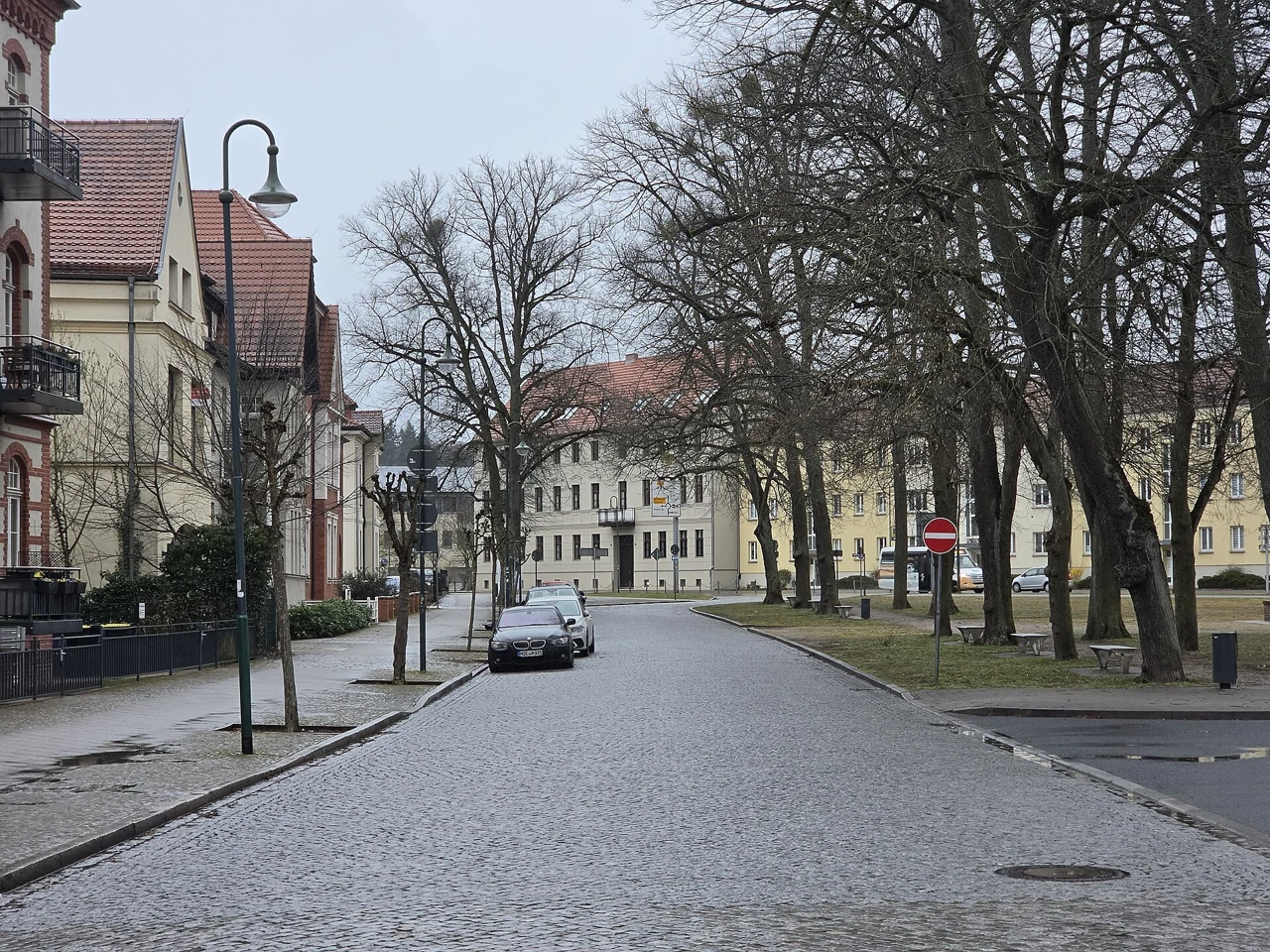
In Neustrelitz, eight streets opening from a square give the city walk its direction. The Tatil Merkezi Stork suggests reading that plan first, then following Schloßstraße towards the garden and the Zierker See shore. Walking from a carefully ordered square to open water can reveal the town's character within a short visit. Make this urban route the centre of a day and give a full lake circuit or nature excursion its own time. The name Schlossgarten should not create an expectation of touring a standing grand palace. The retained garden ensemble, the lost palace's history and streets in present use are different layers of this route.
Recognise the eight-street plan on Marktplatz
The municipal town portrait describes Neustrelitz as a planned settlement founded in 1733, with eight streets radiating from its square market. On arriving, notice the street openings before concentrating on one façade. Changing position by a few steps can show which view closes against a building and which carries the eye along a street. Reading the visit through its plan differs from simply collecting photographs of Rathaus and Stadtkirche. The square also works as a meeting point for a party with different walking speeds; identify the chosen corner clearly.
The city's viewpoint guide places Stadtkirche and Rathaus among the important elements of the market scene. Check the church's present visiting arrangements if an ascent appeals. Reading street directions from ground level and seeing the plan from above can complement one another, though both need not be compulsory in one day. Observe today's use of the space: the streets opening onto the square organise everyday movement as well as a shape on a map. Look in different directions from the same corner to discover what the arrangement makes visible.

Small details along Schloßstraße
Use Schloßstraße between the square and garden as more than a section to hurry through. A doorway, corner or stone detail can reveal how the larger urban plan meets everyday scale. The real Schloßstraße photograph in this guide, uploaded in 2020, records a guard stone. A small object like this is a reminder that travel photographs need not consist exclusively of towers and grand fronts. Stop without occupying the whole pavement and examine its surroundings. Discovering a place at close range does not always require an extended museum visit.
As the garden approaches, change the pace. Questions about finding directions around the square can turn into following a path or a line of sight. When interests differ within the party, some people can examine a small detail while others wait in the next open space. Instead of aiming at an equal number of photographs in every section, consider what the route is showing. With luggage, it may be more comfortable to take this walk after reaching your accommodation. On a short visit, linking square and garden gives the day a clearer form than going to the end of every street and repeatedly returning to the centre.
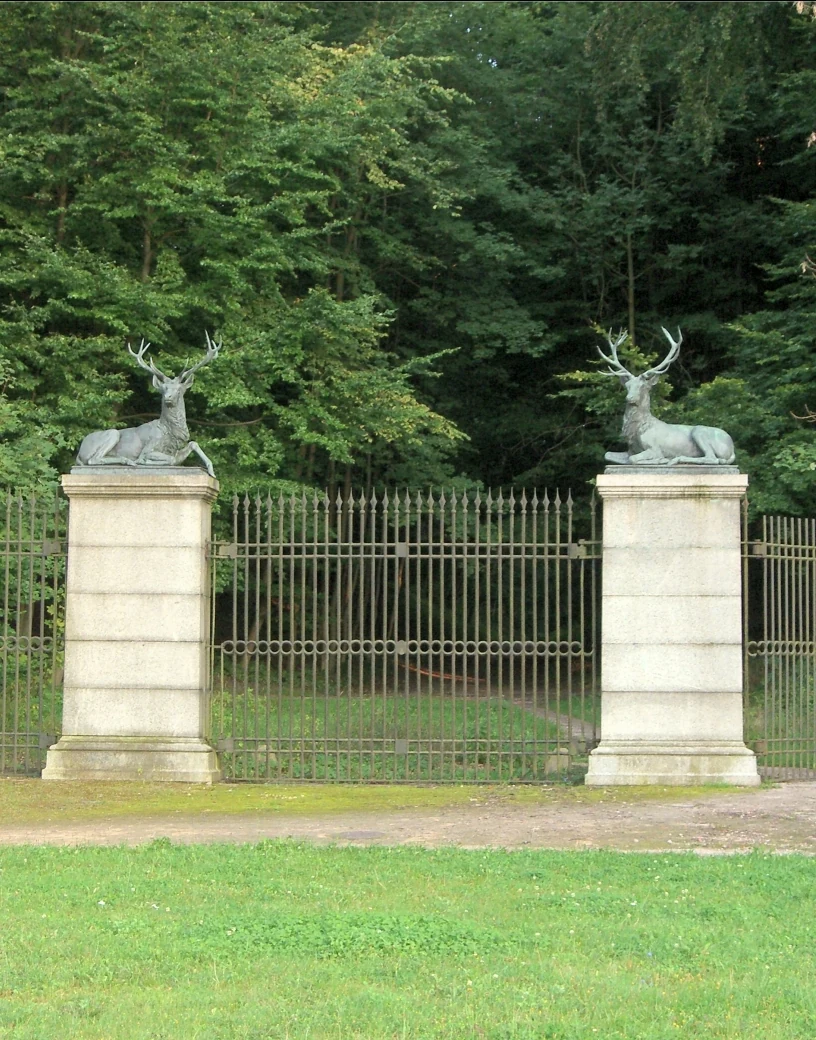
Schlossgarten survives; the palace has another story
The official town history explains that the palace was largely damaged at the end of the war and its ruins were later removed, while the garden ensemble remained. Build the visit around paths, sculpture and surrounding structures rather than a palace interior. The state palaces and gardens institution discusses restored sight lines and garden elements. Following a straight axis while noticing more freely arranged paths nearby can reveal two different ways to explore the same grounds.
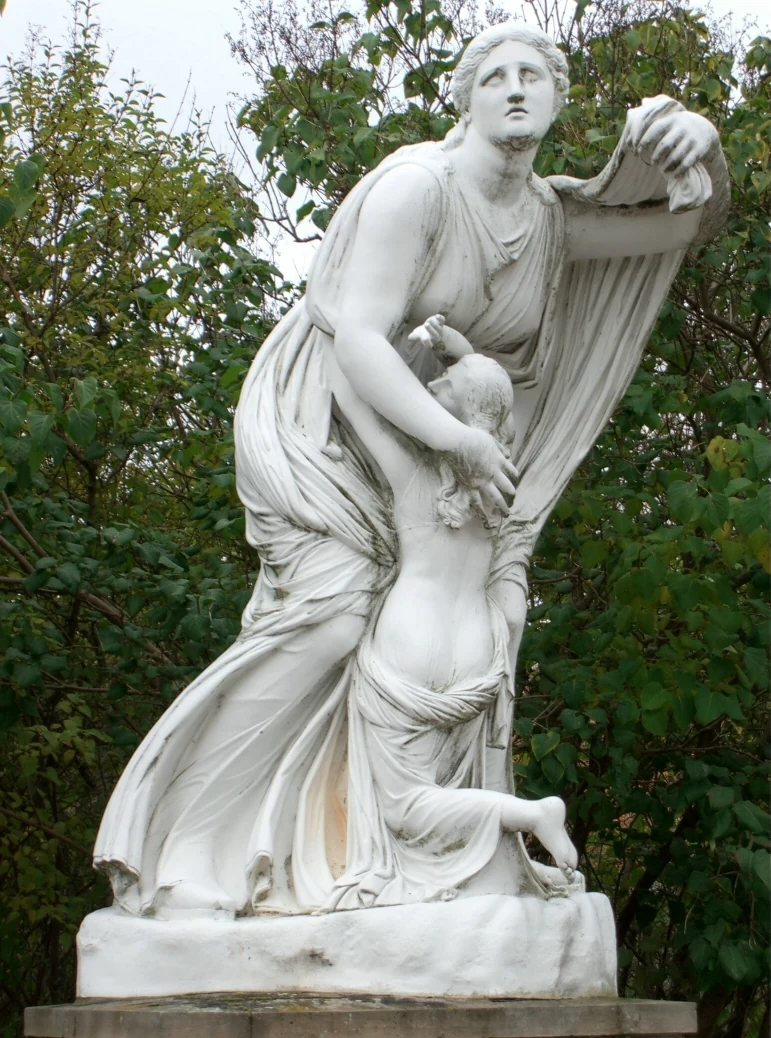
A 2007 photograph of the Niobe statue provides a starting point for pausing at one sculpture and considering its direction and setting. If you encounter historic images of the garden, remember that an old view cannot establish today's number of statues, path access or maintenance condition. Learn the present garden from what you encounter. With children, ask which way a figure is looking, then continue along another path. If the Orangerie or another building interests you inside, research that place's current use and visiting conditions separately. Being able to walk through a garden does not confirm that every associated doorway is open.
Zierker See and Stadthafen: a shore pause or a separate circuit?
The official harbour information explains that the Kammerkanal connects Zierker See with the Woblitz and presents the harbour as a starting point for water journeys. From the planned square through the garden to water, the walk reaches another scale of movement. Examine the relationship between storage buildings and the water's edge. The harbour can provide a destination for the walk without boarding a vessel. If a sailing appeals, check departure and return against your travel date; seeing boats does not establish that the same route operates every day.
The city's active-day suggestion gives 12 kilometres for the complete Zierker See circuit. That distance helps separate a short urban day from a full lake walk. If the circuit is your goal, arrange food, return transport and weather decisions around it as the principal programme. On a square, garden and shore visit, spending time in one selected waterfront section before returning may be enough. Agreeing on a finish that suits the whole party avoids arguing about distance in the final part of the walk. Add a seated pause so that the lake becomes a place to experience rather than a view passed in haste.
Give Leea its own time beyond the centre route
For an interest in energy and environment, Leea at Am Kiefernwald 1 offers an interactive visit. The operator presents the Ressourcenkammer Erde experience and opportunities to compare forms of energy through movement. Treat it as a separate journey and visit, rather than a façade passed incidentally between market and harbour. This guide's exterior photograph from 2021 introduces the building; it cannot establish which activities are usable on a future date. With family, choosing one question to explore can give a half-day visit a more useful focus.
The current operator page distinguishes normal periods, Mecklenburg-Vorpommern school holidays and public holidays in its opening arrangements. This helps avoid assuming that an indoor option is automatically available whenever rain begins. Check the appropriate date first and arrange the remaining garden and lake walk around it. A complete lake circuit, substantial Leea visit and the whole town centre need not be packed into one day. One day about the plan and garden, followed by another about interactive learning and nature, can answer different interests more comfortably.

Catfish at Bootshaus and accommodation beside the lake
The live Bootshaus menu lists fried catfish fillet from Altkalen with creamy leeks and rosemary potatoes. This defined main course adds a proper meal to the waterside part of the itinerary. The operator's address is Useriner Straße 1. The named source in the menu should not be expanded into a claim that the fish was caught in Zierker See that day. If fish or a cream sauce is unsuitable, ask about other current dishes and their ingredients. Check table and service arrangements for the date, and reserve actual time to sit down.
The Bootshaus Pension room page shows single and double options alongside a four-person family room with two bedrooms. It is a real accommodation candidate for an evening near the lake; discuss the particular room's view, access and arrival arrangements before choosing. An overnight stay can separate garden and lake programmes into two periods. For a day visit, the DB Neustrelitz Hbf page gives Rudi-Arndt-Platz 1 and current connections. Leave time between the final waterfront pause, collecting bags and locating the platform. The connection from the ordered square to open water can then remain the principal impression of the day.