
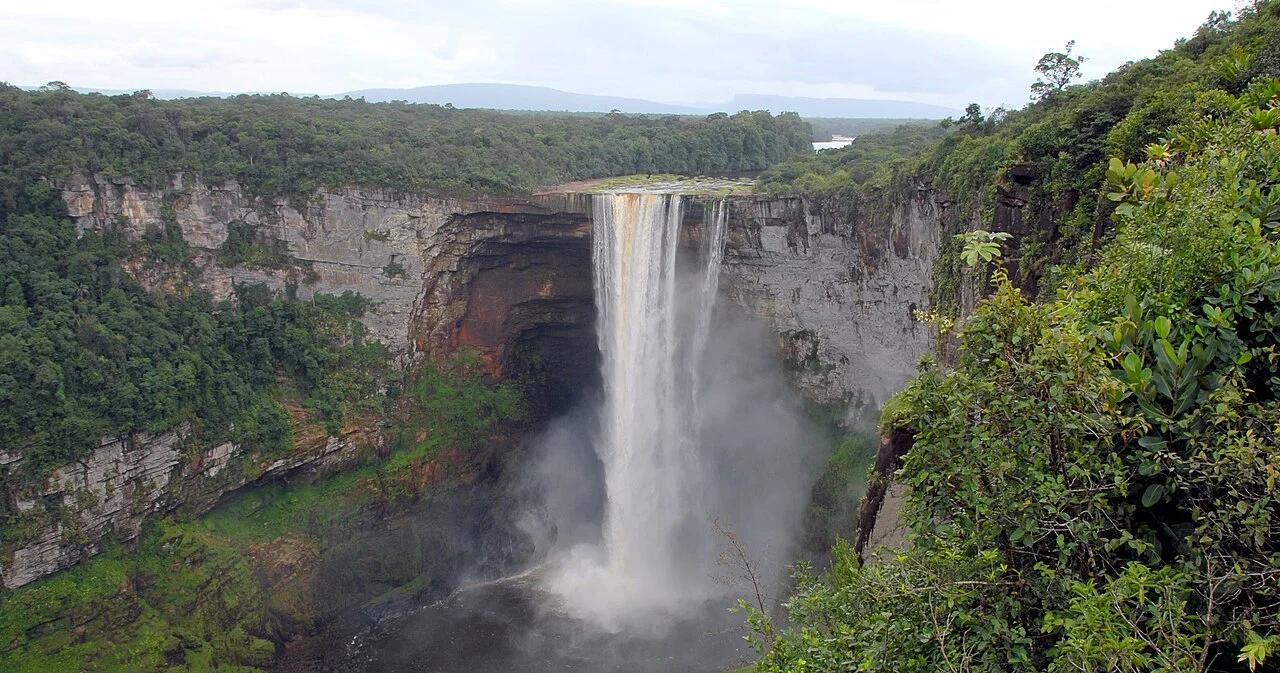
Guyana belongs geographically to South America while its conversations and food also connect strongly with the Caribbean. Tatilmerkezi Stork brings more than a waterfall picture into this journey: a city lunch, a long river transfer and time deliberately left between them. This country guide helps you combine Georgetown with one interior base over eight days. It does not attempt to fit every famous landscape into the same week. A Kaieteur excursion, a rainforest stay and a waterfall beside an international boundary involve different access arrangements.
Start with access and the security framework
At the source check on 4 October 2026, FCDO guidance noted tensions around the Venezuelan border and a disputed southeastern border area with Suriname. This itinerary does not recommend border exploration or river journeys after dark. Georgetown also has risks of violent crime and warnings concerning airport transfers; reputable transport arranged in advance and daytime movement are fundamental planning choices. These precautions do not declare any neighbourhood or interior district risk-free. Consider current official advice, your circumstances and insurance coverage before deciding whether to travel.
Eight days: the capital and one interior base
Day one is for arrival, your arranged pickup and settling into the hotel. Day two allows a daytime Georgetown outing and lunch. On day three, transfer to the interior accommodation you have selected; avoid attaching a demanding walk to that travel day. Days four and five stay around the same base for guided nature activities and river observation. Return to Georgetown on day six. Day seven is for a separately confirmed Kaieteur excursion or disruption buffer, and day eight is departure. If a workable Kaieteur connection does not fit, remove the excursion or lengthen the trip. Do not turn the international departure into a race against a returning sightseeing flight.
The interior segment represents one geographic choice. The Essequibo area and the Iwokrama/Rupununi corridor should not be treated as neighbouring stops that automatically share a three-night stay. Confirm the transfer method, exact accommodation location and daylight arrival before distributing the nights. Two full days in one place offer more observation time than arriving at dusk and leaving the next morning. A quiet early start, a rest through the middle of the day and a short guided activity later can create a flexible rhythm. Seeing a particular animal is never guaranteed.
Essequibo: reading the river landscape
The Essequibo photograph shows broad waterways around Bartica from the air. It should not be read as one waterfront park you can cover on foot. If you choose a river-based stay, establish the embarkation point, luggage transfer and who handles the road portion together. An arrangement that coordinates the boat, accommodation and meals can reduce the number of separate decisions. Official guidance recommends registered boats, life jackets and avoiding river travel in darkness. Treat these as explicit service conditions alongside the comparison of quotations.


Ginep Landing and Rupununi: transfers are part of the journey
The boats and riverbank at Ginep Landing illustrate why interior travel is not simply a series of paved-road drives. For someone choosing Rupununi, the central question is who meets you at each change of transport, rather than how many stops you accumulate. A compact, manageable bag and an agreed option to leave larger luggage at your Georgetown hotel may help. This historical photograph does not establish the present-day operation of a particular landing or a continuous scheduled connection. Keep the confirmed transfer instructions as a separate document instead of confusing an older scene with current service availability.

Iwokrama: give one base two full days
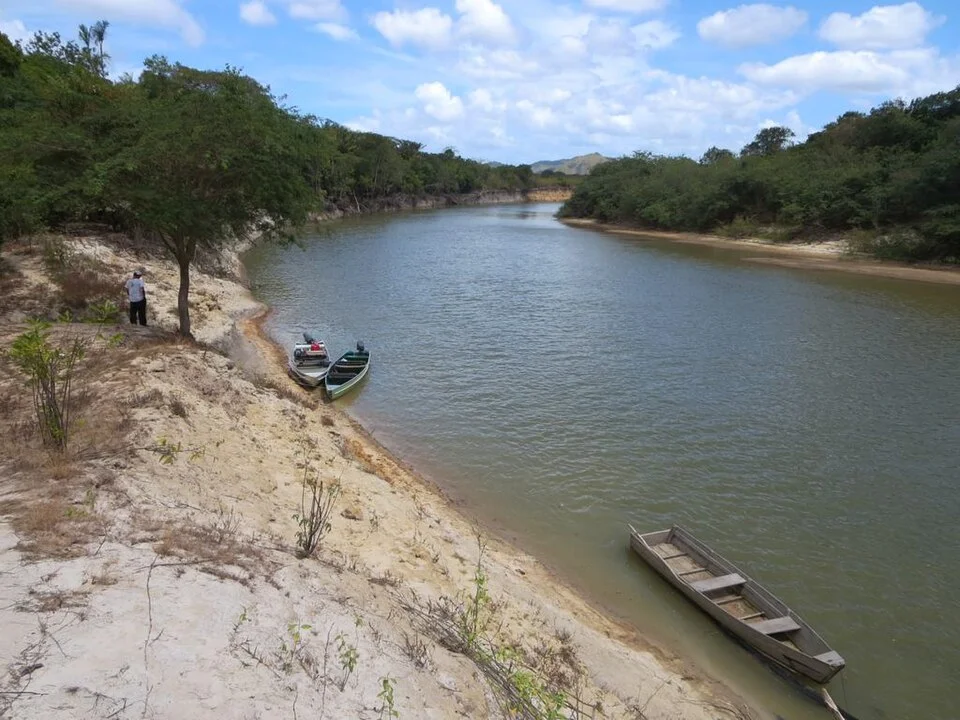
The Iwokrama image frames water between forested banks. It is a useful point in the guide to think about the country's scale after the city. Actual activities depend on what your accommodation can access. Balance guided walking, river observation and rest according to your expectations, and agree on the walk's length and turnaround point beforehand. A calm photograph says little about how demanding a trail might be. Community visits require invitation, permission for photographs and attention to the guide's instructions. Places where people live should not be presented as scenery arranged for a visitor's convenience.


Kaieteur and Orinduik: two waterfalls, different decisions
Kaieteur lies in a national park managed by the Protected Areas Commission and has spiritual significance for Patamona communities. Access, flight or other transfer arrangements and weather conditions need separate confirmation with an appropriate provider. This guide promises no fixed departure, daily operating flight or service automatically included in the eight-day plan. A visit that respects the park's instructions is more meaningful than treating the waterfall as a hurried photographic collection. The Orinduik image was taken from the Guyanese side, with Brazil on the opposite bank. It illustrates a separately researched alternative, not a ready-made additional stop on the main itinerary.


A food plan: cook-up rice, pepperpot and roti
Spread an introduction to Guyanese cooking over two Georgetown meals. Cook-up rice at lunch and roti with curry on another occasion provide different textures to explore. Pepperpot is another important name in the country's culinary culture, but do not assume every restaurant prepares it daily. Find out when it is available and arrange a modest shared tasting instead of placing every dish in one sitting. In the capital you can compare more food choices; at an interior accommodation the meals included in your booking may matter much more. Knowing what is provided for breakfast, transfer-day lunch and dinner prevents an unrealistic expectation of searching for restaurants in the middle of a journey. Explain dietary preferences and ingredient requirements during the reservation process.
Where to stay and how to compare the total cost
For a Georgetown base, compare airport pickup, daytime transport arrangements and food before an early departure alongside the room itself. The Guyana Tourism Authority recommends officially licensed tourism accommodation. Interior quotations depend on whether transfers, guides and meals are included and what happens when weather changes the plan. Two packages cannot be treated as equivalent simply because their nightly room prices look similar. Compare the same items in each written offer: transport, nights, activities, meals, cancellation and delay arrangements. Tatilmerkezi Stork's most useful note here is to leave time between two confirmed bases rather than add more dots to the map.
Prepare the documents that travel with you
Keep accommodation addresses, the pickup contact and the confirmed meeting point accessible offline. Place the capital return night and international departure in a separate line of the itinerary so that changing an interior activity does not silently remove that buffer. Agree where communications may be limited and how the provider handles a delay before setting out. These are practical questions for a specific booking, not promises that a route will operate in every season. The five photographs show distinct landscapes and retain their original source credits; they support geographic understanding rather than evidence of today's road, water level or flight conditions.