
Dewas: begin above the city, then return to street level
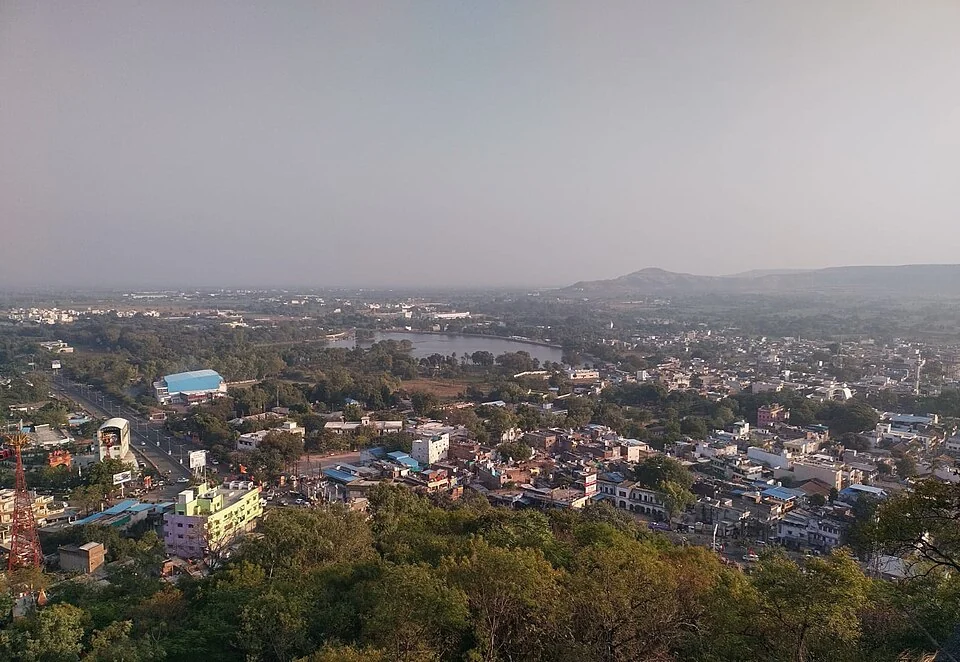
Build a short Dewas visit around the contrast between Tekri hill and the city below. The Tatilmerkezi Stork suggests two perspectives rather than a day that becomes only a list of temples. Give the first session to Chamunda and Tulja Bhawani, then examine ordinary streets and arrange a separate connection to the Pawar memorials near Meetha Talab. This keeps the whole itinerary from circling a single religious setting. The cover photograph contains buildings, trees and distant elevations seen from the hill. Taken in May 2023, it offers a way of reading the city from above without promising today's visibility or weather.
Make the first decision according to your arrival. If you reach town in the morning, leave your luggage and consider the hill for the first session. An afternoon arrival may work better with a short exterior observation in the centre and Tekri the following day. These are planning options, not a tour with fixed departure times. Energy after travelling, differences in walking ability and the route actually available on the day should determine the order. Nearby temple markers on a map do not establish identical access conditions. Record both your starting point and your return destination, and agree on a meeting place before anyone leaves the group to investigate a queue or transport option.
Chamunda: understand the arrangement around the entrance
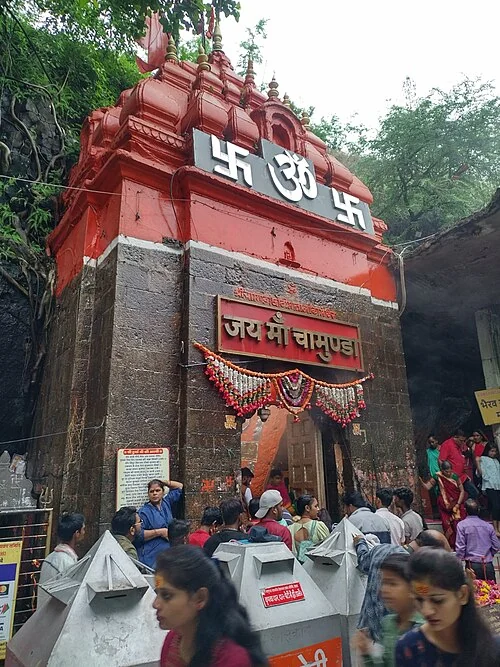
The Chamunda photograph shows a red upper structure, a stone coloured entrance face and visitors around it. It is a broad entrance scene rather than a close view of an isolated statue. First observe movement near the doorway and try to distinguish space for waiting, passage and worship. Asking a person responsible for the entrance is more dependable than inferring today's rules from where people stood in a photograph. Check shoe and photography requirements before proceeding, and consider other visitors' privacy before raising a phone. The May 2023 image cannot calculate the length of the present queue or the number of people expected during your visit.

The district's Tekri presentation describes the sacred hill and includes transport imagery, but it is not a current ropeway operating timetable. Confirm whether the service runs that day, its ticket arrangements and the return option locally. For a group using steps, let the slowest person's pace shape the visit. Making the objective careful observation of the accessible surroundings, rather than entry to both places at any cost, gives travellers with different mobility needs a role in the programme. Leave energy for the descent as well as the ascent. An open entrance in a historical photograph guarantees neither continuous visiting access nor a step free route today.
Tulja Bhawani: give the second temple its own attention
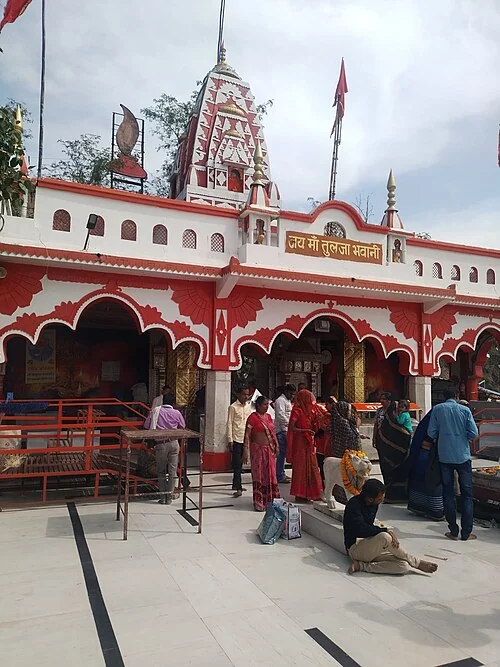
The Tulja Bhawani scene contains a red and white facade, a pointed upper feature, courtyard paving, railings and people. It is a different building and viewpoint from Chamunda; the two pictures are not presented as alternative crops of one doorway. Compare the darker entrance surface at the first stop with the horizontal arches of this facade. With children, turn the comparison into a simple search for a white surface, a red boundary, a pointed top and a horizontal opening. This notices the architectural setting without making worshippers into viewing objects. Follow the permission and visiting arrangements of the second temple separately rather than assuming the first entrance's rules apply everywhere.

If waiting at one point becomes lengthy, avoid making the entire day depend on the same queue. Reduce the second visit according to the group's need for rest while keeping time for the city below. The guide does not invent a complete interior tour, participation in a particular ceremony or a sunset witnessed from a named viewpoint. Its suggestion is an opportunity for observation. When deciding what water and personal items to carry, first ask whether large luggage can remain at your accommodation. A brief photograph from an allowed position may be enough; a prolonged session that narrows the passage is not necessary for understanding the contrast between the two facades.
The city centre and Pawar memorials
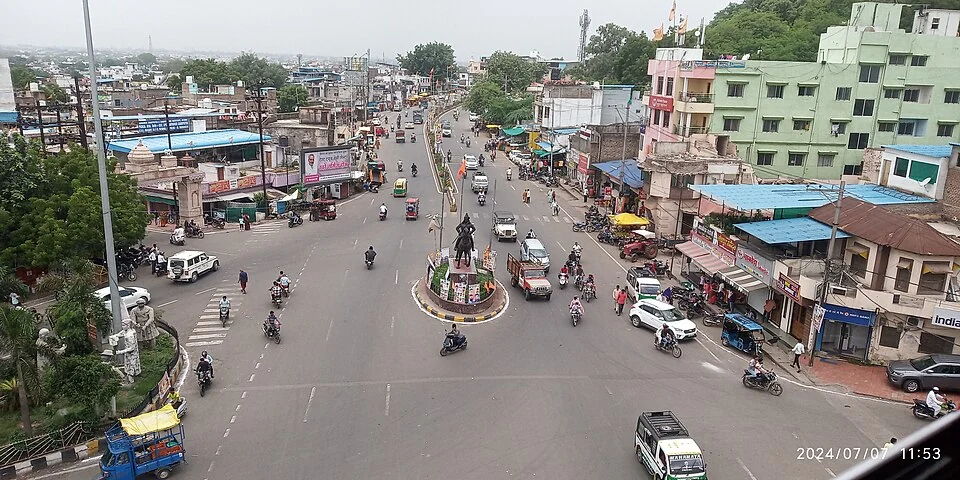
The city photograph contains a junction with cars and motorcycles, rows of shops and buildings with several storeys. Its July 2024 date does not establish current traffic direction. Moving from the wide hill view to street scale, examine a shopfront together with upper windows and the space left for movement. Businesses visible in the photograph do not become current shopping or dining recommendations simply because their signs appear. Assess pedestrian and vehicle movement where you are standing: a short line on a map need not correspond to a continuous pavement. The purpose of this session is to notice ordinary use of the city before adding another monument to the list.

The district administration identifies the Pawar Chattries near Meetha Talab as memorials associated with Pawar rulers and Maratha architecture. Plan this historical focus as a separate journey, not as another room inside the Tekri temples. Establish the correct destination and return connection before setting out. Begin with an exterior objective and ask which parts and interiors are open on the day. We do not have a verified photograph of these memorials in this selection, so neither the junction nor a temple picture is relabelled as a Pawar monument. If entry is unsuitable, shorten that session and return to a rest in the centre. No closed area is promised to open, and no unverified reservation arrangement is described as guaranteeing a visit.
Arrival, a defined meal and an accommodation address
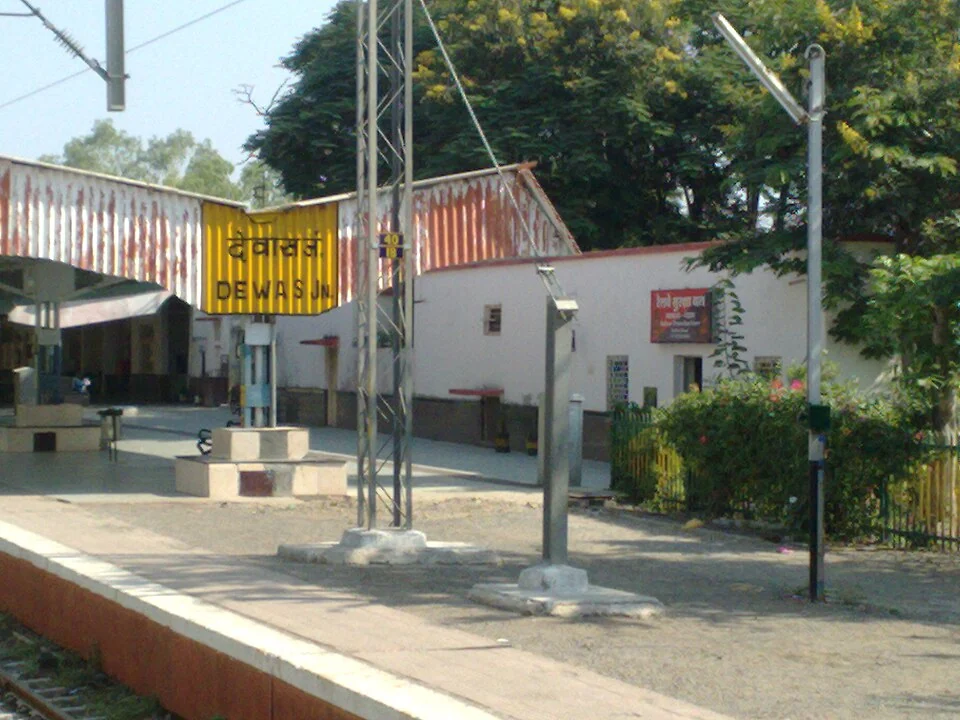
The Dewas Junction picture contains a yellow station nameboard, the platform edge and surrounding structures. Taken in November 2012, it documents neither the present platform layout nor a current train schedule. District arrival information describes Indore airport, rail travel and road connections from neighbouring cities as general options. Check the actual stopping pattern and your ticket for your travel date. Old airline names or a broad list of connected cities should not be turned into today's direct departures. Work out the station to accommodation connection using the address, including whether a separate vehicle is needed. Avoid a return ticket so tightly timed that it depends on the hill visit ending at one exact minute.

For a main meal, investigate dal baati or bafla, explicitly recorded as a local main course by the district administration. Naming a regional meal does not establish its availability at an individual restaurant that day. Ask your chosen place beforehand about service, ingredients, portion arrangements and any dietary requirements. Shri Khedapati International describes Abaca on its own website as a vegetarian restaurant, but that page supplies no dated dal bafla menu, so the dish is not attributed to Abaca here. For accommodation, the property's published address is 5 Kothi Road, Civil Lines. Confirm room availability, luggage storage, entrance steps and an evening return directly with the operator. Sources were checked on 6 October 2026; the five dated photographs remain separate from evidence of current operating conditions.