
What is a practical plan for Hampton?
A night and two days in Hampton, Virginia, allow you to separate Fort Monroe from the downtown waterfront. Give the first day to the fort's museum, defensive architecture and coastal walk, leaving the second for a shorter exploration of the centre. If you have only one day, make the museum ticket and lunch your fixed points, then fit outdoor walking around them. Hampton Roads is a wider regional name: a restaurant in Norfolk or Virginia Beach should not be treated as though it sits in downtown Hampton.
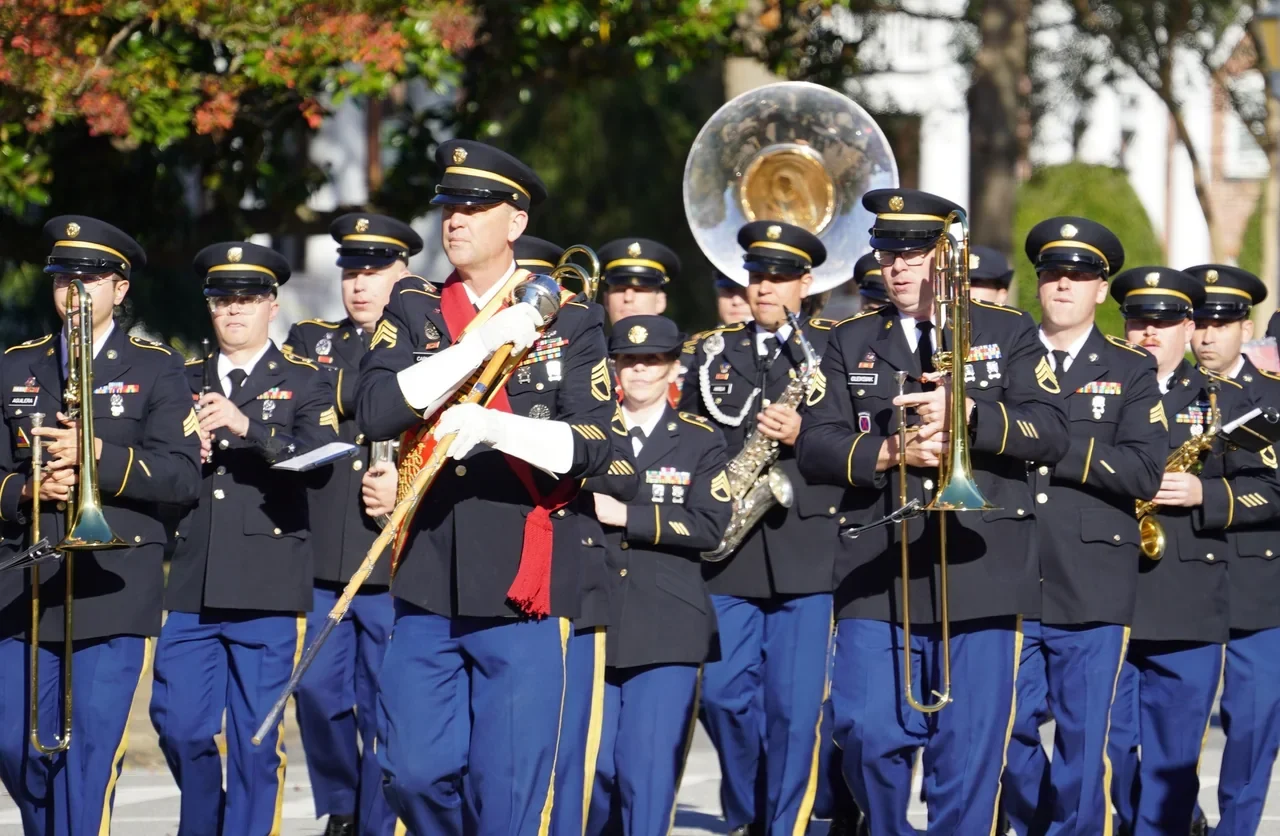
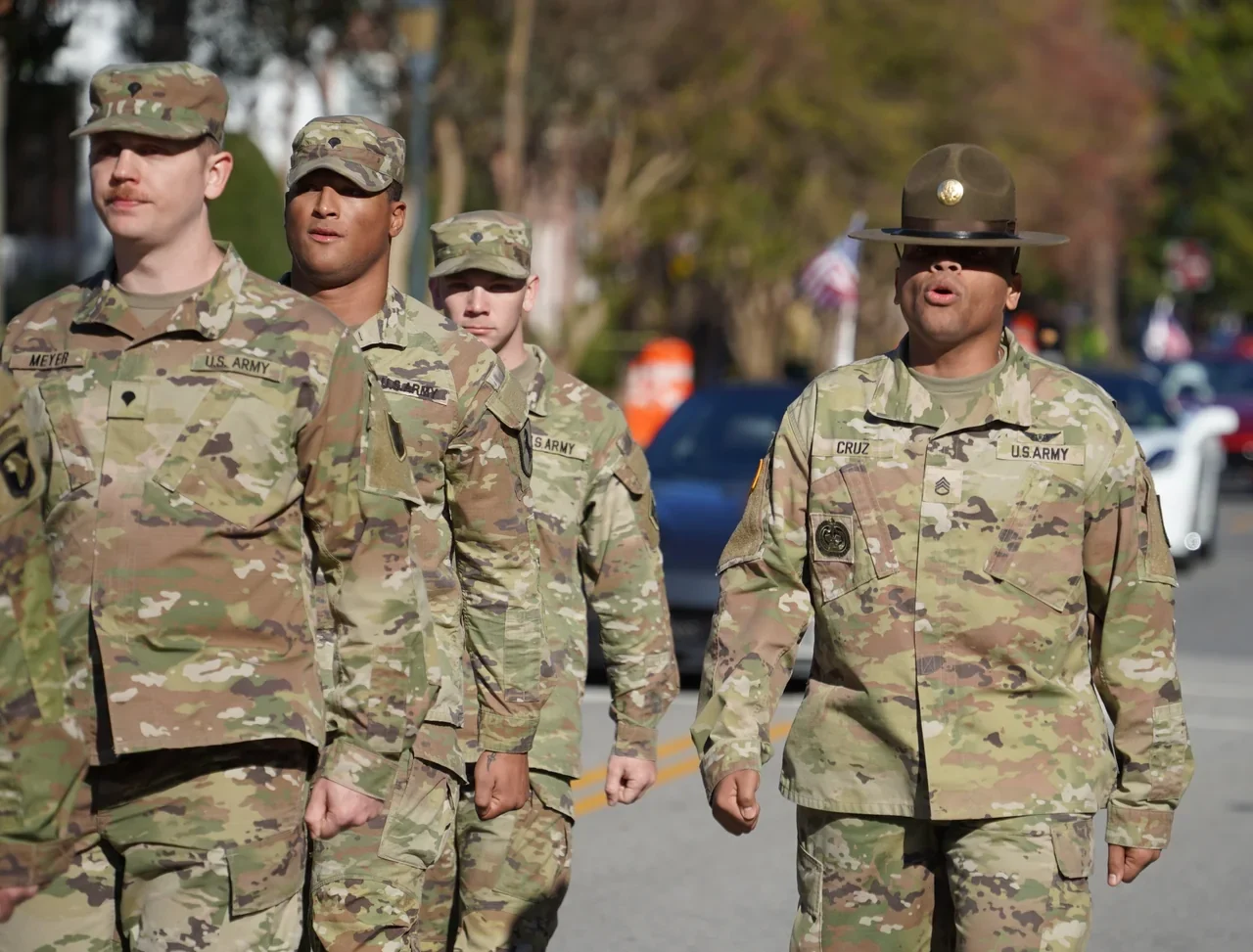
The National Park Service introduction presents Fort Monroe through coastal defence, the history of emancipation and its Chesapeake setting. This provides an official qualitative reason to visit, not a total of unique tourists or a search-volume ranking. The experience works best when you read the interpretation before walking around the masonry. Otherwise, the fort can become merely a pleasant waterfront backdrop. Distinguishing the museum's opening hours from general outdoor access is essential when arranging the day.
How do you reach Fort Monroe?
The official NPS directions recommend a car and state that there is no public transit to Fort Monroe. Set your destination to the Visitor & Education Center at 30 Ingalls Road, rather than the administrative mailing address at 41 Bernard Road. The published approach uses I-64 exit 268, South Mallory Street and East Mellen Street before crossing toward the fort. Save the final directions before driving so you are not studying a phone while navigating the narrower approaches.
If you are travelling without a rental car, arrange the return journey as well as the outward transfer. An easy arrival does not guarantee that another vehicle will be waiting when you leave the museum. Treat the journey from a downtown hotel as a distinct transfer rather than assuming everything forms one continuous walk. Bring water, comfortable shoes and a layer suitable for coastal wind. Indoor interpretation and exposed shoreline walking make different demands, so pack for both instead of preparing only for a museum visit.
When can you visit the museum in autumn 2026?
The Fort Monroe Authority's current notice identifies October 27 as the final Tuesday opening until April. After that, the visitor centre operates Wednesday–Sunday, 9:30am–4:30pm, and the Casemate Museum Wednesday–Sunday, 10am–4:30pm, with its last ticket at 3:30pm. Do not choose a Tuesday in early November using an older opening calendar. Recheck holiday arrangements and exceptional closures near your travel date.
The Casemate Museum is at 20 Bernard Road. Admission is free and the visit is self-guided, but a timed ticket is still required. Collect it at the visitor centre on Ingalls Road before beginning a longer outdoor circuit. That order reduces the risk of arriving at the museum after the last entry time. Larger groups should contact the operator in advance. Free admission does not guarantee capacity whenever you happen to arrive, and the museum visit needs to fit your return transport.
How should you explore the gate, moat and Battery Church?
The Main Gate on Ruckman Road brings together the moat bridge and historic stone construction. It remains a vehicular entrance, so do not stand in the traffic lane to take photographs. From the designated pedestrian approach, look at the building materials, the shape of the passage and the relationship between water and the defensive wall. Seeing the interpretation first gives these architectural details a more meaningful context than a quick photograph taken on the way to somewhere else.
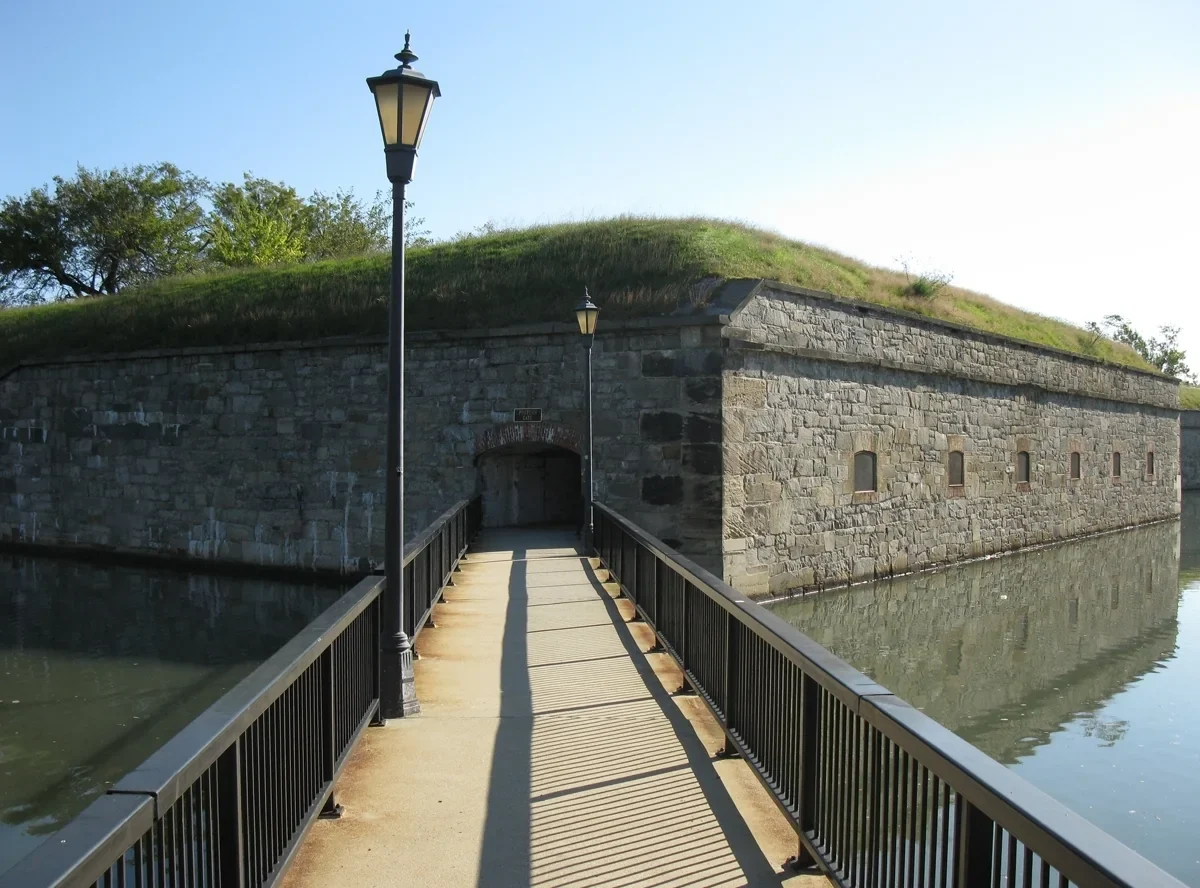
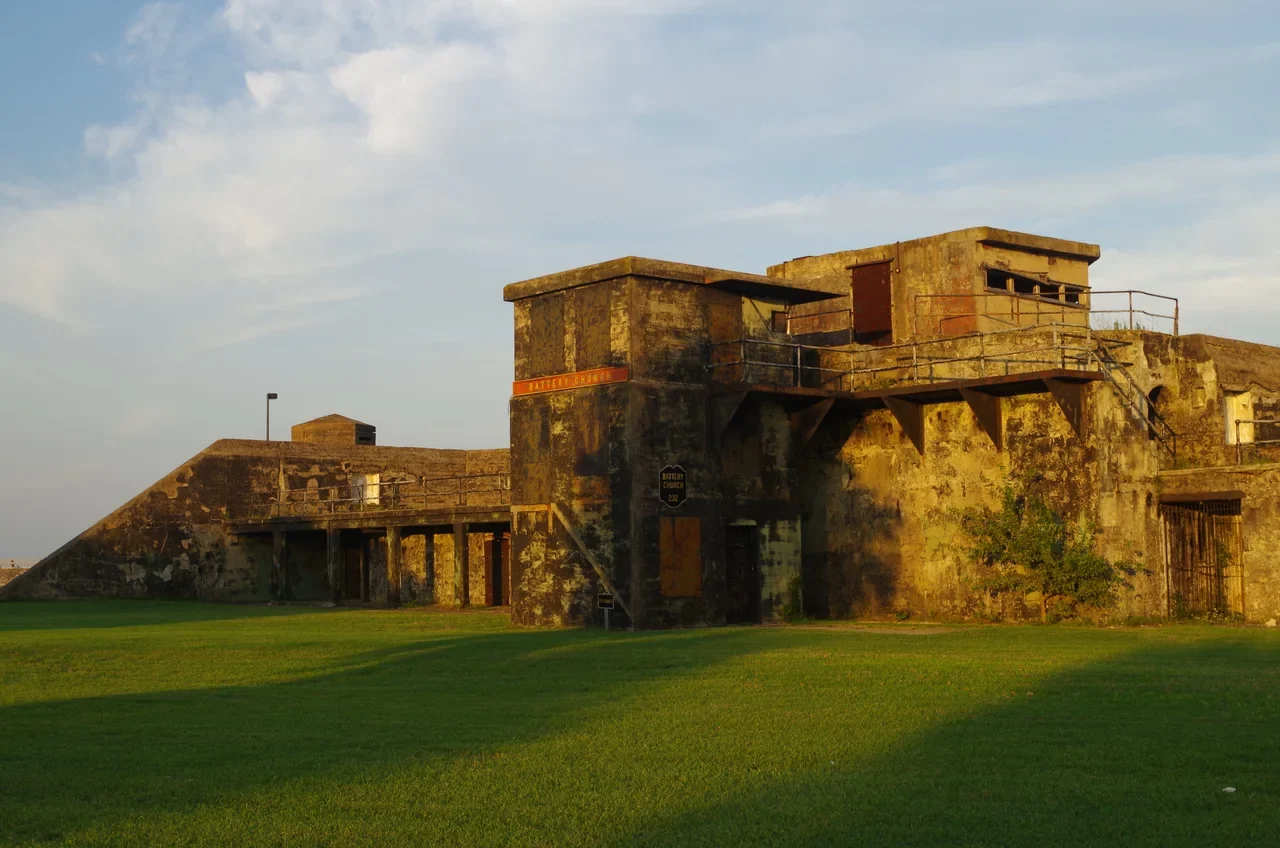
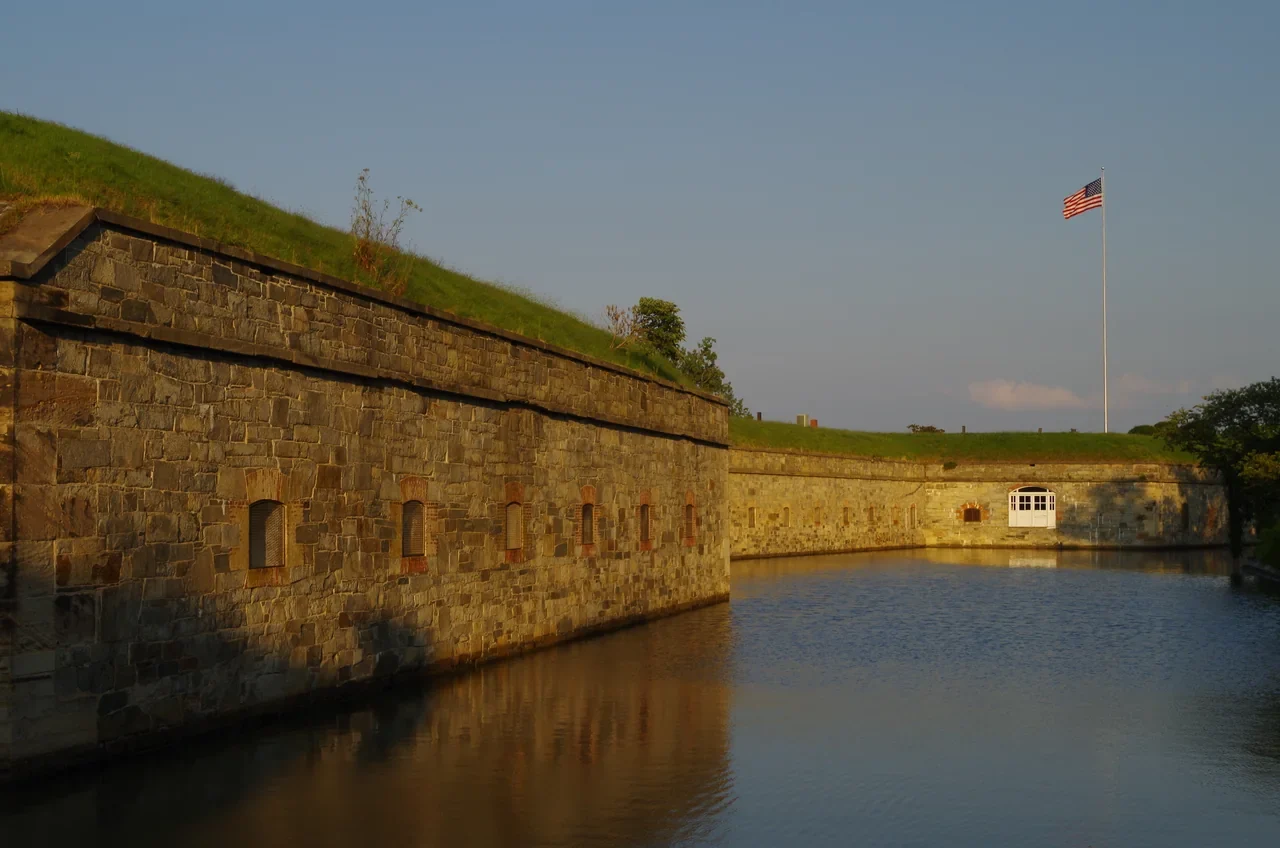
Battery Church is a military battery, not a religious building. Its archival photograph shows a separate concrete defensive structure. The other approved image depicts Fort Monroe's stonework and reflections in the water; neither image promises the same light during your visit. Follow signs and open routes rather than trying to reproduce a photograph at any cost. Closed passages and work areas are not part of the sightseeing circuit. A slower walk with time to compare two different forms of coastal defence is more useful than rushing between every structure visible on a map.
Why are beach hours different from general park hours?
NPS separates the access periods: general grounds open daily from 5am until midnight, while beaches and fishing piers open sunrise to sunset. The later park closing time does not extend beach access into the night. For a first visit, finish the shoreline portion in daylight and return to downtown or your hotel afterwards. Calm water in an archival photograph is not evidence of present swimming conditions, and you should make decisions from the notices and conditions on the day.
The park's basic information also explains that residents occupy some historic buildings. Do not open gates, look through windows or assume a residential garden is public parkland. Plenty of exterior detail can be appreciated while respecting that boundary. Keeping to public routes also makes it easier to understand the fort as a place where heritage and everyday life coexist. There is no park entrance fee or pass requirement, though transport, meals and accommodation remain separate costs.
Which real hotel provides a downtown base?
The Landing at Hampton Marina stands at 700 Settlers Landing Road. Check-in is 4pm and check-out 11am; its official information lists self-parking at $15 daily and breakfast for a charge. It provides no airport shuttle from Norfolk or Newport News/Williamsburg. Reconfirm those arrangements when reserving. This is a downtown base rather than accommodation inside Fort Monroe, making it a candidate for travellers who want a separate fort excursion and an easier evening back in the centre.
Where can you plan a genuine lunch in Phoebus?
Mango Mangeaux, at 33 East Mellen Street, lists a Gumbo Bowl containing seafood, sausage and chicken. It is a concrete main-meal option, with $20 shown on the menu, though price and availability should be checked when ordering. The same page describes its limited café menu as Monday–Friday, 9am–2pm. Its current homepage says dinner is for private events only, so do not rely on older FAQ wording that describes a regular evening service.
Place lunch before or after your museum slot with enough margin for the transfer. Ask about allergens and portion size before ordering, particularly if a seafood dish needs adapting. A planned lunch in Phoebus avoids assuming every food business at the fort will be serving when you finish walking. It also gives the day a different setting before you return to the coast or head back downtown. Keep the final evening flexible rather than booking so many stops that one delayed transfer determines the whole trip.