Namakkal: a complete city day around two sides of the rock
Our Namakkal plan uses three calendar days and two nights: arrival on day one, the foothill surroundings and city on day two, and departure on day three. The Tatilmerkezi Stork does not turn the whole programme into a race to reach a fort summit. The official tourism page identifies the Narasimhaswamy and Ranganathasamy rock-cut temples on different sides of the hill. Those approaches are the main interest, while the fort supplies their prominent urban backdrop. Establish what can be visited and arrange movement according to personal comfort. This creates a pause combining worship settings with working streets, distinct from a Dindigul defensive climb and biryani day. A Kolli Hills excursion is not compressed into the same complete city day.
Arrival: the last connection from the Salem–Karur line
The official Namakkal tourism page places the railway station on the Salem–Karur line. This does not establish that every train stops or that a particular service operates at a particular hour. Choose the actual stop on the booking and plan the final transfer to the property's entrance. Bus travellers should make the equivalent comparison with the operator's actual terminal. A nearby meal and identifying the direction of the rock are enough for arrival day. Late arrivals can arrange reception contact, while early arrivals can ask about luggage storage and rest. Listed airport distances are not treated as current flight or direct-service guarantees. A flight requires its own onward road transfer plan. Keeping the first evening modest allows an easier distinction between the two foothill approaches the following day.
The Narasimhaswamy side: follow the worship setting
District history places the Narasimma Samy temple in the urban setting west of the rock fort; the tourism page uses Narasimhaswamy as one of its two rock-cut temple names. Give this direction the first part of the complete day. At the entrance establish the permitted visitor route, footwear arrangements and photography rules. Architectural interest can be satisfied without obstructing worshippers: notice the continuation of rock behind the structure and how the entrance relates to the street. Evaluate the public parts that can actually be seen rather than expecting access everywhere. Do not enlarge the morning into a long list of stops; allow time for the building and surroundings. If entry arrangements change, an exterior look and city walk can still provide a worthwhile programme.
The Ranganathasamy side: another approach to the same rock
Treat the connection to Ranganathasamy as a distinct movement around the hill. The official page locates the two structures on different sides; map proximity does not guarantee an uninterrupted, shaded or step-free walk. After the first visit, rest and choose walking or a short vehicle connection according to personal comfort. Do not assume that entry and worship arrangements are identical at both sites. The changing approach provides the architectural comparison: the relationship between the foothill structure and an urban road helps explain the rock's scale without climbing to the summit. Leave the lunch interval clear when intending to visit both. Giving time to only one is also possible. Seeing the second structure does not imply unrestricted access to every part of its temple setting.

A meal interval with named regional choices
The national tourism ministry's Tamil Nadu account includes idli, dosa, sambar and chutney, giving the Namakkal day a concrete meal starting point. An available idli or dosa can suit breakfast, with a more substantial plate considered at lunch. The same source discusses arisi paruppu sadam, a rice-and-lentil preparation, in its Kongunadu culinary context. It is not presented as exclusive to Namakkal or available at every kitchen; where it actually appears on a menu, it can be considered as a regional option. Use the interval between the two temple directions for sitting, eating and resting rather than a lengthy shopping circuit. A dish name alone establishes neither seasoning nor service hours. Choose according to the actual menu and kitchen information; current prices are not invented.
Working streets and a transport-city interest
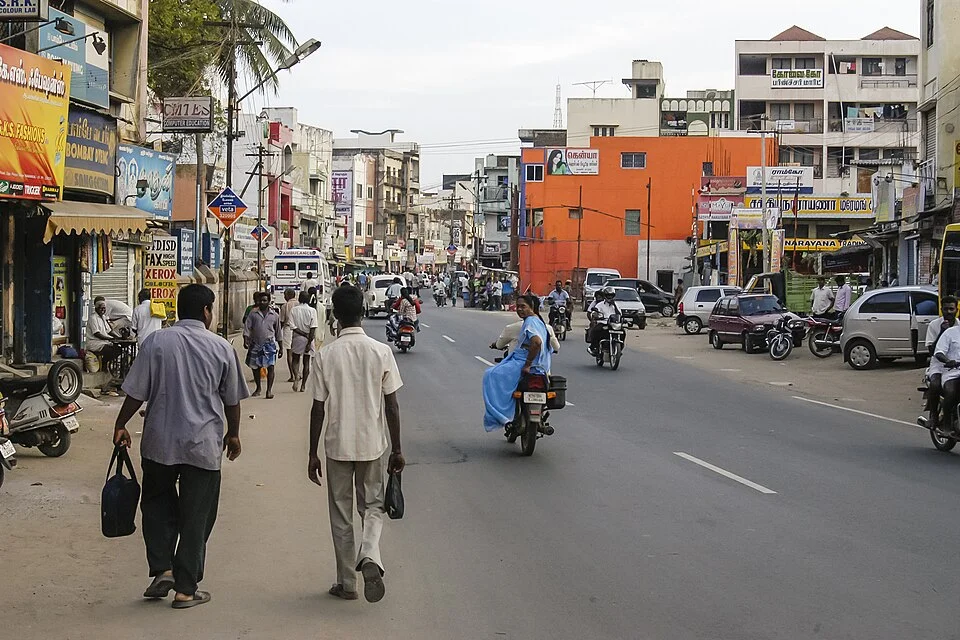
District history describes vehicle-body work and transport as characteristics of Namakkal. Traffic, trade and ordinary journeys continue around the historic rock, adding a different layer to the city day. Complete that interest through a short shopping or orientation walk rather than assuming access to private workshops. If talking at a sales point, respect the person's work and surrounding traffic. Historical production figures in the official account are not repeated as current statistics. The interest here is a working city's character rather than an industrial numerical ranking. The street photograph from 2010 likewise does not document every business or transport arrangement today. Understanding everyday movement beneath the rock adds a separate reader interest beyond the temple visits, without needing an unarranged factory excursion or a promise of private access.

The fort climb is optional for this foothill day
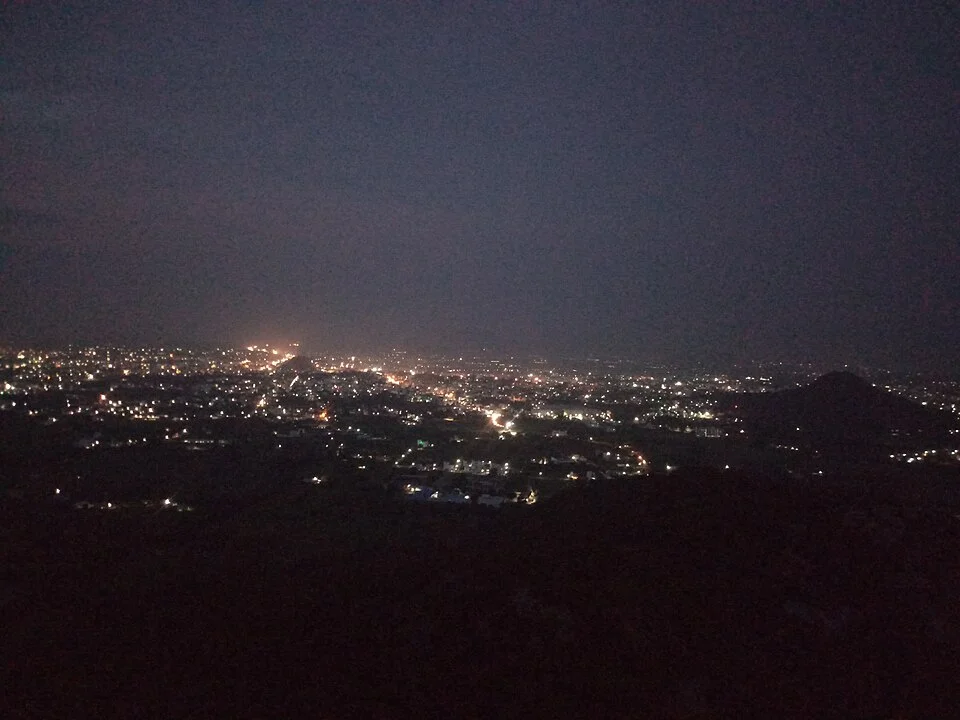
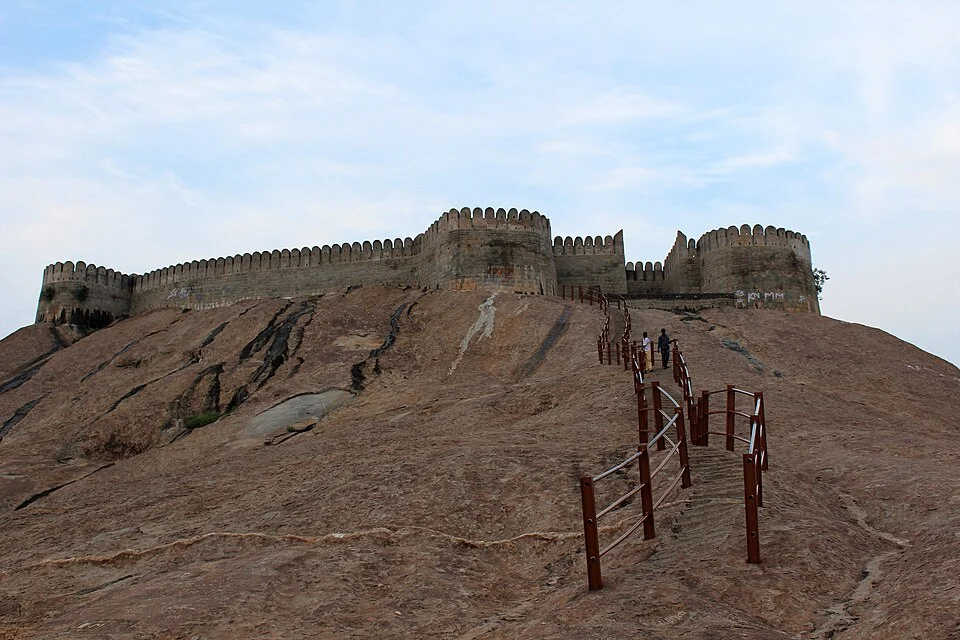
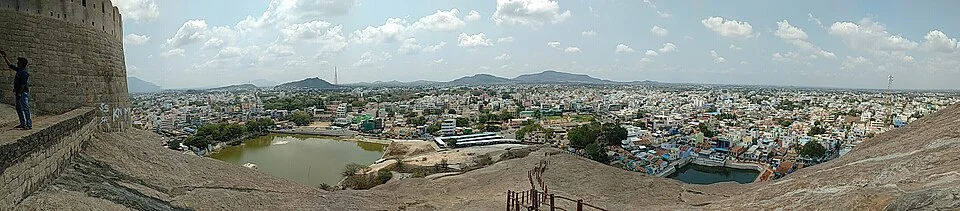
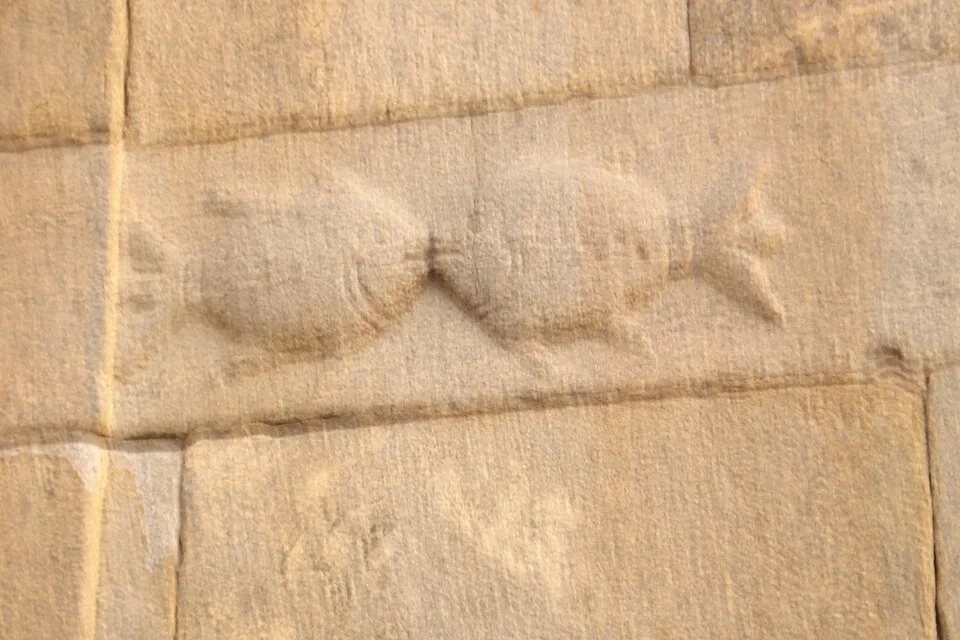
The official tourism page identifies a narrow flight of steps approaching the fort from the southwest. If considering a climb, assess the current route, weather and personal mobility at the entrance. The main foothill programme does not require reaching the summit. Do not sacrifice the lunch break or rush the other temple approach simply to complete a stepped route. An appropriate exterior position can also establish the rock's prominence in the city. Photographs show walls, a stone detail and southern urban surroundings as different scenes; they do not prove that every position is accessible to a visitor today. The night panorama was photographed from Sitharmalai, not the fort summit. Adding another hill excursion to recreate it is unnecessary. Foothill structures, food and urban fabric define the day's scale.

Two nights and departure on the third morning
Choose accommodation against the actual arrival stop, the foothill visits and the onward departure connection. Access to both sides of the rock, a nearby evening meal and night traffic noise matter more than a broad central label on a map. Check the entrance address. Other district interests such as Kolli Hills or Rasipuram require separate days and connections; do not divide one complete Namakkal day across the entire region. The final morning is for breakfast, luggage and reaching the booked service. The source check of 5 October 2026 does not mean transport and visiting arrangements cannot change later. Three calendar days, two nights and one complete city day keep the Stork's pause clear. Two rock-cut approaches, everyday work and a regional meal complement each other without making a summit climb a compulsory achievement.