
Karur: two nights for one complete city day
The Tatilmerkezi Stork suggests treating Karur as the focus of a modest city day rather than simply passing through on a connection. Three calendar days and two nights separate arrival, a complete day for Pasupatheeswarar temple and the city-and-river context, and departure. District information presents textile production and the historic worship structure as different aspects of local life. Not every production site hosts workshop visitors, and not every religious area forms an unrestricted sightseeing route. The main programme therefore combines a reachable architectural focus with a Kongunadu meal. Rather than placing all the district's temples, dams and industrial addresses into one day, choose a few interests with time between them. Two nights allow arrival to remain separate from sightseeing and leave the final morning with a realistic onward allowance.
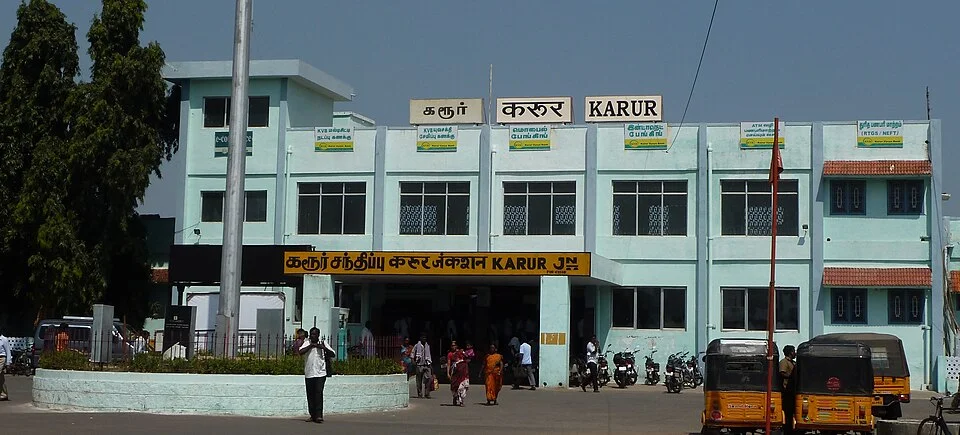
Arrival: connect Karur station with an actual city address
For a rail arrival, confirm the ticket's Karur stop, operating day and arrival time. Arrange the final journey to the accommodation using its precise address; an older station-facade photograph does not establish the current meeting arrangements. Ask about late check-in and a nearby meal if relevant. On an evening arrival, identify the following morning's temple direction rather than filling the remaining hours with multiple visits. A road arrival similarly requires attention to the actual entry point and last transfer with luggage. No fixed service frequency, vehicle fare or precise driving time is stated here. Compare the arrival stop with the departure ticket independently instead of assuming both connections use the same point. An address is selected according to the real itinerary, not only because it lies near a general Karur marker on a map.

Pasupatheeswarar: an architectural city focus
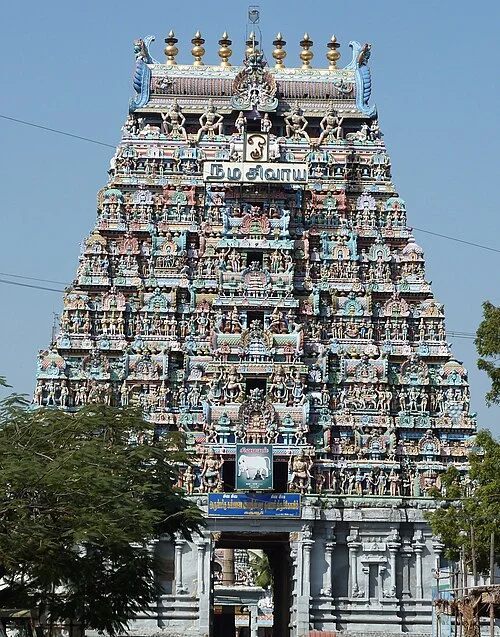
District visitor information identifies Arulmigu Kalyana Pasupatheeswarar temple as a Karur landmark. It can provide the first main section of the complete city day. Observe the entrance gopuram's levels, the relationship between building and street, and details visible in permitted areas. Religious traditions deserve to be understood separately from an architectural visit; a particular ritual or sacred object is not guaranteed by this guide. Establish clothing, footwear and photography rules locally. An exterior look can still retain the interest of the building when an inner area is unavailable. Allow for temperature and walking requirements, choosing one main visit instead of a long chain of religious sites. This is a modest way to begin a Karur day around an actual city focus, rather than reproducing the extensive temple programme of another destination under a different name.
Amaravathi: consider a river with changing water conditions
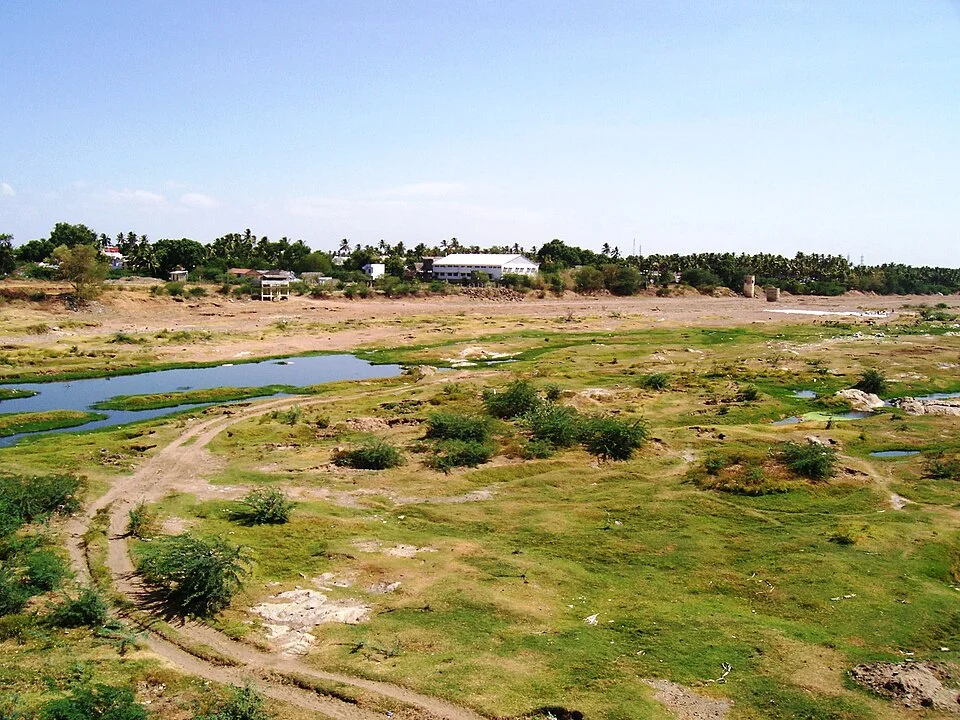
Official district geography includes Amaravathi and Cauvery within Karur's water setting. If considering a short Amaravathi look in the city, establish a permitted public approach and return connection before setting out. A photograph of a dry riverbed does not establish the same condition on the travel date. Water in another photograph does not give permission for entering it or promise a continuous walk along the bank. Evaluate the river according to current flow, ground and local directions. There is no need to stop unsuitably or add a distant dam into the same brief interval simply to obtain a water view. A small exterior look can fit between the temple and lunch if the actual transfer permits it; otherwise leave the river interest to another occasion. Water geography provides context for understanding the city and surroundings rather than a guarantee of access or a fixed visitor activity.

A working textile city: distinguish sales from production access
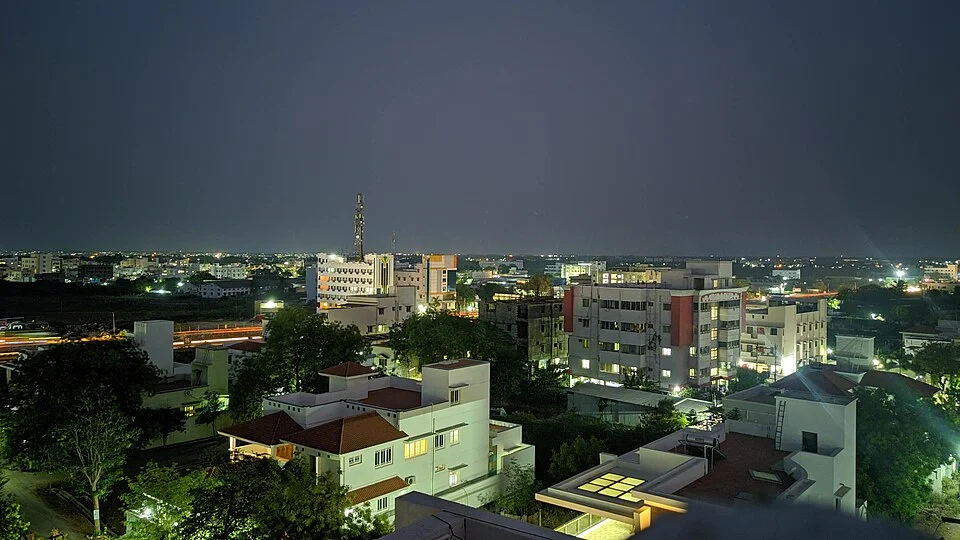
Official Karur information highlights economic interests including handlooms and textile production. If curious, establish what the shop, cooperative or workshop actually offers instead of treating a sales address as a factory tour. Discussing a product's material and use may be more accessible than photographing every production stage. Contemporary designs or demonstrations can involve separate permissions. The time of people working in production is not assumed to be a visitor performance. An evening city view also contains everyday places that are not sightseeing venues; it does not offer access to a private roof or building. Keep this as a short additional interest alongside the architectural and food day. Without an arranged workshop visit, a modest product look and a rest can be sufficient, without needing to turn the city's whole economy into a tour programme.

Keep the market photograph location separate from the plan
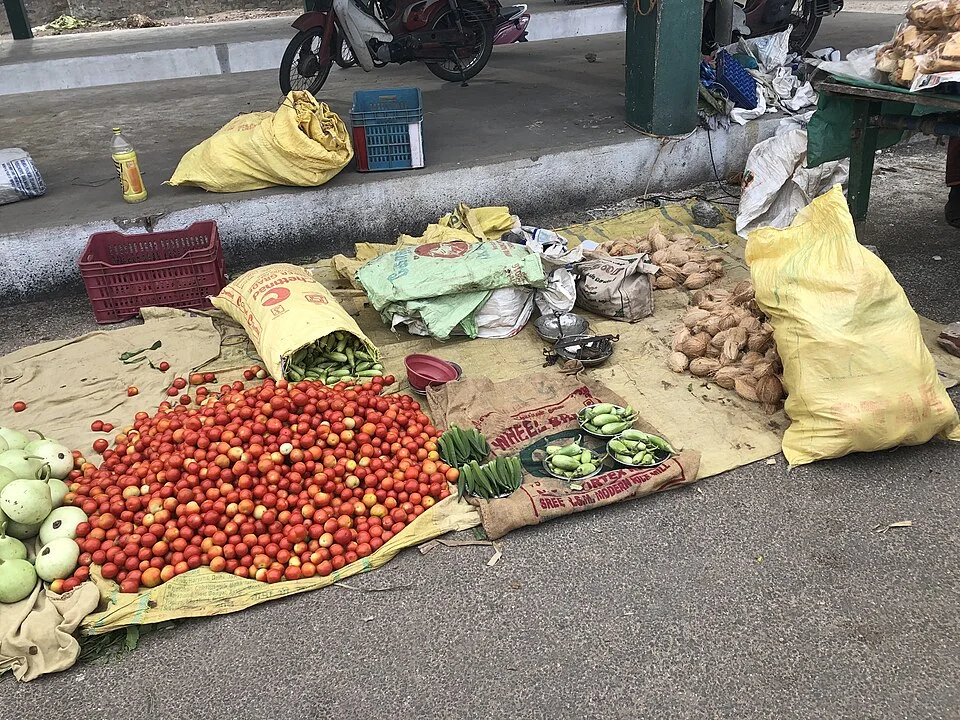
The open-air vegetable-market photograph shows a place in the wider Karur surroundings. It is not represented as a specifically named central-city market. Do not assume the same stall operates in the same place today merely because it appears in an older photograph. For a shopping interest, establish the actual location and activity in person and keep the look brief without interrupting work. Seeing produce does not make a complete market visit mandatory in this city day. The image supplies tangible context for regional food and everyday trade. When selecting lunch, connect that interest with an establishment that is actually open and accessible. A city production-and-trade interest does not require an exhaustive market list. A comfortable meal and a small local look after the temple can keep the one full day's different parts compatible rather than creating another long transfer.

A Kongunadu meal: arisi paruppu sadam and kambu dosa
Incredible India's official food guide places Karur within the Kongunadu culinary region. It identifies arisi paruppu sadam as a one-pot rice-and-lentil dish and kambu dosa as a millet dosa. If offered on a menu, arisi paruppu sadam for a main meal or kambu dosa at breakfast can provide a more concrete regional interest than an unspecified hot dish. Their inclusion does not claim the same preparation or serving time across every Karur establishment. Choose sambar, vegetables or another accompaniment according to what is actually being served that day. Establish portion and ingredient requirements directly and do not infer health benefits simply from the ingredient names. This meal pause can complement the architectural look by approaching the regional setting through taste. One selected main dish can give the stop a food focus without turning the remainder of the day into repeated orders.
Accommodation and a separate third-day departure
Assess an address for two nights against the actual rail or bus connection, the temple direction and nearby meal choices. A property using the city's name is not necessarily equally convenient for every central interest. Ask directly about early departure, late arrival or luggage storage if required. On the evening after the full day, recheck the onward ticket and actual meeting point. Day three is for breakfast, luggage and leaving; adding a distant district visit can reduce the protected allowance for the connection. Sources were checked on 5 October 2026, while current access and transport must be established for the travel date. The Stork's Karur suggestion combines historic temple architecture, the accessible context of a working textile city and a concrete Kongunadu meal within one modest city day. The plan provides time for different interests without claiming the complete district or unrestricted entry to places where people work and worship.