
Cottbus makes more sense when its city streets and Branitz landscape are treated as two separate parts of a day. The Tatil Merkezi Stork suggests using the morning for Spremberger Straße, Altmarkt and one cultural stop, then setting aside the afternoon for water, trees and changing views at Branitz. Reverse that order if the park is your main reason for coming. A meal and a planned connection belong between the two. This avoids treating a landscaped estate as the next doorway on a compact town walk. You can enjoy both without climbing every tower, entering every building or spending the whole visit trying to finish a list.
From Spremberger Straße to Altmarkt
Starting around Spremberger Turm gives the central walk a useful point of orientation. Follow Spremberger Straße towards Altmarkt and notice the relationship between shopping, pedestrian movement and older facades. On reaching the square, pause before selecting another landmark. Look at where a street opens into the space, how the sequence of frontages changes and where you could sit. Looking at one building from two distances may tell you more than a quick photograph followed by an immediate departure. Stand clear of the walking flow when taking that photograph, so the town remains comfortable for people using it for everyday purposes.
The commercial life along this route belongs to the visit too. Closed shops, an event on the square or work on a building are features of the day you actually encounter. An older image cannot guarantee that every shop sign or street arrangement survives unchanged. Keep one indoor option available instead of making an outdoor itinerary inflexible. If rain begins, you can change the focus without leaving the centre. With children, comparing the shape of a tower, a square and a side street can create a manageable small investigation without requiring a lengthy account of every construction date.

A tower climb is a decision, not an automatic stop
The Spremberger Turm operator describes 131 steps to a viewing platform 28 metres above ground. Consider that effort separately from a short street walk. For someone who does not want stairs, the exterior still works as an orientation point. If you choose to climb, consult the operator’s visiting information for your date and allow time to descend as well as time at the top. A current exhibition may give the visit an additional focus, but its presence and hours should be checked against the day of travel.
Continuing towards Oberkirche gives another opportunity to compare a prominent building with the streets around it. An exterior view, entering the church and attending worship are different activities; being able to walk past does not establish that every interior area is available for sightseeing. Use a pause here to decide whether a museum belongs in the central part of your day. Inserting every possible indoor stop before a substantial park walk can leave very little room for the slower section you originally hoped to enjoy.
Choose Wendisches Museum for a cultural thread
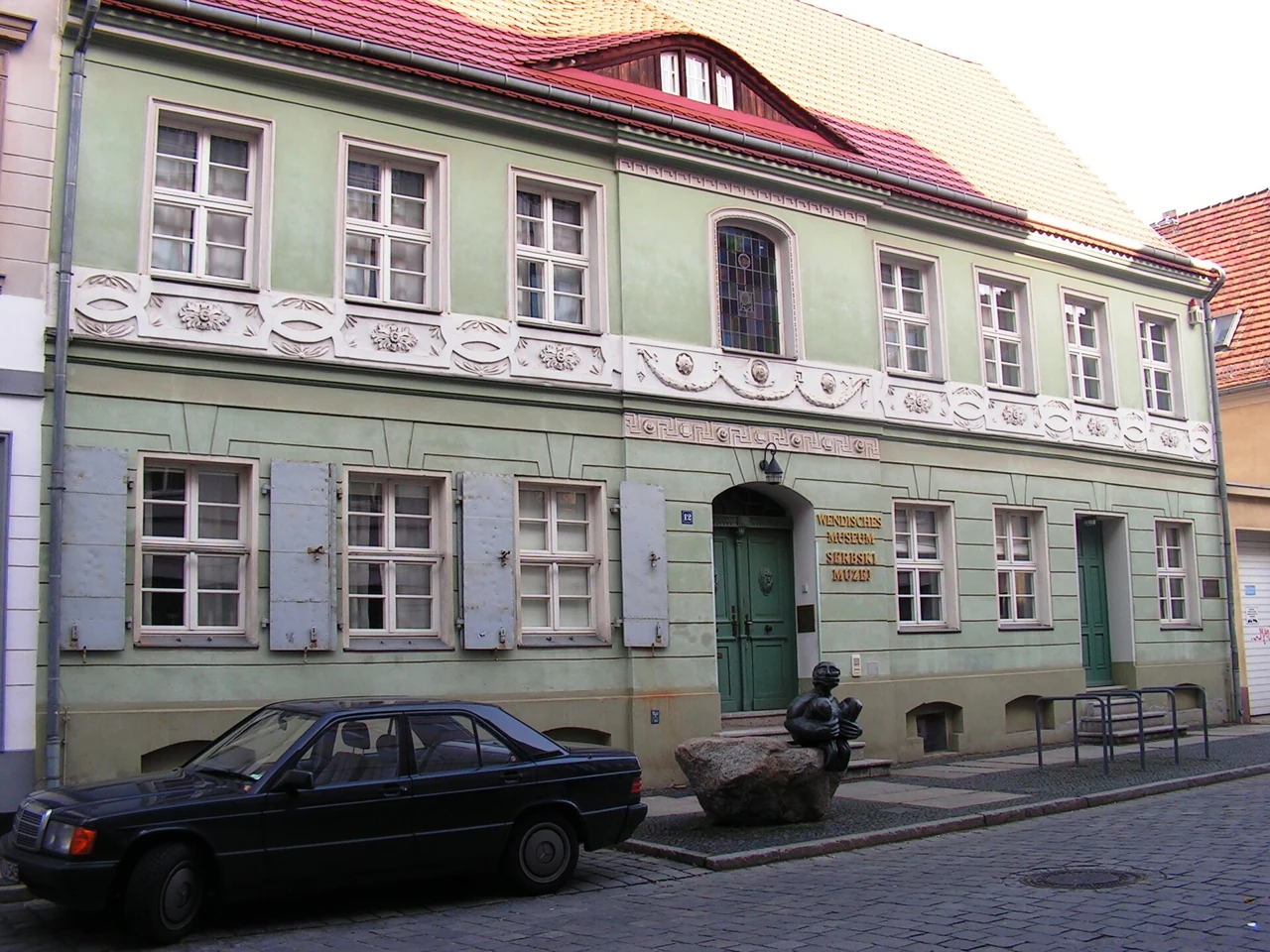
The municipal Wendisches Museum page places the museum among the city’s cultural attractions. Visitors interested in Sorbian/Wendish culture in Lower Lusatia can assign a deliberate museum block to the walk. Exploring a language, a household object or a particular story is more meaningful than claiming to understand a regional culture from a decorated frontage. You might connect the city name encountered outside with something learned inside. Check the institution’s current exhibition, admission arrangements and access information instead of using an exterior photograph as evidence that it is open.
Choosing a museum can mean simplifying Branitz to a principal walk and the palace surroundings. Choosing a more extensive park visit can mean leaving the centre at a meal and a shorter street route. There is no fixed number of attractions required to make either decision worthwhile. An overnight stay also allows the cultural and landscape sections to sit on different days. Reading carefully in a museum is easier when you are not constantly calculating how much of the afternoon remains for another long walk.
Give the Branitz landscape its own time
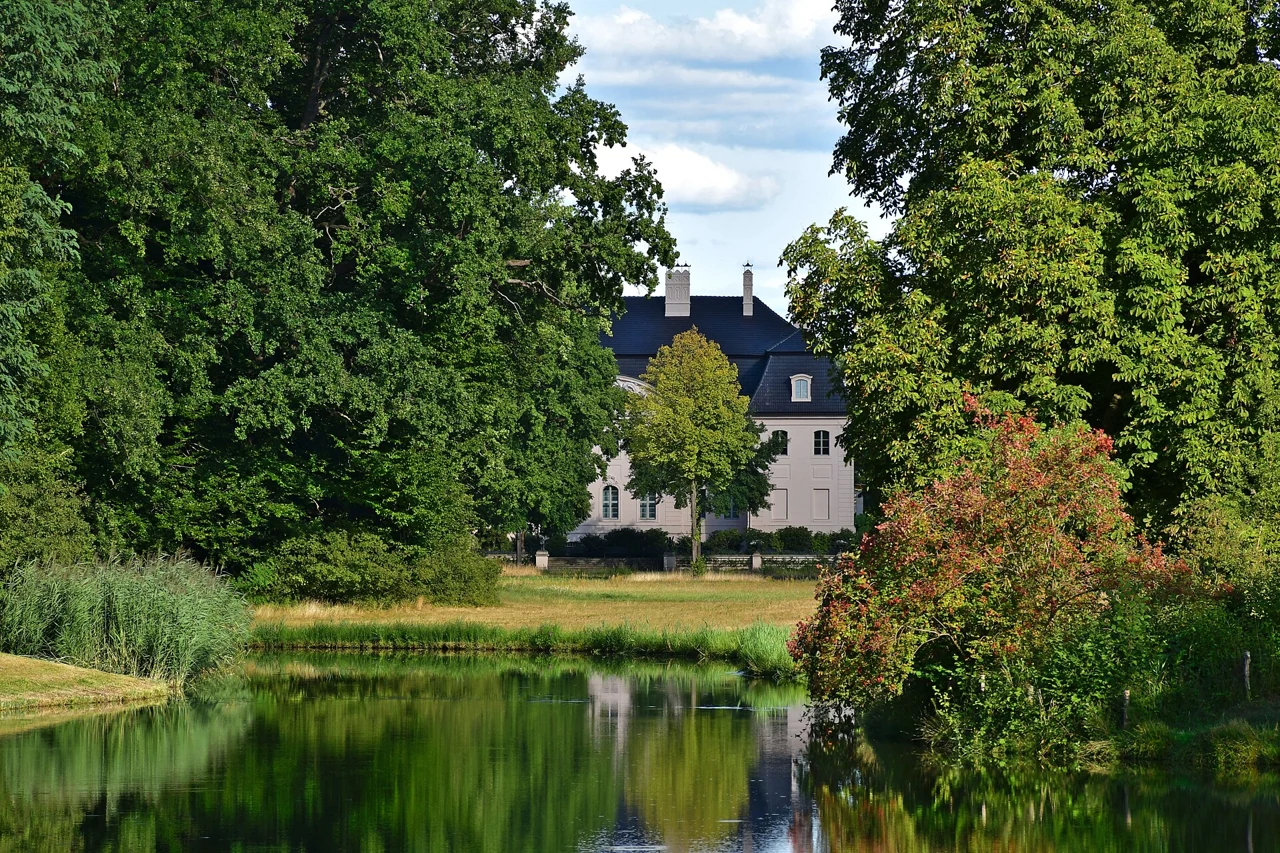
The city’s Branitz park account describes Pückler’s work between 1845 and 1871 and the reshaping of land through water, raised ground and hollows. At the park, avoid making a single palace photograph the entire purpose of arrival. Consider how the composition changes as you walk. A building seen through an opening may disappear behind trees; a stretch of water can introduce a different view across its far bank. Stopping and looking back can reveal this relationship without requiring the longest available route through the grounds.
The earth pyramids are distinctive features, and the pyramid in the lake contains Pückler’s grave. It should not be approached as an ordinary mound to climb for a better view. Follow the marked route and the current management of the park rather than trying to reach a closed area or an uninviting shoreline. The Stiftung Fürst-Pückler-Museum website brings together palace, exhibitions, park plans and visiting options. Walking outdoors and visiting the palace are separate decisions about hours and admission. If you want the interior, make its opening day and access arrangements part of the plan; an afternoon devoted to the landscape can also be sufficient in its own right.
The foundation’s arrival information recommends bus 10, the Pücklerlinie, from Hauptbahnhof to Branitz Schloss. Use a current departure to connect your two parts of Cottbus. Drivers are directed to the visitor parking area at Kastanienallee 29 and should include its current payment arrangements and the walk from parking. Cyclists should use the designated places for leaving bicycles around the park. Green areas looking close together on a map are not a reason to assume that every connection will be a short, comfortable walk. Establish the return connection before beginning the park section.

A main meal at Kartoffelkiste
Kartoffelkiste is an actual restaurant at Spremberger Straße 37. Its own menu lists Gnocchipfanne: potato gnocchi with cherry tomatoes and courgette in a tomato and basil sauce, finished with cheddar and mozzarella. This gives the day a specific main meal between walks instead of relying on coffee and cake. Because cheese is part of the dish, it is not presented here as vegan. Ask the restaurant about current ingredients and preparation if dietary needs affect your choice. Planning a meal before transferring to Branitz can make the landscape walk more comfortable than beginning hungry and hoping the first available snack will be enough.
Do not let a restaurant stop become a precise promise of a train connection. The time required to order, eat and settle the bill varies with the day. Decide whether the meal comes before the park or after returning to town, then place the connection around it. If travelling with others, agree on that arrangement before splitting up to explore different streets. A clear meeting place is more useful than several people independently deciding that they will eat somewhere near the tower.
A central hotel and the station
SORAT Hotel Cottbus, at Schloßkirchplatz 2, is a real option for staying in the centre. The operator describes different room categories and the main entrance in the pedestrian zone. Discuss luggage unloading and the access arrangements of the room you are booking rather than inferring them from a photograph. Sleeping centrally does not put Branitz directly beside the hotel, so the park still needs its own transport decision. Keeping luggage at an appropriate agreed location can make a second day of sightseeing less cumbersome.
The DB Cottbus Hbf page gives Vetschauer Straße 70 as the station address. Consult the actual departure, service changes and, where relevant, lift status. Leave space between the final park pause and the platform for the bus journey, collecting bags and finding your way. The point of this itinerary is to experience two kinds of place attentively: the compact street relationships of central Cottbus and the deliberately shaped open landscape at Branitz. A planned connection lets each retain its own pace.