Pudukkottai: city heritage and a separate Thirumayam day
Allow four calendar days and three nights for Pudukkottai: arrival on day one, the city on day two, a separate Thirumayam visit on day three, and departure on day four. The Tatilmerkezi Stork treats the city as more than a place to pass through on the way to a fort. Its courthouse setting, everyday trade around Raja Street and outlying rock architecture deserve different intervals. Thirumayam is not a small addition to the end of a central walk; it requires its own connection and return allowance. Staying in the same base reduces luggage moves. The aim is to understand the contrast between an urban heritage setting and an outlying monument, rather than claim to cover the entire district.
Arrival: connect the actual stop with the hotel entrance
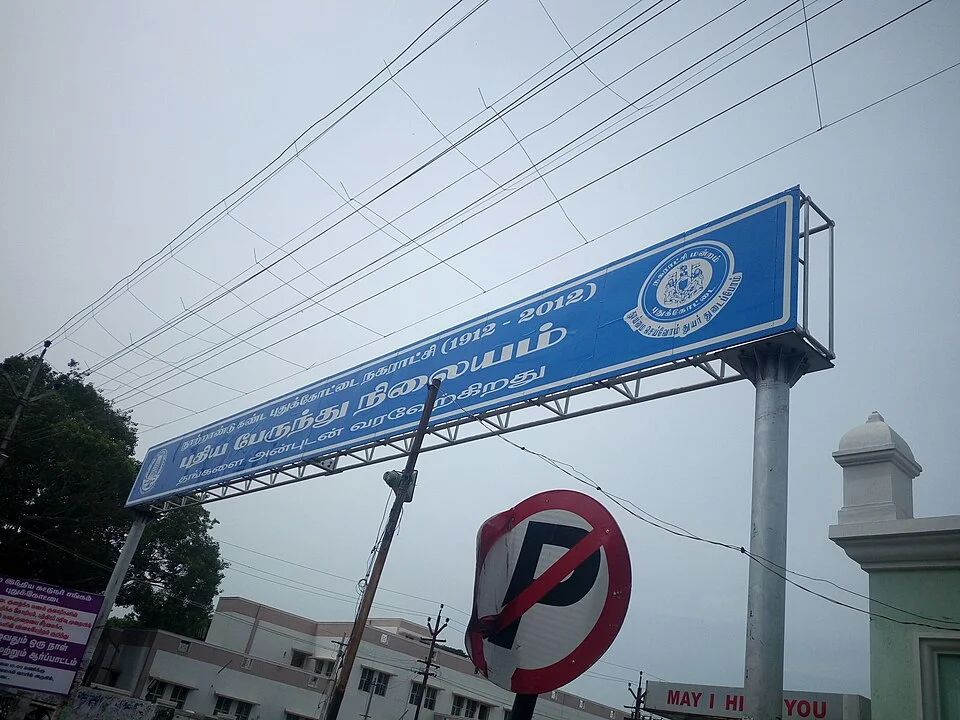
The district arrival page presents road and railway connections as ways of reaching Pudukkottai. Plan the final journey from the stop named on your ticket to the property's entrance, rather than using only a broad city label. A room in the terminal direction may suit an early bus; another central address may work better for the city day. Discuss reception arrangements for a late arrival and luggage storage for an early one. A nearby meal and short orientation walk are enough for the first evening. Keep Thirumayam separate instead of attempting it after arriving with bags. If flying into another regional centre, treat the onward road transfer as a distinct journey. Day one is for settling in, with complete sightseeing days still ahead.

City morning: courthouse architecture from outside
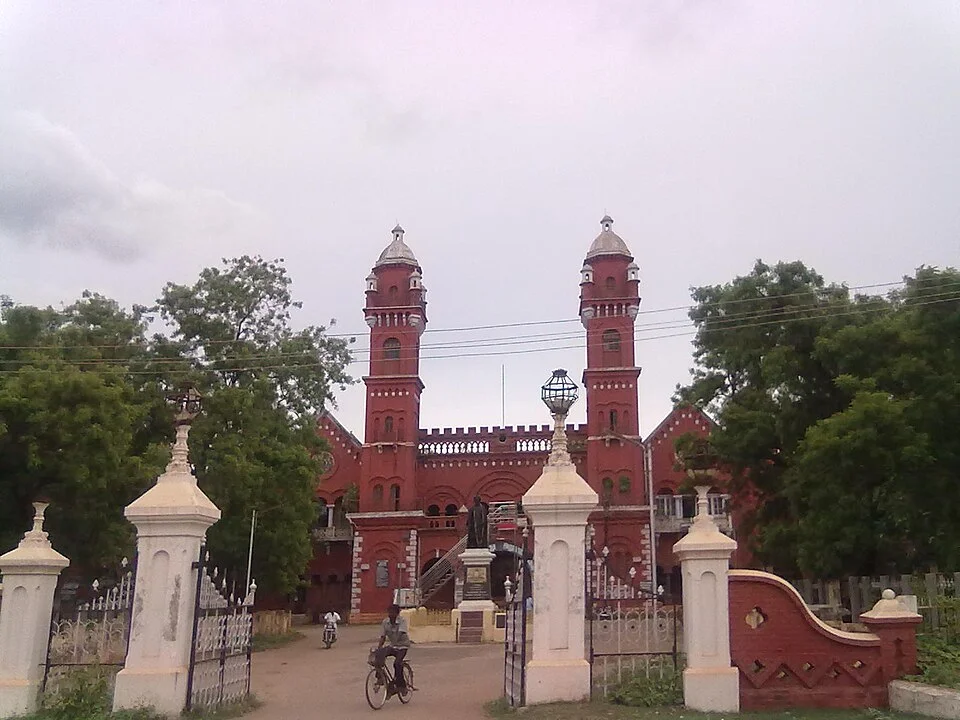
The district heritage account highlights Pudukkottai's courthouse and former administrative setting. Viewing the courthouse from a permitted public position provides a concrete start for noticing facade and entrance arrangements. A working institution is not assumed to allow casual exploration of rooms or staff areas. Choose a position that does not interrupt traffic or people entering. After observing colour, symmetry and the building's scale, select a modest continuation towards the centre. The official account of former palaces and present administrative uses helps explain a city whose history remains connected with everyday work. Keep the programme an exterior and street-scale interest, rather than an institutional interior tour. A short visit can leave a clear architectural impression without needing access to every courtyard or doorway.
Raja Street: a working shopping street
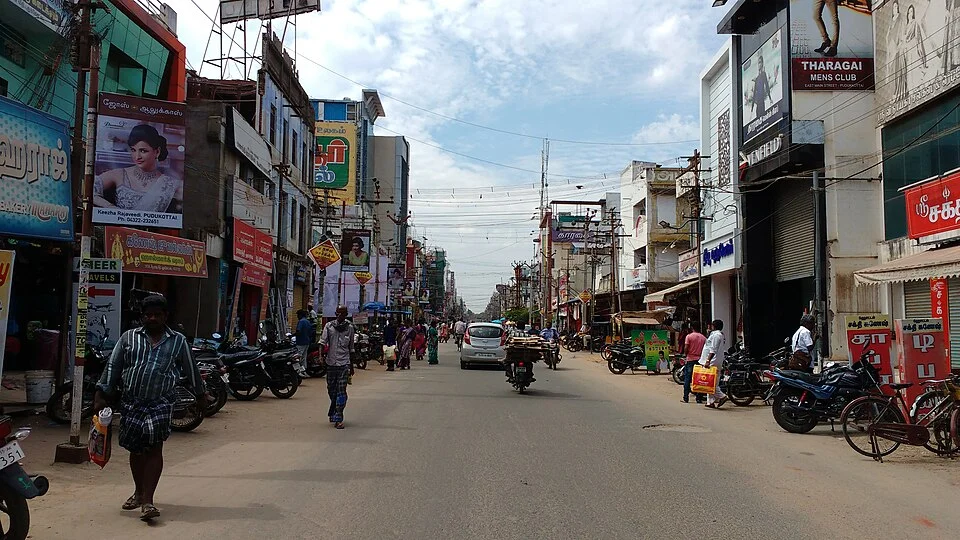
The second urban interest is the trading fabric of central streets such as East Raja Street. Shop entrances, motorcycles and everyday deliveries share the same environment. Approach it as a place where people work and shop rather than an enclosed historical set. Choose short walking segments according to shade and safe crossing opportunities, and ask before photographing workers. If buying something, a manageable small object may be more useful than a lengthy souvenir list. Returning to the room for a lunchtime rest does not diminish the city day. Observing facades, signs and movement preserves the scale of the visit instead of creating a rushed district excursion. The accompanying street photograph dates from 2017 and is not a current directory of shops or opening businesses.

Meals: a Tamil Nadu breakfast rhythm
The national tourism ministry's Tamil Nadu food account discusses breakfast choices including idli and dosa, with accompaniments such as sambar and chutney. A preparation actually appearing on a Pudukkottai menu gives the heritage morning a tangible food interest. These dishes belong to a regional Tamil Nadu context and are not presented as recipes exclusive to this city. Establish the accompaniments and portion with the kitchen. Leave an unhurried interval for lunch in the centre rather than eating between a succession of transfers. Three nights need not mean identical breakfasts: idli one morning and an available dosa another can give small variety. No particular restaurant is promised to be open, no dish is guaranteed at every hour, and no current price is invented.
Day three: a separate Thirumayam connection
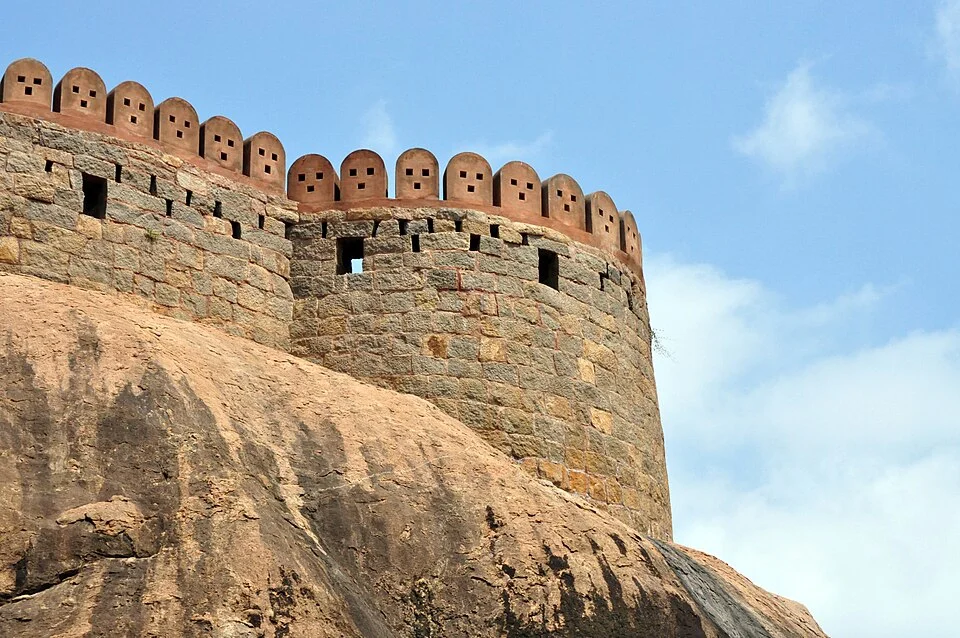
The official district page places Thirumayam Fort approximately 18 kilometres from Pudukkottai. That proximity does not make it part of a central walking circuit. Establish the departure stop, final approach and return connection together for day three. Bus travellers should identify the actual Thirumayam stop; those using another vehicle should agree a return meeting arrangement. Current entry information for the travel date is more useful than treating an old timetable as a fixed appointment. Reserve the morning for the main visit and allow space for lunch and returning. There is no obligation to add every surrounding temple. The purpose is to understand an outlying rock structure in its own environment. Continuing to another district centre would require a separate journey plan.
Thirumayam: rock walls and the foothill setting
The district identifies the fort's ASI-managed heritage context and its relationship with rock-cut Siva and Vishnu structures around the foothill. Begin by learning the permitted route, then notice how walls follow the rock's form. Instead of approaching the site only as an elevated viewpoint, consider stone surfaces, the defensive perimeter and the settlement direction. Establish access and worship arrangements for other structures separately: fort admission does not automatically allow unrestricted entry elsewhere. If steps or gradients are unsuitable, exterior views and a modest foothill visit can remain worthwhile. Water, sun protection and a protected return interval support a comfortable day. Finding unofficial passages or recreating every position in an older photograph is not a required part of the visit.

Three nights and departure on day four
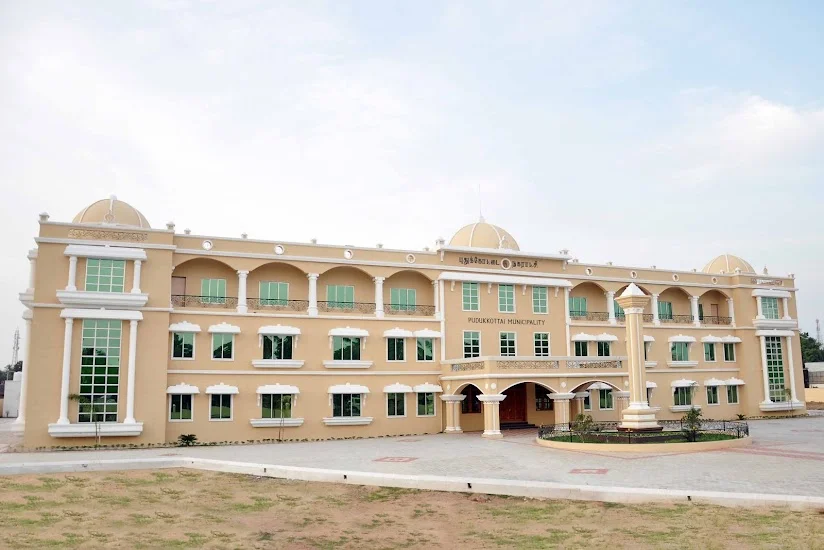
Evaluate accommodation against both complete days: access to the centre for the city programme, the real departure point for Thirumayam, and the onward stop for the final morning. Consider night traffic noise, reception access and nearby meals. Municipal facades may supply an exterior interest without being presented as museum interiors. Day four is reserved for breakfast, luggage and reaching the booked onward service; both complete sightseeing days have already taken place. Transport and entry arrangements can change after the source check of 5 October 2026 and should be matched with the actual travel date. Pudukkottai streets and Thirumayam rock architecture have complementary roles. Four calendar days, three nights and two complete days remain clearly distinguished, leaving room for onward travel.