Whangārei brings river, marina and woodland settings close together on the map, but they do not all need to become one short walk. The Tatilmerkezi Stork suggests one night and two calendar days: spend the arrival day finding your bearings around Town Basin, following the smaller Hātea Loop and enjoying a real meal; use the second day for a separately planned visit to Mair Park, A. H. Reed Park or Whangārei Falls. This is an urban break rather than a driving itinerary covering all of Northland. The central waterfront and the greener northern river corridor serve different purposes. Choosing one main city walk and one independent outing makes the programme easier to understand. For an overnight stay, luggage collection matters as much as the view from the room. Begin by marking Town Basin, the accommodation address and the return point for the second day's outing separately.
Town Basin: a small arrival-day city loop
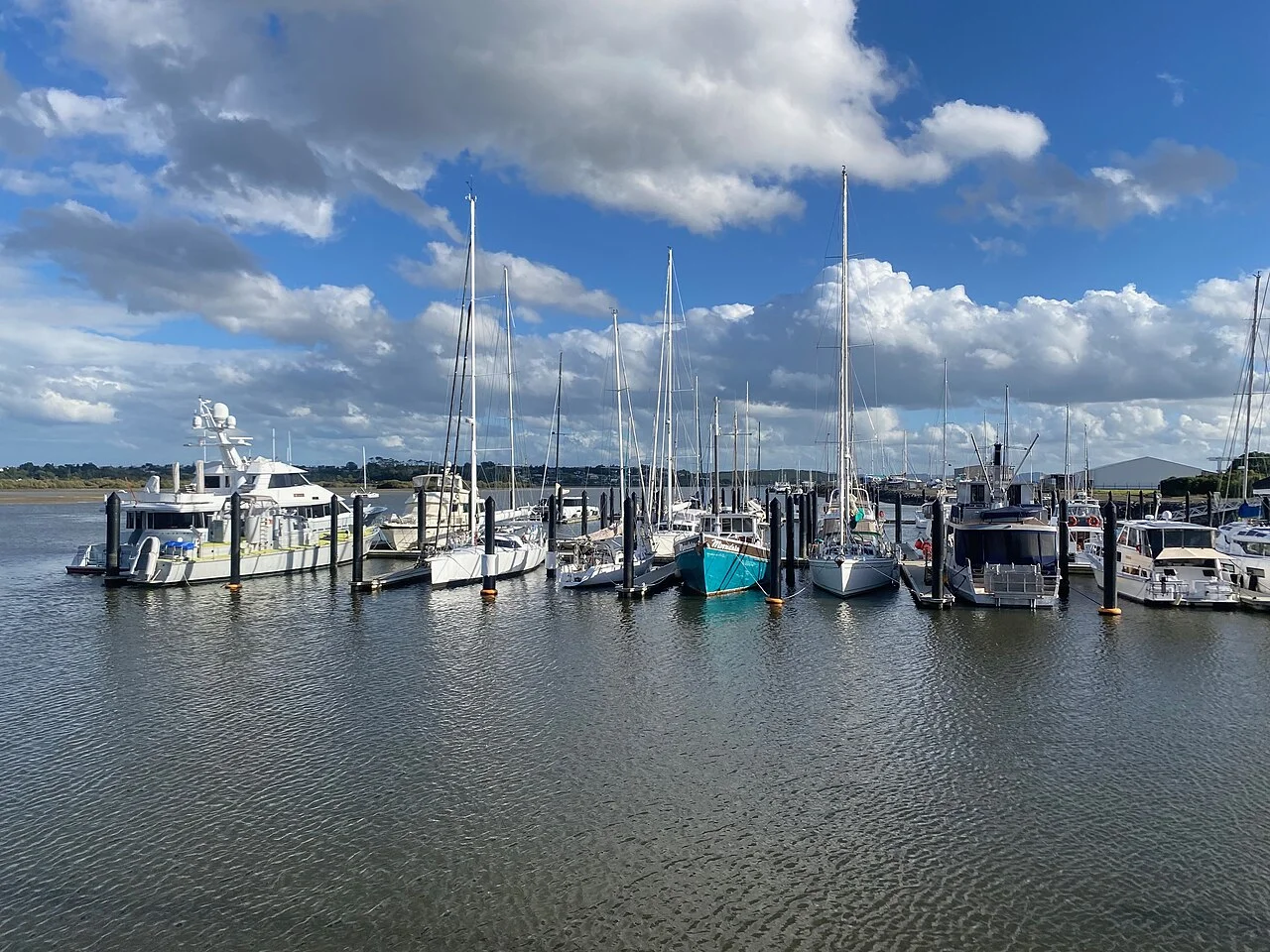
Town Basin's boats and river edge provide a useful introduction to the city's scale. A visit does not have to depend on joining a boat trip: walking through the public surroundings, pausing beside the water and having lunch can form a complete afternoon. Checking into the accommodation and leaving luggage first takes some pressure off the walk. Think of coffee, a river viewpoint and a meal as three small sections rather than a long checklist. Visitors interested in the cultural buildings nearby can arrange those visits separately. A wide waterfront photograph is not evidence that an exhibition is currently open, and the rights covering contemporary artworks or collections are distinct from the licence for a documentary river scene. The photographs used here stay with the river, parks, walkway and functional port surroundings. They support orientation without promising access to private boats or cultural interiors.
Hātea Loop: understand the river crossings
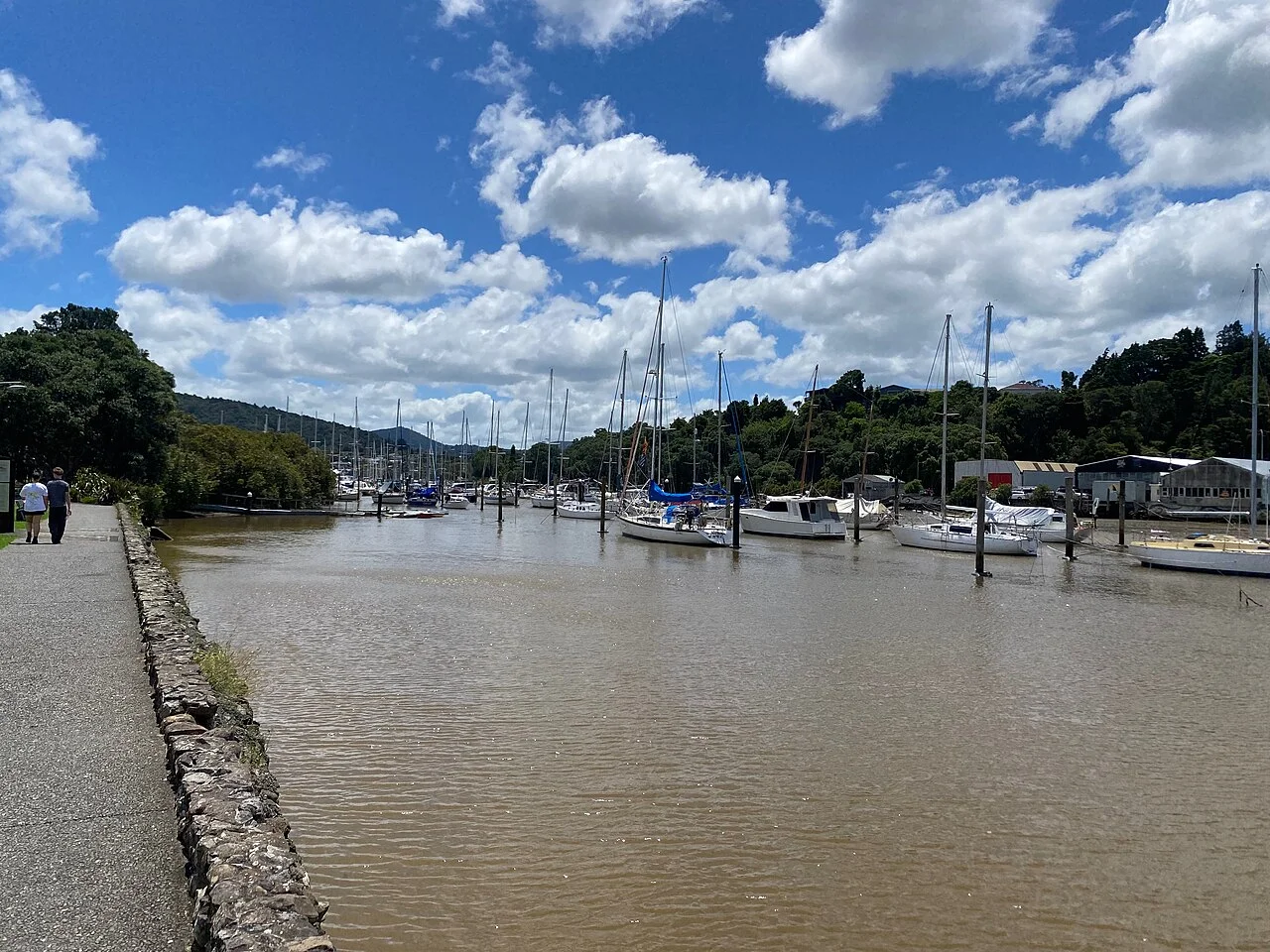
The council's walking resources distinguish the smaller Hātea Loop from the longer Hātea River Walkway. Choosing the city loop for the first afternoon avoids accidentally committing to the wider route towards the falls. Bridges connect the two banks; when looking across the water, also work out which crossing or bank you want to use for the return. Kōtuitui Whitinga is a pedestrian and cycle link that can open for boat traffic. The council's bridge page explains a scheduled daily opening and conditions affecting operation in strong winds. This guide does not turn that description into a guarantee of uninterrupted passage on every travel date. Returning along the same bank after a shorter section is another reasonable option. The January 2026 river photograph records a particular scene rather than today's weather or the condition of every path. The main experience is becoming familiar with the relationship between waterfront, boats and streets.
Mokaba: choose an actual Town Basin meal
Mokaba Cafe's own website gives its address as 6 Quayside, Town Basin. The sample menu observed on 5 October 2026 separates brunch from 8am and lunch from 11.30am. Artisan toast or eggs on ciabatta can suit a smaller morning pause, while the homemade kumara and feta fritters create a more substantial meal. Kumara is sweet potato. The listed fritter plate also includes egg, bacon, tomato, avocado and hollandaise, so its name alone should not be read as a vegetarian label. A separately named vegetarian breakfast uses potato rosti, portobello mushroom, tomato, capsicum, spinach, feta and beetroot relish. Concrete lunch choices on the same menu include seafood chowder, roast pumpkin salad and New Zealand lamb skewers served with a warm kumara and feta salad. These are observed dishes from this operator, not foods guaranteed at every cafe in town. The venue explicitly describes the menu as a sample and says products and prices can change. Keep the specific meal ideas without presenting today's prices as fixed future costs. A morning walk followed by lunch leaves more flexibility than fitting a long river trek between two meal deadlines.
Mair Park: a greener second-day focus
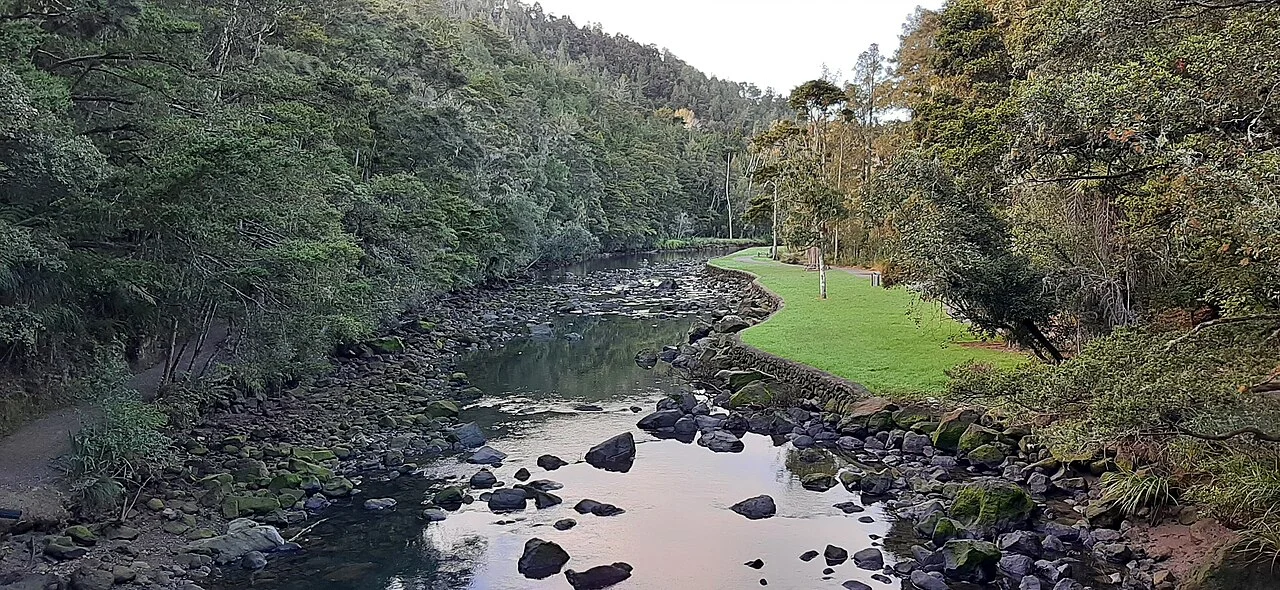
Mair Park offers a river-and-tree setting different from the central marina. The source photograph was taken in April 2022 and shows water, banks and park greenery in a broad scene. Selecting this area alone for the second morning avoids making a lengthy woodland walk compulsory for a short city stay. The council's Hātea River Walkway description presents a wider network connecting Town Basin, Mair Park, the A. H. Reed area and the falls. The whole network and a short visit inside a particular park are different commitments. Arrange the outward and return journeys from the accommodation rather than assuming every point can be reached within the same small city loop. Leave room for luggage collection and departure instead of planning a long stop everywhere. Returning to Town Basin for lunch can be particularly convenient after an overnight visit: you already understand the streets and meal location from the arrival day.

A. H. Reed Park: keep the woodland pause separate
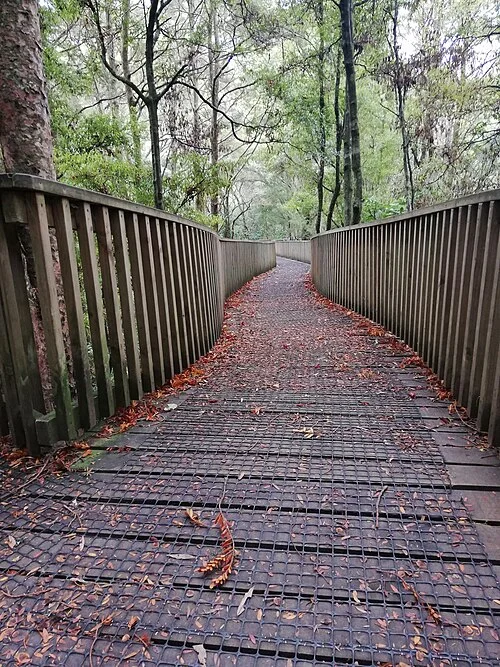
The wooden-railed walkway and trees in the A. H. Reed Park photograph illustrate a different experience from the marina edge. The April 2020 image is not a report on present path maintenance. If this is your second day's main focus, reduce the expectation of also completing the falls, another park and the entire riverside network that morning. A smaller woodland outing gives room to slow down and notice light between the trees. Establishing a return connection makes the plan more flexible if weather or access changes. A park name on a council route does not establish that every section is step-free or equally easy for every visitor. Someone wanting less walking can combine the central loop with one park. A visitor interested in a longer river route can treat that network as a separate day's activity rather than hide it inside a hurried departure morning.

Whangārei Falls: a viewpoint and a return journey
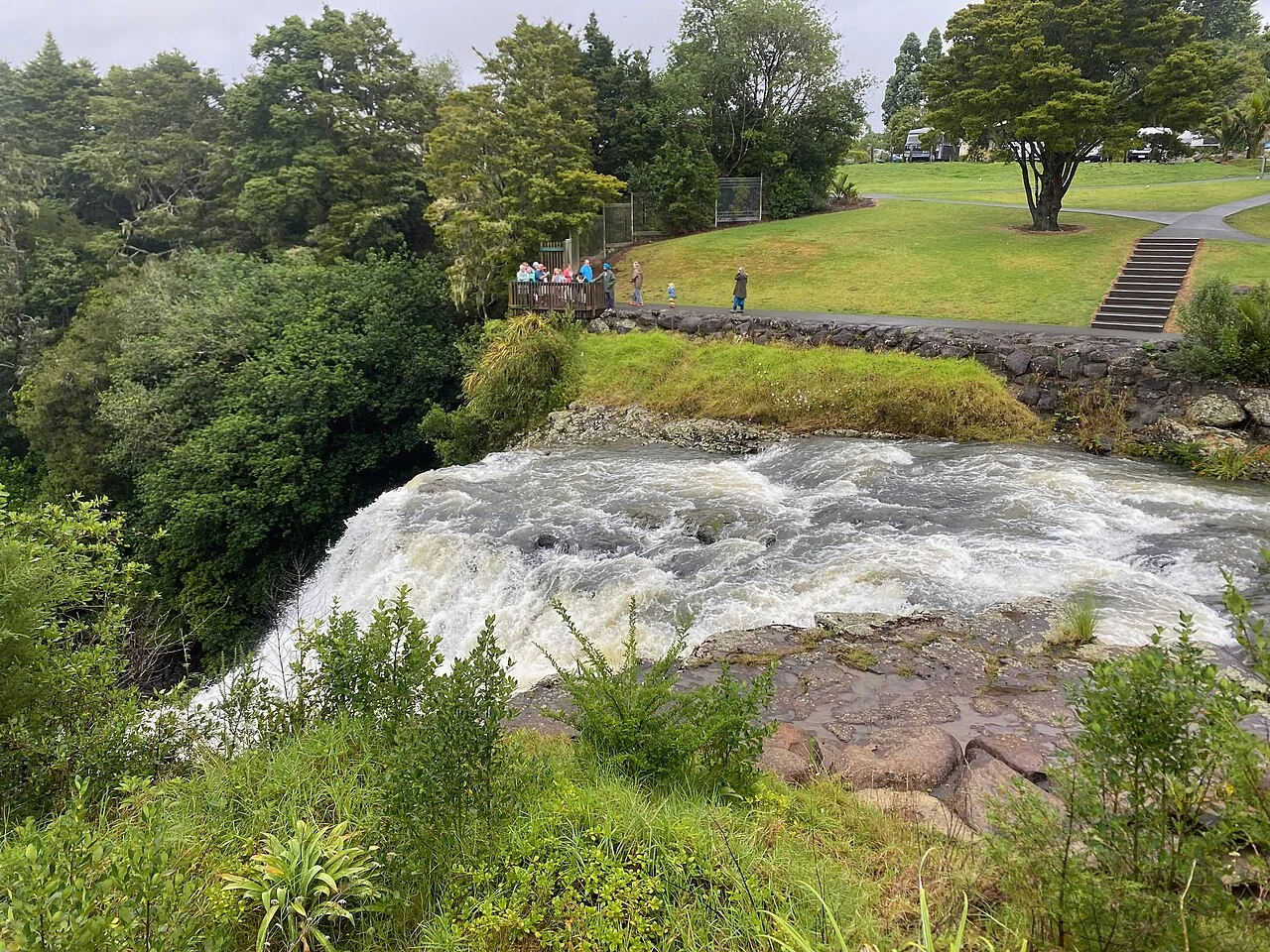
A separately arranged return outing to the falls can be easier to combine with a city break than tying lunch to walking the whole river corridor. The January 2026 photograph here shows the upper watercourse and green surroundings at Whangārei Falls. It is neither swimming permission nor a water-safety assessment. Treat the visit as a viewing pause rather than make a water activity compulsory. If the falls are the second morning's choice, Mair Park and A. H. Reed Park do not need to become obligatory intermediate stops. Leave a separate allowance for lunch, luggage and onward travel. If weather or transport changes, returning to the central river loop is a valid alternative; seeing the same waterfront in different light can add another dimension to the stay. The Stork's suggestion is deliberately limited: find your city bearings, enjoy a meal without rushing and then choose one green setting.

Rooms and transport: distinguish the two port settings
A room near Town Basin can support the first day's walk and meal connection. Accommodation elsewhere may require a different journey, and the word marina in a description does not establish that it is beside the same central waterfront. The Port Whangārei photograph is a separate January 2026 port scene, not a view outside Mokaba Cafe. Keeping these places distinct makes an accommodation decision more accurate. If arriving by a regional bus or another onward connection, use the current operator information for the actual travel date rather than assume a daily frequency or an invented taxi fare. An overnight programme works best when the room, meal and main walk are considered together. Then reserve the second morning for one park or falls outing, with a clear return to the city. That structure allows Whangārei's urban waterfront and greener river corridor to retain their own character.