
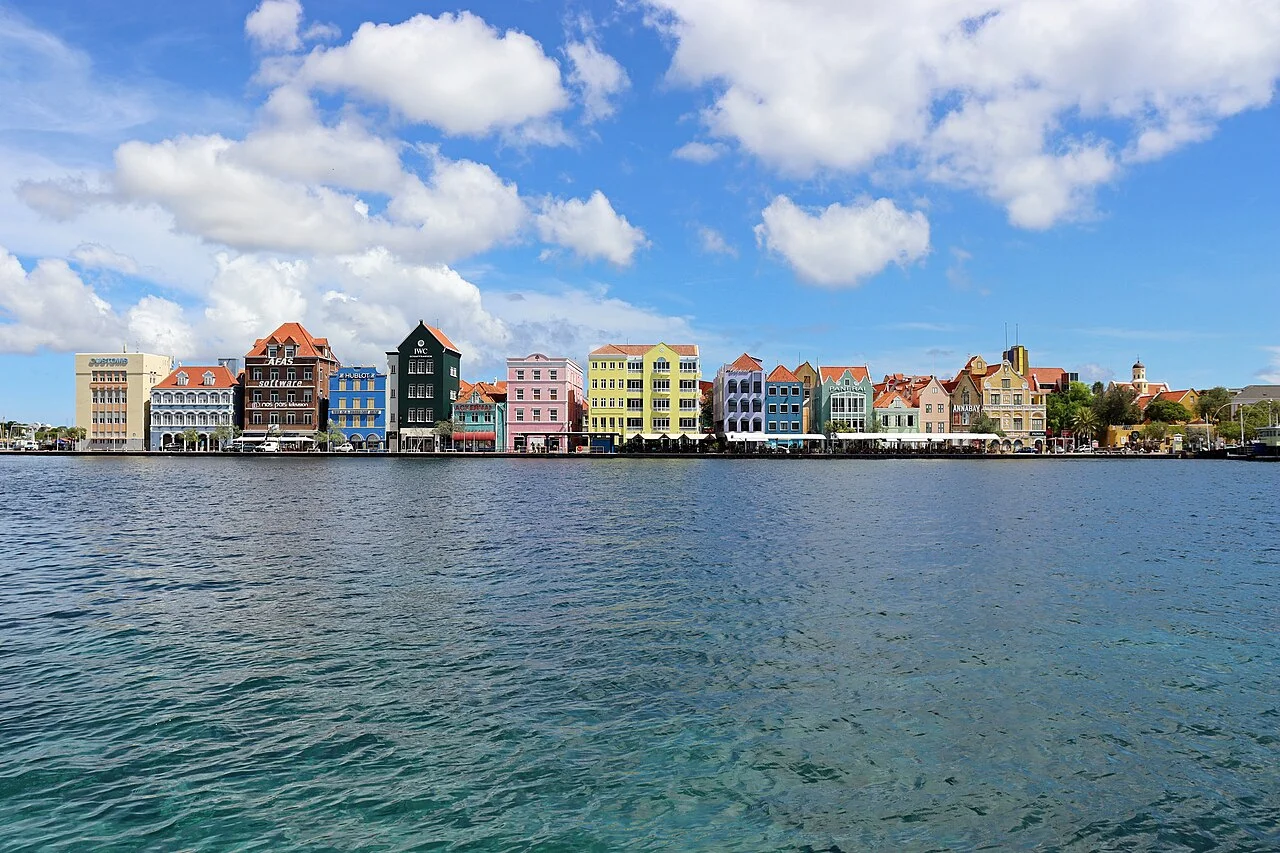
Tatilmerkezi's Stork begins Willemstad with a modest question: do you want a collection of colourful façades, or a city day lived between different neighbourhoods? This guide takes the second approach. It proposes two days and two nights, with departure on the third morning. It is not an island circuit, a western beach checklist or a Curaçao country guide squeezed into the capital. Punda, Otrobanda and Pietermaai provide the backbone. With one day available, choose the first-day plan rather than compressing both. The pleasures here can be small: looking across the harbour, eating lunch without rushing and returning along a street when its light has changed.
Day one: Punda and the Queen Emma Bridge
Begin on the Punda side and read Handelskade as a waterfront rather than a single photo stop. Water, trade and the streets behind the buildings are the useful relationships to notice. Then turn inland for a shaded coffee break. The official tourism page describes Punda as a pedestrian district; that does not promise continuous, vehicle-free pavements throughout the city. A family carrying bags may get more from a compact loop than from a long walk in the heat. Save the name of a corner you can return to after browsing a shop. Two or three clear landmarks are often easier to use than studying a phone map at every junction.
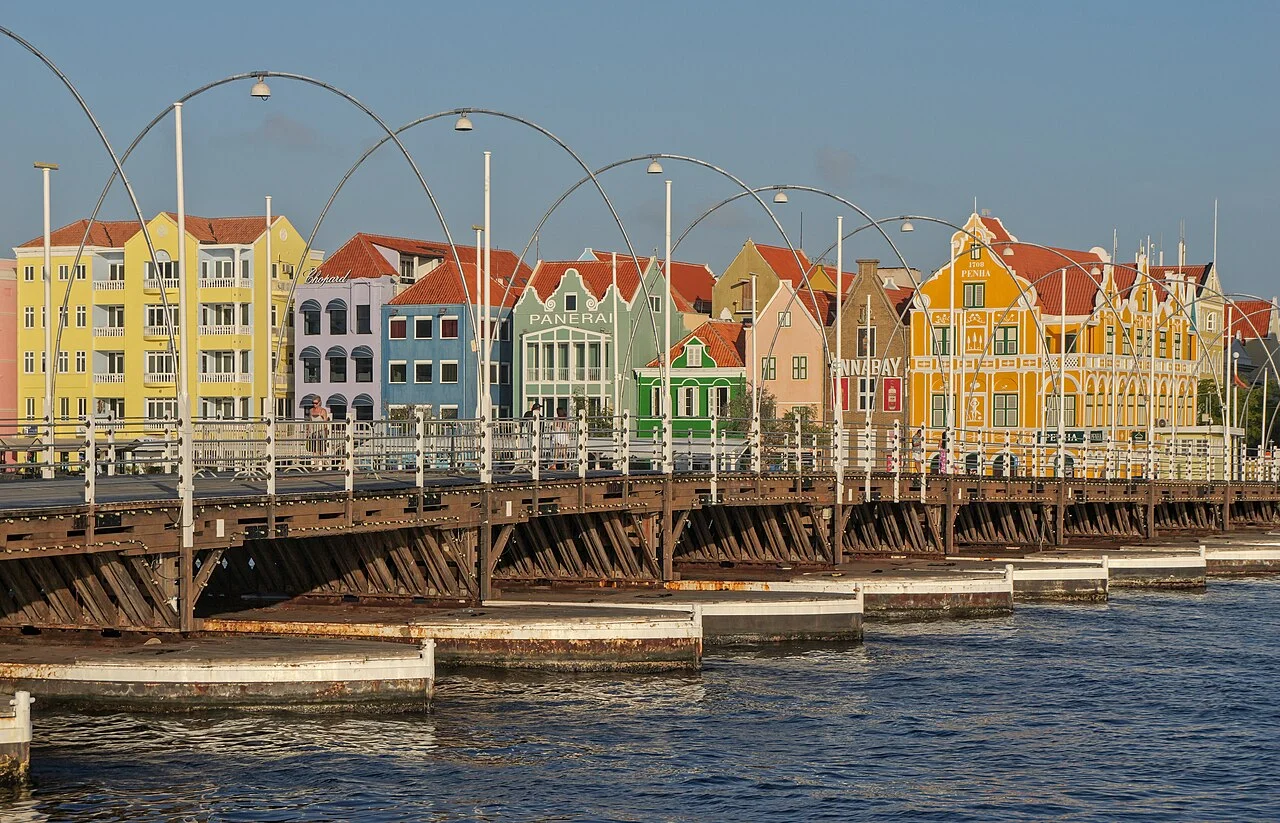

Queen Emma is the pontoon bridge linking Punda and Otrobanda. Its ability to open for harbour traffic matters to an ordinary city itinerary: do not make a crossing the tightly timed link before an appointment. Cross before or after lunch according to the situation you find. If the route is closed, do not search for a shortcut along the opening. Follow local directions for an available connection and adjust your day. The bridge photograph explains movement within the city, rather than promising an attraction ticket. Likewise, not every waterfront building is a museum you can enter. Willemstad remains a functioning port with activity that has priorities beyond a visitor's schedule.
Lunch: make a meal around Plasa Bieu
Give the first day's main meal to the area around Plasa Bieu, the Old Market in Punda. The tourist board's food itinerary introduces stobá and giambo there. Stobá is a stew, with goat given as a common example in that source; giambo is an okra-based soup option. Choose from the menu you actually find rather than expecting both on every counter. A main dish, a starchy accompaniment, vegetables and a drink can make a more coherent lunch than collecting several unrelated snacks. Travellers who prefer a lighter midday meal can leave space for dinner. Eating together need not mean ordering identical plates.
Batido supplies a concrete name for a fruit-drink break, while pastechi is a filled pastry that can anchor a short breakfast. These are useful as parts of an eating rhythm: pastry in the morning, a warm lunch and a drink break later, rather than simply a list of photogenic items. For four people with different appetites, agree on one shared meal point and let the other breaks remain flexible. This guide offers no fixed menu, price or opening-hour guarantee. Its purpose is to help structure the day. The dishes described by official sources provide culinary context; they are not an inventory of what a particular stall sells on your visit.
Otrobanda and Rif Fort: understand the setting first
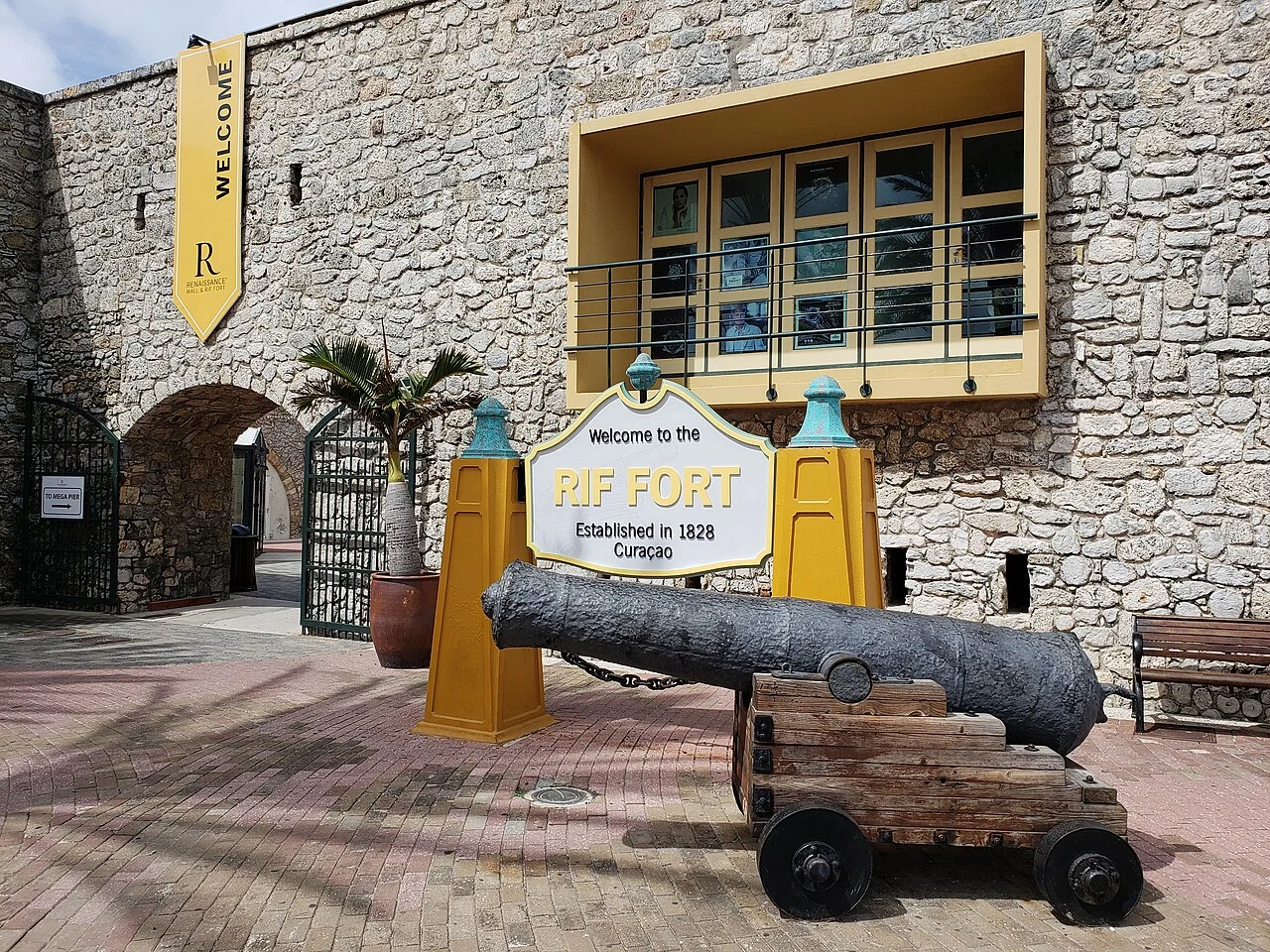
After crossing, make a short street loop in Otrobanda. On a first visit, understanding the harbour connection, historic fabric and return direction is more useful than completing every lane. The Rif Fort area can form part of that loop. Separate the older defensive structure from its present commercial uses when you look around. The wall and cannon in the photograph provide historical context, not evidence of a business's current admission arrangements or offers. When choosing a seated break, consider shade, steps and facilities as well as a view. If shopping bags would complicate the next neighbourhood walk, move the shopping to the end of the day.

Otrobanda's contemporary murals could be the focus of a separate art visit. This image package uses historic streets and waterfront context rather than close photographs of those artworks. Seeing a mural in a public street does not automatically establish unlimited rights to reproduce it commercially. During your own walk, keep doorways and passageways clear instead of turning residents' entrances into prolonged posing spots. For a family, the bridge crossing and one neighbourhood loop may already make a satisfying first day. Returning to the accommodation for a quiet evening is a complete choice, not an unfinished itinerary. Nightlife is optional.
Day two: a smaller walk in Pietermaai
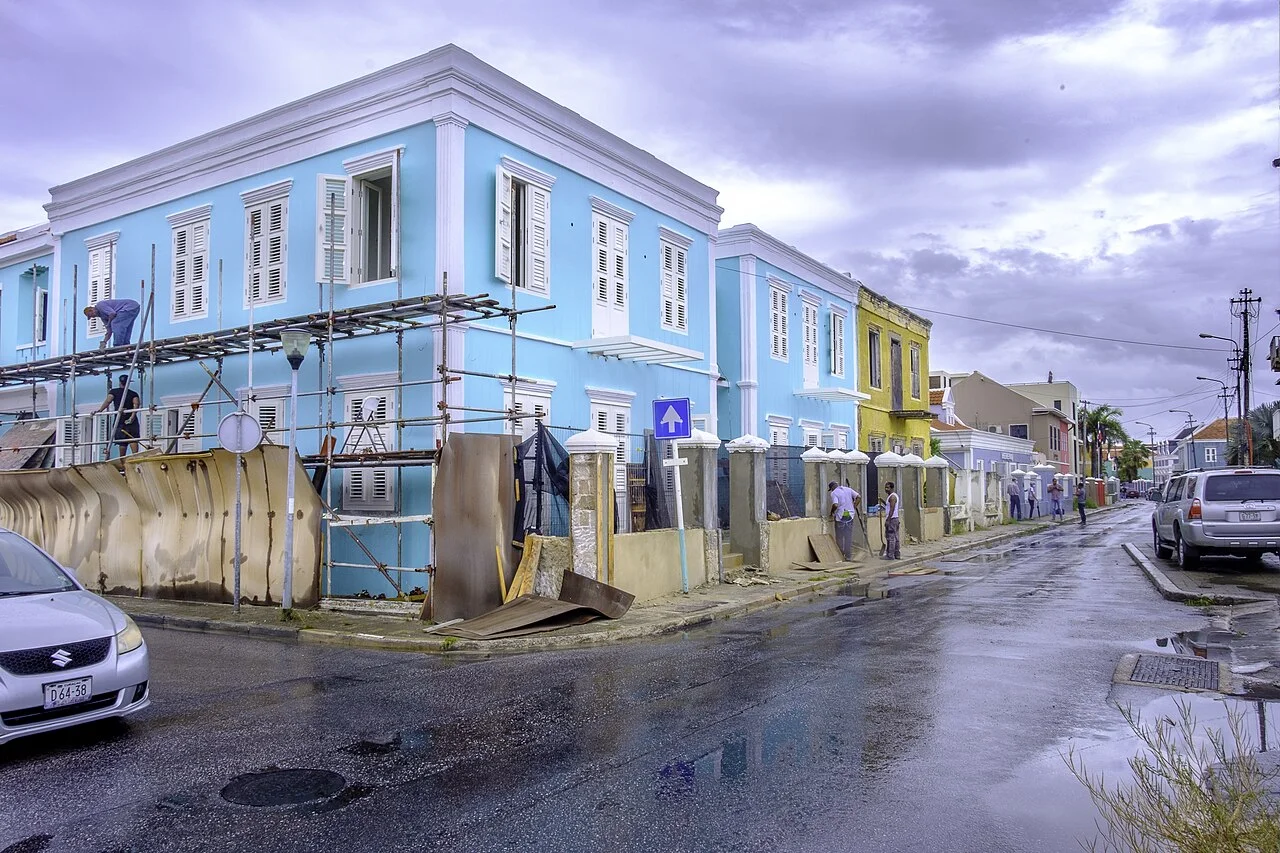
Give the second day to Pietermaai. The purpose is to notice its street scale and choose an evening meal area, rather than repeat the first day's harbour panoramas. Use the morning or a more comfortable part of the day for a few blocks and a break. The junction of Theaterstraat and Pietermaai illustrates another historic streetscape within the city. Its 2020 photograph records that moment; it does not verify the building's current repairs or an operating business. If you encounter works, choose an open and permitted connection. A photograph is not a reason to extend your route onto closed property or force an awkward crossing.

The official tourist board also presents Pietermaai as an evening dining area. Choosing a table during the second day's lunch break is usually easier than wandering when everyone is tired. If one traveller wants a quiet meal and another prefers a livelier evening, eat together first and make separate decisions afterwards. Having chosen stobá on the first day, you might choose another main dish or a lighter meal on the second. Recording local dish names can make menus easier to approach. Avoid treating any recipe as unchanging or exclusive to one neighbourhood. Curaçao's table is shaped by different cooks, businesses and preferences, which leaves room for discovery.
Waaigat, transport and a place to stay
Use De Ruyterkade and the Waaigat surroundings to understand transport directions, rather than as a third lengthy itinerary. The pictured urban waterfront is not an invitation to enter the water. The tourist board's transport explanation distinguishes smaller buses and larger buses operating from the Punda Waaigat and Otrobanda terminal areas. Choose a departure area in relation to the neighbourhood you want to reach. That describes the network's structure; it is not a current timetable. With luggage on arrival, going to the accommodation first can be practical. On a light-bag city day, short walking loops may work better. A rental car need not turn the historic-centre visit into a parking search.
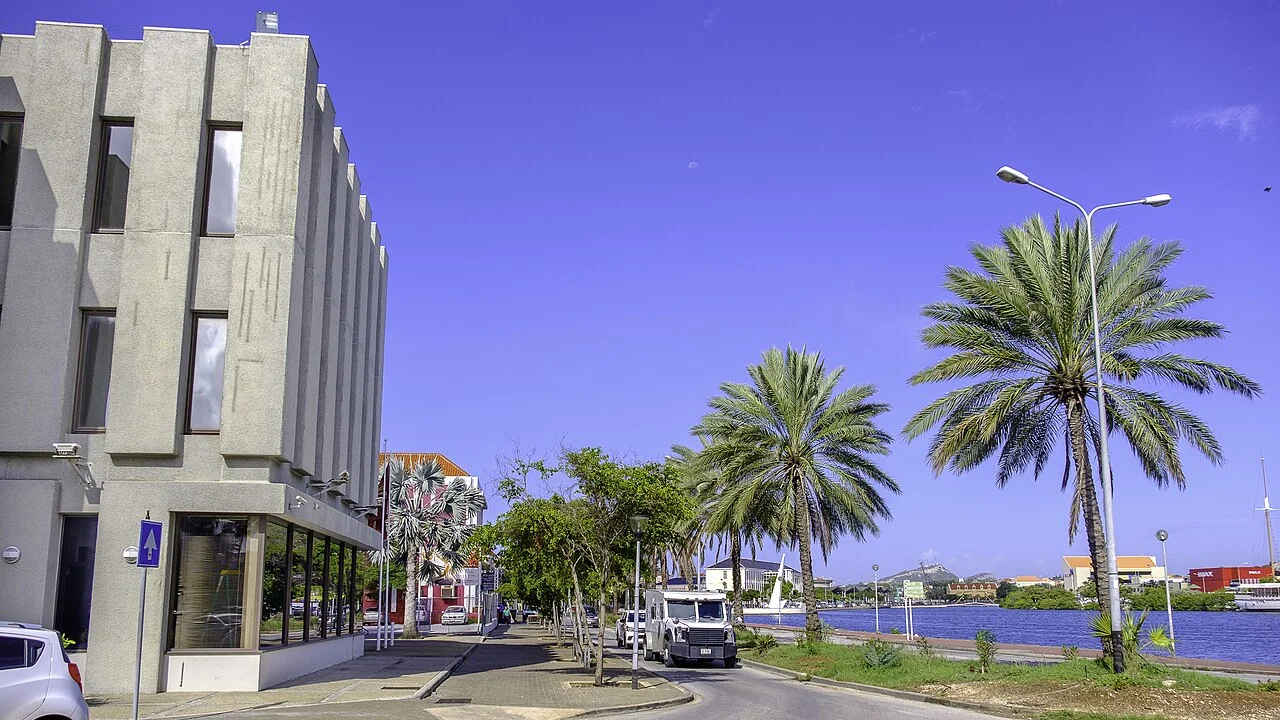

Punda can suit the first day's loop, Otrobanda the bridge connection, and Pietermaai the second day and dinner choices. These location characteristics cannot guarantee every property's quietness, accessibility or security. A street-facing room, the presence of steps and the evening return arrangement are specific accommodation questions. Reserve the third morning of this two-night plan for luggage and the airport, rather than fitting in a final island beach. The Stork's suggestion here is to leave space for the memory of a bridge crossing, a local lunch and a few streets walked attentively. Sources were checked on 4 October 2026; photograph capture dates remain separately recorded in their captions.