
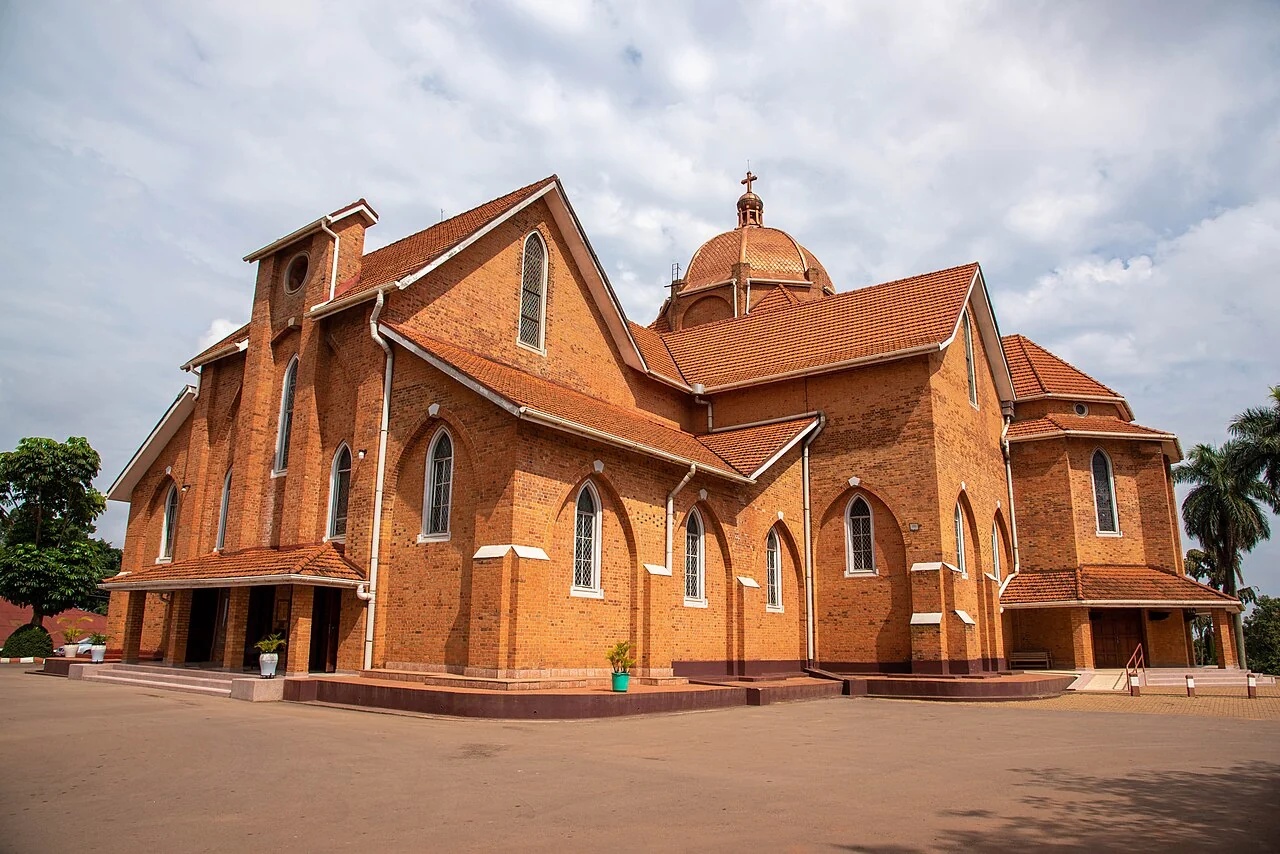
The Tatilmerkezi Stork builds two full Kampala days around a hill, a city market and actual local meals. This is not a shortened safari or lake circuit. It is for readers staying in the capital and exploring two urban areas from the same room. Reserve one day for history and a place of worship around Namirembe, and another for the market and meals around Nakasero. Rather than joining every point on Kampala's map into one walk, select the start and return of each day. A busy market and a quieter hill need not be visited at the same pace. Giving a morning to one place can help prevent traffic becoming the strongest memory of the visit.
Three nights with two complete city days
On arrival evening, settle into the room, find nearby food and confirm the following day's vehicle meeting. The first full day is for an agreed Namirembe visit and a short walk nearby; the second for Nakasero market and a local meal; depart the following morning. Three nights therefore provide two complete activity days. Arrival and the flight day are not silently counted as extra sightseeing. After a late flight, another lengthy journey is unnecessary. With only one full day, choose between market and food or a hill visit rather than attempting to finish both main areas.
This is an editorial framework, not a fixed tour schedule. Worship, weather and current security arrangements can change the suitable day. Confirm Namirembe access before placing another appointment around it. Save the return address and vehicle waiting point in the same message. Children and travellers with mobility needs may benefit from a short walking section, seats and verified entrance surfaces. Driving to a hill and walking only the appropriate part is a valid way to encounter the city. A small number of visible decisions can reduce hurried navigation in unfamiliar streets.
Namirembe: read architecture alongside worship
Kampala Capital City Authority's tourism portal identifies Namirembe Cathedral among the city's religious and historical places, noting completion of the present building in 1919. Give the exterior and surroundings time first, then ask the institution about current opportunities for an interior visit or guided explanation. A worship service is not automatically the same product as a tourist visit. If a service is taking place, quiet behaviour and institutional directions come first. Looking at the façade and attending worship are different choices: explain your purpose to staff. Try to understand the building's use rather than treating it simply as a photographic background.
Choose a short section around the cathedral and a seated break. If you want another hill afterwards, consider the vehicle connection separately; climbs should not be calculated as though this were a flat central walk. Ask about indoor photography, clothing and an accessible entrance. A local guide's name, language and actual meeting point should be agreed. During historical interpretation, follow the connection between building, city and community rather than trying to memorise every fact. Returning towards the accommodation for a nearby meal can bring the first day to a calmer conclusion.
Nakasero: give the second day's market a purpose
Uganda Tourism Board's destination catalogue introduces Nakasero as a central Kampala produce market. Use the morning with one purchasing or observation purpose: choose fruit, vegetables or a portable everyday item. Not everyone in the market is working for visitors. Keep passage clear for people carrying goods when you stop. Ask before taking close portraits and establish quantity and price before buying. Without facilities to prepare produce at the hotel, buy an amount you will actually use. Pairing the market with lunch in the same central area keeps the second day from becoming a search for restaurants scattered around the city.
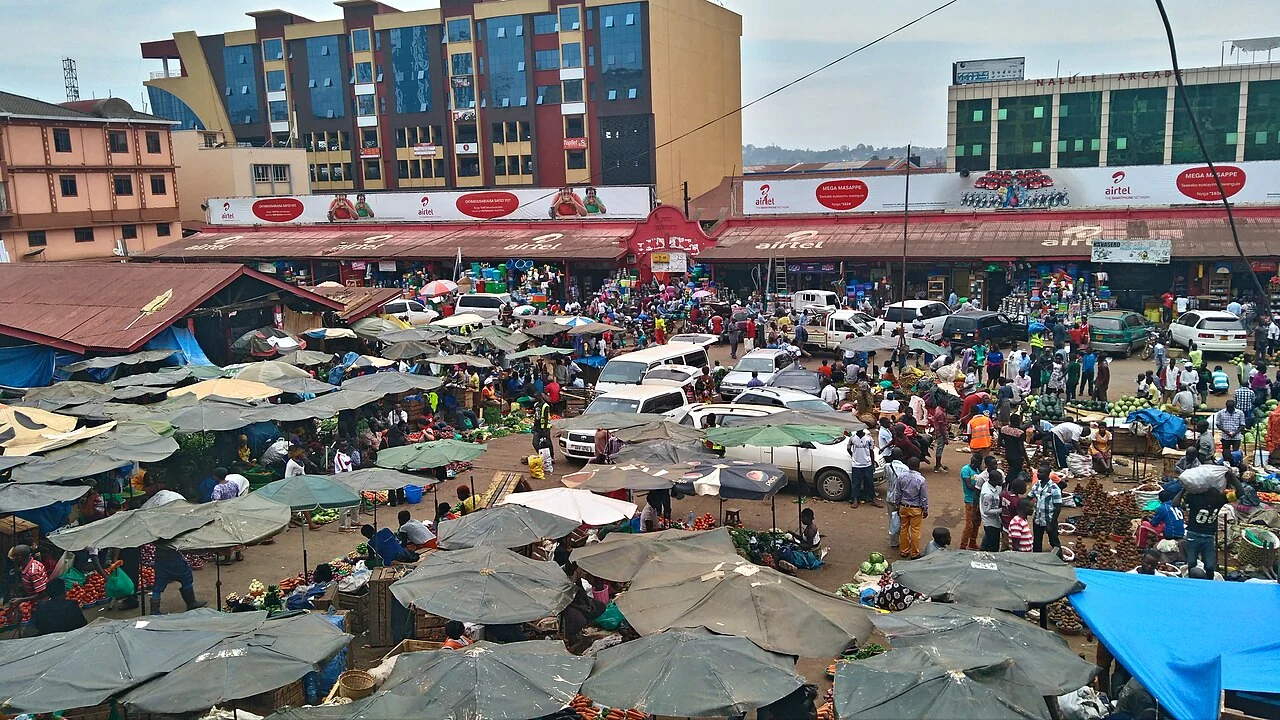

Take a seated break after shopping. Rain or crowds do not oblige you to explore every planned street. Keep bags closed and valuables out of view. Establish collection before entering the market rather than searching on a phone while carrying packages at the exit. The images describe a city setting, not an obligation to buy from a particular vendor. Learn the actual price locally rather than using somebody else's older expenditure as today's budget. Reserved market time is more than a shopping list: it offers a respectful opportunity to notice ordinary movement and work without turning people into staged attractions.
Rolex: a freshly prepared meal after the market
The official UTB catalogue describes rolex as a chapati combined with eggs and vegetables; the order is not related to a watch brand. If offered on the actual menu or stall, begin with a freshly prepared portion. Ask which vegetables are included, how the eggs are cooked and which allergens matter. A group sharing a chapati and a traveller requiring separate portions have different needs, so clarify contents and quantity first. Placing this simple meal after Nakasero gives food a real position in the city day. Instead of squeezing a new taste between hurried vehicle changes, choose somewhere comfortable to sit or safely pause.
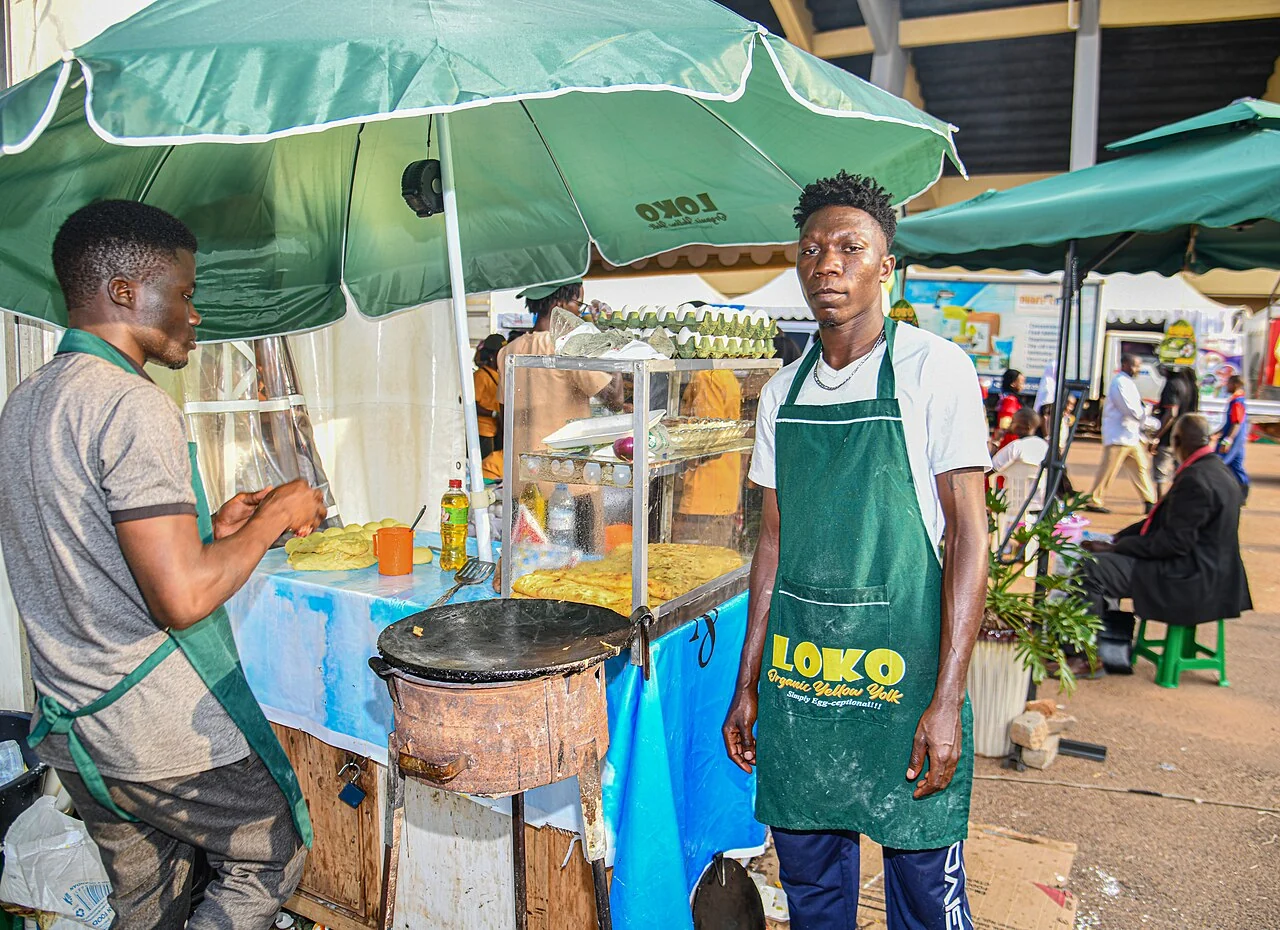

For another small snack, you might investigate a dough-based option such as mandazi, also named in the catalogue, without assuming every stall has it. Prioritise safe drinking water, clean hands and properly cooked food. If you cannot arrange appropriate washing, ask the accommodation about suitable prepared or peelable fruit choices. Our photograph is a Ugandan rolex-stall example, not a current menu from an identified Kampala business. The value of a food stop lies in learning what you order and making a comfortable meal, rather than the number of products you can list afterwards.
The Entebbe connection and urban vehicle choices
Uganda Civil Aviation Authority identifies labelled Airport Taxi vehicles and rental arrangements at Entebbe airport. Agree the driver, vehicle, baggage and exact accommodation address when organising collection. Do not treat an older online fare or journey time as a guarantee. Entebbe is a different settlement, and arrival in Kampala is not a short walk inside the city. On departure morning, allow for real traffic conditions, security procedures and baggage check-in. Solve access to the airport before making a final market trip compulsory. If considering public transport, verify the actual route and changes with local staff.
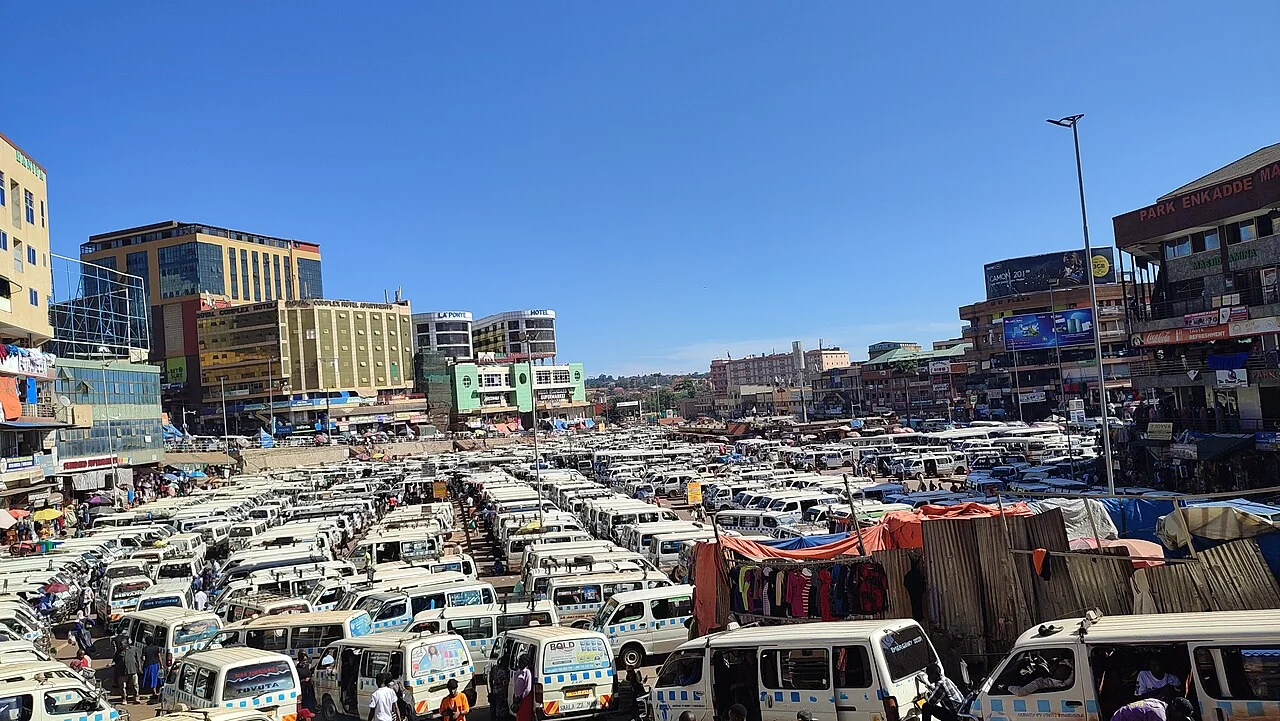

The Old Taxi Park photograph illustrates an urban shared-vehicle setting; it is not a recommendation to board a random vehicle. On a first arrival with luggage, an arranged connection can be considered instead of unfamiliar transfers. A motorbike boda-boda is not automatically recommended to every reader: official security advice also records robbery risks associated with these vehicles. Arrange a reliable return instead of walking at night. Written meeting points and offline contact details help on days requiring a vehicle change. Compare the vehicle or guiding arrangements alongside the number of actual visits during two city days, rather than treating transport as an invisible extra.
Accommodation and current conditions that matter
A central address around Nakasero can be compared for the market-led programme, while Kololo may be considered when a meeting or personal appointment is in that area. A neighbourhood name does not guarantee a quiet room, walkable access or security. Ask about the precise address, stairs, breakfast, night return arrangements and whether the room faces the road. One room for three nights can be practical if it genuinely serves both days' connections. Treat access to evening food as a separate requirement from the room charge. A distant property can increase the total transport burden; avoid deciding solely by the view or nightly rate.

At the 4 October 2026 review, Uganda National Museum's official visiting page states that it is temporarily closed for renovation. No open museum visit is scheduled here. If it reopens, use the institution's current announcement to arrange a separate programme. FCDO warns about potential terrorist attacks, demonstrations and walking after dark. Follow local directions and do not turn large gatherings or protests into sightseeing stops. This short Kampala plan does not extend to western border areas or national parks. Verify entry, health and insurance using official sources for your own passport and actual travel history. The aim is two understandable, thoughtfully organised capital days rather than compressing the whole of Uganda into a stopover.