

If Port of Spain exists in your imagination only as the stage for Trinidad Carnival, the meals and green spaces of an ordinary city day can disappear between the celebrations. Tatilmerkezi's Stork proposes a smaller capital plan: two days, two nights and departure on the third morning. Day one concerns your accommodation area and food choices; day two focuses on a botanical garden visit when conditions permit, followed by another meal. Tobago, Maracas Beach and a circuit of Trinidad are not additions to these two days. The aim is to connect a few city experiences sensibly. This is not a walking route with a safety guarantee, but a preparation framework to shorten or change in response to official advice.
Current conditions first: a city photograph does not guarantee access
The UK government's travel advice checked on 4 October 2026 reports high levels of violent crime. It specifically identifies parts of downtown Port of Spain, several surrounding areas and the interior of Queen's Park Savannah for caution. It advises against walking at night and recommends established transport providers. Build the day with current local advice from your accommodation rather than following an arbitrary street loop independently of those warnings. Searching alone or in quiet areas for a distant photograph viewpoint is not part of this plan. Remove a stop when conditions are unsuitable. An attractive photograph cannot establish that a visit is appropriate.


The 2007 harbour photograph illustrates the capital's relationship with the water. It does not verify current building operations or a viewpoint visitors can access. Traffic, working hours and port activity may move to a different rhythm from a holiday. On arrival, leave your bags first, then choose a clear meal stop and return connection. Arrange an identified transfer with a defined meeting point recommended by your accommodation. A shared arrival plan can be simpler than several travellers looking independently for vehicles. This guide gives no endorsement of a named driver, fixed fare or guaranteed journey duration. It concentrates on the order of decisions that makes a short stay manageable.
Day one's table: build a meal around doubles
Doubles supplies the most concrete introduction to this city plan. Tourism Trinidad explains the combination of fried bara and curried channa, or chickpeas. Sweet, sour and hot accompaniments give the short meal its distinctive character. The photograph depicts a Trinidad culinary example, not a plate from an identified Port of Spain vendor or a claimed local capture location. Beginning with one serving and a drink break allows room to try a local food without turning the morning into an eating challenge. A traveller unfamiliar with hot sauces can ask for them separately. Different members of the group need not order identical versions to share the experience.


The tourism source mentions St. James and Ariapita Avenue among areas associated with doubles. That does not establish identical services on every corner today. Having chosen a vendor, consider where to stop, wash your hands and meet your return transport. At the other main meal of the first day, a roti and curry or channa and aloo, chickpeas and potatoes, can provide a different texture when available on the actual menu. Tourism Trinidad's culinary introduction also lists dhalpuri and buss up shut roti. Rather than collecting all these dishes in a single day, arrange a short morning meal, one seated main meal and a rest. Concrete food names help make the plan more useful than a generic instruction to find something local.
Queen's Park Savannah: not a current event calendar
The official tourism source presents Queen's Park Savannah as a large open space in the capital. The cricket scene in this package dates from 2014. It does not demonstrate that a match takes place today or that an event calendar is fixed. When current local conditions support it, the surrounding area can help explain the city's scale during a transport connection. Do not turn walking across the entire grassy interior into an objective, particularly given the official caution relating to that area. Ending the evening with a walk there is not recommended. Attendance at an event requires a separate decision based on a current organiser announcement and an arranged return.


Carnival is a strong part of the city's identity, but every visit cannot be treated as a Carnival day. If your trip overlaps an event, use a more focused event itinerary instead of trying to retain the ordinary two-day programme as well. A family may not all want to spend the same amount of time in a crowd; a shared meeting point and an early return option can be useful. Carnival costumes, performance stages and music groups have not been used here as apparent evidence of a current event. Understanding urban leisure need not depend entirely on a major festival calendar. A measured day with a meal and a permitted visit can serve a different traveller need.
Day two: a short Royal Botanic Gardens visit
Royal Botanic Gardens provides the second day's focus. Tourism Trinidad's place record published in 2026 describes the gardens north of Queen's Park Savannah on Circular Road and gives their establishment date as 1818. The photograph of trees and planted grounds was taken in 2006. It is not a detailed map of today's paths or facilities. Aim for a short visit in an open area considered suitable under current local conditions. Read the available plant labels rather than identifying species from photographs without botanical expertise. If rain or another local circumstance disrupts the visit, shortening it may make more sense than adding a second distant stop to rescue the day.
Connect accommodation, the garden and a chosen meal point along one transport backbone. Exploring a city does not require making every connection on foot. A garden visit, a rest and a seated main meal can provide enough scope for this second day. Having eaten roti on day one, you might look for pelau or another local plate on the menu for variety. The tourist board's food material mentions pelau and corn soup within the Trinidadian table. That establishes culinary context, not a recipe or a claim that every business stocks them. Talking about ingredients, portion size and the rhythm of meals gives the visit substance without turning the entire guide into repeated generic cautions.
A Gulf of Paria image and an accommodation backbone
The 2015 photograph looking west from the Audrey Jeffers Highway foreshore towards the Gulf of Paria adds a different coastal context. It is not an invitation to walk beside a highway or enter the water at sunset. This plan does not include a visit to that camera position. The photograph is a separate real scene showing another relationship between the city and the coast. Distinguishing an image from a recommended access route matters. PTSC's official site is the appropriate starting link for its service network, routes and schedules. Consult travel-date information there rather than treating an old photograph or annual publication as a transport promise.
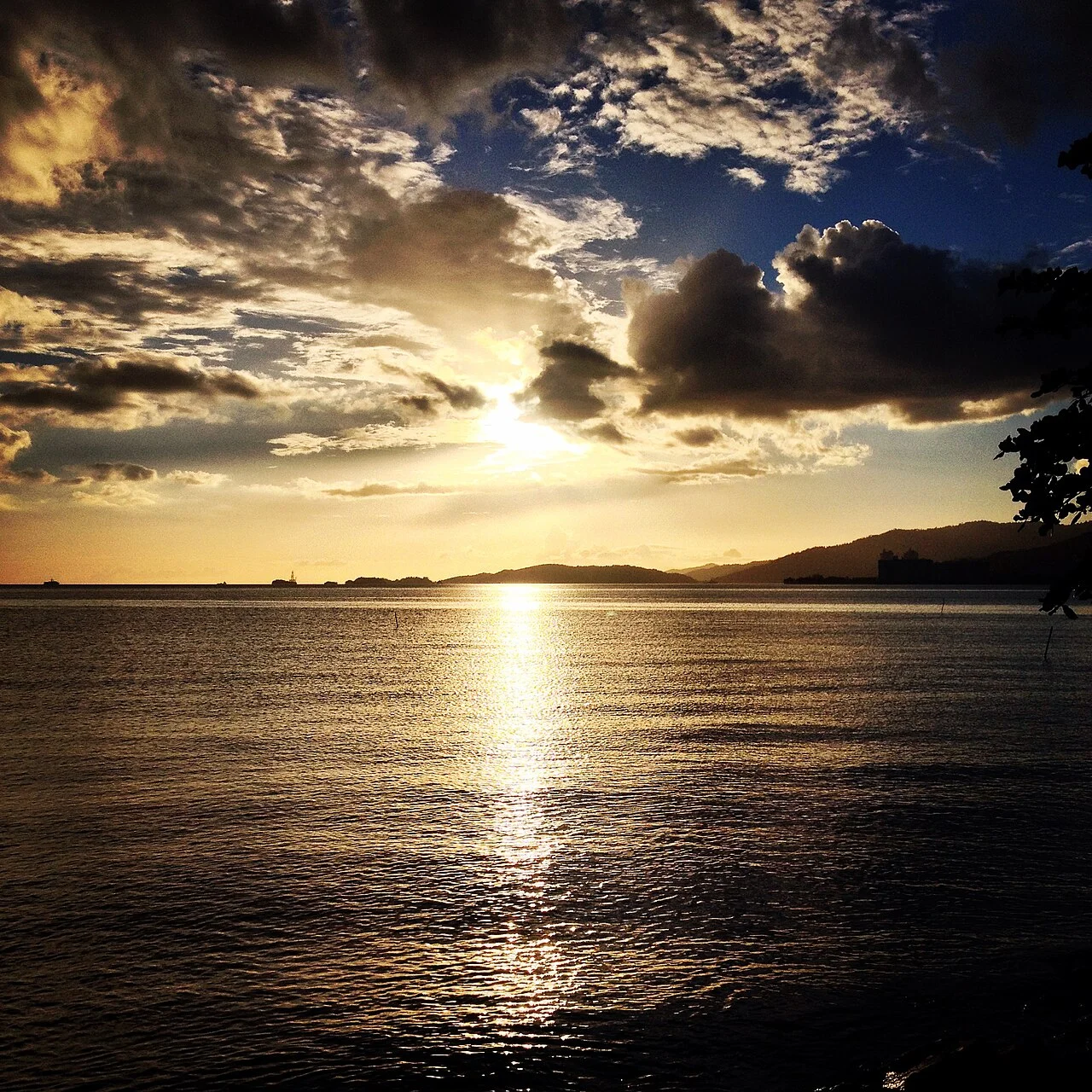

Do not choose accommodation by postcard appearance alone. A property around the Savannah may suit the garden focus, while a Woodbrook or St. James connection can be considered in relation to meals. No area label guarantees the security or quietness of every property. Collection at the entrance, return transport and late-arrival reception are specific criteria for this short stay. The third morning of the two-night plan belongs to breakfast, luggage and departure. Tobago becomes another programme only with its own ticket, time allowance and day. Here the Stork invites you to spend meaningful time in a few places appropriate to the conditions, instead of collecting more stops. Sources were checked on 4 October 2026; photographs retain their separately recorded capture dates.