
Arles: one night from arena stone to the Rhône
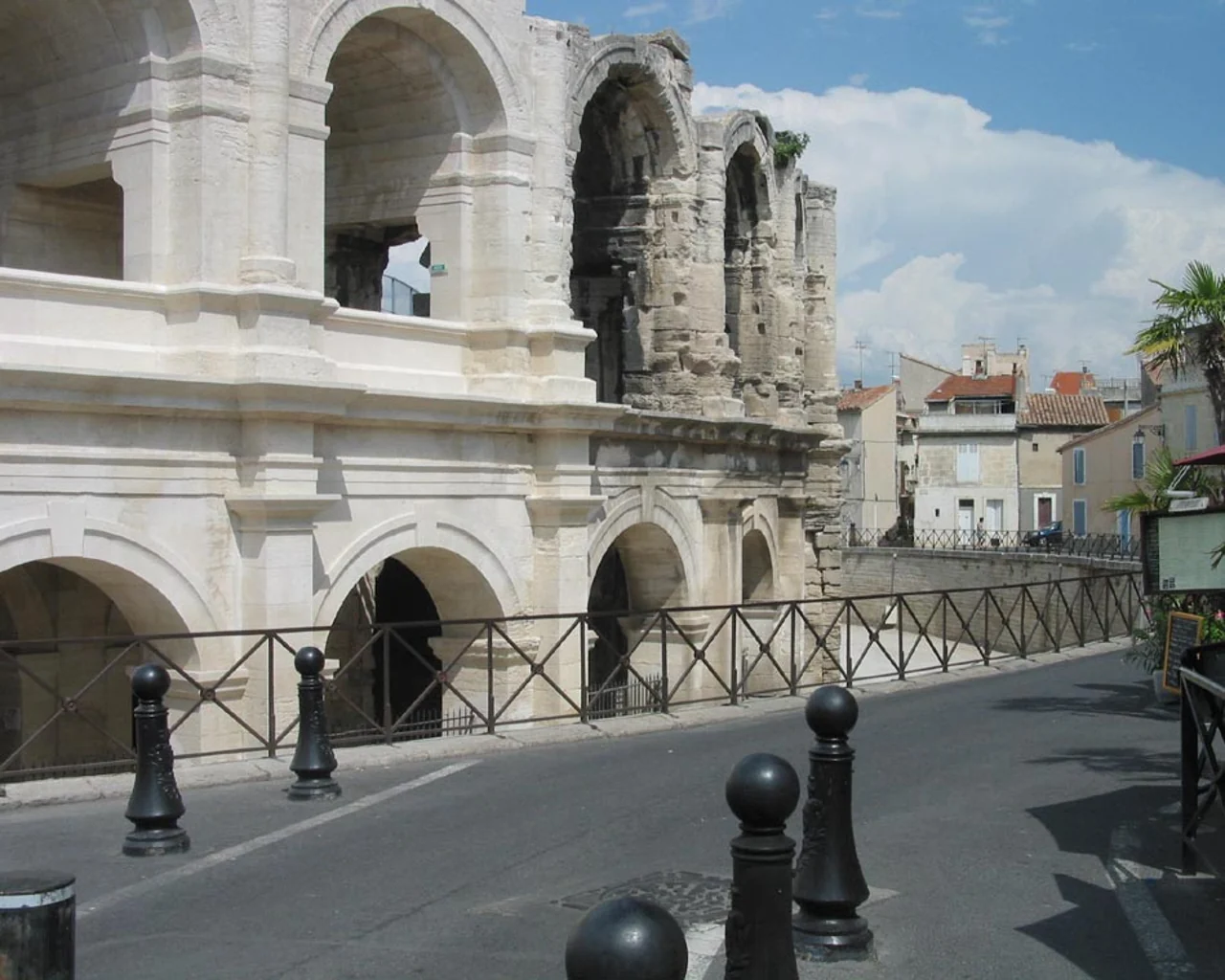
An overnight stay in Arles can distinguish ancient performance buildings from the living riverfront. Tatilmerkezi Stork suggests the amphitheatre and Roman theatre surroundings on arrival, followed by the Saint-Trophime portal and the Rhône side. A longer museum visit or the Baths of Constantine can occupy another day; every stop need not fit one afternoon. Sources were checked on 5 October 2026. Musée départemental Arles antique opens 09:30–18:00 except Tuesdays. Monday arrivals have a collection option, but the same museum cannot be assumed open on Tuesday morning. Historical photographs are not evidence of today's entrances, weather or visitor numbers. The amphitheatre image shows lighter and darker stone after partial restoration on 28 July 2006, not a guarantee that all surfaces remain unchanged.
For rail arrival, check current SNCF station access and assistance information. Search the journey for your ticket date rather than turning a connection from Avignon, Marseille or elsewhere into a fixed duration or cheap fare guarantee. Leaving luggage at accommodation before beginning narrow historic streets may be more comfortable than treating the bag-carrying walk as sightseeing. Weigh central monuments, river proximity and returning to the station when selecting a room. Steps, lifts, early luggage storage and parking depend on the property's actual services. A city image full of summer events is not an October prediction of noise or crowds. Two-night visitors can separate the museum and river sections; those staying once should leave time for morning departure.
Roman theatre: a different space from the amphitheatre
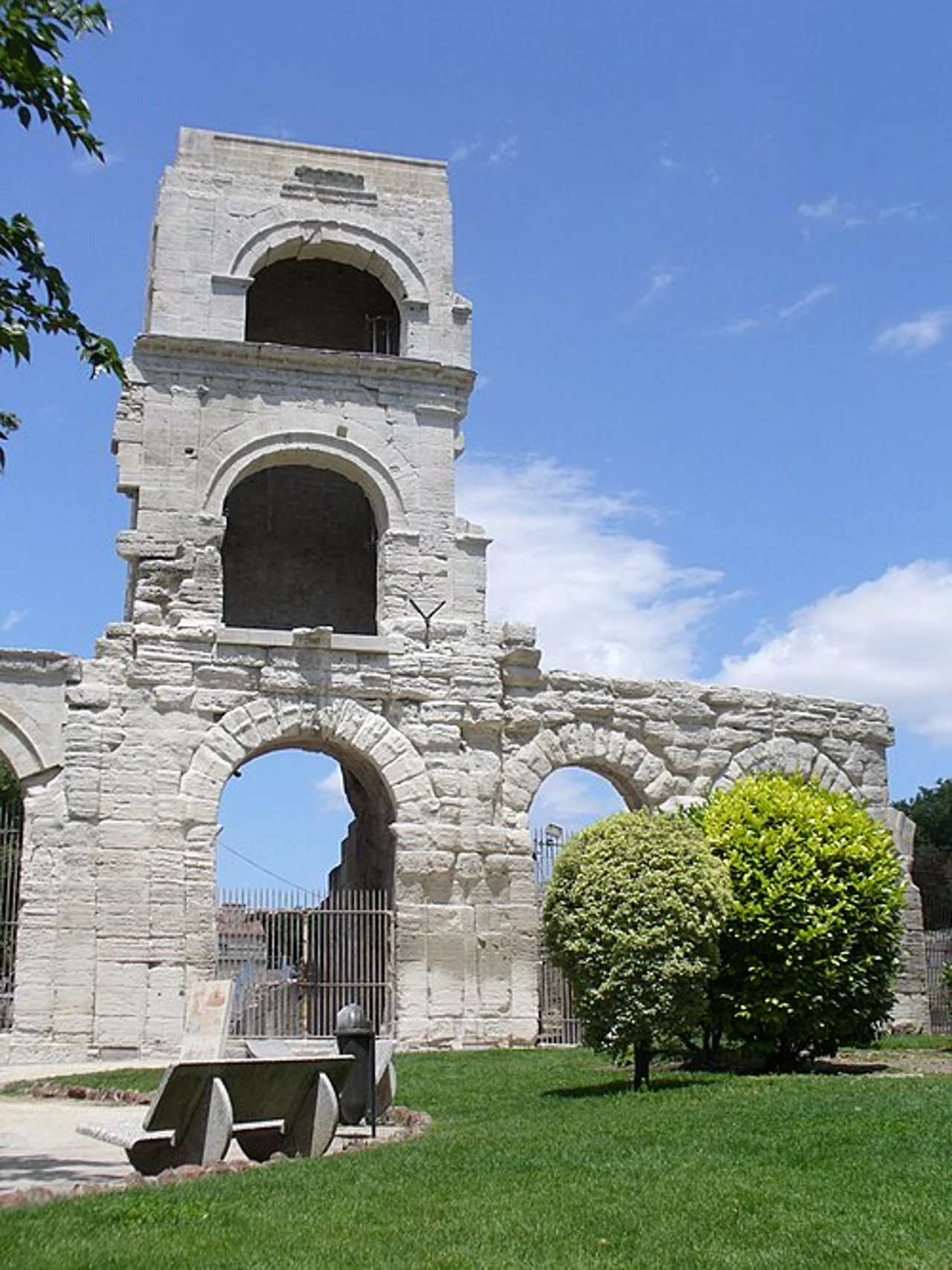
Treat the Roman theatre and amphitheatre as separate stops. Our theatre photograph shows an older arched wall, a rising section and grass rather than the repeated broad arches around the amphitheatre. Captured on 2 July 2007, it documents neither a present performance nor today's seating arrangements. If entering, check which areas the ticket covers and the actual opening that day. Inclusion in a combined ticket does not mean every section remains accessible during every event. With children, discussing the difference between two building shapes may be clearer than fitting everything into one general Roman story. Spend enough time to notice a surviving wall rather than racing past it.

The tourism office's ticket system lists the amphitheatre, theatre and baths separately. A free-admission announcement for September heritage days is no general October admission offer. Summer gladiator displays and guided-tour times are not transferred into 5 October as if still scheduled. A short exterior look and an extended interior visit require different amounts of time, so decide which you want before arrival. Choosing one building and a nearby street before lunch can be more relaxed than hurrying across every stone stair. Leave room for other visitors in narrower passages and respect sections closed on site rather than crossing barriers for a photograph. The route remains useful if you shorten one stop.
Saint-Trophime portal and an actual Camargue meal
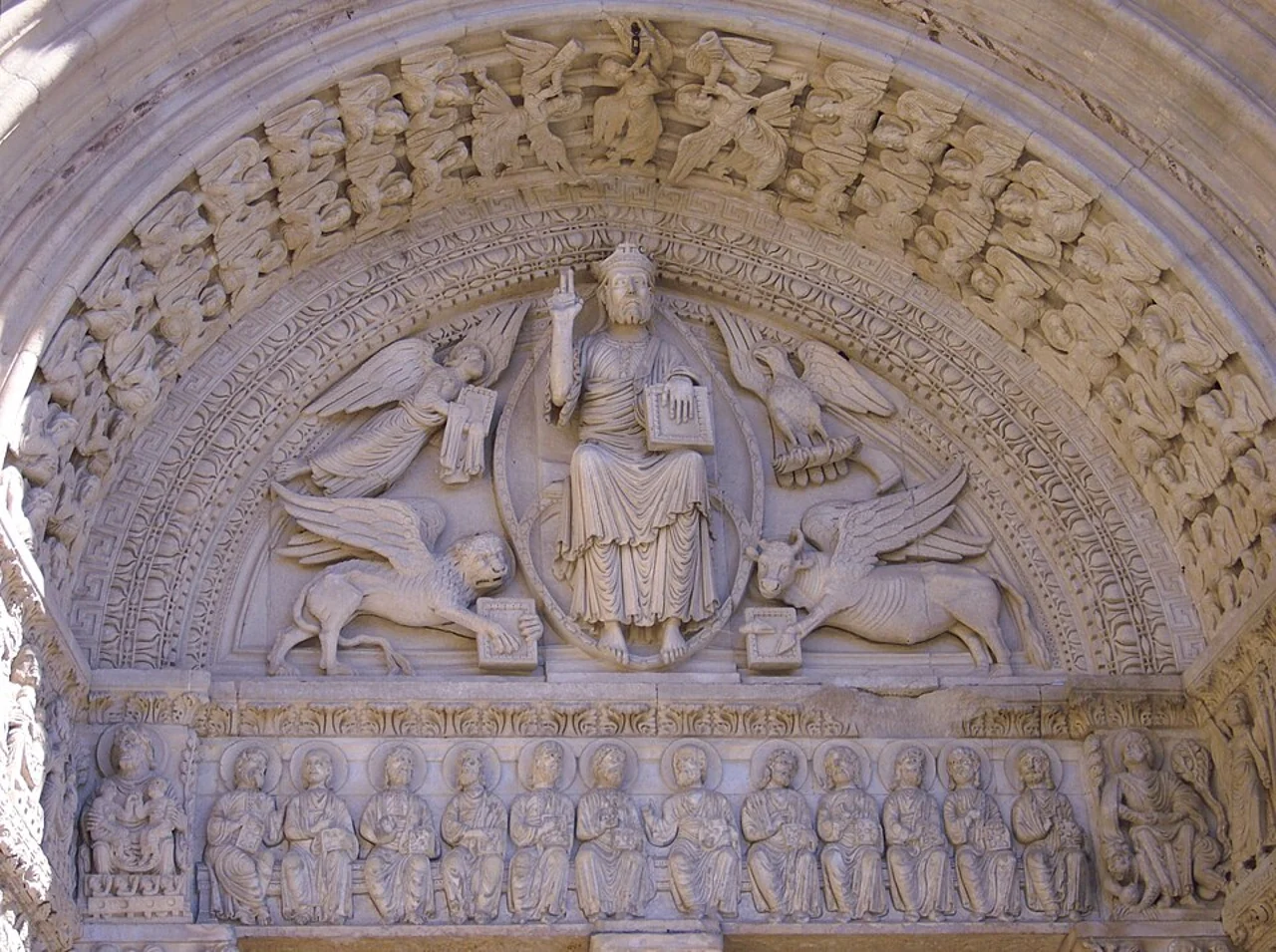
Look at the carved stone tympanum above Saint-Trophime's historic portal. The chosen daylight image dates from 4 September 2007. A separate night image incorporating a modern lighting design was excluded because its additional rights were uncertain. This photograph claims no cloister or church-interior visit. Do not merge the main doorway, worship space and cloister into one admission arrangement or opening time. During ceremonies, respect movement through the entrance and quiet inside. Studying one carved figure and its surrounding lines keeps the observation grounded in visible surfaces instead of describing an artwork you have not seen indoors.

Le Criquet's own site lists Tuesday-Saturday lunch 12:00-13:30 and dinner 19:00-21:00, with Sunday and Monday closed. Do not plan this meal as an available Monday 5 October booking; keep Tuesday restaurant service separate from the museum's Tuesday closure. For a specific meal, Le Criquet's own menu lists gardianne de taureau with Camargue rice and vegetables. If offered during your actual service, this plate can connect the river city with its agricultural surroundings. Seeing a menu does not reserve a table or promise that a price remains unchanged on your trip. Confirm booking, service times and the day's offer directly. A traveller avoiding meat should not assume the same plate is served without it; ask about an actual separate option. Discuss wine used in cooking or allergens before ordering if these matter to you. Tatilmerkezi Stork invents no remembered tasting: the suggestion comes from the business's listed meal, while the stone portal image remains an architectural photograph rather than a food scene.
Saint-Julien and the Rhône: comparing an old panorama with today's riverfront
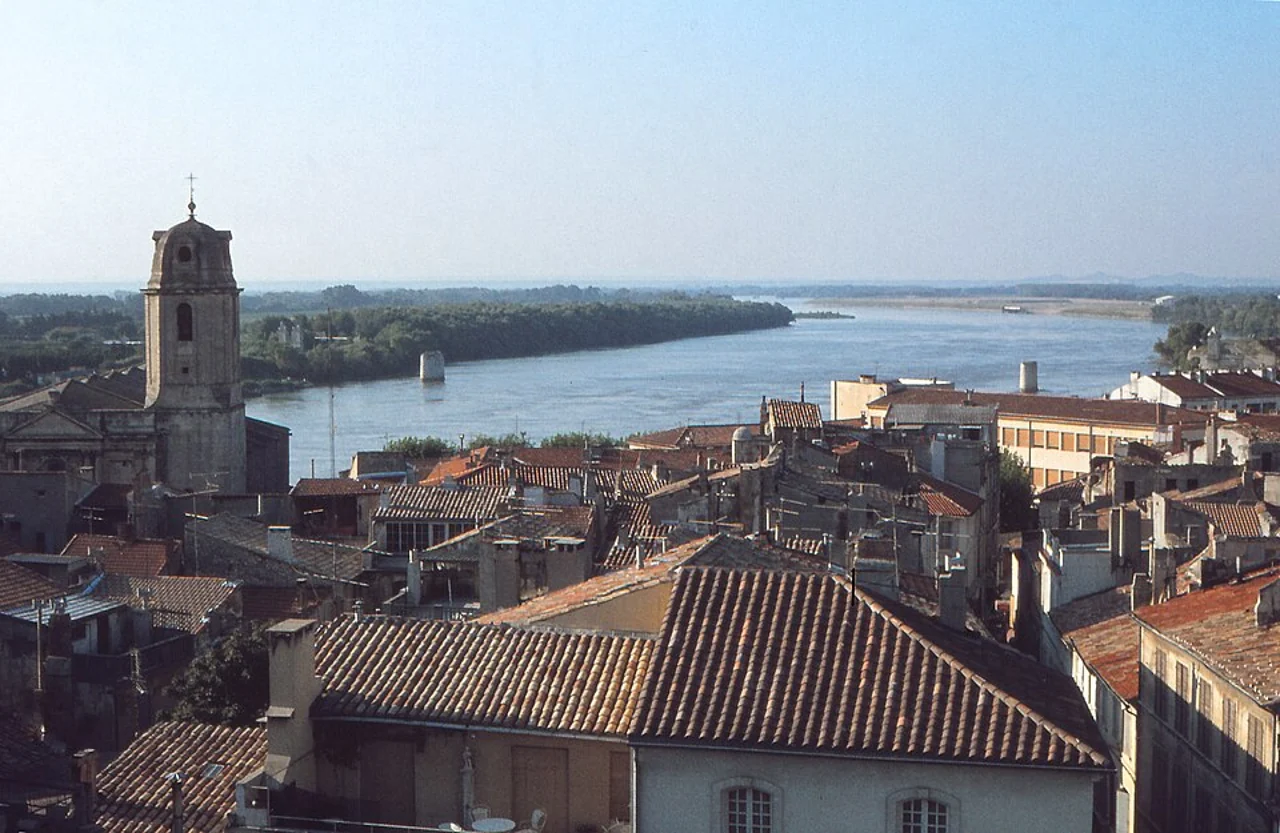
Towards the river, read the water as an open space beyond roofs and streets rather than a completely separate excursion. Jean-Pol GRANDMONT's image from August 1977 shows the Saint-Julien district and Rhône. Its viewpoint need not match your present walk exactly; it is not tied to a promised hotel terrace. Follow actual public walking areas and local rules on the riverfront. Water levels, wind and temporary closures can change, and this older panorama supplies no proof of safe access on your date. Looking across the river from a permitted position is enough to understand the setting without approaching its edge.

For a shorter evening, select one section from the Saint-Trophime side of the centre towards the river and return by a route that meets your access needs. No exact sunset colour, empty bench or guaranteed timing is promised. With children, remain within a clear public boundary rather than seeking a closer waterside position. Keep pedestrian and bicycle movement clear while photographing. If rain begins, use a saved return route instead of assuming a nearby indoor institution is open. A river pause is no boat departure and no complete Camargue excursion. Broader regional travel requires separate transport, a return vehicle and a service operating on the day you choose.
Baths of Constantine: a separate second-day choice
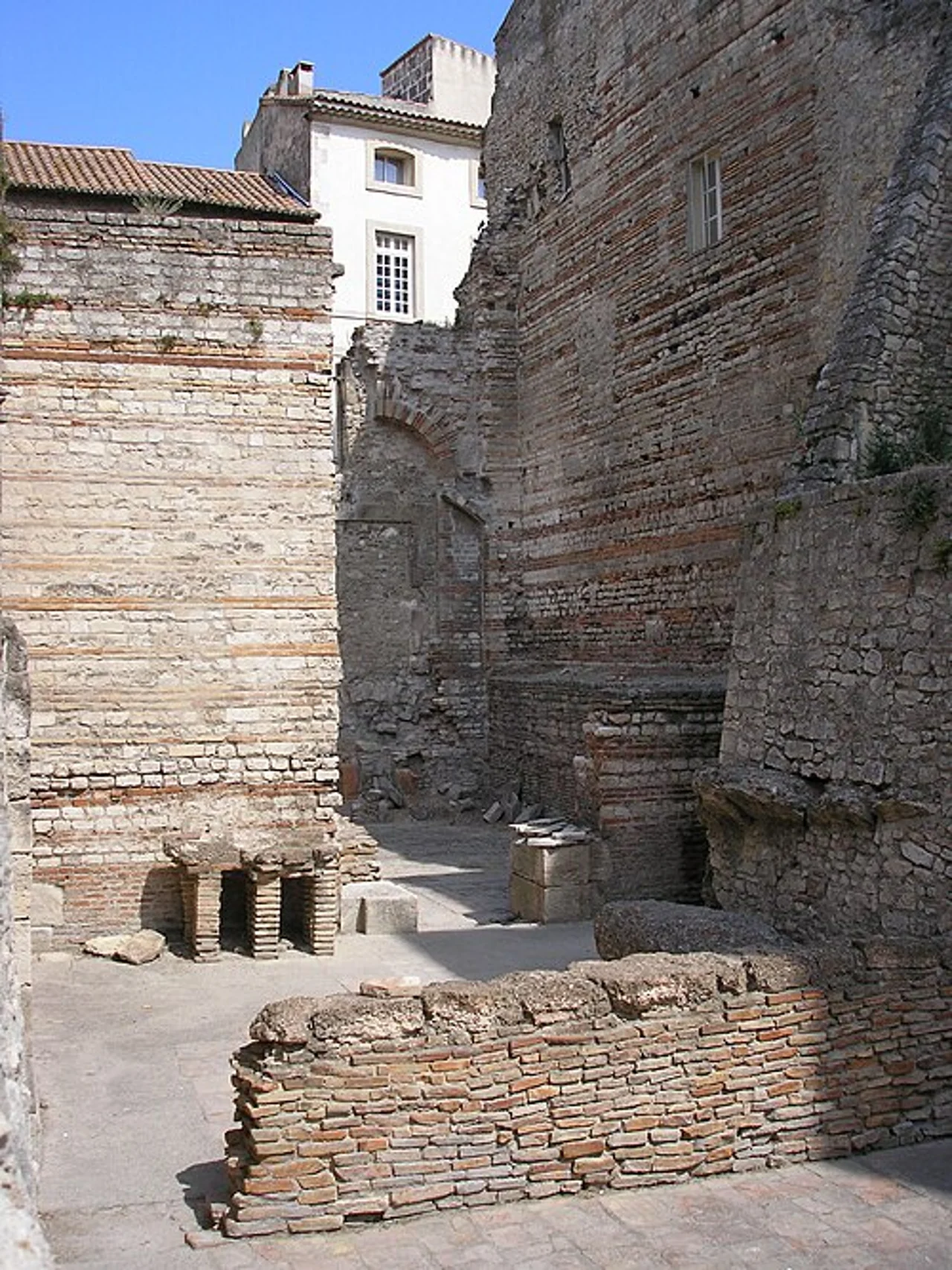
The selected Baths of Constantine image records brick walls and a lower stone foundation on 12 July 2006. Compare materials without writing as though every room of the monument has been visited. Tourism information introduces the baths separately, and this guide does not carry May–September opening hours into October. Check the actual working and admission arrangements at the entrance. If a combined visit option is useful, first decide how many monuments you can realistically examine. Buying wider ticket coverage does not remove walking time between museum and river. Shortening the itinerary because of rain, steps or narrow passages remains a reasonable travel choice.

If the second morning is Tuesday, remember the Arles antique closure. Checking current doors for the baths and central exterior route can be more workable than spending the morning walking to a closed museum. Visitors staying on another open day can give the collections more time and reduce the monument count instead. Leave a margin for checkout, luggage and returning to the station. This guide does not turn finished summer photography calendars or an imagined city with every entrance open into present-day advice. One ancient building, a carved portal, a specific Camargue meal and a riverside pause can complete an overnight stay within its actual limits. The final choice should fit your date and your ability to walk.