
Read Junagadh with two complete city days
Allow three nights and two complete city days in Junagadh. Arrival and the room occupy the first evening, Uparkot and the mausoleum setting the second day, a chosen rock-cut space and town session the third, with departure on the fourth morning. Tatilmerkezi Leyleği uses this rhythm to see the Saurashtra city at its own scale. Junagarh Fort in Bikaner is not a stop on this route: similar spelling does not identify the same monument. Passing through from Rajkot also differs from spending two full days here. Uparkot, the Mahabat setting and Khapra Kodiya deserve separate sessions and current admission checks. A closed institution can leave the meal and town portions intact. Girnar or a wider Gir nature programme needs added time, real transport and the relevant admission arrangement. A central room booking does not automatically provide any of those outings.
Arrival and the same room across the stay
The current district administration transport page describes state transport bus links between Junagadh, other Gujarat towns and further destinations. Use your own ticket for the service and terminal: a general tourism statement is not a departure timetable. A rail traveller likewise connects the actual arrival station with the accommodation address. The first evening needs bags, the room and the next morning's transfer rather than a long sightseeing programme. An urban property can suit returns from Uparkot, the mausoleum area and meals. A location near Girnar or another district attraction serves a different stay. Keeping the same room for three nights avoids moving luggage during the two complete city days. Establish whether its door opens onto a main road or a smaller lane, especially for a night arrival. Ask about the final terminal transfer too. A city name alone does not mean all the stops are within walking distance of the property.

Uparkot: give the complex its own morning
The national India Cine Hub record presents Uparkot as Junagadh's historic core and an important starting point in the city. Give it the morning of the first complete day instead of taking a single picture before racing to another major place. Within accepted areas, look at the relationship between buildings, ground levels and stone spaces. The actual selected photograph shows a small stone structure surrounded by water and railing; it does not establish that every well or underground passage is accessible. Check the accepted section and daily admission arrangements with the institution. A dated description of restoration or access cannot promise an open doorway on your visit. Keep water and a short rest interval for the outdoor session. Where steps or narrow passages are unsuitable, a flatter accepted area can be enough. Lunch after this substantial morning provides a clear break before the mausoleum session.


Time for the exterior architecture of Mahabat
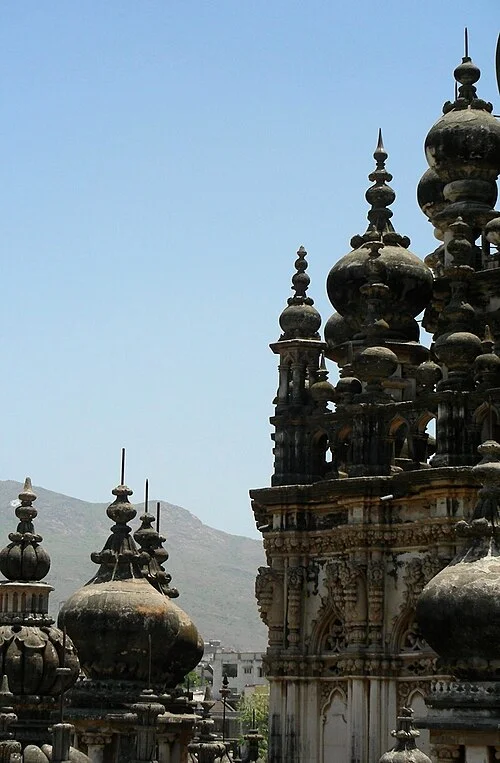
The Mahabat mausoleum setting forms the second main historical session. The current India Cine Hub account places these monuments in Junagadh's heritage. Domes and ornate minarets in the actual photograph explain why the setting deserves time of its own; the portrait view is not a complete wide panorama. Look at the exterior from an accepted position in the afternoon, then allow a seated rest. Ask locally about interiors, stairs and photography. A doorway visible in an older image need not remain in use today. The main day does not require climbing every tower. Looking at the relationship between roofs, towers and facades already introduces the institution's visual character within the city. Shorten the exterior session if heat or waiting begins to reduce comfort. Having another complete day removes pressure to put every historical place into the same afternoon.
Khapra Kodiya: use the accepted stone space
Gujarat Tourism currently lists the Buddhist rock-cut spaces of Khapra Kodiya among Junagadh's historic institutions. Make this the chosen main stop on the second complete day, checking open sections and ticket arrangements before travelling. The actual photograph contains stone columns, narrow steps and connected rooms. It cannot explain the lighting, surface conditions or access to every room on the visiting day. If steps are unsuitable, ask about an accepted exterior or more accessible section; the itinerary does not require using a difficult stairway. A quiet session looking at light and connections can be more meaningful than rushing through every similar room. Do not confuse this address with a different cave setting within Uparkot. The real meeting point, transfer and accepted entrance need separate checks. A meal, a brief town walk and rest can complete the remaining day without adding another compulsory mountain ascent.


A proper meal with rotlo and ringan no olo
The state tourism account describes rotlo as a Kathiawadi flatbread made with bajra and pairs it with ringan no olo. Ask an establishment whether that bread and aubergine preparation are available for a main meal in Junagadh. Learn the actual portion and accompaniments rather than assuming every restaurant offers the same plate. Where a garlic accompaniment is served, consider your own heat and dietary preferences. Rotlo belongs to a regional Kathiawadi tradition, not a recipe claimed to have been invented only inside this city. Allow a seated meal after Uparkot on the first sightseeing day and a regular meal after the rock-cut session on the second. Two complete days do not need to be sustained entirely by street snacks. This guide supplies no personal tasting memory, exact price or restaurant with guaranteed present-day service. The actual menu and return address make the food choice a practical part of the city plan.
Town names and a historical gateway photograph
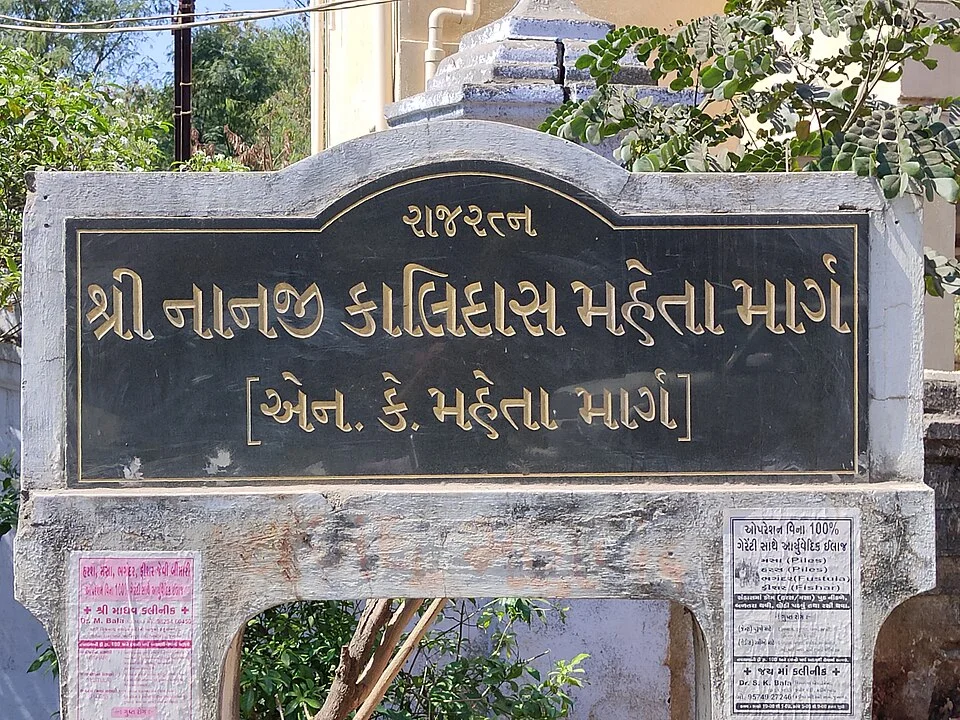
The selected archive photograph of Majewdi Gate records its appearance in the 1890s. This real historical photograph offers a way to think about the arch and frontage, rather than pretending to show a walk completed today. Use a current map and accepted route information for any actual gate or street encountered during a town session. The close photograph of the Nanji Kalidas Mehta Marg marker likewise establishes a street name and the sign itself, not unrestricted access along the entire road. Matching names to the town map reduces the chance of reaching the wrong entrance. This is not a separate shopping itinerary or a requirement to count every old gate. Short town observations between the substantial institutional sessions are enough. Historical imagery and a later street marker can show different traces of time without supplying an invented market scene, event or personal memory absent from the photographs.


Budget Girnar and departure separately
If Girnar is a priority, create another day around the actual ascent option, physical needs, weather and return journey. Keeping the original three nights unchanged does not automatically place a mountain visit inside both full city days. Adjust the accommodation and transport for the longer stay. A nature programme in the Gir setting likewise depends on its own gate, admission and room location. The word Junagadh on a reservation does not bring the whole district to one address. Leave the final morning for breakfast, bags and the real onward connection. A late departure may need only a short rest interval. Sources were checked on 5 October 2026; daily opening, tickets and services require information for the travel date. Two complete urban days balance Uparkot, the mausoleum setting, a selected rock-cut stop and concrete meals as an introduction to a wider Saurashtra journey. An unused option can justify another night.