

It is easy to remember Nadi only as the airport through which you entered Fiji. This time the Tatilmerkezi Stork suggests keeping the luggage on the mainland for two nights: one day for the town market and main streets, another for a chosen food experience and a coastal pause. This is not a shortened version of a seven-day island-hopping itinerary. It creates a separate town visit for someone staying around Nadi who wants to leave the hotel and understand the place. Namaka, Martintar, Nadi town, Wailoaloa and Denarau are not interchangeable names for the same doorstep. Choose a base around the two days you actually intend to spend here.
Namaka, Martintar or town: choosing a two-night base
Namaka may suit everyday shopping, pharmacies and food markets near the airport area; Martintar offers a different focus for restaurant meals. Nadi town gives visitors interested in main streets, the municipal market and handicraft shopping another starting point. Tourism Fiji distinguishes these areas by their different uses. An accommodation listing headed Nadi does not establish that you can walk from the room to the town market. Consider the full address, arrival arrangements and first dinner together. Do not move hotels simply to sleep in another district during such a short stay.
Wailoaloa serves a different coastal and dining pattern, while Denarau is associated with resorts and marina connections. Neither is used here as a synonym for the town centre. A coastal base requires a transport leg for the market morning; a town base requires a separate return plan for a shore visit. Knowing whether breakfast is included, whether luggage can be stored on departure day and how reception handles a late flight gives a more practical accommodation decision than a view photograph alone. This guide promises neither fixed transfer times nor current hotel rates.
First morning: Nadi Municipal Market
Build the first day around Nadi town's market and main streets. Identify the current entrance and your meeting point for the return journey before taking an unhurried look at the stalls. The market photograph was genuinely taken inside Nadi Municipal Market in2016. It does not establish that the same trader occupies the same stall now. Spend the morning learning the names of produce and linking a modest purchase to the needs of that day. Do not assume every tropical fruit is available in every season or that every produce stall also serves prepared meals. A brief conversation before photographing a trader respects the market as a workplace.
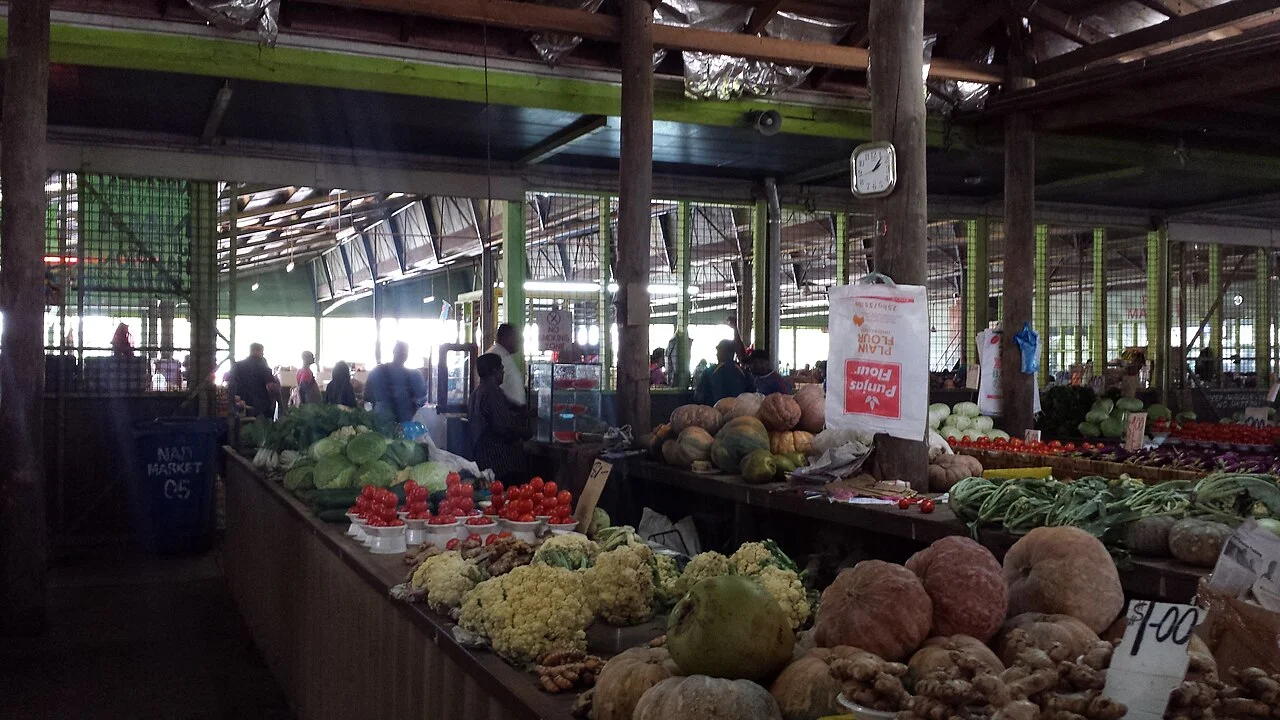

Think about the storage available at your accommodation before buying supplies for the entire holiday. Fruit should not automatically replace a complete meal; the market visit and a seated lunch can be different stops. Tourism Fiji also identifies a food market in Namaka. Choose the one that fits your base instead of compressing both into the same morning. The purpose is to understand one market and organise the rest of the day around it, rather than spending the morning in vehicles between similar shopping stops merely to increase the number of places visited.
Main streets and a small handicraft circuit
A short circuit through Nadi town's main streets after the market shows a place shaped by everyday commerce as well as tourism. The Queen Street photograph provides broad street and traffic context; it does not say that the pictured businesses still sell the same goods. Give one or two shops time if you want to distinguish a mass-produced souvenir from a piece whose maker can be explained. Tourism Fiji introduces the Nadi Handicraft Centre and other shopping possibilities. Build a small circuit around places actually open that day rather than assuming identical business hours for every trader.
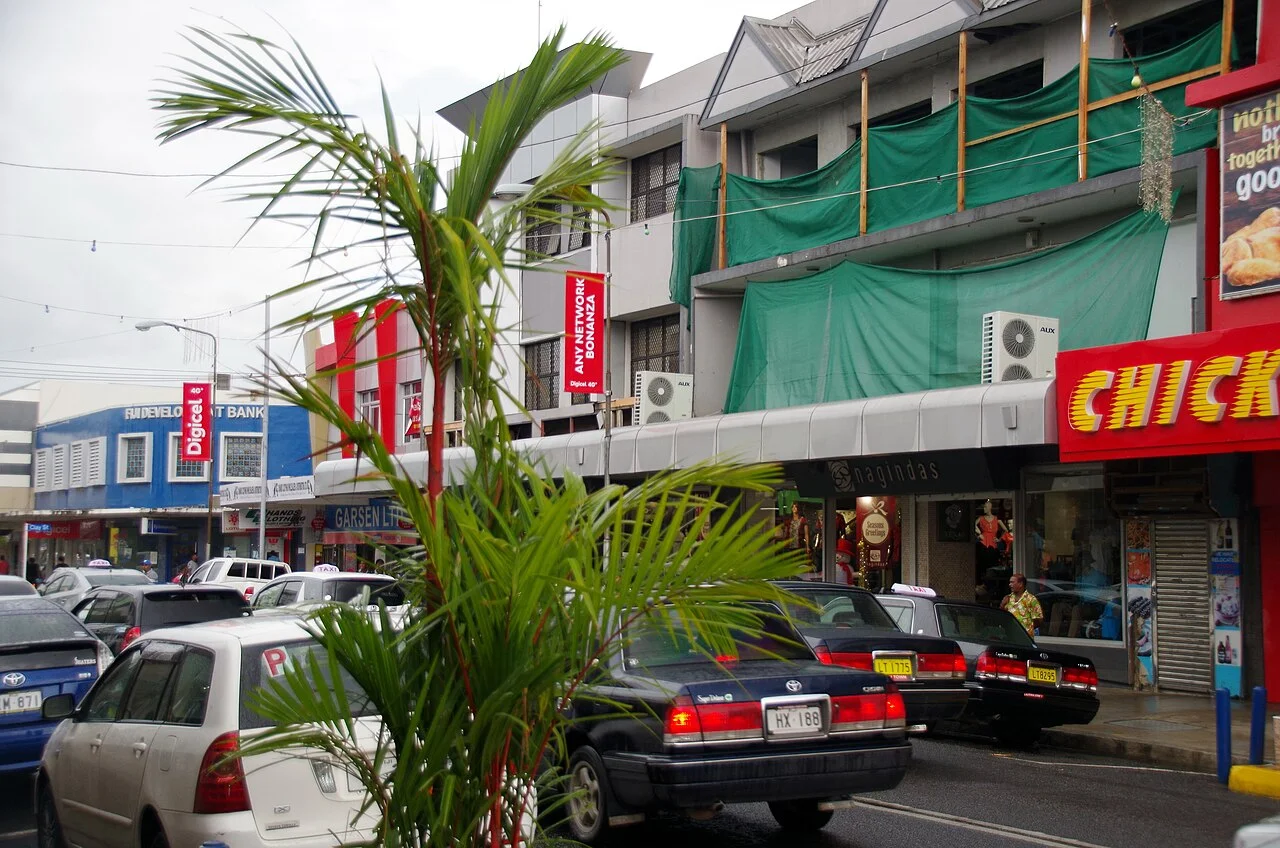

When considering masi cloth, woven goods or woodwork, compare the material, stated place of production and explanation the seller can provide. No stall receives an authenticity certificate from this guide. Plant material or food bought for home also needs to fit the destination country's import requirements; being available for sale does not mean an item can cross a border without conditions. Put lunch at the end of the street circuit, then return to your accommodation or a quieter place to sit. A shorter afternoon leaves more attention for the next day's food experience in warm weather.
Second day: give lovo a real time allowance
The second day's principal stop can be one food experience with confirmed booking and current arrangements. Tourism Fiji describes Vavavi near Wailoaloa through a substantial session connecting lovo preparation, a market visit and a concluding meal. Lovo is a method involving an underground cooking pit; it is not an assumption that any restaurant offers the same process at every lunchtime. Treat such a programme as the main appointment of the day rather than a ten-minute tasting added to an already full morning. Read the actual meeting point, transfer coverage and meal arrangements in your own booking.
Watching or participating in preparation offers a different experience from photographing a finished plate. Coconut preparation, wrapping ingredients in leaves and arranging the pit are examples described by the tourism source, but the operator determines the exact day's programme. Explain specific dietary requirements before buying; a broad mention of options does not automatically cover every individual need. This is neither a lovo cooking instruction nor medical dietary advice. After the concluding meal, a short coastal pause and a return to your base may balance the day better than an additional lengthy lunch.
Attach meals to the neighbourhood
Nadi's dining variety does not end with lovo. Tourism Fiji's restaurant introduction names contemporary examples at Vasaqa including Bula burritos, bao, tacos and burgers. These are not presented here as a single ancient Fijian tradition. Other Asian dining options around Martintar and Namaka allow a shared dinner one evening and a shorter lunch on another day. A nearby first dinner, the second day's lovo session and a lighter last evening differ from a checklist requiring constant restaurant changes. Include the journey back to the accommodation in each choice rather than selecting only by a menu photograph.


The mango tree pictured in this guide is a real natural scene from Nadi, not an advertised public garden or today's market stall. It is not identified as the supplier of fruit to a particular business. If you want to connect market produce with a meal, rely on the seller's or cook's explanation rather than inventing a supply chain from an image. Across two nights, distributing meal times is more useful than attempting every dish in a single day. A market's ordinary rhythm and one well-chosen table can provide a stronger memory than a long sequence of hurried tastings.
Transport and departure on the third morning
Fiji Airports' current information identifies the official yellow taxi ranks at Nadi Airport and requires meters for journeys. Vehicles with electronic-payment options have their own markings. Establish the payment method before boarding instead of assuming every taxi accepts every card. No fare is frozen in this guide. For a hotel transfer, connect the flight number, meeting point and any inclusion in the room booking to your actual confirmation. The2012 photograph of a bus crossing Nadi River is a genuine transport scene, not an announcement of a current route or ticket system.


For a local bus journey, investigate current electronic ticket arrangements, the boarding point and the last return through relevant current operator information. The different districts are not described as one continuous walking route. On the third morning, place checkout, luggage handling and the final airport connection in the same plan. This itinerary does not claim that leaving the airport during a connecting flight suits every traveller: entry conditions, baggage and responsibility for the onward flight remain separate questions. The Stork's Nadi plan ends after two substantial town days: a real market, a compact shopping circuit, a chosen food experience and an understood return journey.