

Besançon: distinguish the Doubs centre from the higher ground
Give the centre inside the Doubs bend your main day in Besançon, keeping the Citadelle direction a separate choice around walking capacity. Two nights can provide an arrival evening for orientation, a following day for Vauban quay and one principal museum, then a short unfinished street piece before departure. Tatilmerkezi Stork suggests looking at the long waterside fronts before climbing: fortification, historic arch and museum square present different scales in the same city. The cover photograph shows a Citadelle front and stone wall in the Saint-Étienne direction; the source gives 25 October 2024. No current ticket, open room or experienced fortress tour is added to the image.
For rail arrival, distinguish Besançon Viotte from the outlying Besançon Franche-Comté TGV station. Viotte's institutional address is 2 Avenue de la Paix; check which station your selected ticket actually reaches. Do not use the same first-walk plan for an arrival requiring another transfer. Choose accommodation around returning to the train, older-centre activities and overnight quiet; a historic building establishes no lift or early luggage reception. Sources were checked on Monday, 5 October 2026: the fine-arts and archaeology museum lists Monday opening, while Musée du Temps is closed. Check a suitable day such as Wednesday if wanting both. Keeping the fortress climb optional makes the route more flexible.
Quai Vauban: look at the long frontage across the water
The separate Quai Vauban photo shows a long row of buildings beside the Doubs, actually captured on 9 September 2015. This differs from the fortress wall: examine repeated windows, roofline and the gap between the banks. A river surrounding the centre does not mean every bank provides a continuous walking route; identify current crossings and your return bridge. The historical water colour says nothing about today's conditions. Neither a boat nor swimming activity is assumed chosen here. The official central walk links different cultural buildings within the river bend; decide whether to continue from this section to the square's museum or towards Grande Rue.
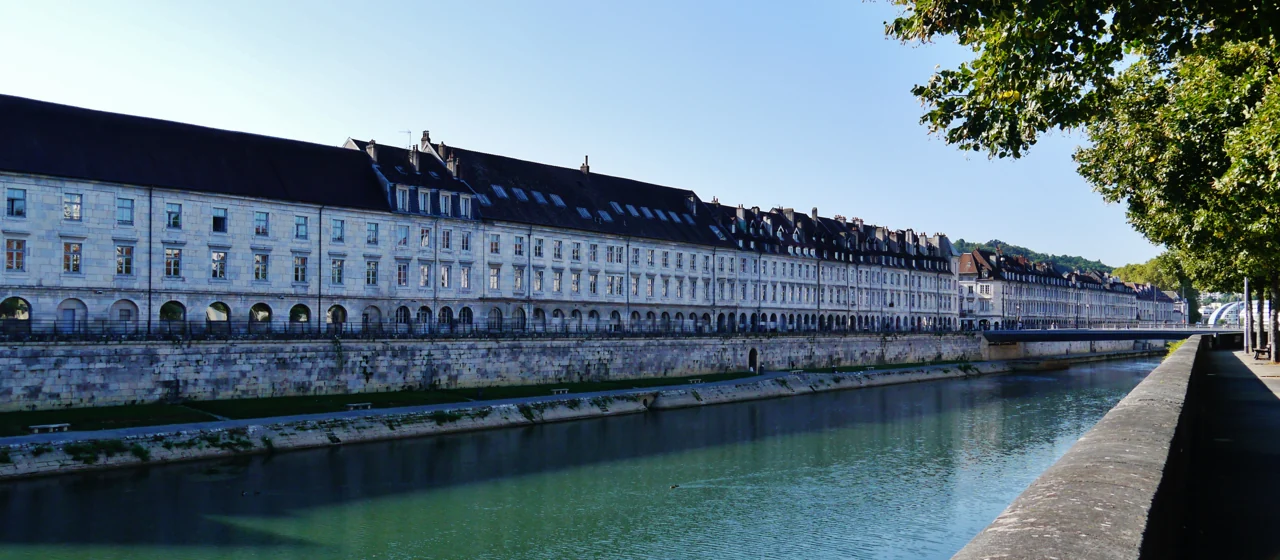

A quay pause can fit around the principal museum's lunchtime closure. A short waterside section and a real meal during the weekday break can give you a fresh start on returning. Neither an available bench nor sunny weather is guaranteed. Keep the walking route clear while photographing and choose a composition without unnecessary proximity to the water. Children might compare rows of windows with reflections; this offers an observation rather than inventing a family experience. When tired, choose a section with a known return instead of trying to complete the entire bend. Seeing museum and quay in one day need not turn the whole perimeter into a checklist: a short look can reveal the large building relationship.
Porte Noire: distinguish an ancient arch from current access
The Porte Noire photograph shows arch, neighbouring street buildings and a dome behind. Its June 2007 source image also includes maintenance scaffolding; do not describe that as today's works. The tourism office identifies the Rue de la Convention monument as Roman, dating approximately to AD175, and lists year-round exterior access. That establishes no admission to every adjacent building or cathedral part on the same day. Choose a short stop to compare the arch's stone surface with the later arrangement around it, remaining clear of traffic and access routes when looking at carved details. The photo proves neither that restoration has ended today nor that it has resumed: read your own day's scene on site.


Combining the arch with other Grande Rue stops can be enough to see older central buildings in sequence. If continuing uphill towards the fortress, account for the separate exertion and check actual entrance conditions. This guide promises no current admission to every Citadelle gallery or animal area; it selects one of the city museums as its principal interior. Looking at the cover's fortress front does not establish a free or step-free tour there. Examine a real outward and return route on a map, and omit the climb if that better suits the day. Comparing the arch with neighbouring streets has meaning on its own; every higher stop need not fit into one outing.
Palais Granvelle and Musée du Temps: another closure day
The fourth image shows Palais Granvelle's long exterior facing Grande Rue; camera metadata dates it to 20 March 2006. The institution gives 96 Grande Rue as Musée du Temps's entrance address. This is no interior picture of clock mechanisms or evidence of a gallery visited today. Outdoors, examine the arrangement of windows between storeys and the broad stone frontage's relationship with the street. Grandvelle in the file name does not change the real place name Granvelle. The museum offers a separate interior for an interest in clocks and time. Choosing it as your principal museum can leave the square's fine-arts museum as an exterior look, rather than hurrying through both collections.


Musée du Temps lists 10am–12:30pm and 2pm–6pm Tuesday–Friday from 1 April to 31 October, with 10am–6pm on weekends and holidays, and Monday closure. A conditional 9am–4pm heat-alert notice on the page establishes no heat alert today: confirm any actual date-specific change. The fine-arts and archaeology museum instead closes Tuesday; do not copy the two calendars into one another. Ask about current combined-ticket coverage and access at reception. Select one mechanism or group of objects to examine how it is displayed. Licences for the five historical outdoor photographs confer no reproduction permission for current exhibition works or gallery images; follow the separate interior rules.
Place de la Révolution, the main museum and a Comté meal
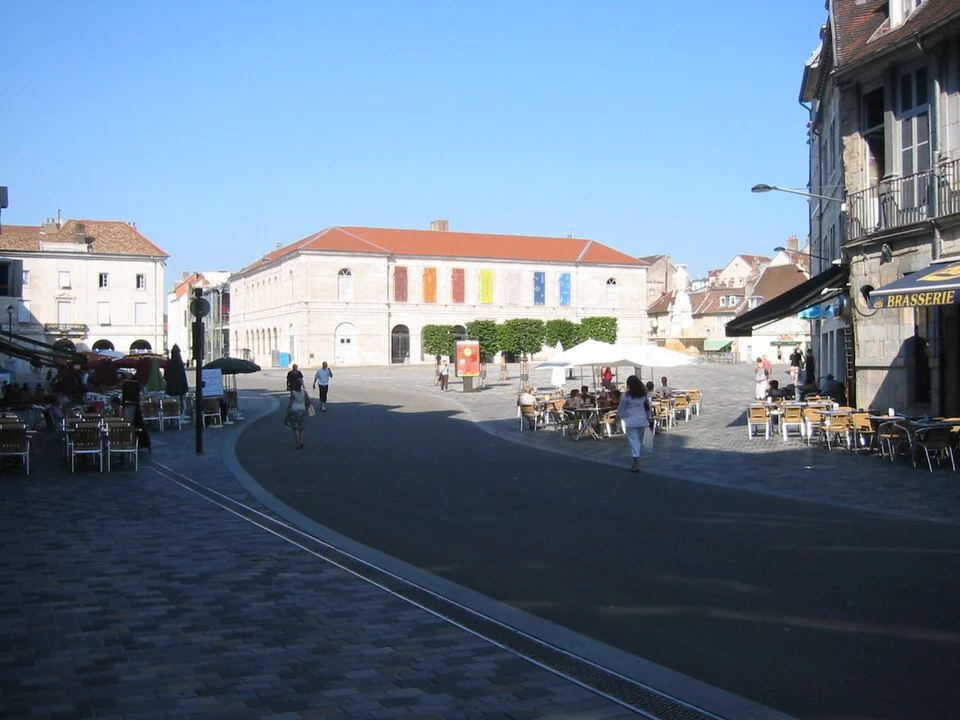
The fifth photo gives Place de la Révolution and the distinct Musée des Beaux-Arts et d'Archéologie front; camera metadata dates it to 3 July 2006. The actual address is 1 Place de la Révolution. Its current October hours are Monday, Wednesday, Thursday and Friday 10am–12:30pm and 2pm–6pm; weekends and holidays 10am–6pm, with Tuesday closure. Separate annual closures also apply. Do not reduce the museum to a last-minute stop just before the lunch break; allow time for one collection section. The institution lists a Révolution tram stop, but check actual direction and departures in local transport for your date. The old square picture establishes no current table or crossing arrangement.

La Grange's own menu offers gratinette salade verte as a concrete main: potato, onion, Morteau sausage, Comté and cancoillotte, with green salad, at 17 Avenue Cusenier. Consider the pork sausage and cheeses around your dietary needs and ask the operator about alternatives. The page top says Monday–Sunday while its footer says Monday–Saturday service; especially avoid guaranteeing Sunday and reconfirm your day. A menu observation promises no unchanged price or stock. Afterwards choose a short quay return or go to your accommodation. Allow time for bags and Viotte on the final morning. This city day distinguishes fortress scene, Doubs frontage, Roman arch, Granvelle mansion, separate museum square and a real main with local ingredients.