
Mombasa: three nights for two cultural days
The Tatilmerkezi Stork marks a fort, a street and a meal on the Mombasa map before adding anything else. The purpose here is to understand the coastal city through two full days, rather than rename a national itinerary built around Nairobi museums or safari parks. Use the arrival evening for settling in, the first complete day for Fort Jesus and a short Old Town segment, and the second for a slower neighbourhood and Swahili food plan. Leaving on the morning after a third night separates two activity days from the airport or station day. Add more nights separately for a long beach holiday; Diani and other coastal settlements should not be treated as stops immediately beside the urban centre.
Rather than ask one building to tell the whole city's story, choose two questions: what does the architecture around the old port preserve, and which neighbourhoods shape everyday meals and shopping? One principal morning visit, a shaded lunch pause and a shorter afternoon segment may be enough. Agree walking length with a guide beforehand if children or companions with limited mobility are travelling. Completing every street is not the point. Two different city experiences, approached without rushing, are a more useful result than a crowded checklist.
Fort Jesus: read the fort and museum together
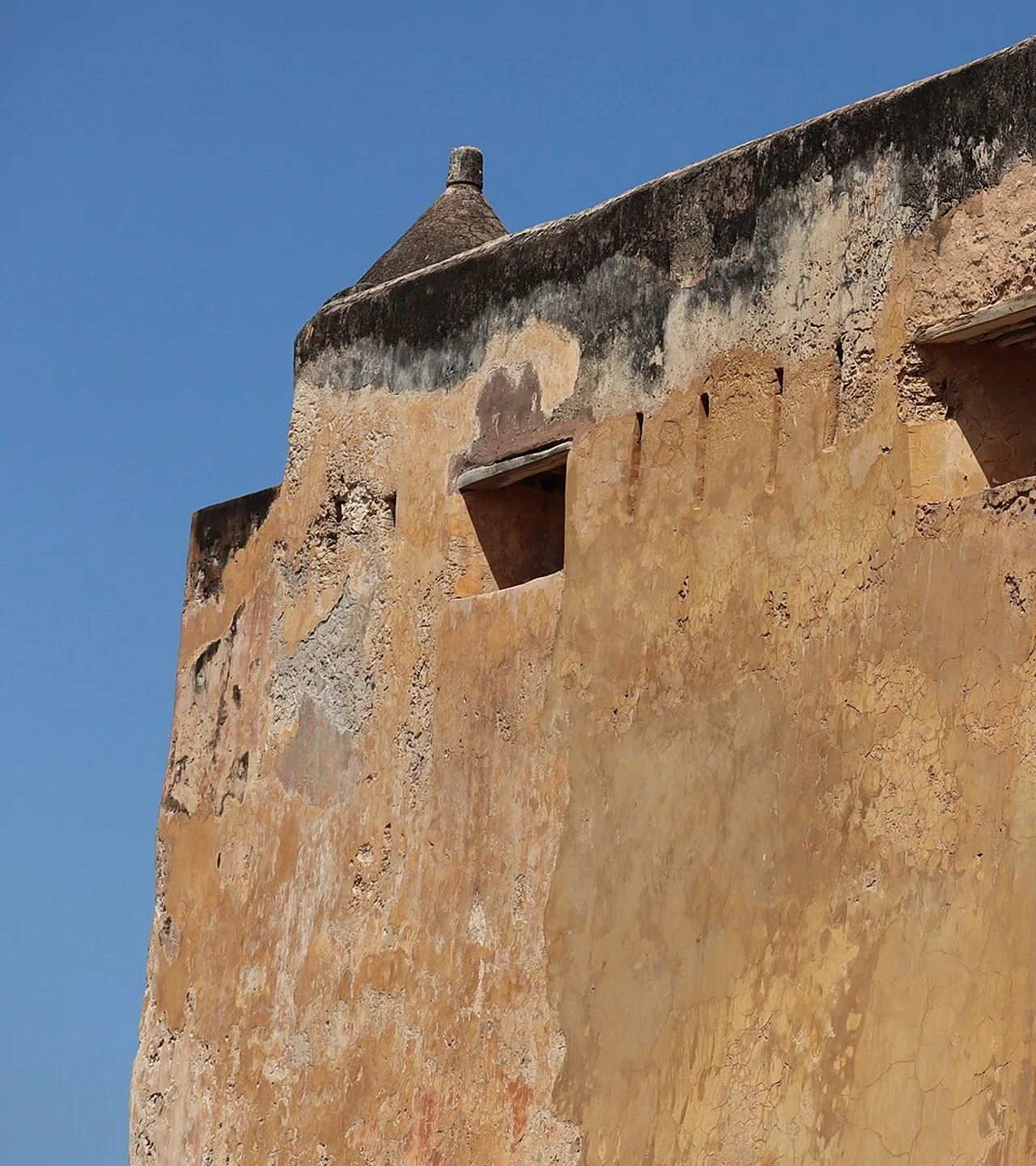
Make Fort Jesus the principal stop on the first morning. National Museums of Kenya identifies the museum on Mombasa island within the historic fortification at the harbour entrance. Start by asking staff which sections are accessible that day. Consider the relationship between walls, passages and the port instead of treating every stone surface simply as a background. Read object labels to understand cultural connections around the harbour; the appearance of an exhibit is not enough to establish its origin or history.

The institution mentions events and art displays, but this guide does not promise a sound-and-light performance on a particular evening. Confirm the actual date, admission and return vehicle directly before building an evening around one. Check the current visitor category and payment instructions through NMK's official channel. Permission to take a photograph is also different from permission to publish a contemporary work of art appearing in it. Use authorised areas and avoid obstructing other visitors. Establish a clear meeting point with your guide before leaving, so that the museum visit still leaves room for lunch rather than consuming every part of the day.
Old Town: a short guided neighbourhood segment
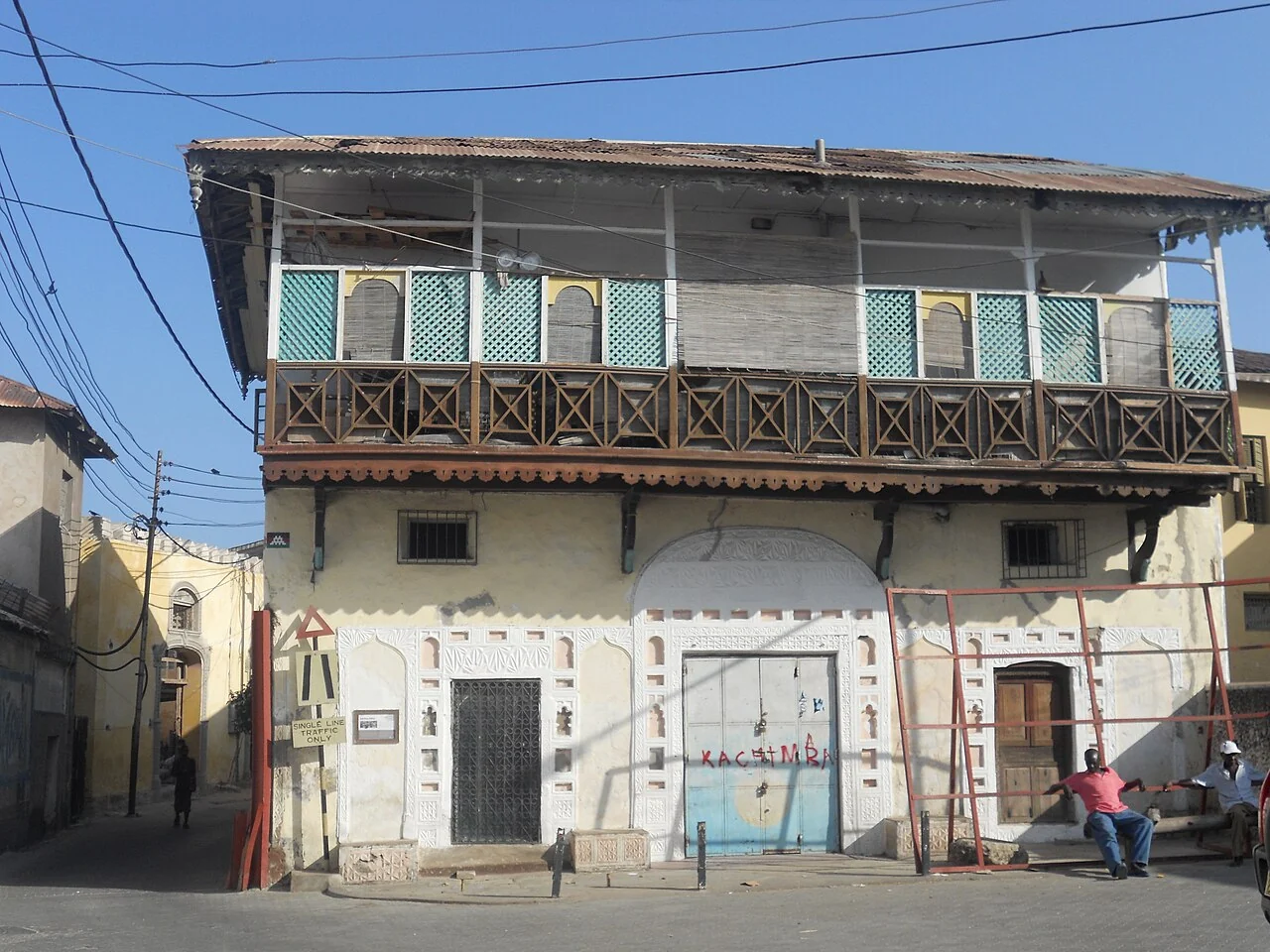
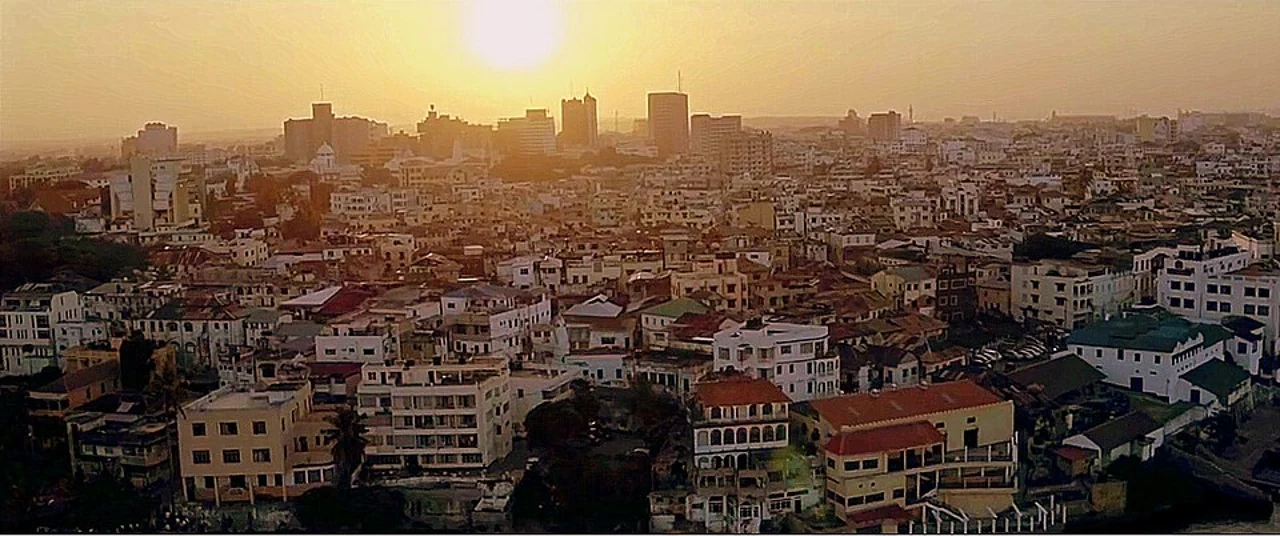
After Fort Jesus, choose a short Old Town section with a reliable local guide rather than attempt every lane. NMK's historical neighbourhood map offers a way to read doors, balconies and older buildings, but an old map does not establish present road access or permission to enter premises. Compare how a wooden balcony addresses a street and how a doorway organises a façade. Do not consume a residential district as if it were an unoccupied museum: stay out of private entrances and ask before photographing people or businesses. The historical post-office image illustrates architecture, not a promise of current postal services or an exhibition.
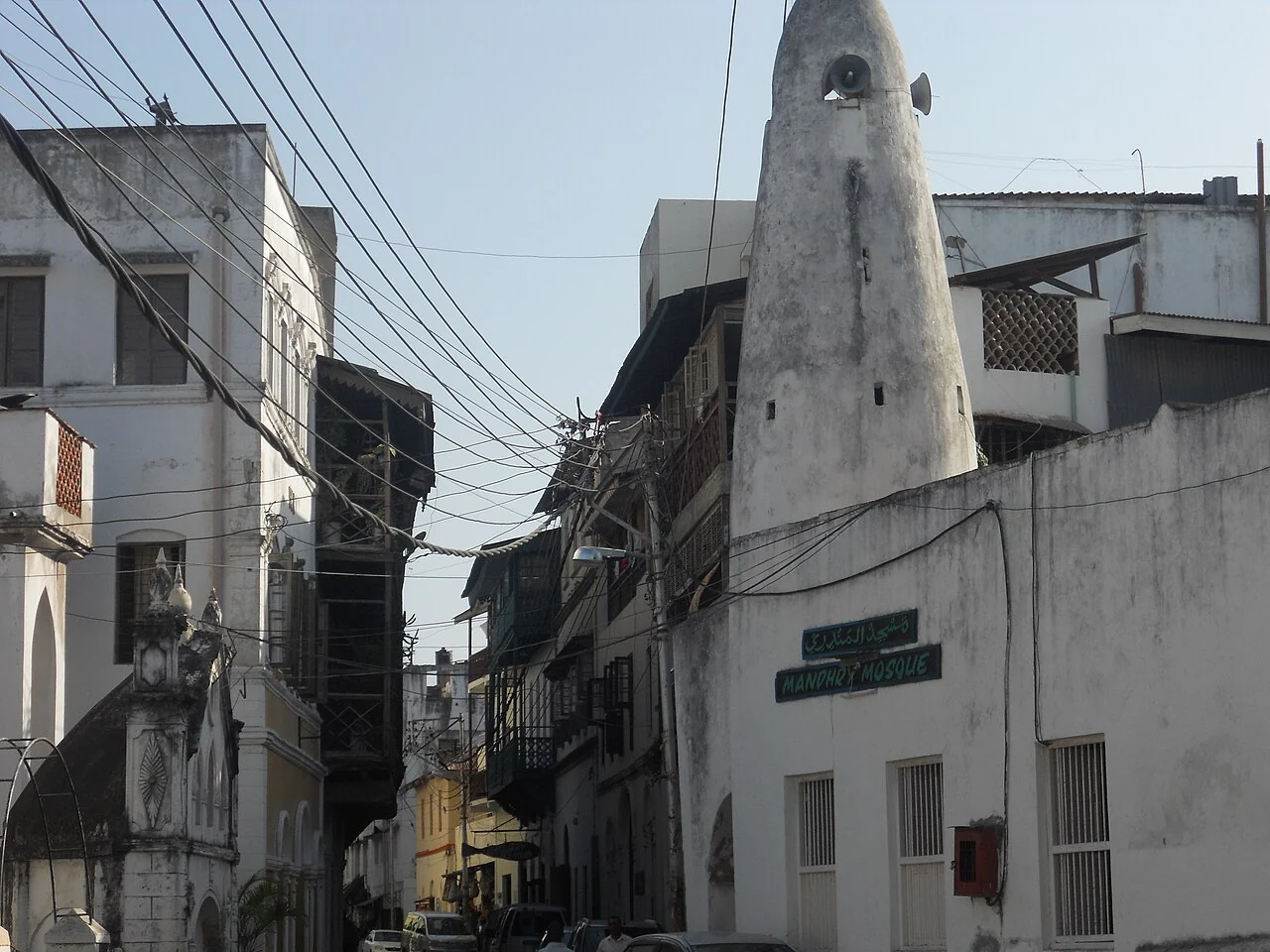

There is a material safety consideration here. FCDO advice checked on 4 October 2026 identifies higher crime risks in Mombasa Old Town and around the Likoni ferry. Solitary night exploration therefore does not form the ordinary itinerary. Plan a short daylight route using the current assessment of accommodation or a trustworthy local guide, and cancel it if demonstrations or a security incident affect the area. Keep valuables discreet. Visiting a neighbourhood is different from entering every side street; going directly from the museum to lunch is a reasonable alternative if conditions or personal comfort make the additional walk inappropriate.
Swahili meals: different choices for breakfast and lunch
The Kenya Tourism Board's Mombasa food experience identifies mahamri and mbaazi for a Majengo breakfast, and pilau, biryani and fish curries among lunch choices. Use these names to ask about a menu rather than assume every business serves a standard package. After the museum on day one, choose a rice or fish-based lunch; on the second morning, ask about mahamri and mbaazi where an appropriate business actually offers them. Establish ingredients, accompaniments and portion size rather than infer dietary or allergy suitability from the dish's name alone.
A spice-shopping pause around Mackinnon can complement the meal, without becoming an obligation to complete an operator's entire route. Official tourism information also mentions madafu and kachri around Mama Ngina. Consider them only if current access and trustworthy preparation make a short stop suitable. Attend to clean handling of peeled or uncooked items, and organise reliable drinking water separately. A calm meal followed by dependable transport back to accommodation may sustain two cultural days better than extending every evening into another street itinerary. The useful question is how coastal meals differ between breakfast and lunch, not how many plates can be counted during one visit.
Centre or Nyali: relate the room choice to city days
Where you sleep changes the transport needed for two museum and neighbourhood days. If considering the centre, ask for the actual entrance address, daylight transport arrangements and evening return, rather than infer walkability from a district name. If a coastal stay in Nyali is preferable, organise outward and return vehicles for the cultural visits on the island. The official tourism brochure identifies Nyali in a coastal accommodation context, but a room near the sea does not automatically provide suitable swimming conditions or uncomplicated pedestrian access. Include accommodation meal times and opportunities to rest in the daily programme.
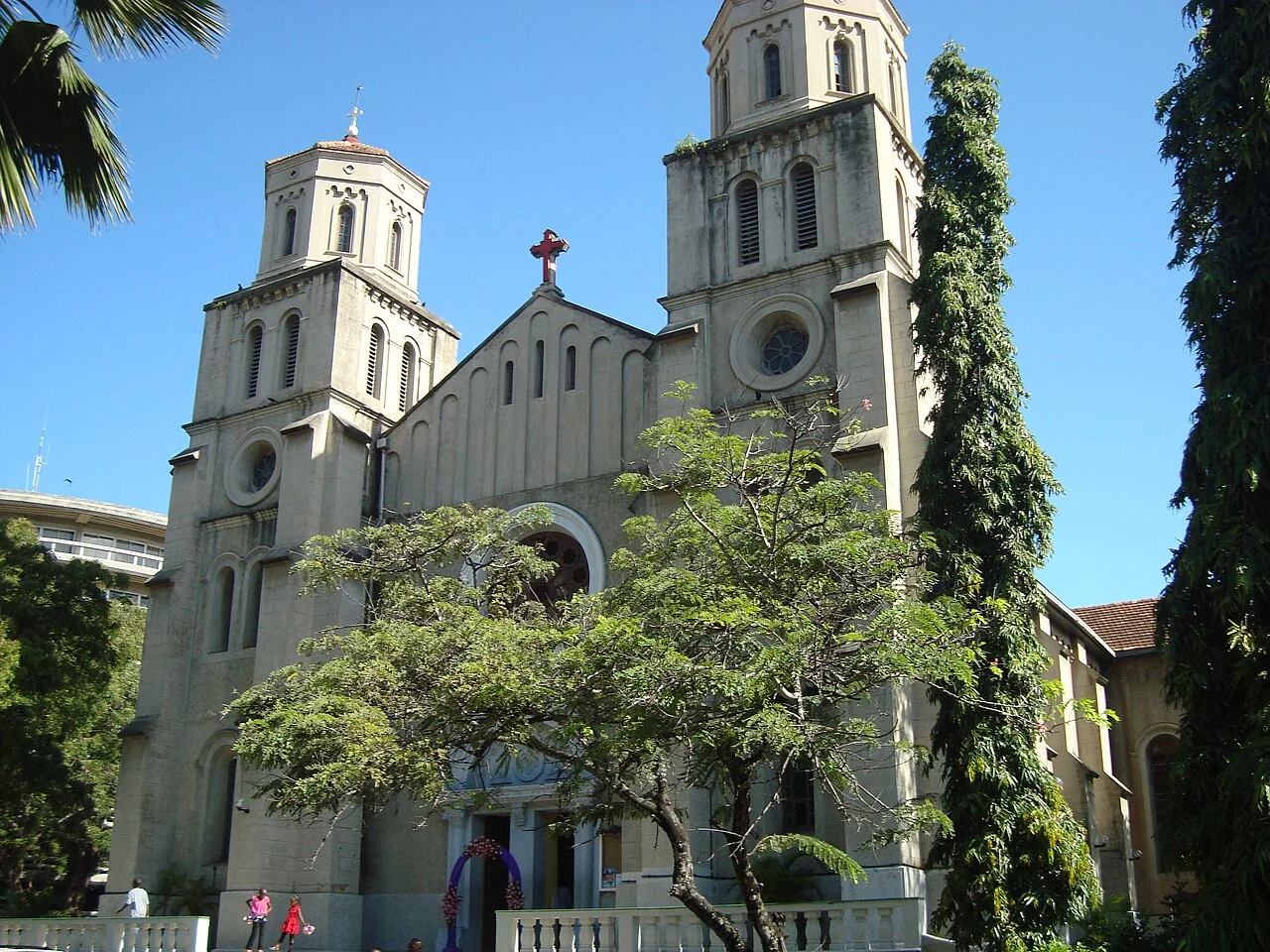

An encounter with a place of worship can become a brief architectural observation. The dated Holy Ghost Cathedral photograph shows one of Mombasa's religious building settings; the guide does not promise interior visits, service times or a special exhibition. Ask about current visitor permission and respect worshippers' space. After lunch on the second day, one short architectural observation or a return to accommodation is enough. Not every free hour needs another building name, particularly in hot weather. Concrete questions about noise, water, cooling, stairs and transfers tell you more about a useful room than the view in its advertisement.
Arrival and departure: allow for different station locations
If arriving by air, organise the meeting between the airport shown on the ticket and your accommodation beforehand. Record the driver's name, vehicle and a contact arrangement for delays. For a train from Nairobi, use Kenya Railways' current official booking channel. Mombasa Terminus and the urban station should not be treated as the same arrival point: recheck the operator's connection information between the island and terminus and the actual service for your date. An old timetable is not copied into a guaranteed connection for every train. The ticketed destination, check-in conditions and final accommodation transfer belong in one plan.

On the final night, pack and reconfirm the morning departure, vehicle meeting and travel documents. Consult official Kenyan authorities for entry conditions applying to your passport; another traveller's experience is not evidence of authorisation. Read current regional advice and insurance requirements, avoid demonstrations and maintain a dependable return arrangement. This two-day cultural itinerary does not attach Kenya's warning regions as holiday extensions. The Stork hopes you leave remembering a fort, a doorway and a newly learned meal name. Leaving an unfinished stop for another journey can be a worthwhile outcome too.