
Nancy: from a public square to a private house
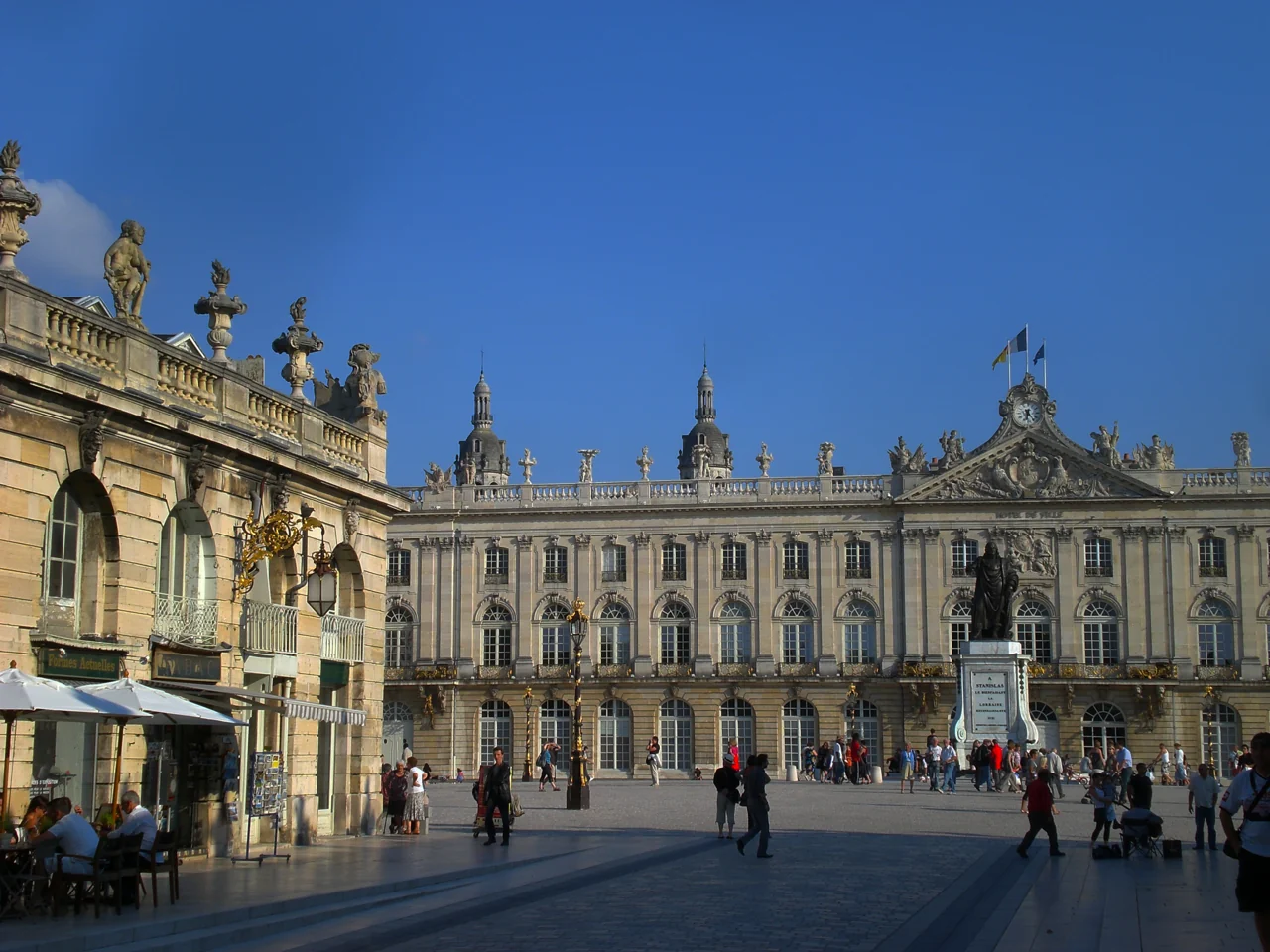
Consider two nights in Nancy to compare the arrangement of a city square with the everyday scale of a house. Give the arrival evening to Place Stanislas, the next morning to the art museum and the afternoon to a previously booked Villa Majorelle visit. A short gateway walk in the older centre can fill the final morning. Place the main day on a Wednesday or Thursday when both institutions may be open, confirming restaurant service separately. Tatilmerkezi Stork asks how public symmetry differs from the varied windows of a house frontage. The cover shows Place Stanislas in August 2010, with open space, regular fronts and a statue. It establishes neither present crowds or ground arrangements nor the sky on your travel date.
Check the city railway station as Nancy, also called Nancy-Ville. A transfer from Lorraine TGV is a different arrival task. Examine SNCF's connections and return for the actual date without assuming an unchanging journey duration or fare. Staying near the station may suit an early departure, while an older-centre property may suit an evening walk; obtain room details directly from the operator. A historic façade establishes no lift, quiet rear room or late reception. Knowing when bags can be left and collected can make museum time easier to use. If arriving late, select only a short square walk on the first evening. Arrange the house booking independently of the hour your train reaches the city.
Porte Héré and admission to the art collection
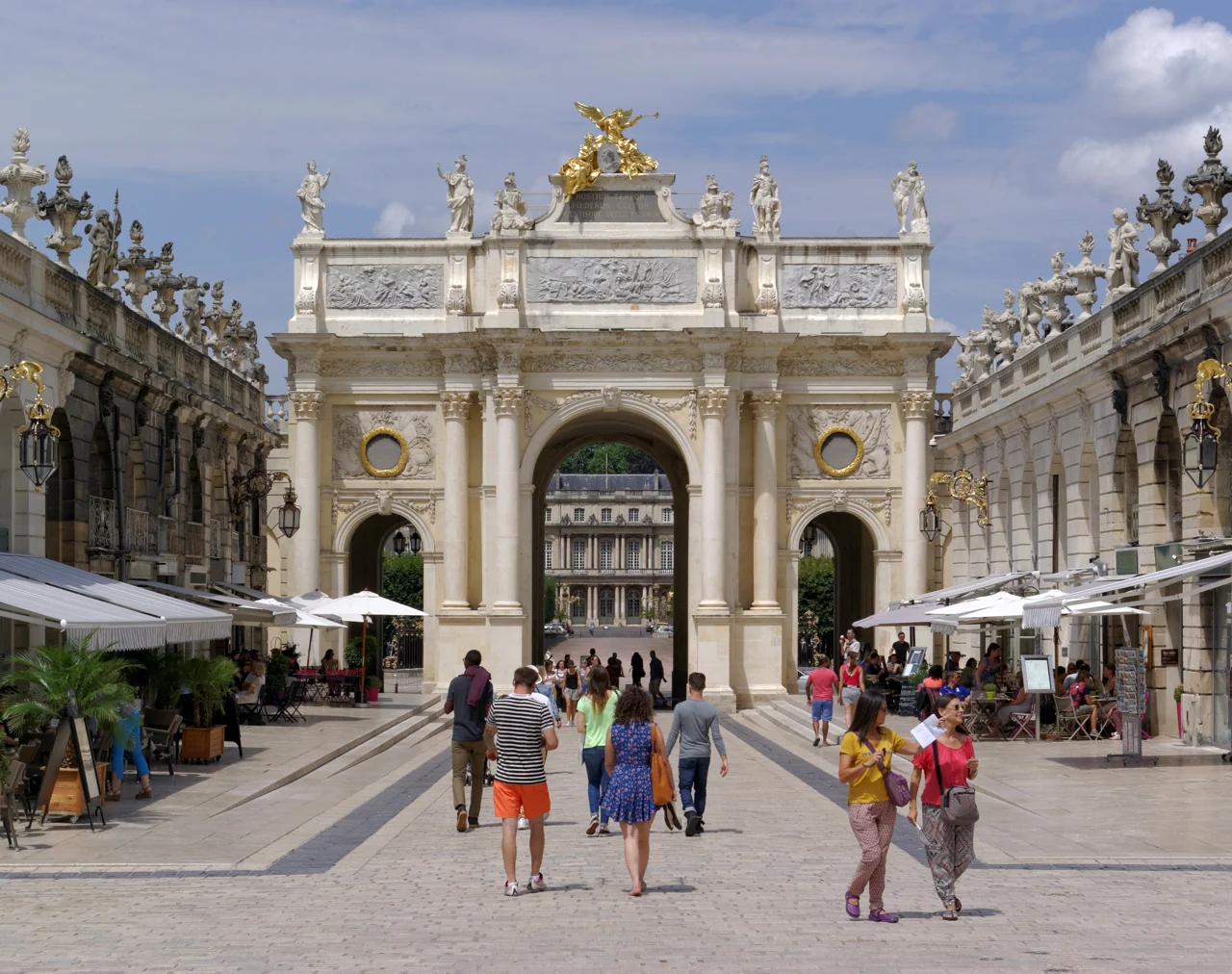
The second photograph shows the three-opening stone arrangement of Porte Héré and its street passage, captured by Berthold Werner on 18 July 2015. Approaching these openings after the broad square gives a clearer comparison than hurrying around the whole city. Choose two details: how the main arch differs from the side openings and how the upper decoration relates to passage below. Tables or crowds in the older image should not be presented as today's arrangement. Walking through an outdoor gateway and obtaining a museum ticket are different tasks; the collection on the square has its own calendar. Every architectural detail need not be squeezed into one picture. Make a short observation where the pedestrian route and your viewing distance allow, then continue to the principal interior.

Musée des Beaux-Arts de Nancy is at 3 Place Stanislas. Its institutional page checked on 5 October 2026 gives 10am–6pm opening, Tuesday closure and separate closures on New Year's Day, 1 May, 14 July, 1 November and 25 December. Charges can depend on the exhibition, so do not import another city's free-collection policy. Choose one section and examine two works through colour or material rather than trying to finish every room. Plan your exit around a full lunch and the house appointment. The museum identifies the Stanislas–Dom Calmet bus stop; check the current vehicle and return. Review specific access information and reception assistance for movement or sensory needs. A published walking estimate should not become a guaranteed outcome for every visitor.
Villa Majorelle: distinguish the open house from suspended tours
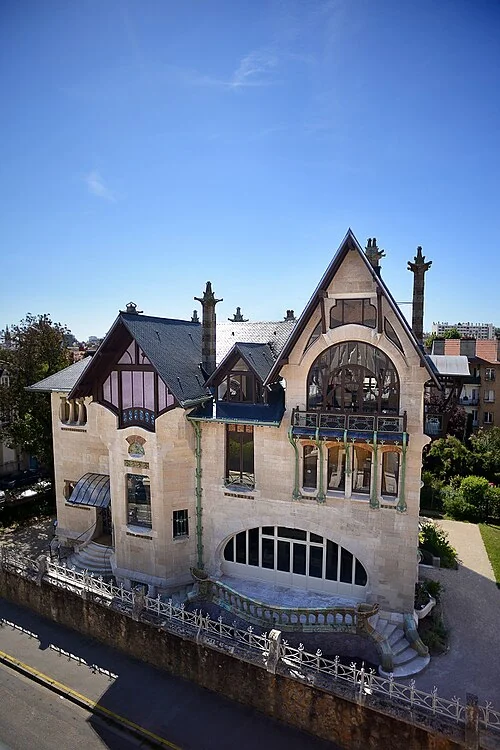
The third image depicts the north façade of Villa Majorelle, photographed by Damien Boyer on 24 June 2020 and licensed from the Nancy Musée de l’École de Nancy source. Varied roof forms, differently shaped openings and planting near the building create a scene distinct from the repeated square frontage. Its visit address is 1 Rue Louis Majorelle. The house is not another room of the art museum on the square, so plan transfer and rest separately. The selected photograph shows Henri Sauvage's historic building in broad exterior context rather than reproducing a contemporary artwork closely. Inside, compare what a window does for light with how the room permits movement. This observation proposal is not presented as a personal memory of a visit.

The current institutional notice gives individual visits Wednesday–Sunday, 2pm–6pm, with compulsory online booking. Weekend guided visits from 11am to noon are separately suspended from 3 October until 3 April 2027; this does not mean all house visits are closed. From 28 October 2026, only the ground floor remains accessible during works. Do not describe that future restriction as already operating on 5 October. Check both the bookable ticket and available rooms for your actual date. The institution reports a lift platform for the ground floor; do not extend its conditions automatically to other levels. Base the visit on the section genuinely admitting visitors rather than treating rooms planned for later restoration as already seen.
The Saint-Epvre exterior and a full main meal
The fourth photograph shows the stone entrance, tall arch and double doors of Basilique Saint-Epvre, another Berthold Werner image from 18 July 2015. Rather than adding long detours on both sides of the museum-to-house day, leave this older-centre section for the final morning. Compare the entrance scale with the differently shaped windows at the house. Seeing a historic place of worship outdoors establishes neither an interior open to visitors every day nor a free guided tour. Check actual use on the date if entry matters and adapt your sequence around worship. The short exterior observation here infers no current admission schedule from a photograph. Choosing one detail around your interests can be more useful than lengthening the stop list.
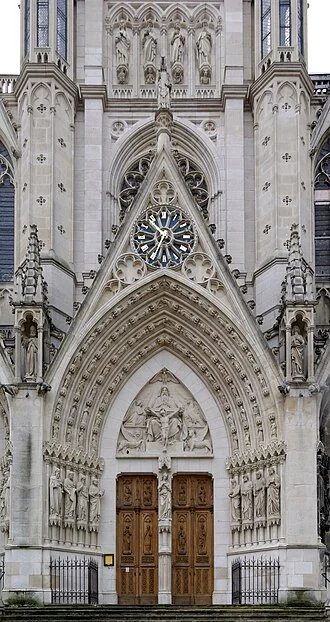

A full meal need not be reduced to Lorraine sweets. Les Pissenlits' operator site currently links an undated menu listing bouchée à la reine with fresh noodles as a main course, describing poultry quenelles, poached poultry and cultivated mushrooms. Its menu page gives 27 Rue des Ponts, while one sentence on the access page says 25bis; confirm the actual entrance and service day when booking. The PDF establishes neither a specific October menu nor availability at every service. Ask the kitchen about mushrooms, meat or other components that may be unsuitable. Obtain a real lunch service fitting the house appointment before assigning a definite meal time between institutions. The image shows a church entrance, not a restaurant table, plate or evidence of food personally tasted.
A short final walk to Porte de la Craffe
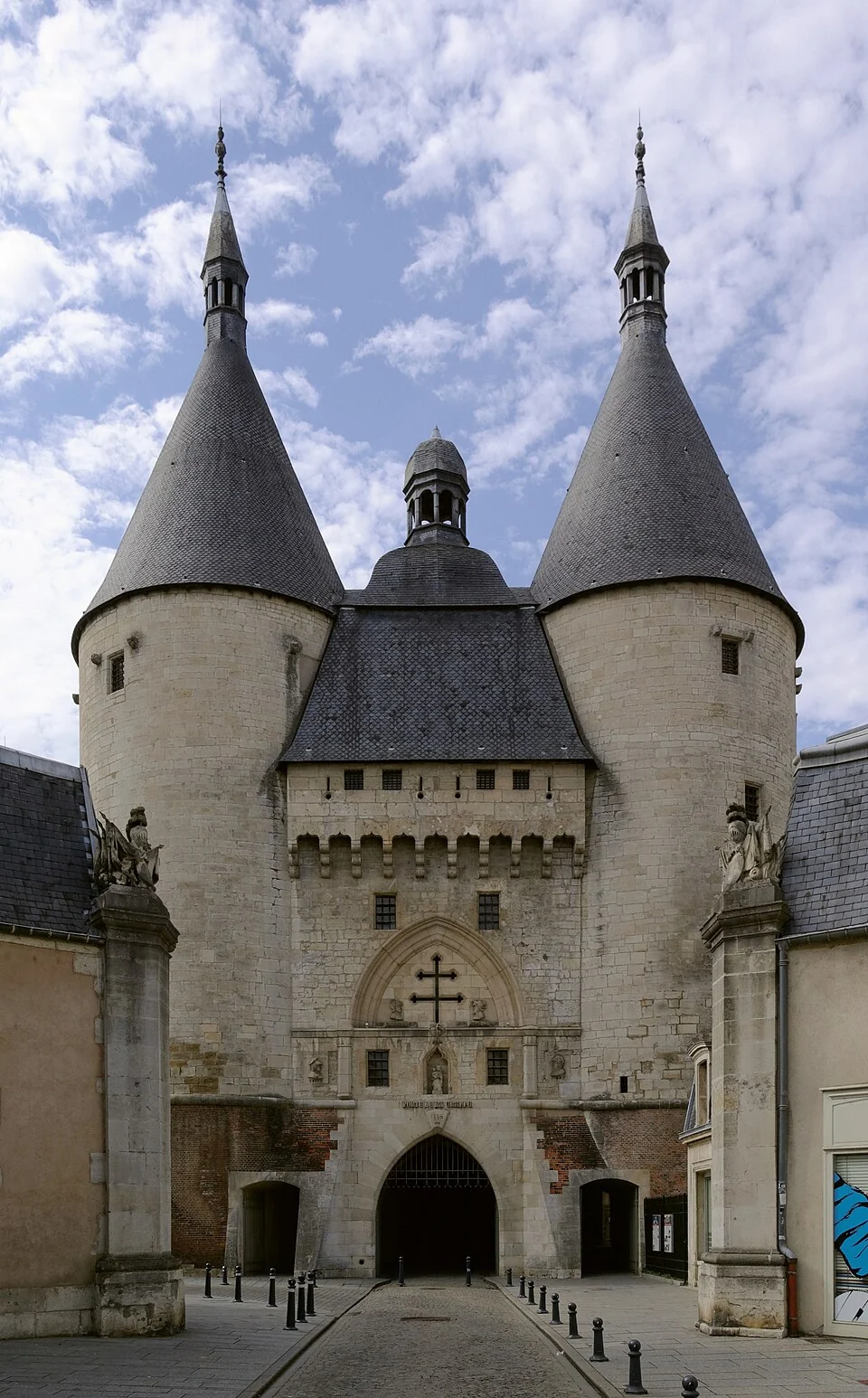
The fifth photograph shows the two round towers and pointed roofs of Porte de la Craffe around its passage, dated 18 July 2015 with the source's required Berthold Werner attribution. Its defensive scale is a distinct observation from the open, decorated arrangement of Porte Héré. With children, finding where the opening lies between the towers can be a sufficient question. The photograph promises no current special tour behind the gateway or interior admission. Select this final outdoor stop only where luggage collection and the train return permit it. If the longer walk feels tiring, return to a different edge of the square already visited. Increasing the number of similar gateways is less useful than understanding how the two chosen structures differ in use.

Arriving on Monday and leaving Tuesday does not provide the same art-museum and house day proposed here. Fit the calendar to the trip or select an open alternative instead of applying a finished itinerary without adjustment. Calculate the available final morning alongside the property's luggage arrangements. Rain can justify shortening the square section, while the booked house day requires room for its separate transfer. A single city walk does not complete the region's entire Art Nouveau heritage. Place Stanislas and the art collection, the house's distinct admission conditions, two city gateways, the Saint-Epvre exterior and a concrete main meal provide a set of different observations that can be adapted to the real dates of your stay.