
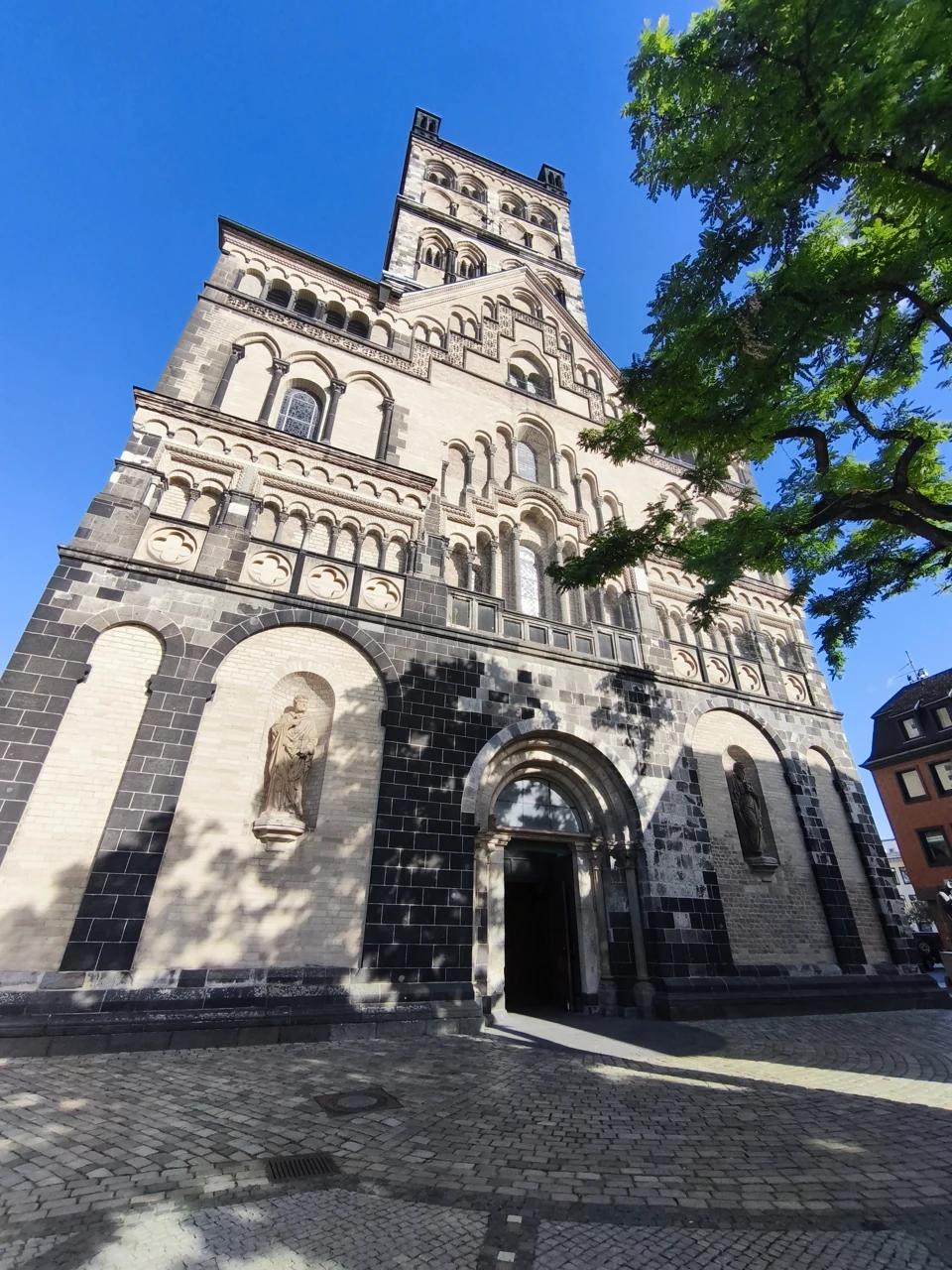
The first decision for a day in Neuss is whether to concentrate on the compact city centre or the outlying art-and-nature setting of Hombroich. For a first visit, this guide proposes a centre route from Quirinus Münster through Oberstraße to Clemens Sels Museum. Read the reopened Roman collection separately from archaeological remains belonging to other periods, rather than treating every old wall as Roman. Hombroich deserves its own transport arrangements and time outdoors. A substantial meal and a genuine hotel option complete the practical plan. Keeping those choices distinct creates a day with room to look closely instead of a sequence of hurried transfers.
Start at Neuss Hbf and continue to Münsterplatz
The DB station record places Neuss Hbf at Further Straße 1. Check your arrival carefully: a Düsseldorf station and Neuss Hauptbahnhof are different destinations. Use current departure information, lift notices and replacement-service updates on the date of travel. Münsterplatz is a useful starting point for the central walk because the subsequent stops can be arranged along one broad direction. Leave luggage at your accommodation or an agreed storage solution before sightseeing. At the end of the day, retain a separate allowance for getting back to the station rather than treating your final restaurant table as the departure point.
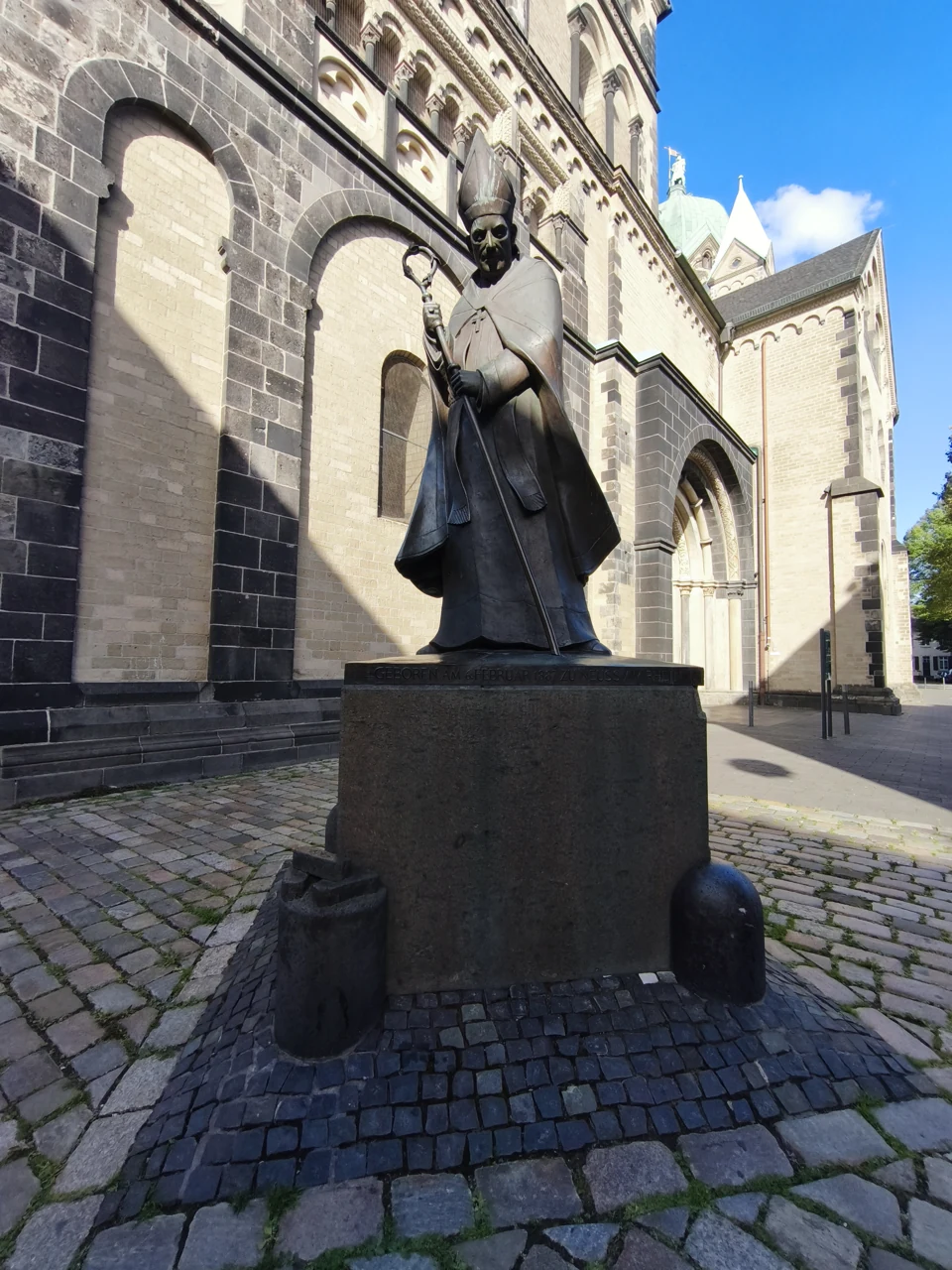
Begin with the exterior of Quirinus Münster and the surrounding square. A photograph of the church does not establish unlimited interior visiting hours; consult the parish's current information for worship and special programmes. If entry is possible, look quietly inside; if a service is taking place, concentrate on the exterior. The Frings monument at Freithof provides a closer-detail stop after the broad square view. Notice how the sculpture fits into the space and how pedestrian routes pass it. An image of a May celebration belongs to that dated occasion and should not be interpreted as an event taking place during an autumn visit.
RomaNEum and Oberstraße: distinguish the historical layers
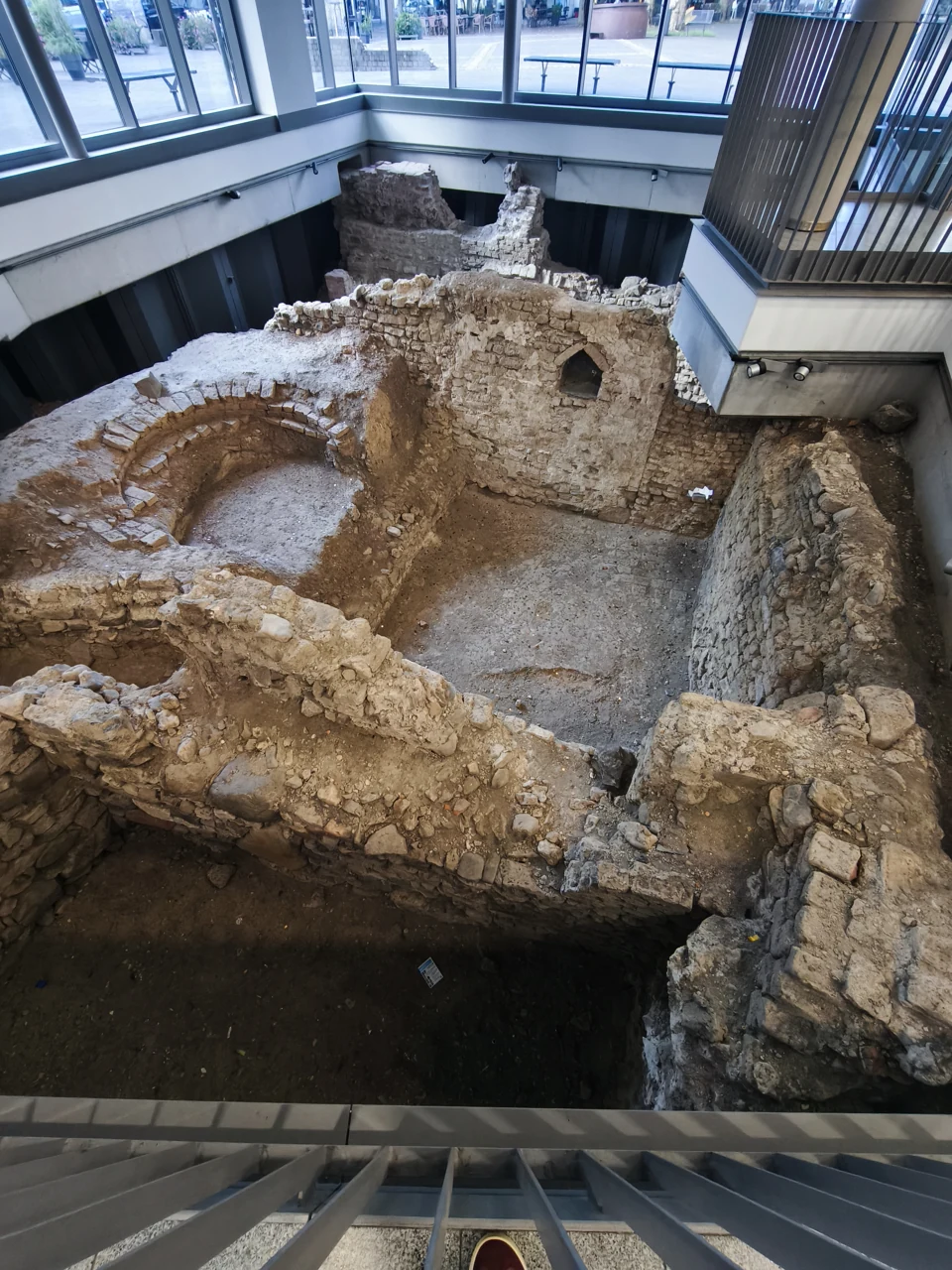
RomaNEum at Brückstraße 1 offers a short archaeological stop within the centre. The institution's visitor information gives Monday to Sunday, 9am to 6pm, with closure on public holidays and free admission. Do not identify the exposed cellars as Roman simply because you are interested in Roman Neuss: the institutional description relates them to medieval urban fabric. That distinction helps you approach the Roman collection later without conflating separate historical periods. Allow a focused pause to examine the remains. This is a different scale of visit from a full tour through the principal museum's galleries, so it need not occupy the whole morning.
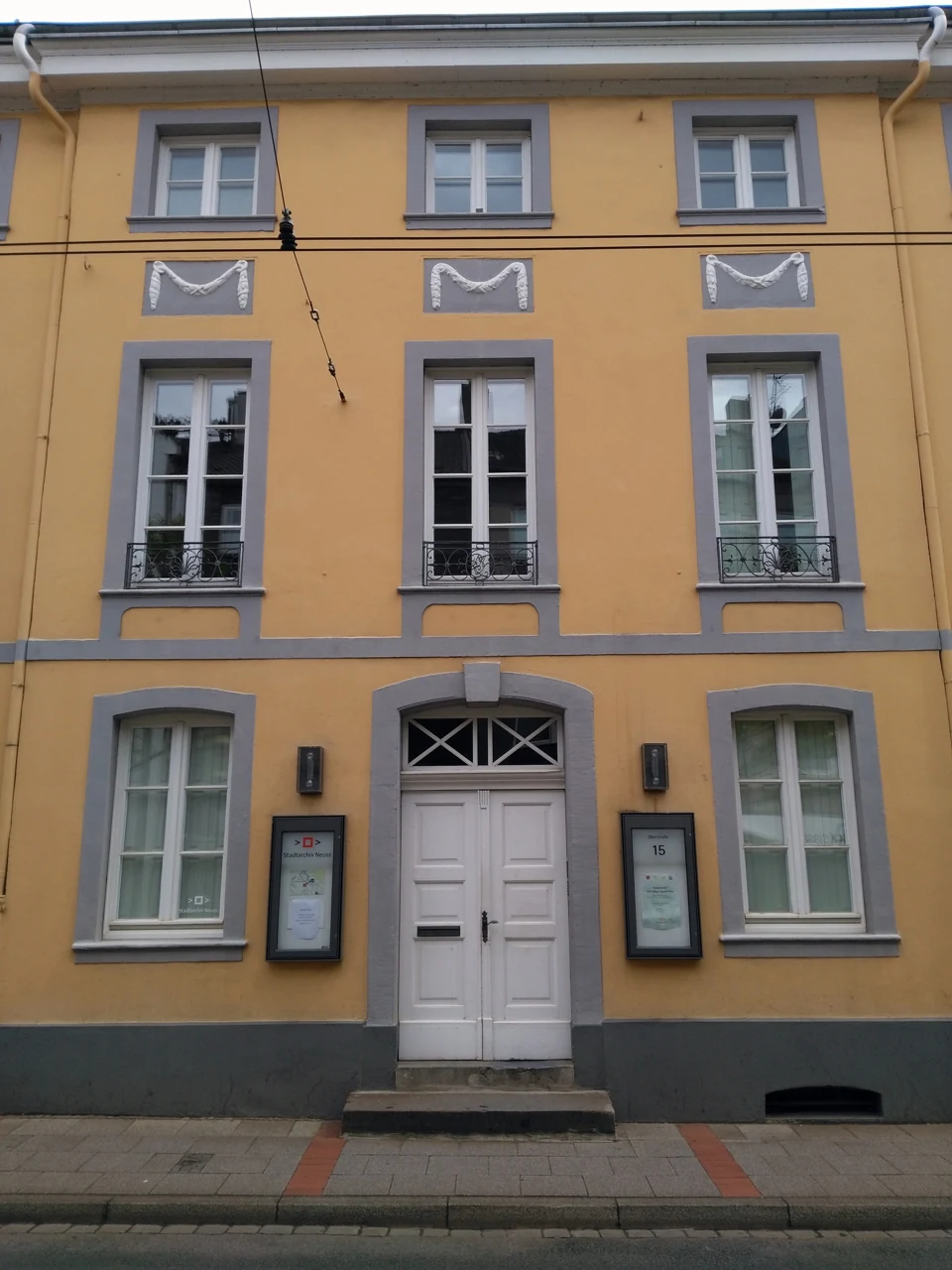
Continue along Oberstraße, comparing façades, changing street width and the present uses of older buildings. The city archive's exterior can form a photographic stop; using archive services for research is a separate activity with its own arrangements. You do not need to enter every building to understand the street. A few minutes observing one façade alongside its neighbours can be more illuminating than checking off a succession of doors. In wet weather, shorten this outdoor section and reserve extra time for the museum. If photography is your main interest, take a little longer here while keeping the restaurant's kitchen times and the museum visit in view.

Clemens Sels Museum: the Roman collection and differing access
The city's official museum information confirms that the archaeological collection reopened in October 2025. Older renovation notices should therefore not become a claim that the Roman section remains closed. Plan the museum at Am Obertor as the more concentrated indoor part of the day, following your observations outside. Select the Roman past, art collections or a combination according to your interests. Roughly ninety minutes is this guide's suggested allowance rather than the institution's prescribed duration. A detailed visit can take longer, while temporary-exhibition end dates should be checked independently from the permanent collection's regular operation.
The museum's own visitor page gives Tuesday to Saturday from 11am to 5pm, and Sunday and public holidays from 11am to 6pm; the last Thursday of the month has evening opening. Access differs between buildings. The main house offers step-free access and a lift, whereas the city-history section in the Obertor is reached by stairs. Do not generalise the conditions of one building to every gallery. Contact the institution about the specific collection you wish to see if mobility is a concern. With children, selecting one subject or group of objects can work better than trying to inspect every display at the same pace. An outdoor Monday walk does not automatically include the normal museum visit.
A proper main course at Vogthaus
At Münsterplatz 10–12, the operator's own menu lists the Vogthaus-Burger with a 180g beef patty, fried onions, bacon, a fried egg, cocktail sauce and fries for €19.90. It is a concrete main-meal option before or after an extended museum visit. Bacon contains pork, so the description should not imply a beef-only dish. Ask the staff directly about allergens and dietary requirements; the menu and price in effect when ordering govern the meal. Its square location allows you to put lunch near the beginning of the route or return here later rather than adding a distant restaurant transfer.
The published kitchen hours are noon to 9pm Tuesday to Thursday, noon to 10pm Friday and Saturday, and noon to 9pm Sunday. Later bar opening is not evidence of food service continuing until the same time. If dinner follows the museum, confirm last orders and table availability. A seated main course gives the group a more substantial break than a dessert-only stop and can make the second walking section more comfortable. For a larger party, arrange a table directly; a route described in a guide does not reserve restaurant capacity or establish a guarantee of service.
Give Hombroich its own half-day
At Minkel 2, Museum Insel Hombroich's current information lists October to March opening from 10am to 5pm, with admission ending an hour before closing. Extended hours until 7pm are announced specifically for 10 and 11 October 2026, not the entire autumn. The Hohe Galerie is currently closed for restoration, and storm warnings can lead to partial or complete site closure. If you choose this outing, plan the journey and outdoor visit as their own block rather than an improvised extra after the city museum. Visitors who enjoy moving between art spaces and landscape may prefer to give it the following day.
For accommodation, ibis Styles Düsseldorf-Neuss's operator record confirms a real Neuss property at Hellersbergstraße 16. Düsseldorf in the name does not place it in Düsseldorf's city centre: organise the central Neuss walk and Hombroich journey around the actual address. Check room and breakfast conditions within your booking. An overnight stay lets you separate the urban and Roman-history route from a second day of art and landscape. The benefit is more than having time for extra stops: each place can be experienced on its own terms, with appropriate transport, access arrangements and time to look.