
Albi: an artist’s gaze and the scale of a brick city
Albi is easy to recognise through the large silhouette of Sainte-Cécile, but looking at a portrait, a poster and a façade within a narrow street creates a different kind of visit. The Tatilmerkezi Stork chooses the Toulouse-Lautrec Museum, the Berbie garden and the Saint-Salvi neighbourhood as separate focuses rather than interchangeable attractions. The purpose is not to drive around the entire Tarn region. It is to compare the way an image directs attention with the scale of public urban space. Allow two nights and three calendar days: an arrival evening, one full art-and-city day in the middle and a departure morning.
In autumn, a Wednesday arrival followed by a Thursday museum visit is a useful example. The institution's published October–May arrangement includes Monday closure. Leave your suitcase at your room and identify a genuine evening meal on arrival. Do not confuse Albi-Ville with Albi-Madeleine: read the station on your ticket alongside the exact address of your accommodation. There is no need to walk every historic lane with a large bag on the first evening. Knowing tomorrow's museum entrance, lunch possibility and return direction can be more helpful than immediately attempting every monument within sight.
The Toulouse-Lautrec Museum: ask what an image brings forward
The museum's current practical information gives Tuesday–Sunday morning and afternoon sessions from 1 October to 31 May, with a midday break. Do not transfer the continuous summer arrangement into autumn. Galleries are cleared before closing, so a last-minute attempt to see everything is a poor plan. Use the Berbie Palace address at Place Sainte-Cécile for your approach. Check the terms of a temporary exhibition or event separately instead of assuming that every activity is covered by ordinary collection admission. Leaving substantial luggage at your accommodation is more useful than arriving at the entrance expecting it to be an easy detail to solve.
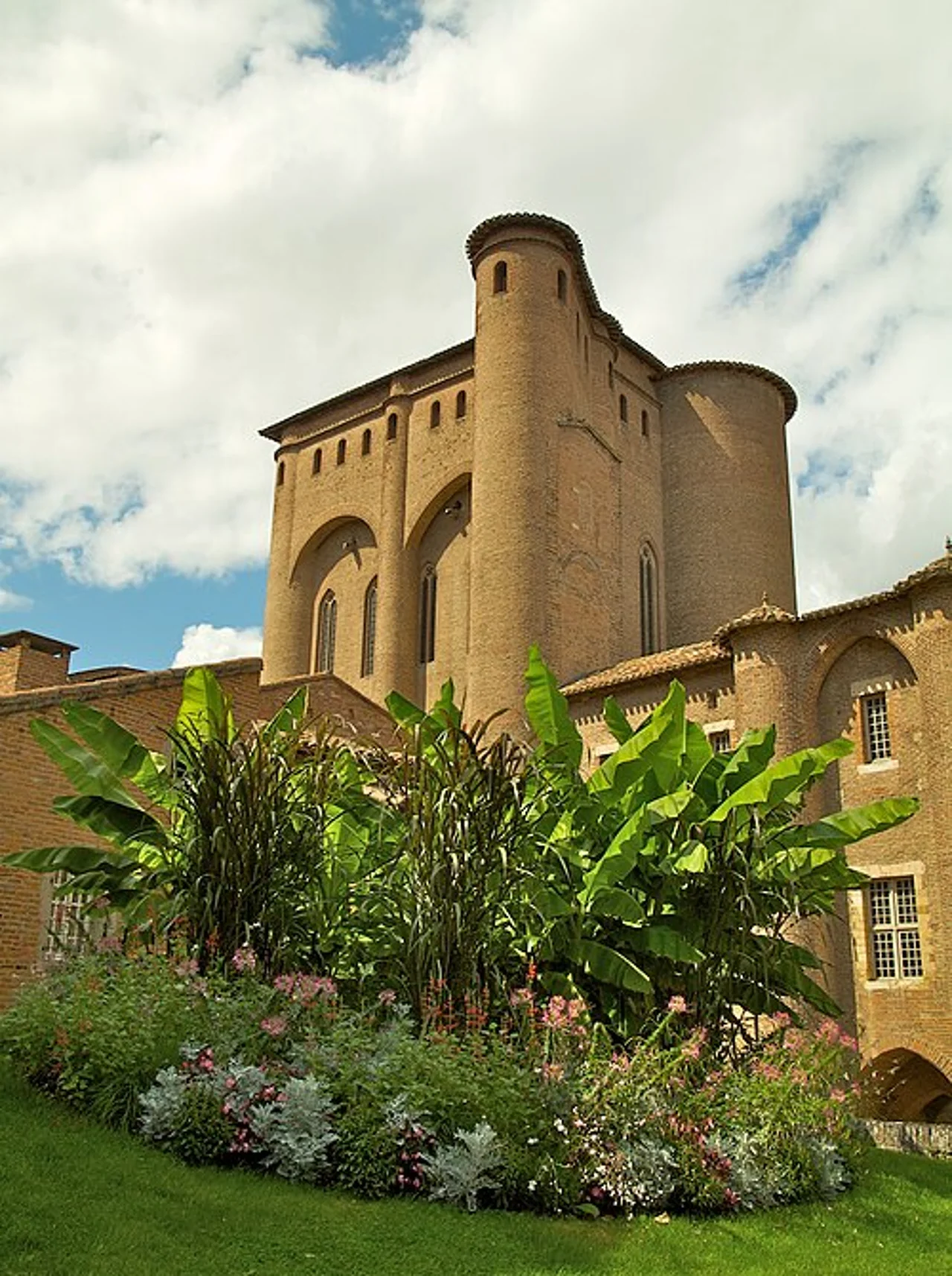

Choose a portrait or poster actually displayed that day. Look first at the centre of the image, then at what is left towards the edge. Where do line, expression or lettering guide your attention? A poster that must communicate from a distance has a different purpose from a portrait examined closely. Compare them to consider how the artist establishes a relationship with a viewer. You need not memorise an entire biography. A short note about one work can be more memorable than moving quickly through every room. The palace exterior photograph in this guide is not evidence that a particular work is currently displayed; interpret the collection from the real galleries you encounter.
Saint-Salvi: move from a monumental silhouette to a small interval
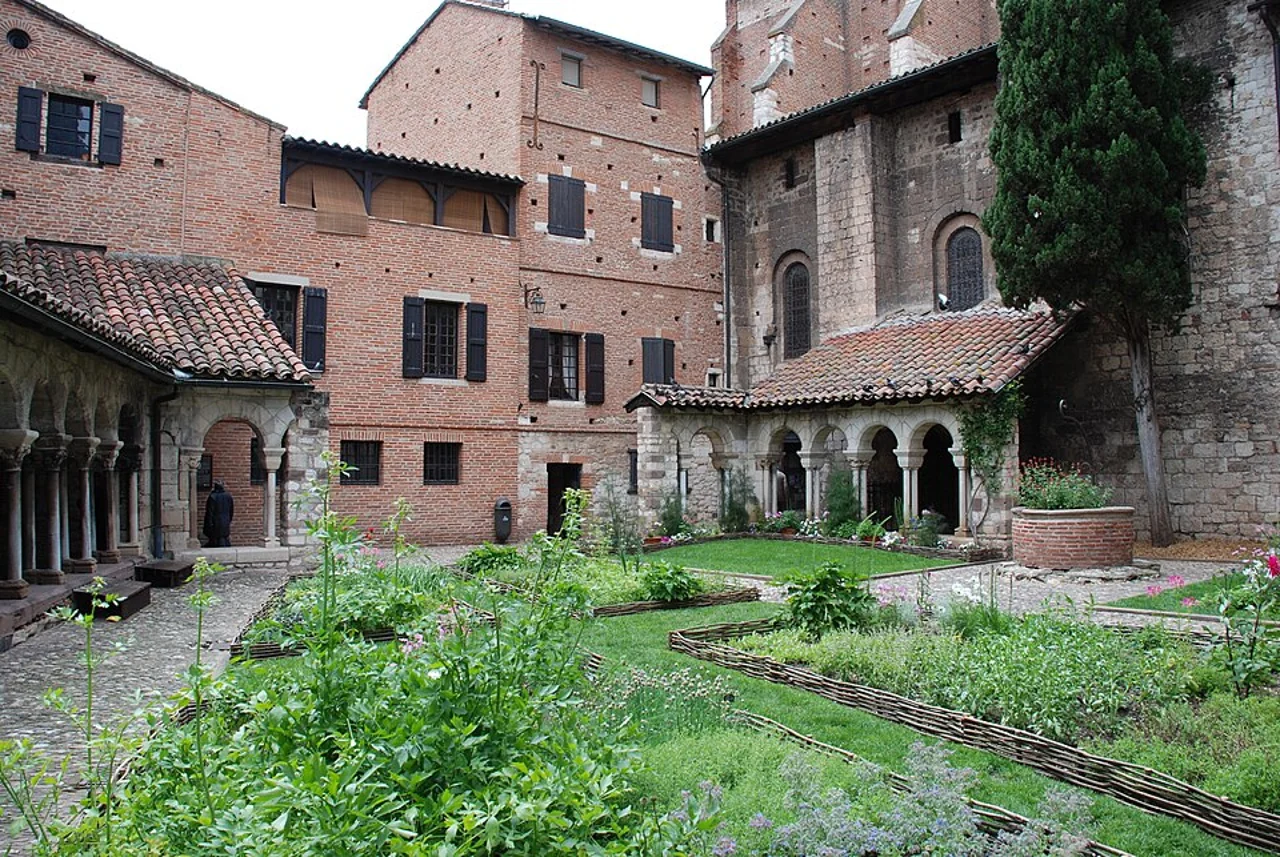
After the museum, do not automatically seek another attraction of the same scale. Move towards Saint-Salvi. The cloister's intervals between columns, its small garden and neighbouring façades offer something different from a cathedral mass seen at a distance. Stand at a corner and notice what an opening frames, then consider how the streets brought you into that space. The tourism office's historic-centre circuits present neighbourhoods as separate walking pieces rather than a single list of photographs. Allowing the day to slow through these differences can make a welcome change after an intense art collection.

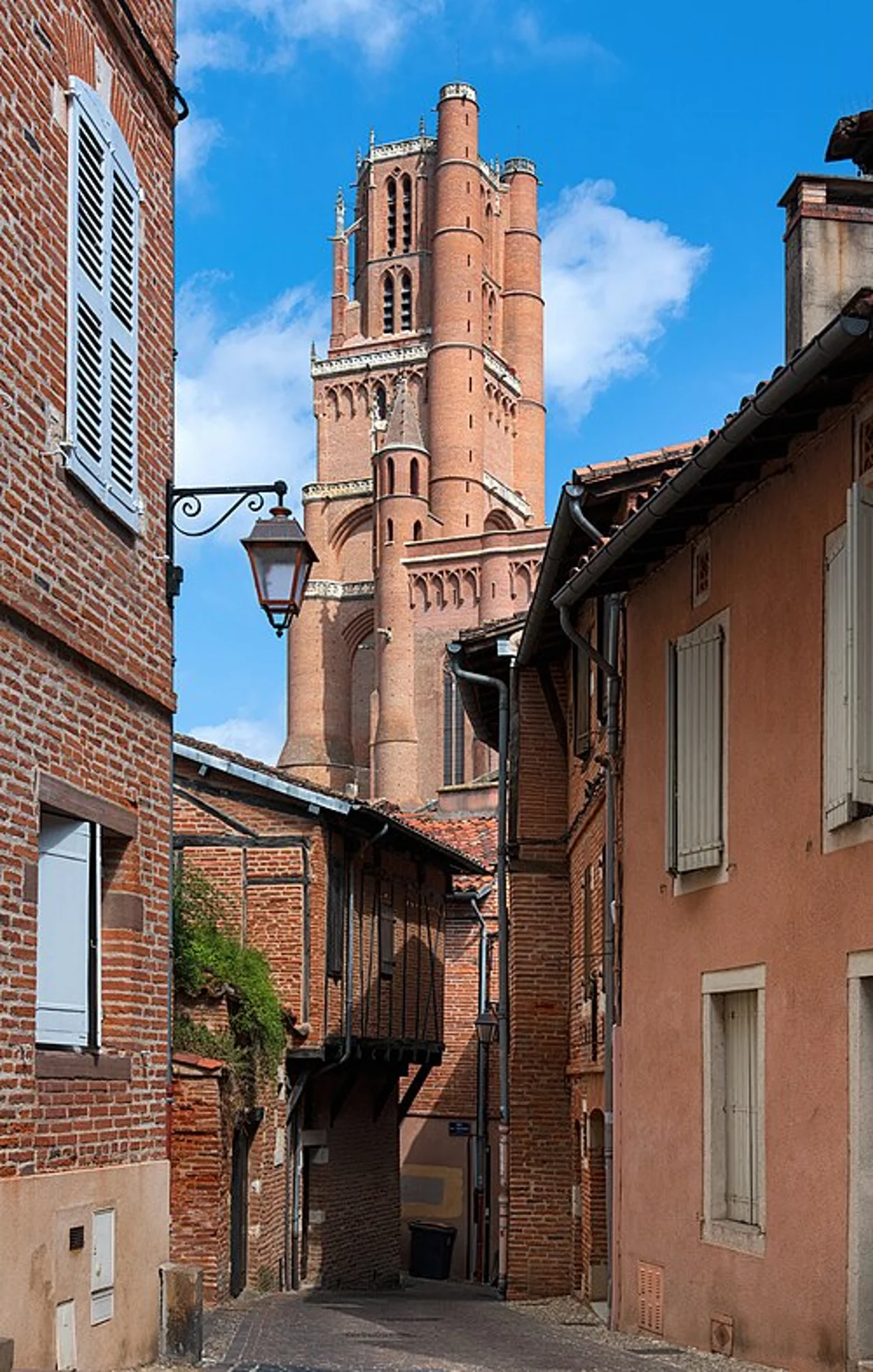
A view of Sainte-Cécile's tower from a narrow lane such as Rue des Prêtres differs from the broad view in a square. Before seeing the whole structure, you notice a fragment between façades. This public street walk does not establish continuous unrestricted access to a place of worship. If an interior visit matters to you, confirm its separate arrangements. Shorten the circuit in rain or when tired and add a place to sit. Assess steps and surfaces on the ground. The museum's accessibility information cannot automatically be applied to every historic lane elsewhere in the city.
The Berbie garden: from an image to an arranged view
The Berbie terrace and garden are a separate component from the museum galleries. Current institutional information describes free garden access and an earlier autumn closing than in summer. Check the arrangements relevant to your visit and give the outdoor section a daylight slot. Formal planting lines, the edge of the wall and the city beyond can be read together. Make a small comparison between a poster guiding its audience and a landscape organising a view, without claiming that these two things serve exactly the same purpose. The garden makes the artistic morning part of a wider encounter with the city.
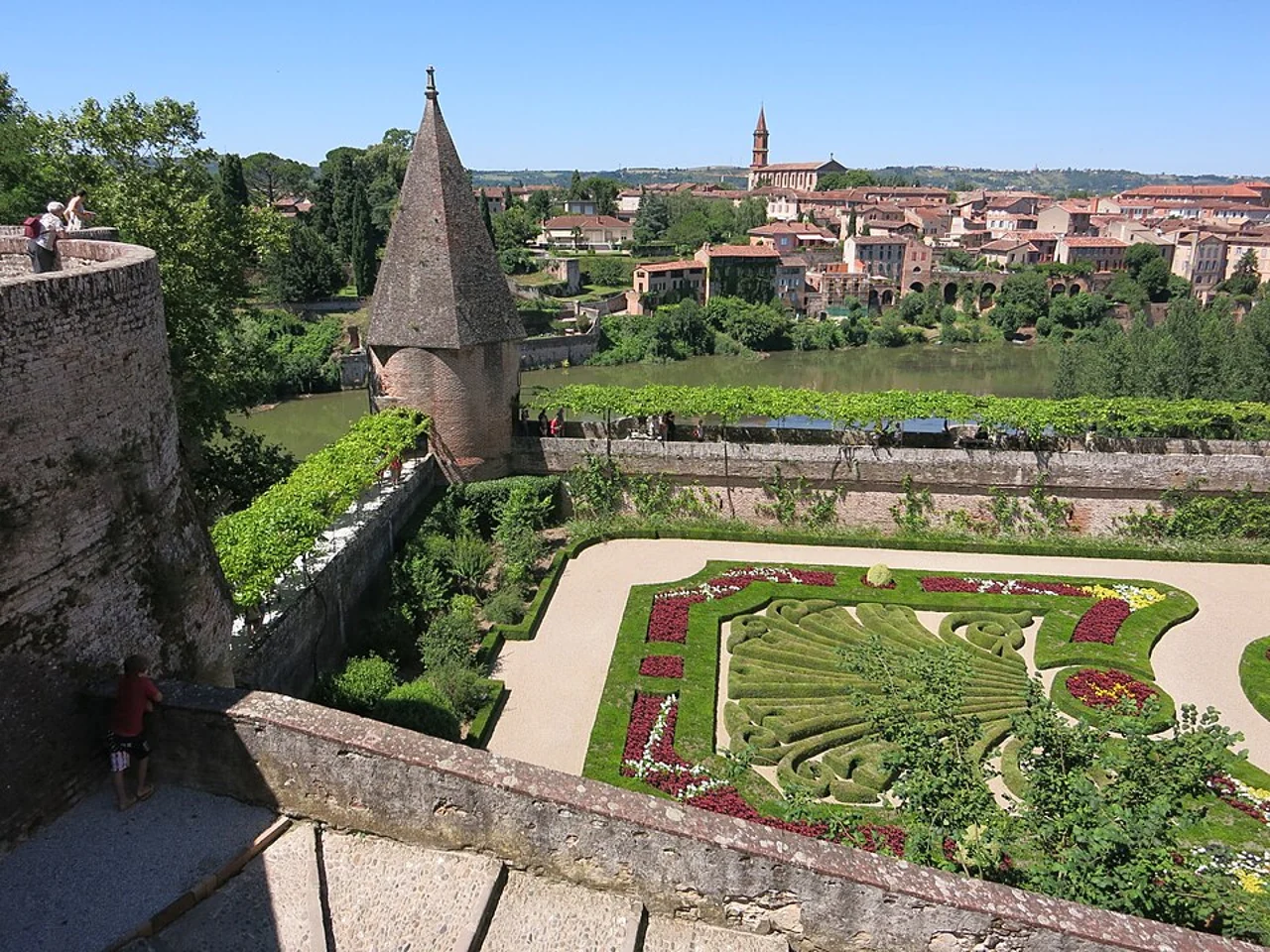

The garden photograph records its arrangement in 2014. Seasonal growth and maintenance can naturally change its appearance. A sunny terrace photograph does not forecast the weather of your visit. Reduce the outdoor portion in rain or wind and choose an indoor break instead. This open-air interval may suit families, but keep out of planted or restricted areas. Readers who also want the Gaillac vineyards should allow a separate transfer and another day: a vineyard outing is not automatically included in this compact Albi cultural day. Keeping the city's programme coherent can be more rewarding than extending it in every direction.
Pont-Vieux and Madeleine: compare the opposite bank
For Pont-Vieux, an old closure description must be distinguished from current municipal information. The city's restoration page states that work finished at the end of May 2025 and that the bridge reopened on 10 June 2025. An older heritage page still describing work is not carried forward here as today's condition. Check any present local restriction at the actual route. Moving to the other bank and seeing the palace and historic centre from outside adds a different scale to the morning's close examination. You do not need to cover every stretch of riverbank within one day to benefit from this change of viewpoint.
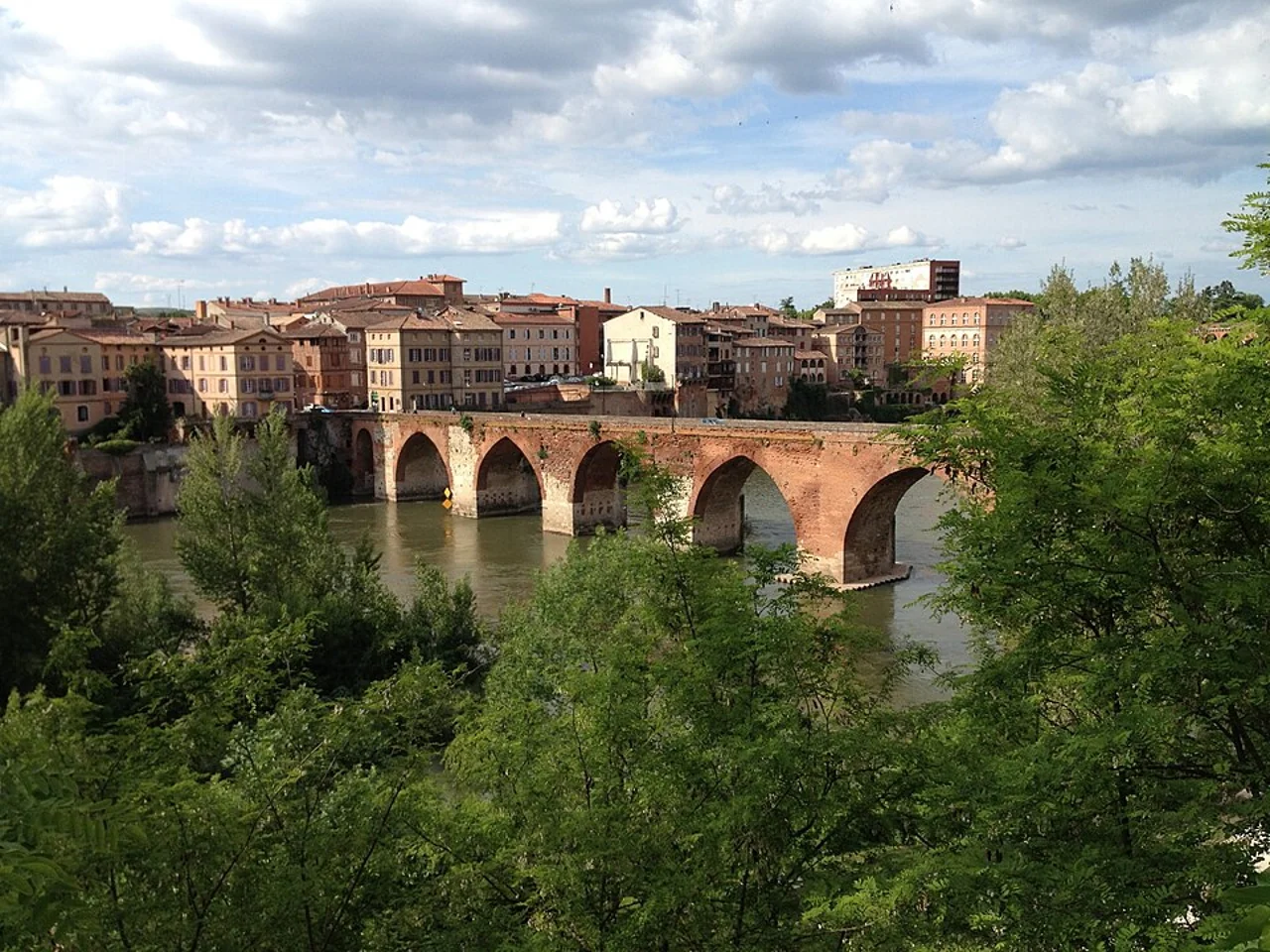

If heading towards Madeleine, think about your return as well. The municipality describes changes to electric shuttle circuits following the reopened bridge. Learn the current stops and service rather than relying on an old route diagram. An announcement of a free service does not mean that a vehicle waits for you at all hours. This waterside circuit is not a swimming or boat programme. Those wanting to return to their room before dinner can keep the opposite-bank walk short. A view should not leave your return connection or luggage arrangements uncertain, particularly on a brief stay.
Janot and gimblette: distinguish a small pause from lunch
The tourism office's own shop describes Janot as a dry anise biscuit and gimblette as a small sweet ring flavoured with cédrat and orange blossom. These two names give your city day a concrete local coffee-break choice. If available, ask about ingredients and allergens rather than assuming that every producer uses an identical recipe. Cordes-sur-Ciel's almond croquant is also promoted in the region, but it should not be renamed as a product originating in Albi. Where a regional food comes from and where you can buy it are separate pieces of information. A useful food stop connects the taste to that geographical distinction.
For a concrete lunch option, Les Tables d’Éric & Hélène at 7 Rue Henri de Toulouse Lautrec lists cassoulet with melsat and duck on its own website. Its chalkboard changes, so confirm the dish when booking. Published opening hours are Thursday-Saturday noon-11pm and Sunday noon-4pm; those spans do not promise kitchen service throughout. Arrive Wednesday for a Thursday museum-and-lunch day, taking the museum’s Monday closure into account. Keep Janot and gimblette for a small sweet stop after the main meal.
A biscuit pause need not replace a proper midday meal. Use the museum break for somewhere to sit and eat, then add a small sweet stop later. Gaillac wine can be a local accompaniment when it appears on the menu; retain an alcohol-free choice and a sensible return plan. For accommodation, compare proximity to the historic centre with the station connection, and a quiet room with an active evening street. Leave time for bags and your actual ticket on the last morning. The Stork's Albi takeaway is a set of different scales: an image directing attention, a brick façade, a river view and an anise biscuit. Sources were checked on 5 October 2026; recheck access and menus before travelling.