

Three nights, two days: one base for the walled city
Tatilmerkezi's Stork gives Khiva two complete days rather than treating it as a photographic pause squeezed between Tashkent and Samarkand. Consider arrival and a short orientation on the first evening, the western gate and Juma Mosque on the first full day, then a confirmed Nurullaboy visit and slower city walk on the second. Depart on the morning after the third night. This allocation is not a train or flight timetable. Late arrival or an early departure may require another night to preserve both days. The guide does not retell the country article's Tashkent–Samarkand–Bukhara week; it serves readers choosing time in this one city.
UNESCO identifies Itchan Kala as the historic inner town enclosed by walls. On entering, learn the gates, your return direction and the accommodation's actual entrance. Pair one architectural group with a seated break rather than trying to exhaust every madrasa. Attend to shade and water early. With children, discuss an exterior material before choosing an interior. Keep residents' passage clear while making photographs. A room close on a map may still involve awkward luggage access over older surfaces. The atmosphere within the walls does not replace practical questions about sleep, stairs and the distance from the vehicle stopping point.
The western gate and Kalta Minor: a compact first day
The official tourism page identifies Ata Darvaza as Itchan Kala's principal western gate. Begin the first complete morning with a short orientation from here, giving the Kalta Minor surroundings their own time for looking and taking notes. The official city introduction includes the unfinished minaret. Comparing its tiled surface with nearby buildings does not require a climb. Do not assume that every tall structure operates as a viewing platform. At the entrance, establish current ticket coverage, included interiors and re-entry arrangements rather than applying an old price to today's visit.
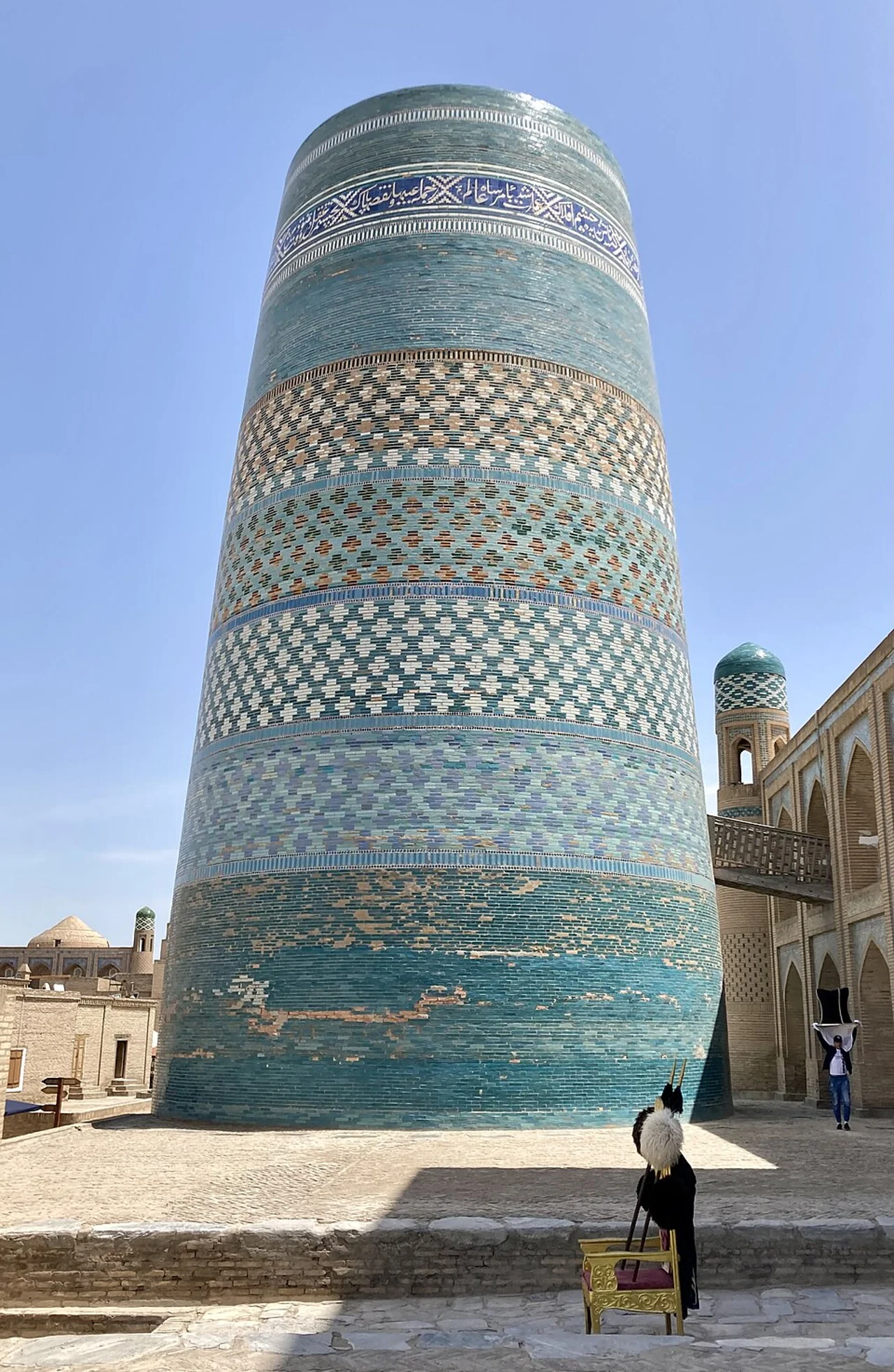

Add a seated pause before continuing to the day's mosque visit. Agree where one companion can wait in shade while another takes photographs. Learn clothing and visitor rules at the mosque entrance. Travellers with mobility requirements should investigate thresholds and paving against their own needs; the entire old city is not declared step-free. For evening photography, a short exterior walk after rest can serve better than adding an ambitious tower ascent. Reduce it when weather becomes uncomfortable. A useful first day depends on an understood return from the gate to your room and sustained attention to two places, rather than the largest possible list of stops.
Juma Mosque: time for the columns and visitor rhythm
Juma Mosque's interior of wooden columns offers a different way of looking from the open spaces outside. Official pages give different column counts, so no precise number is repeated here. When entry is available, follow one detail: carving, wood surfaces and the way light shapes the room. If there is interpretation or a guide, ask how elements have been conserved rather than inventing a date from a decoration. Respect worship and staff instructions. Clarifying photography, footwear and quiet conduct at the start makes the visit easier for everyone.
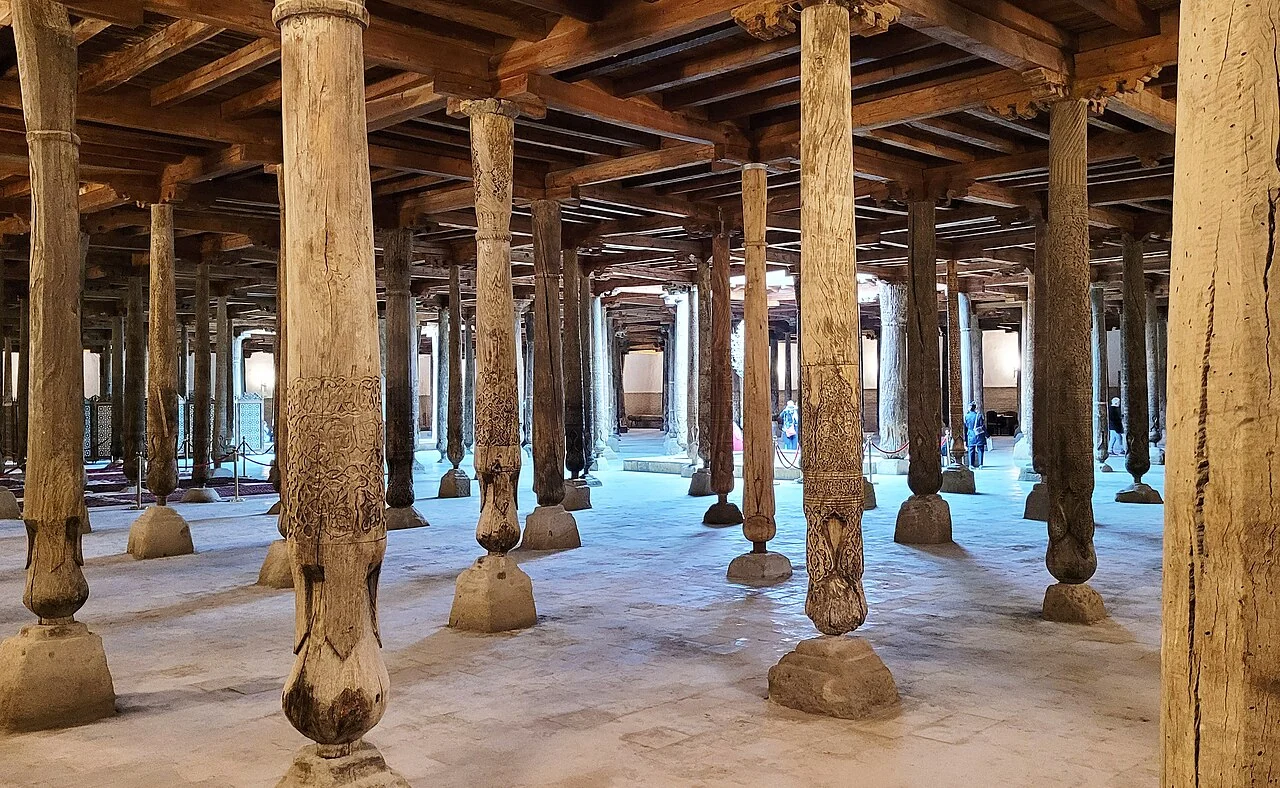

Do not require every companion to spend the same time inside. One person may have a sustained architectural interest while another can stand only briefly. Agree the meeting place and following meal accordingly. Asking children to describe a pattern on one column may be clearer than turning the hall into a history examination. After an interior visit, lunch and rest can be more useful than another long outdoor circuit. There is no need to move the second day's principal focus into this afternoon. If a section is closed or worship makes a visit unsuitable, observe permitted exterior surroundings and ask about another time; a photograph outside a closed door is not an interior experience.
Nurullaboy and a local meal: make the second day different
The official Khorezm itinerary places Nurullaboy on a different second day from Itchan Kala. Do not copy that programme's hours and restaurant names into your trip as a fixed timetable. Confirm the palace sections, guiding and approach with current institutional information before assigning the morning. A palace focus lets you compare building use and courtyards rather than repeating the same gate-and-minaret loop. Ask staff which parts are historic spaces and which are present-day services. Return to the same urban base without adding a lengthy countryside extension; remote archaeology and desert fortresses are outside this two-day city plan.


For a meal, ask about shivit oshi if it is on the actual menu. The official food account describes dill-green noodles, a dairy sauce and a meat-and-vegetable accompaniment, and notes its mainly summer preparation. Availability in October is not guaranteed. Another official Khorezm account introduces tuxum barak, an egg-filled dough dish. Discuss portion sizes and sharing, perhaps trying them at different meals rather than ordering two substantial plates together. Establish dairy, egg and meat ingredients separately: green noodles are not proof of a vegetarian serving. Afterwards, connect palace notes with the ingredient question discussed at lunch. A local-food plan can remain concrete without claiming a restaurant offers an identical menu every day.
Urgench connections, room access and the final check
If arriving through Urgench, coordinate the airport or station actually printed on your ticket with the Khiva hotel's vehicle meeting arrangement. The official tourism itinerary links an Urgench arrival and a Khiva transfer; it does not establish a daily flight or vehicle service. On the official railway sales portal, check date, station and passenger name. Obtain written information about luggage storage, early room entry and waiting when delayed. If a vehicle cannot reach a room within Itchan Kala, ask how far baggage must be carried. An address outside may offer different vehicle access; compare evening returns, food and rest alongside atmosphere.

The official FCDO material checked on 4 October 2026 retains advice about licensed taxis, seatbelts, belongings in crowds and caution with photographs around official or military areas. Establish entry rules for your passport through the authorities, ask how the hotel handles visitor registration and retain the record. Do not borrow a visa exemption issued to another nationality. Restricted Afghan-border areas are not part of this city programme. Bringing a drone is not an ordinary camera choice and requires checking official permission in advance. Keep the final morning for breakfast, luggage and the real departure connection instead of another long excursion. The two cultural days can then close without becoming a last-minute race through squares.