
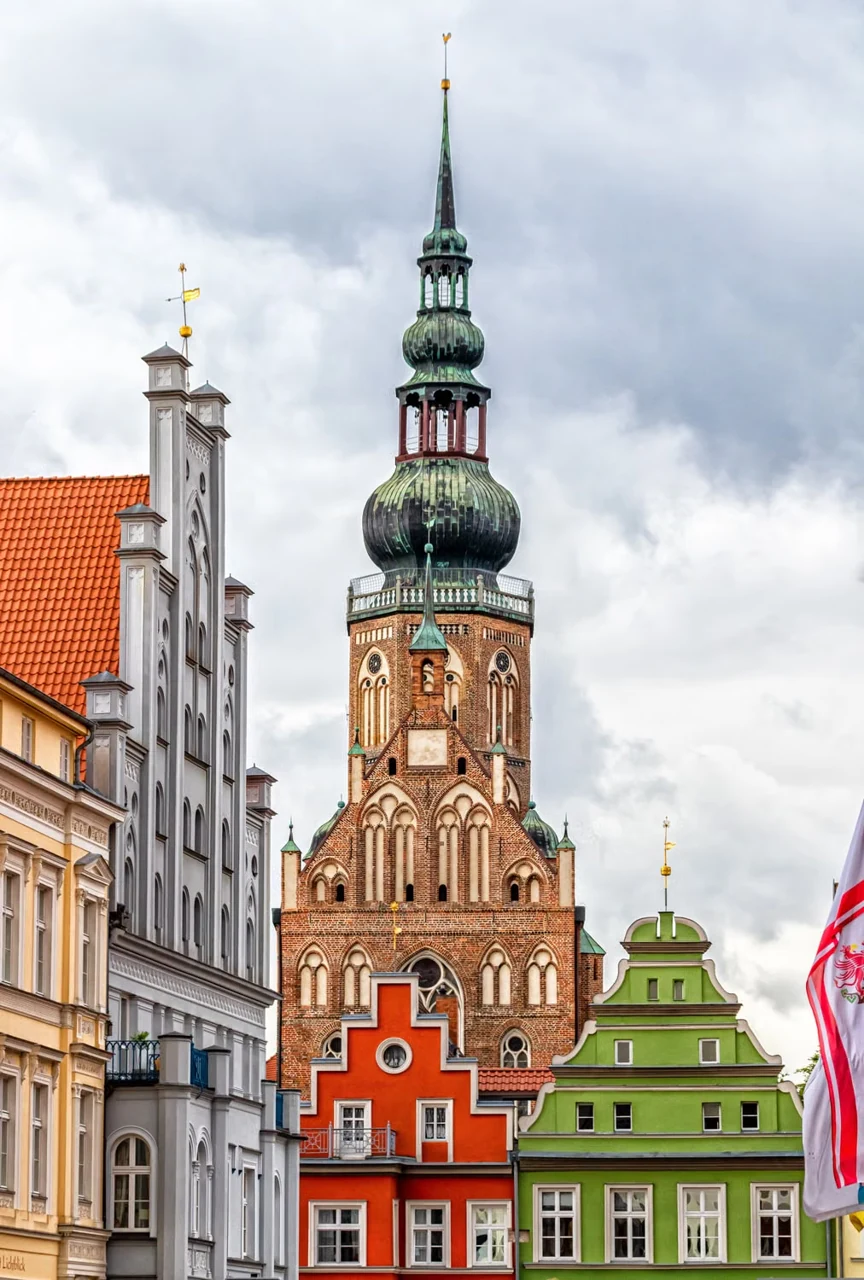
A visit to Greifswald can connect Caspar David Friedrich’s family home, paintings and one of the ruined buildings he used as a motif. These are different experiences in different places. Start with the centre, the Friedrich house and the Pomeranian State Museum, then give Wieck and Eldena a second day. This order leaves room to compare the actual landscape with the artist’s constructed image without treating every stop as a location you must tick off before dinner. It also separates a compact town walk from a substantial outing along the River Ryck. Choose the parts that interest you, rather than assuming that a Friedrich itinerary is one continuous museum visit.
Separate the square, the family house and the paintings
Begin around Marktplatz and look at how the façades address the open square. Pause at a corner to compare its broad space with the streets leading out of it. Then consider the Caspar-David-Friedrich-Zentrum at Lange Straße 57. The institution explains the former family home and business premises together. Its old soap-making space and family room bring the story closer to the household and work behind the artist’s biography. This can give the visit a clearer focus than simply collecting a date and a photograph of the entrance.
The house and a major picture collection serve different purposes. Use the centre to understand family life, then use the Landesmuseum to spend time with selected works. If your schedule is short, a longer visit to one institution may be more satisfying than rushing through both. Opening days also differ with the season: the centre lists Tuesday–Sunday access in May–September, but Tuesday–Saturday in October–April. That makes a Sunday autumn itinerary a different proposition from a summer one. Check the institution’s current information for the day you intend to visit instead of relying on a general museum listing.

Use current information for the Landesmuseum gallery
The Pommersches Landesmuseum at Rakower Straße 9 now lists Galerie der Romantik and Pommern / Pomorze – Land am Meer among its permanent exhibitions. Older travel descriptions may discuss the picture gallery’s redevelopment closure; use the museum’s present visitor information. It lists Tuesday–Sunday opening from 10:00 to 17:00 and Monday closure. Ask about the route when you arrive and decide how much time you want to give to paintings and to regional history. Having both available does not oblige you to allocate them equal time.
Choose one painting and look at its foreground, horizon and relationship between architecture and landscape. This gives you something to consider at Eldena the following day without searching for an exact match between a painting and the current ruin. Check the present scope of the English audio guide too; the museum does not describe every part as having identical coverage. Its monastery garden is listed as open from May to October. An exterior break can be part of the visit in that season, while a winter plan needs a different place to pause. Keep the gallery and garden as separate choices within the same stop.
Read the historic harbour from the bank first
After the centre, the Museumshafen changes the scale of the trip. Masts, ropes and boats take over from street fronts. The city explains that information boards in front of vessels describe their type, construction year and history. Start with these shore-side accounts. A boat’s presence in the historic harbour does not grant unrestricted boarding. Investigate a deck visit or a sailing excursion with the relevant operator; looking at the vessels from the bank is a different activity and does not require a sailing ticket.
Consider the Hafenstraße side and the boatyard area on Salinenstraße as parts of a working maritime setting. At one point look at the boats against the town; at another, concentrate on the vessel itself. That makes the harbour more than a sunset photograph. On a windy day, brief observation stops can be more comfortable than a long seated break. Before continuing towards Wieck, assess the remaining walking distance and your energy. The river route is a substantial extension, rather than another short detour among streets in the old centre.

Give Wieck and Eldena a second day
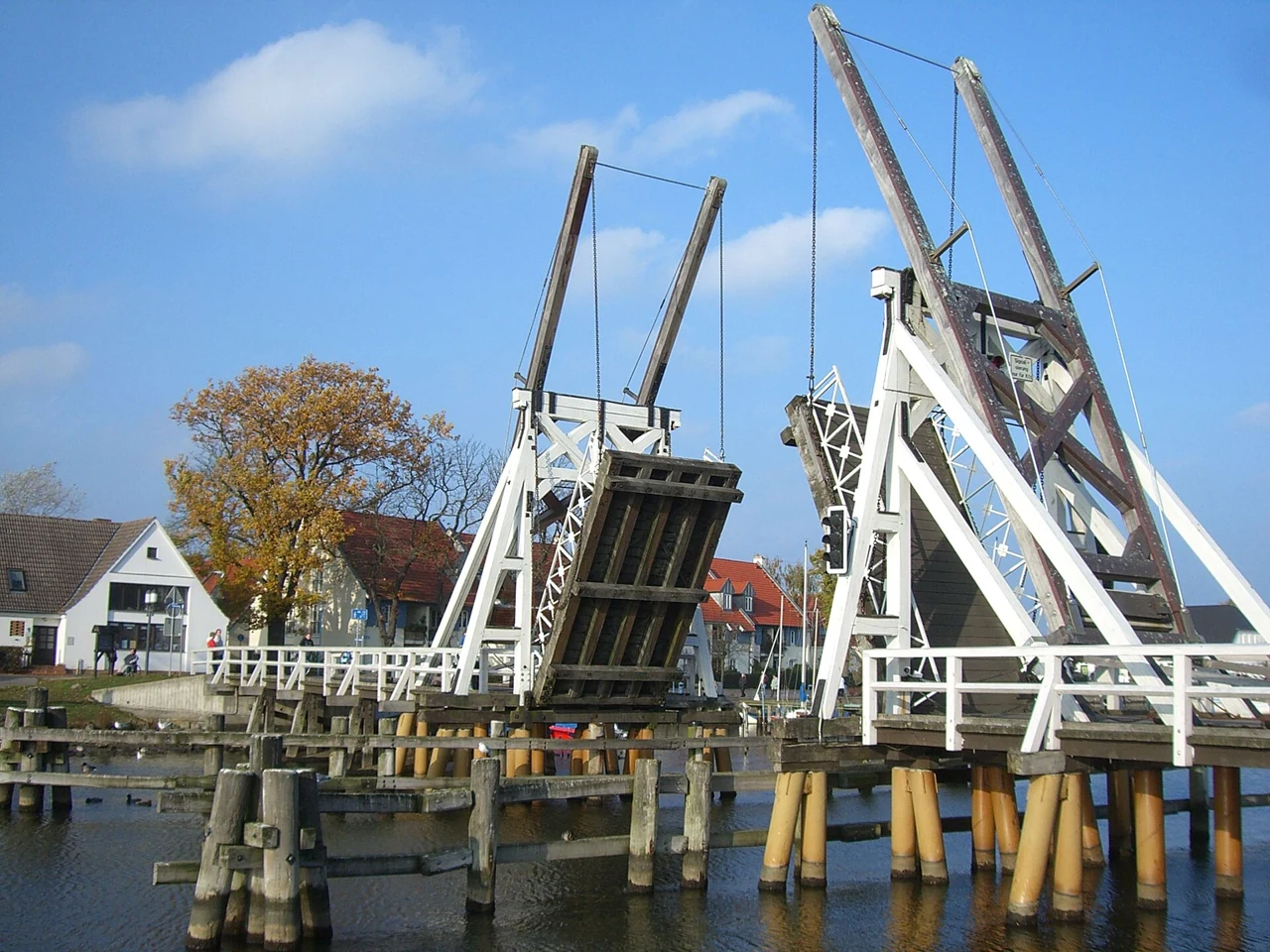
The city’s Wieck listing describes a roughly five-kilometre Treidelpfad link along the Ryck from Museumshafen to the fishing village. Add the return journey and your time at the ruin when planning it. Walking pace varies, so treat the distance as the day’s principal outdoor activity instead of relying on a single promised journey time. If you choose cycling or public transport, investigate conditions for the travel day separately. From Wieck’s bridge area, compare the view towards the harbour and Bodden with the more enclosed water space seen near the centre.
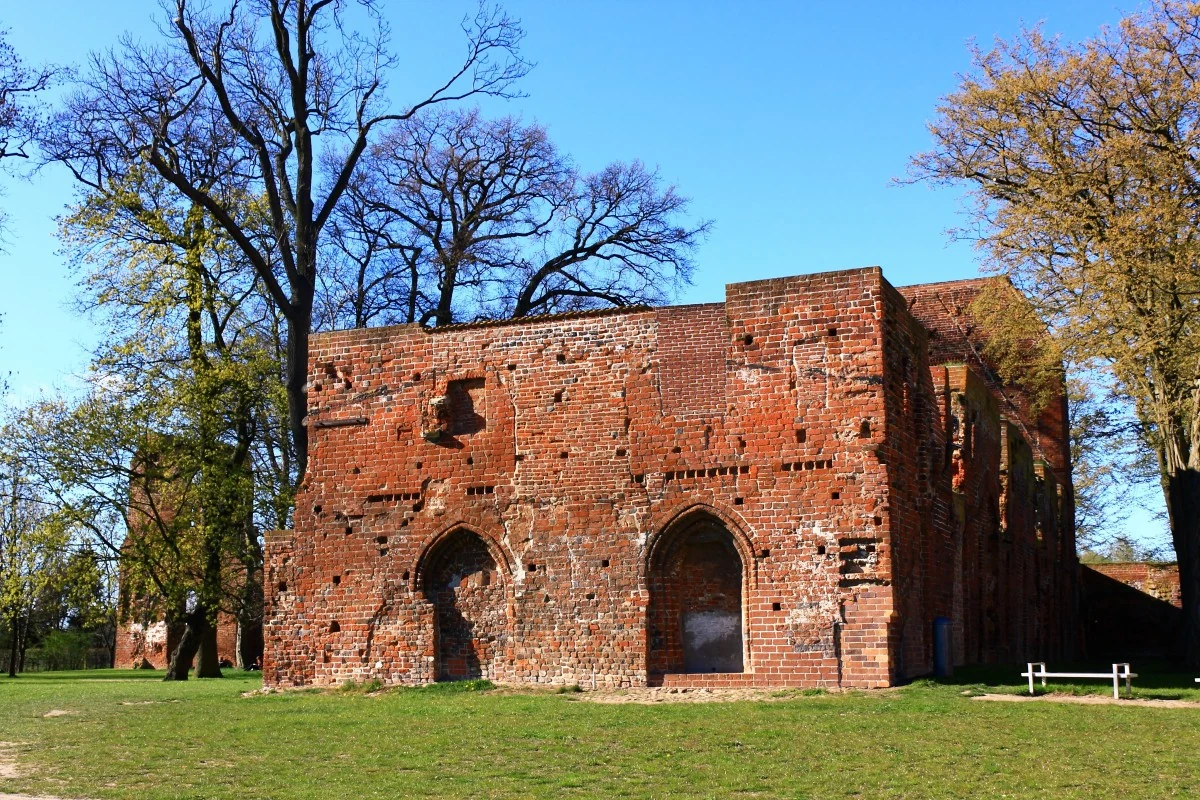
The Eldena monastery ruin at Wolgaster Landstraße 41 is described as accessible throughout the year without an entry charge, apart from separate events. Look through the openings left between the walls and notice how trees frame the masonry. This is an open ruin landscape, so a sequence of enclosed museum rooms is the wrong expectation. The relationship between the existing structure and a motif used by Friedrich provides the main subject for a visit. In winter the city states that snow and ice clearance is not provided; do not calculate the same walking outing as though summer ground conditions apply throughout the year.
Choose a substantial meal on the station side
Peter Pane Greifswald at Bahnhofstraße 44E is one seated-meal option on the station side of your return. The operator’s local page describes Der Getrüffelte with a beef patty, grilled mushrooms, Grana Padano, rocket and truffle cream. Check separately whether a side such as fries is included or charged in addition. This is a concrete main-meal candidate in a useful location, rather than a claim about traditional Greifswald cooking. Choose it for the food and position that suit your itinerary.
Kitchen closing and restaurant closing are different times. After a late museum exit or return from Wieck, check the final food-service time before relying on a table. Discuss ingredients and suitability with staff; a burger containing meat and cheese is not automatically compatible with another dietary requirement. Give the meal its own space in the day instead of ordering while already watching the countdown to your train. Collecting luggage and reaching the platform need separate time afterwards.
Keep accommodation and the railway return distinct
Hotel Kronprinz at Lange Straße 22 is an accommodation candidate near the pedestrian area. A central room helps with the town stops but does not shorten the river route to Wieck. Establish your room arrangements, luggage storage and arrival time directly with the hotel. Its website lists staffed reception from 07:00 to 22:00; obtain an arrangement beforehand for a later arrival rather than assuming that a town-centre hotel has the same reception pattern as every other property.
The DB listing for Greifswald station gives Bahnhofstraße 43. Check the actual service, platform and any assistance required for your date. For a final half-day, a short return to a square corner or a Ryck viewpoint noticed earlier can be more useful than adding another distant stop. You will then leave with a distinction between the artist’s home, the paintings, the real ruin and the town’s water spaces, rather than remembering Greifswald only as the birthplace printed beside a famous name.