
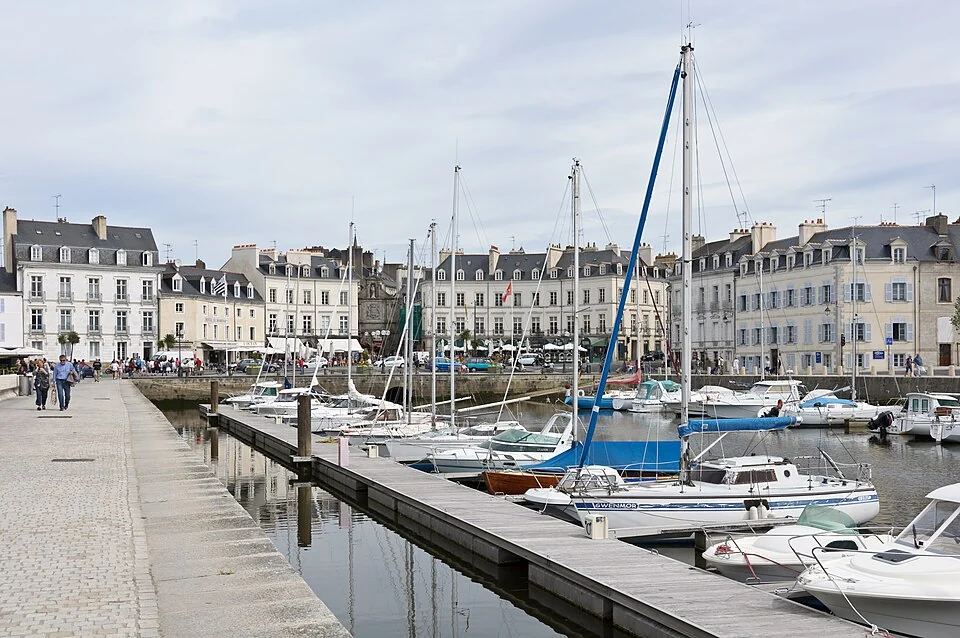
Vannes: an overnight route between harbour and old town
A night in Vannes gives the harbour a place within a city visit instead of allowing one waterfront photograph to stand for the whole destination. Start around quai Éric Tabarly and look towards Porte Saint-Vincent, then explore the entrances and façades of the old town. Reserve another session for Saint-Patern on the following day. The Tatilmerkezi Stork suggests comparing one doorway, one row of windows and one waterline rather than rushing through the same street repeatedly. Do not automatically add an island sailing to this compact itinerary. A harbour photograph establishes neither a particular vessel's departure point nor sea conditions or a booked trip. That extension needs its own operator information and time.
The cover image shows boats, masts, pale waterfront buildings and the town connection around the Saint-Vincent gate behind them. It was taken in 2010, so the arrangement of vessels does not provide today's quay instructions. On arrival, observe the water's edge separately from the pedestrian route currently in use. Marking a gate or a crossing on your map can preserve direction without imposing one walking duration on every traveller. Leaving luggage at your accommodation before a modest first circuit makes room for changing weather and dinner. If rain interrupts the waterfront session, shorten it and return during a more comfortable interval. The purpose of the overnight stay is to allow that flexibility.
La Cohue: an exterior view and a dated museum plan
In the La Cohue photograph, a yellow timber-framed neighbouring frontage and the museum's stone arched entrance offer contrasting surfaces. Begin with the window spacing, then follow the doorway's stone frame. This makes a useful comparison of how materials organise a view within the same urban setting. The image records an exterior in 2010; it does not establish that galleries have been visited today or that every part of the building is accessible. Children might enjoy finding a repeated shape in the frontage. If you want a longer art visit, separate this outdoor exercise from the museum session, allocating time to each rather than treating a street photograph as an interior experience.
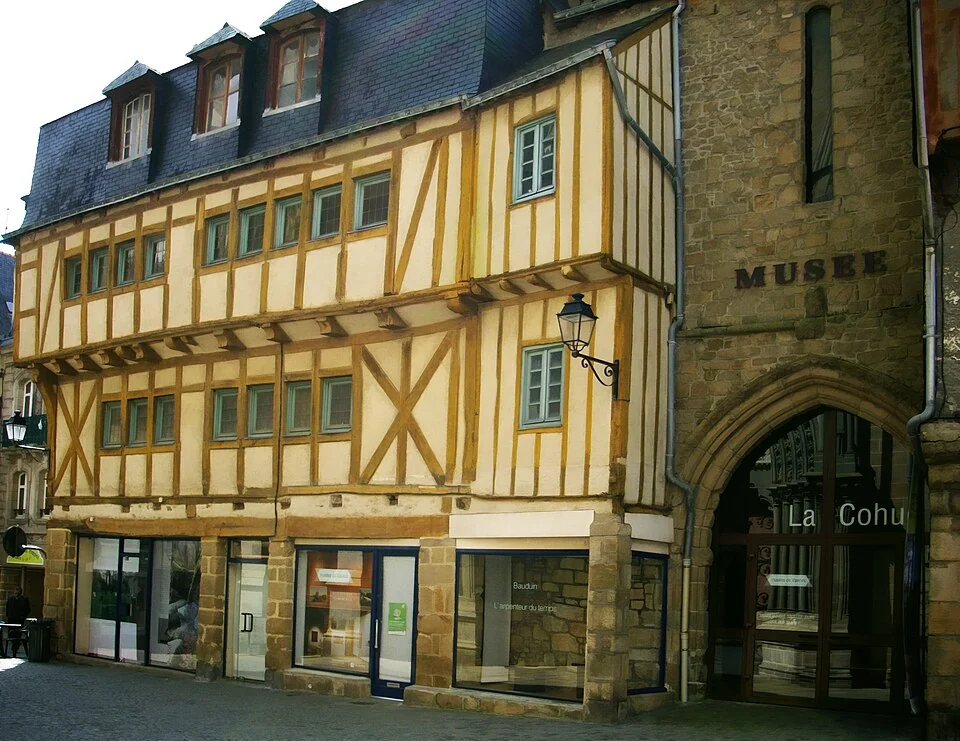

On 6 October 2026, municipal information lists La Cohue at 15 place Saint-Pierre, with October–May opening Tuesday–Sunday, 13:30–18:00, excluding public holidays. The newer RIDEAU closure programme runs from 17 October to 6 November 2026, including school sessions on 3–6 November and a reserved closing evening on 6 November. General hours therefore cannot guarantee ordinary access throughout November. Confirm the arrangements for your date with the museum. The municipal page also marks Château Gaillard as closed; it should not become a guaranteed rainy-day alternative.
Saint-Pierre's portal: change the scale of your observation
The cathedral image shows the western portal rather than the entire building. Layered stone arches, two red doors and the central opening bring the eye from the scale of a cityscape down to a particular entrance. Neither the doors' colours nor the opening visible in the photograph establishes their condition on your visit. Interior access, worship arrangements and temporary works may have different requirements. Look first at the way the arches surround one another, then ask locally where visitors may enter. The guide does not describe attending a service or climbing a tower. A doorway photograph supplies no evidence for either experience.
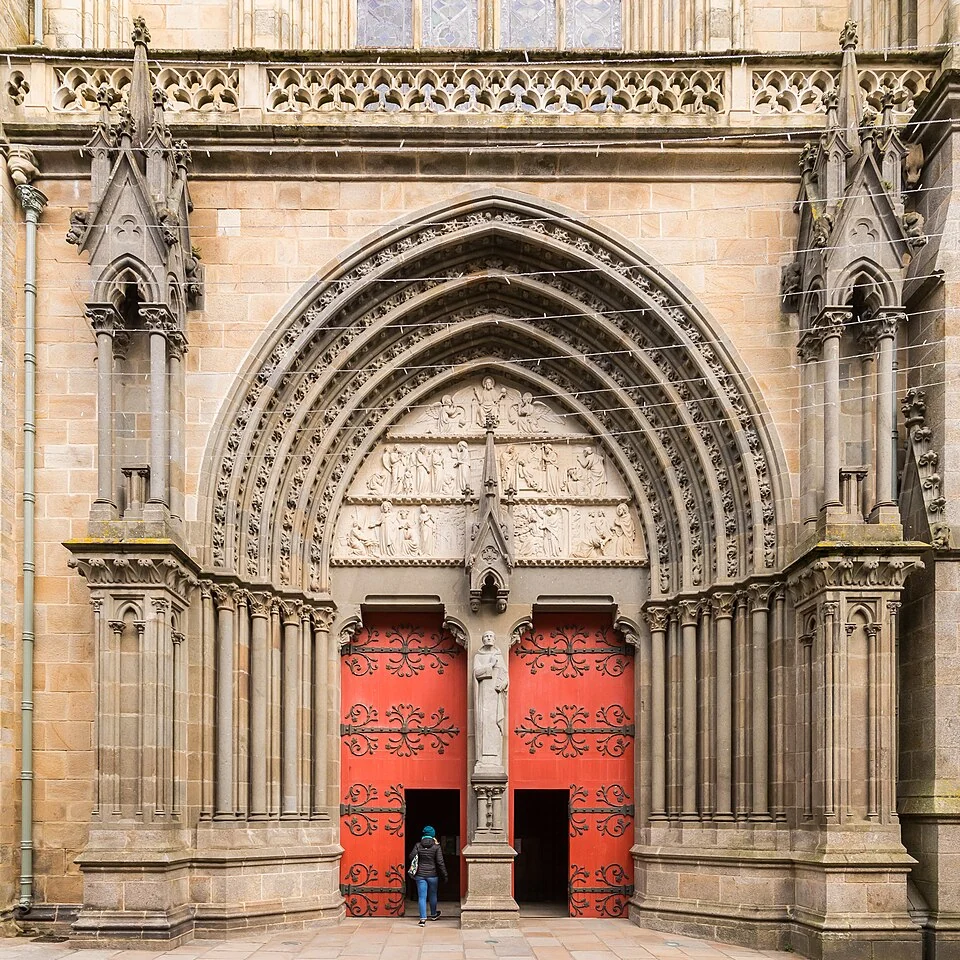

Instead of trying immediately to identify every sculptural figure, follow one stone line from its lower point towards the arch. The difference between that upward movement and the more horizontal window patterns elsewhere can become an exercise carried into the next street. Choose three manageable steps: pause near the square, obtain a broader view from a suitable position, then continue walking. Avoid blocking a narrow passage to secure a photograph. When energy starts to fade, remembering one carefully observed detail may be more rewarding than collecting an ever longer checklist. This overnight route works without requiring an interior visit to every religious building on the map.
Ramparts and Saint-Patern: keep the two views distinct
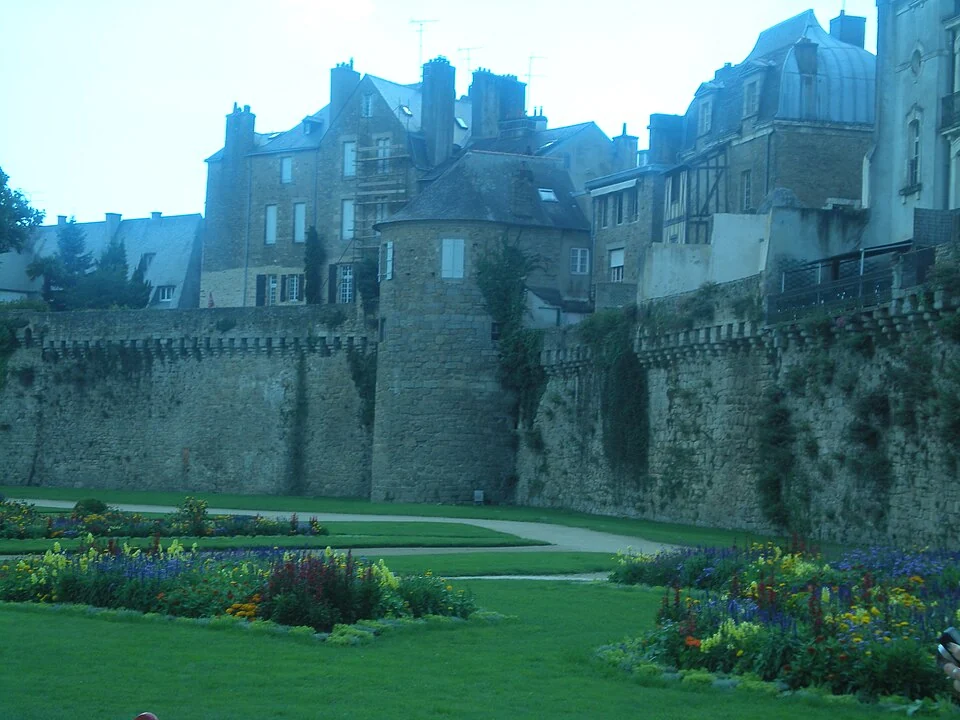
The ramparts photograph combines planted garden beds, a substantial stone wall, a tower and the roofs of the town behind it. It is neither a close-up of stone texture substituted for a complete location nor a present-day garden access diagram. Move your attention from the planting to the wall, then from the wall to the roofline. Those three layers allow a comparison of different scales within one scene. Taken in 2011, the photograph promises no current flower colours, seasonal layout or open passages. Rather than assigning an uncertain tower name, describe the visible relationship between defensive masonry and the town behind it. Connect this exterior walk with the harbour session on the first day while leaving energy for the return to your room.
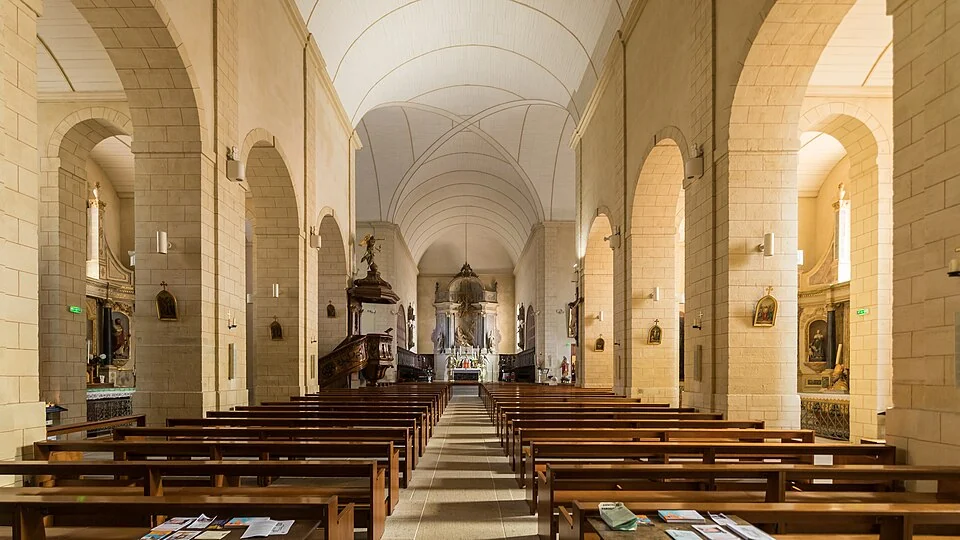


Give Saint-Patern a separate portion of the next day. Its licensed image depicts the church interior, not an exterior bell tower: rows of benches, stone columns, arches and the worship space towards the front are visible. The 2022 photograph helps explain interior scale but establishes neither today's permission to enter nor visiting hours. If access is unsuitable, keep your visit to an outdoor circuit in the neighbourhood. If entry is possible, respect quiet and any worship in progress while observing the spacing between columns. Comparing that rhythm with the smaller scale of surrounding streets adds a distinct second chapter to the stay. The historical image is never presented as a personal memory of a visit.
A defined Larmor Gwened meal and the return journey
Le Jardin publishes its address as 24 rue de Larmor Gwened. The June 2026 menu currently linked from its site on 6 October lists sea bass fillet with buckwheat risotto, crisp kasha and seaweed butter. That documented main course does not confirm October stock; ask about the day's menu. Restaurant lunch service is Tuesday–Sunday, 12:00–14:00, with dinner Thursday–Saturday, 19:00–22:00; Monday is closed. Longer bar hours do not establish kitchen service. Confirm fish and dairy ingredients without fixing a future price.
Do not assume that this Larmor Gwened meal is immediately beside the museum exit in the old town. Plan a separate outward and return connection using the actual address. On Tuesday or Wednesday, placing lunch before the museum can be more practical than depending on an evening kitchen. For Thursday–Saturday dinner, consider the reservation and return together. Kicéo's current network lists route 4 through Gare SNCF Nord and République, while route 12 includes Gare SNCF Sud, République and Le Port. A network description is not evidence of a stop at the restaurant door or a departure at your chosen time. Use the operator's planner with your starting point, destination and travel date.
Choose accommodation around the journey you will actually make. The station district may suit an early train; the old town can support the doorway and frontage walks. Ask the property about steps at the entrance, luggage storage and overnight noise rather than treating a central address as a promise of silence or available parking. SNCF's station page gives rue Favel et Lincy, but its observed seven-day timetable displayed August dates, so it was not used to establish October train times. Read the current departure on your ticket separately. Sources were checked on 6 October 2026; the five photographs retain their older individual capture dates in the captions.