

One night in Olympia, with two distinct city chapters
Give Olympia one night and approach it through two different public spaces. The first chapter is the Capitol Campus, with its working state buildings; the second is downtown, Sylvester Park and the edge of Budd Inlet. This suggested itinerary begins with an afternoon arrival, an unhurried downtown walk and an evening near the water. Leave the Legislative Building visit for the following morning, then have lunch before departing. An overnight stay removes the pressure to reach a tour straight from a long journey and gives the waterfront its own place in the trip. Keep a longer drive to Seattle or the Olympic Peninsula outside this compact city plan. The point here is to experience Olympia's own centre rather than use it only as a photograph stop on a regional circuit. Check tour availability before choosing the accommodation address: that decision shapes the order of the two days more usefully than an ambitious list of attractions.
Arrival: mark the current transit centre address
Intercity Transit's customer service page, checked on 5 October 2026, places Olympia Transit Center at 205 Franklin Street NE. Older online guides showing 222 State Avenue should not replace this current customer service address. If arriving by bus, check the actual stop for the service you select, then look at the remaining journey to your accommodation with luggage. The operator's current Zero Fare page says its bus services and Dial-A-Lift do not collect fares. That statement does not cover tickets sold by unrelated intercity companies. Stops on Capitol Way provide a way to approach the campus, but choose the current route and direction for your travel day rather than rely on an old route number. For drivers, overnight hotel parking and visitor parking at the campus are separate decisions. Consider leaving the car for a downtown walking chapter and making one deliberate campus transfer instead of repeatedly moving it between short stops. Avoid making the first waterfront walk a luggage transfer, particularly if conditions are wet. Allow time to settle in before beginning the sightseeing part of the afternoon.
Legislative Building: arrange the morning around a tour
The current Washington State Capitol Campus site describes free guided tours of the Legislative Building lasting about fifty minutes. The tours page requires a reservation for groups of ten or more; that rule is different from the flexibility available to an individual visitor. Smaller groups can join without booking only when space is available. Reaching the building in the morning does not guarantee a place on a specific departure. Confirm the date and group size with Visitor Services before fixing the rest of your day. The official FAQ lists ordinary weekday building hours as 7.30 a.m. to 5 p.m. and weekend hours as 11 a.m. to 4 p.m.; legislative sessions and holidays can alter those arrangements. Do not schedule the incoming bus and the tour start for the same minute. Give yourself time to understand the campus layout before the indoor visit. The 2005 photograph of the domed facade helps identify the building, but it is not evidence of today's entrances or working arrangements. A look at the exterior also does not imply that every other state building follows the same visitor rules.
Sylvester Park and the Old Capitol: a downtown history pause
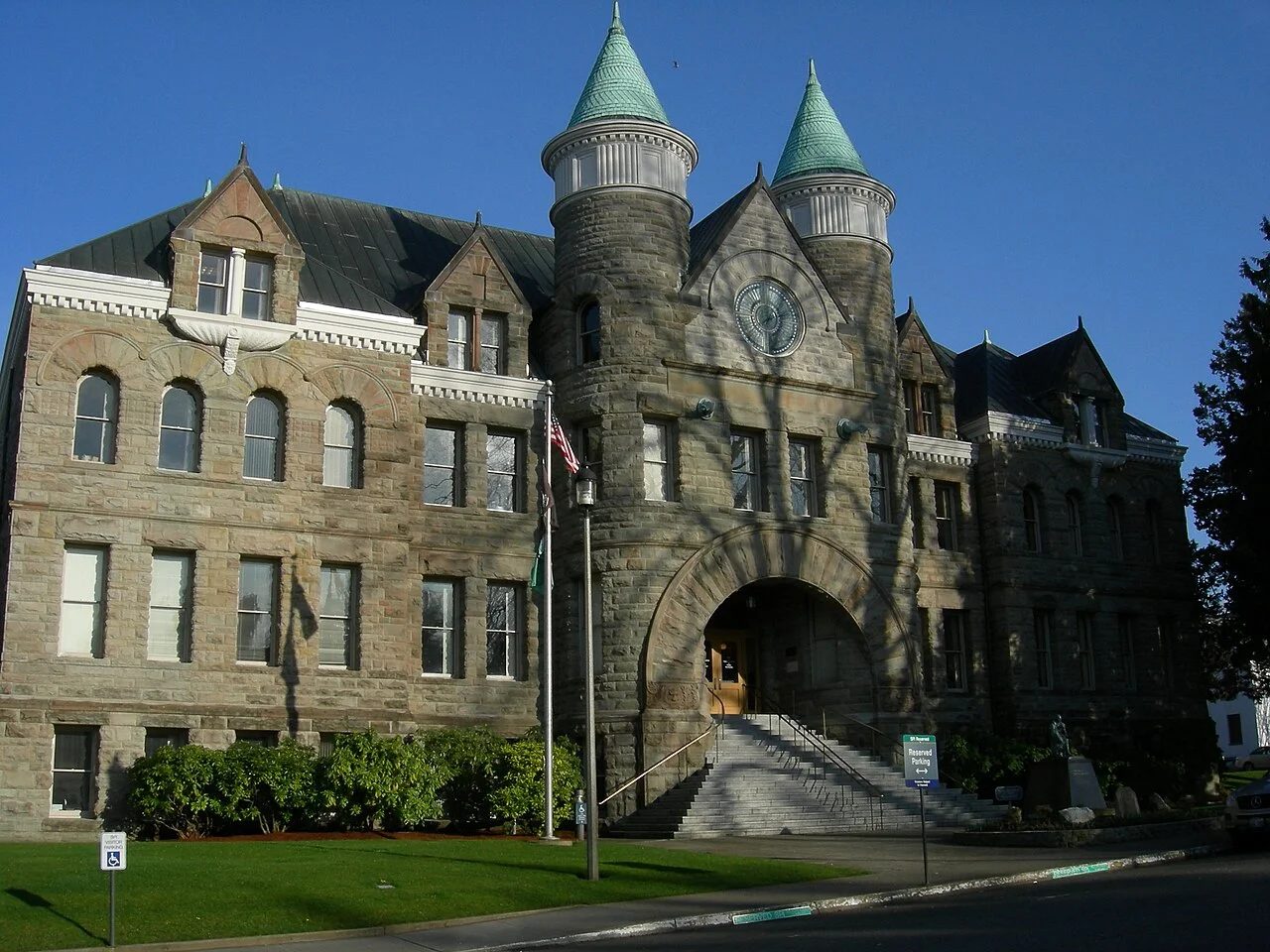
After the campus chapter, return to the smaller scale of downtown at Sylvester Park. The state's park page describes the square bounded by Capitol Way South, Washington Street South, Legion Way Southeast and 7th Avenue Southeast, with benches, paths and a gazebo. Its listed hours run from seven in the morning to dusk. Across Washington Street stands the Old Capitol Building, a different structure from the newer domed Legislative Building. The official building account says the former courthouse housed state legislative and executive offices from 1905 to 1927; it is now occupied by the Office of Superintendent of Public Instruction. Treat this as an exterior stop viewed from the square, rather than a promise of unrestricted access to a working office. Comparing the scale of the old and new government buildings gives the two city chapters a clear connection. Historic photographs also reveal roof and tower differences, but should not be treated as exact depictions of the present facade. Make your own comparison from the public side of the street. An afternoon pause in the park can break up the walking before you continue towards the waterfront.

Percival Landing: slow down beside the water
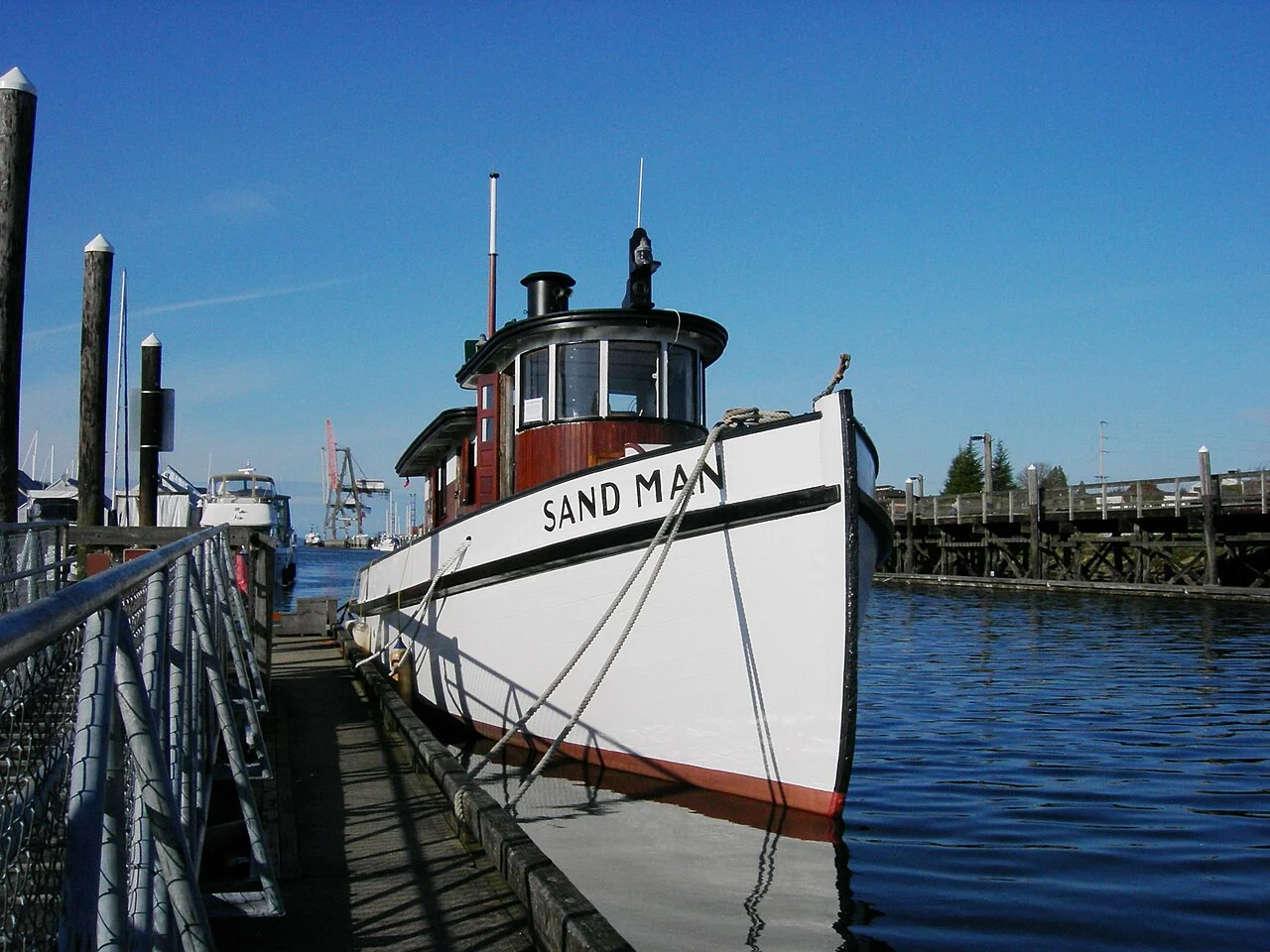
The city's Percival Landing page gives an address of 217 Thurston Avenue NW and describes a boardwalk roughly 0.9 miles long along the shore. This is the open-air part of the itinerary, where the relationship between downtown and Budd Bay is easier to see. There is no need to complete the entire boardwalk. Choose a shorter outward-and-return walk according to the section open that day, your need for a rest and the direction of your accommodation. The edge of the water, moored boats and the meeting of streets and shoreline offer useful subjects for observing the city. Seeing public artwork does not automatically give permission to reproduce every work without restrictions. The Sand Man photograph used here is an exterior view from March 2007; this guide does not promise a current boat visit or deck opening time. The 2011 marina photograph likewise does not establish today's mooring arrangement. If this is your evening chapter, begin early enough for the daylight you want and decide the return route first. A shorter visit that ends comfortably is more useful than adding a dark final loop merely to complete a plan.


A concrete meal on Columbia Street
Anthony's HomePort Olympia publishes its address at 704 Columbia Street NW and its lunch menu on the restaurant's own page. In the observation made on 5 October 2026, the crispy true cod taco is described with cabbage, tomatoes and salsa mayonnaise in a flour tortilla. A taco-and-chowder combination is also listed. The clam chowder includes potatoes and bacon, so it should not be presented as a vegetarian soup. This example makes the waterfront meal practical without claiming that a particular fish was caught locally or that every ingredient will be available on your day. Confirm your intended mealtime, the current menu and the restaurant's reservation advice directly. For someone avoiding seafood, the listed avocado toast may be a starting point for questions, while preparation and allergens still need a direct answer from staff. The photographs in this guide depict city scenes, not the meal being recommended. Do not squeeze lunch immediately before the departure service. Leave separate time to sit down, eat and get back to the transit centre; variable service time should not be reduced to a guaranteed number of minutes.

Accommodation and a simple second-day finish
For this itinerary, look at accommodation addresses between downtown and the Capitol Way corridor. The waterfront evening lies on one side of the plan and the public-building morning on the other. This is an area-selection suggestion, not a statement about any hotel's availability, price or accessibility. Ask about arrival arrangements, luggage storage, parking charges and the following morning's checkout together before committing. If choosing an address farther away, compare the transfers to both chapters as well as the room rate. After the tour, one central pause and one meal are enough to close the trip without turning the final hours into a checklist. If the walking needs to be reduced, remove either the Sylvester Park stop or the Percival Landing chapter while keeping the margin between the campus booking and the departure journey. The source-check date is 5 October 2026. Operating hours, menu choices and transport information should be checked again for the actual day of travel. This two-day arrangement focuses on seeing Olympia's governmental centre and ordinary waterfront life as separate, connected parts of the same city.

