
Busan works best when you organise each day around one side of the city. Gamcheon and the working waterfront around Jagalchi belong together in the west; Haeundae and Haedong Yonggungsa make a different day in the east. Three days give a first visit room for both, with time to sit beside the sea instead of repeatedly crossing the city. This itinerary puts more walking earlier in the day and keeps the evenings comparatively open. With only two days, choose your favourite coastal area rather than squeezing every stop into a hurried circuit. Practical details were checked against official sources on 9 October 2026; confirm exceptional closures and operating changes before travelling.
Day one: Gamcheon and the working waterfront
Start with Gamcheon Culture Village. The colourful houses rising across the hillside are worth seeing beyond a single viewpoint, but the neighbourhood is also somebody’s home. Keep voices low in narrow lanes, leave doorways clear and resist climbing a private staircase for a slightly better photograph. Following the marked visitor route gives the morning a natural structure without treating every residential passage as an attraction. Comfortable shoes with reliable grip matter more here than an ambitious list of photo locations, especially after rain. Allow enough time to turn back or shorten a loop when the steps become tiring.

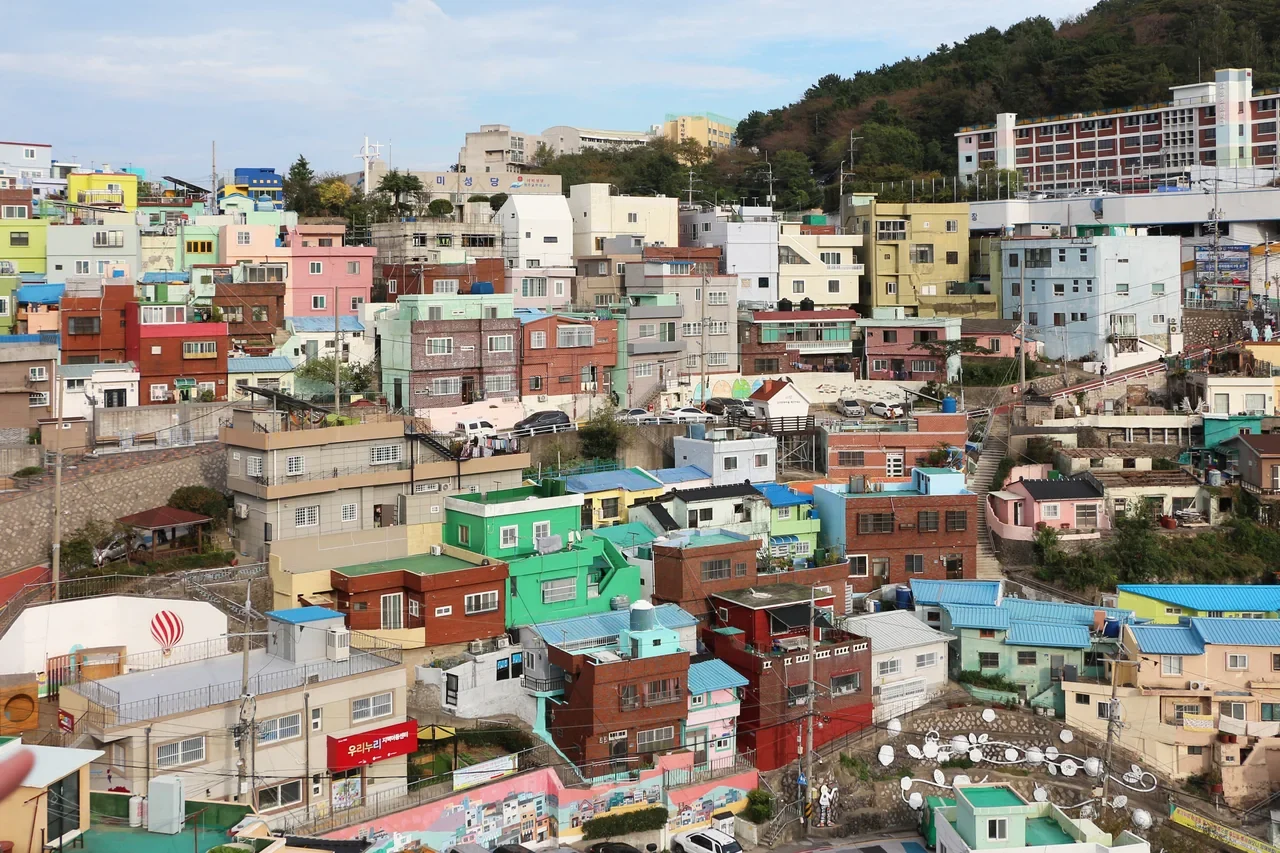
The village operator’s directions page lists its information centre at 203 Gamnae 2-ro, open 09:00–18:00. Plan a daytime visit within that window and follow current access notices in the neighbourhood. From Toseong station on Metro Line 1, Exit 6 connects with village buses Seo-gu 2, Seo-gu 2-2 and Saha-gu 1-1. Taking a bus can reduce the uphill approach, but it does not make the entire village step-free. Visitors with limited mobility should ask the information centre about a suitable route instead of assuming that every viewpoint is equally accessible.
Move towards Jagalchi for the afternoon. Walk through the market and the surrounding streets before committing to lunch. If a restaurant lets you choose seafood from a display, ask how the final bill works: preparation, accompaniments and the amount ordered can matter as much as the price of the fish itself. A cooked dish is a perfectly reasonable alternative to raw seafood. Ask to see the menu and understand the portion rather than making a decision only from the display. Photography should leave enough room for people buying, selling and moving goods through a working market.
Visit Busan lists Jagalchi’s main market as operating 05:00–22:00, with closures on the first, third and fifth Tuesdays of the month; individual businesses can differ. Nampo Exit 2 and Jagalchi Exit 10 on Line 1 provide walking approaches. Compare the closure pattern with your actual calendar before making the market essential to your lunch plans. Keep the evening around Nampo if you still have energy for a walk. Adding a journey across town solely to collect another attraction makes this first day less enjoyable.
Day two: Haedong Yonggungsa and Haeundae
Begin the eastern day at Haedong Yonggungsa, where temple buildings meet the rocky coast. It is an active place of worship, so give worshippers space and check photography rules before entering buildings. Step aside during ceremonies and choose places for photographs that do not block stairs. Wind and rain can make a long stay along an exposed coastline less appealing; adjust the visit to the conditions rather than following the itinerary mechanically. Starting earlier gives you more flexibility later, although it cannot promise an empty temple.

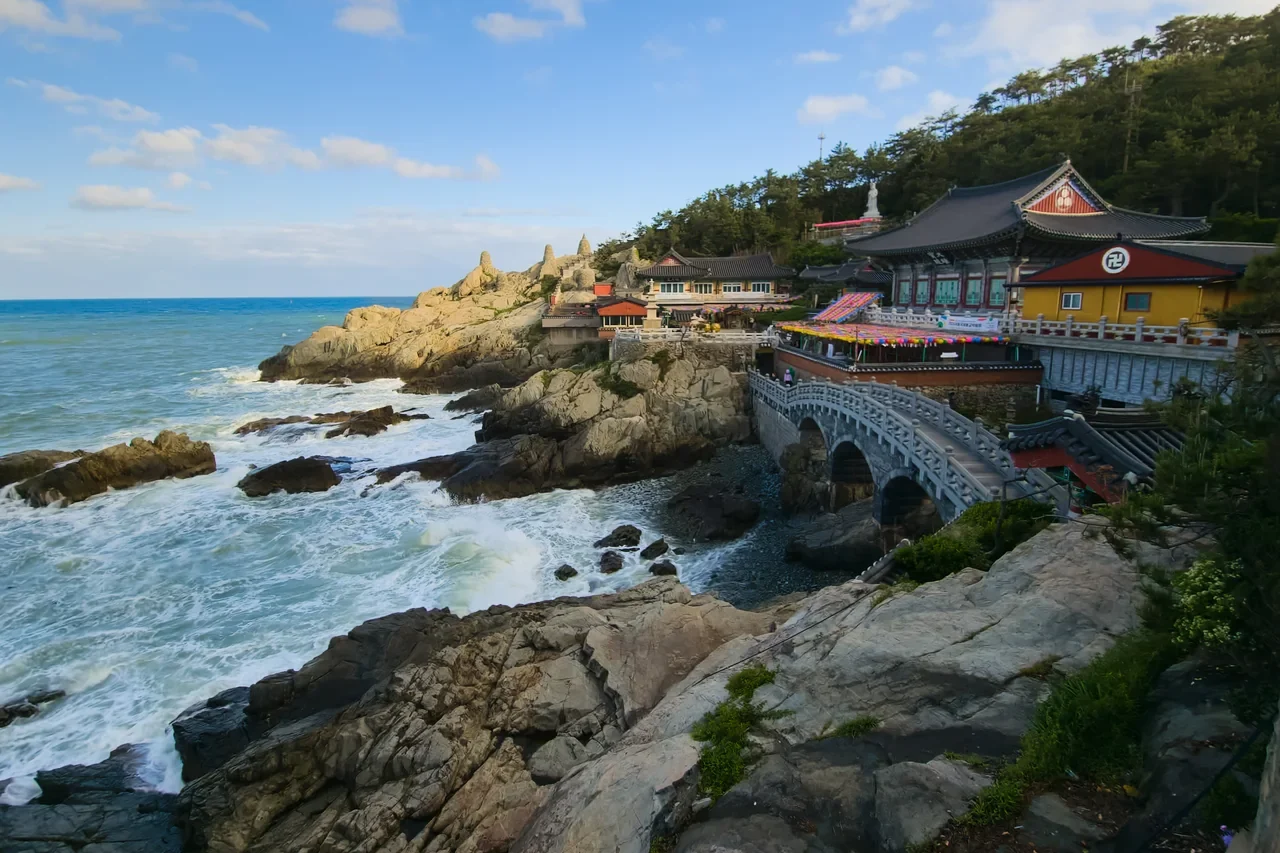
Busan’s official tourism listing gives free admission, hours of 04:30–19:20 and last entry at 18:50. One public transport option is the Donghae Line to Osiria followed by bus 139. Check the direction and current service on your travel day: reaching a railway station does not mean you have arrived at the temple entrance. Afterwards, return towards Haeundae and leave the afternoon largely open. A walk along the shore, a proper rest and dinner nearby can be more rewarding than another tightly timed excursion.
Haeundae’s appeal is the meeting of beach and dense city. You can alternate time beside the water with a look through nearby streets without building the day around paid activities. The sand sculpture shown in this guide is an archival photograph, not a promise that the same installation remains on the beach. For swimming, follow current beach notices and staff instructions rather than judging conditions from an attractive view. Outside suitable weather, treat this as a coastal walking day. There is no need to make getting into the water a condition of a successful visit.
Day three: a substantial noodle lunch and Gwangalli
Give Busan food a proper meal slot instead of relying entirely on snacks. A specific option is a bowl of milmyeon at Gaya Halmae Milmyeon in Yeonsan-dong, with dumplings to share if you want a larger lunch. This is an inland stop, not a restaurant on Haeundae beach. Use the address to distinguish it from similarly named businesses: 32 World cup-daero 145beon-gil, Yeonje-gu. Discuss the plain or spicy noodle choice when ordering, and ask the restaurant directly about broth ingredients or allergens when these affect what you can eat.
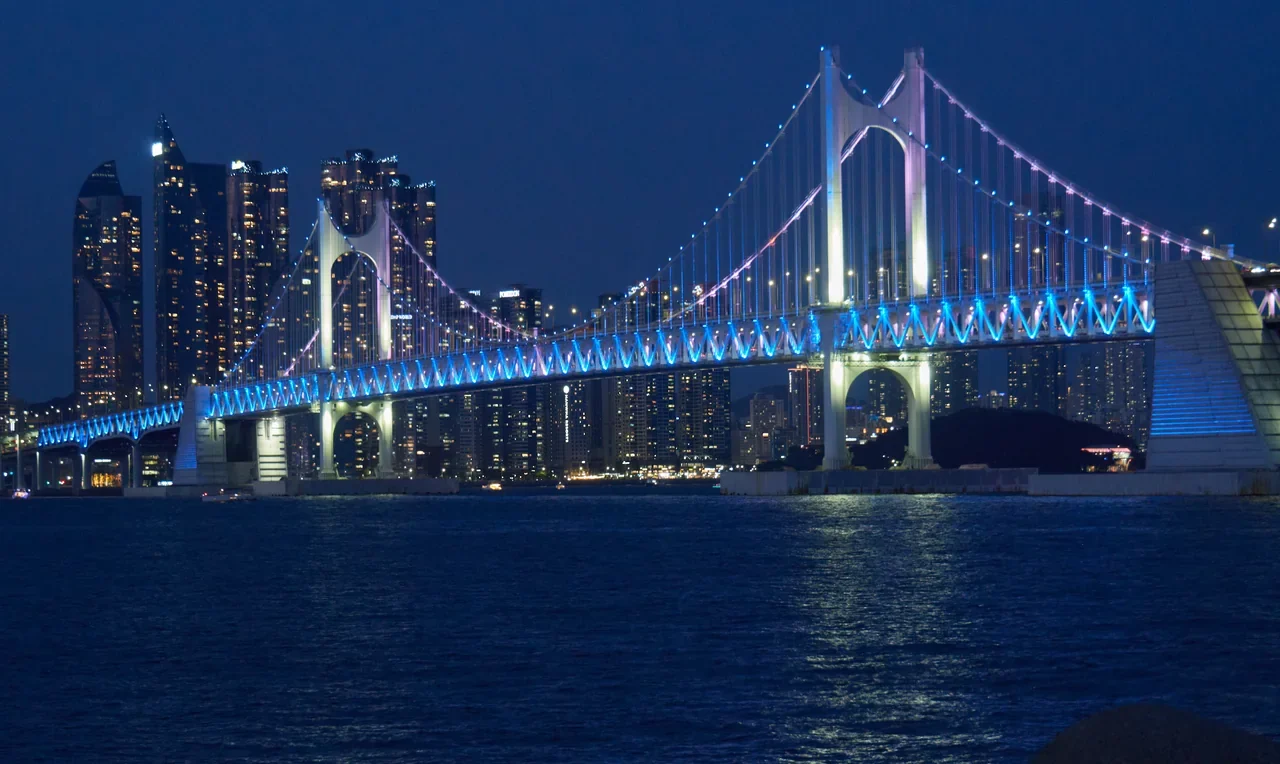
The Korea Tourism Organization listing identifies milmyeon, bibimmyeon and large dumplings, with published hours of 11:00–20:00. A directory listing is not a booking or a guarantee against an exceptional closure. After lunch, continue to Gwangalli and reserve the remaining time for the waterfront. The view towards Gwangan Bridge changes as daylight fades, which makes staying in one place worthwhile. Do not make a particular performance or special event essential to the evening without checking its actual schedule.
Transport, accommodation and practical choices
Group places on a map before setting out and avoid repeatedly switching between the western and eastern parts of Busan. The metro operator’s fare table lists adult transport-card or mobile-ticket fares of KRW 1,600 and 1,800 for its two distance bands, compared with KRW 1,700 and 1,900 for QR tickets. The first band covers up to 10 kilometres. These are metro fares, not a universal price for buses, airport journeys or every possible transfer. Keep transport, meals and any taxi rides as separate budget lines so an unexpected journey does not consume the day’s food allowance.
For an eastern base, a real accommodation option is Fairfield by Marriott Busan in Haeundae. This is the Haeundae property, not the similarly named hotel at Songdo. Its official page gives check-in from 15:00 and check-out at 12:00. Compare prices for your dates alongside cancellation terms, and do not assume breakfast is included in every rate. Staying here means accepting a longer journey for the western day. If markets and the older centre are your main interest, choose a base that reflects that preference instead. A good Busan itinerary is measured partly by how little unnecessary time it creates in transit.