
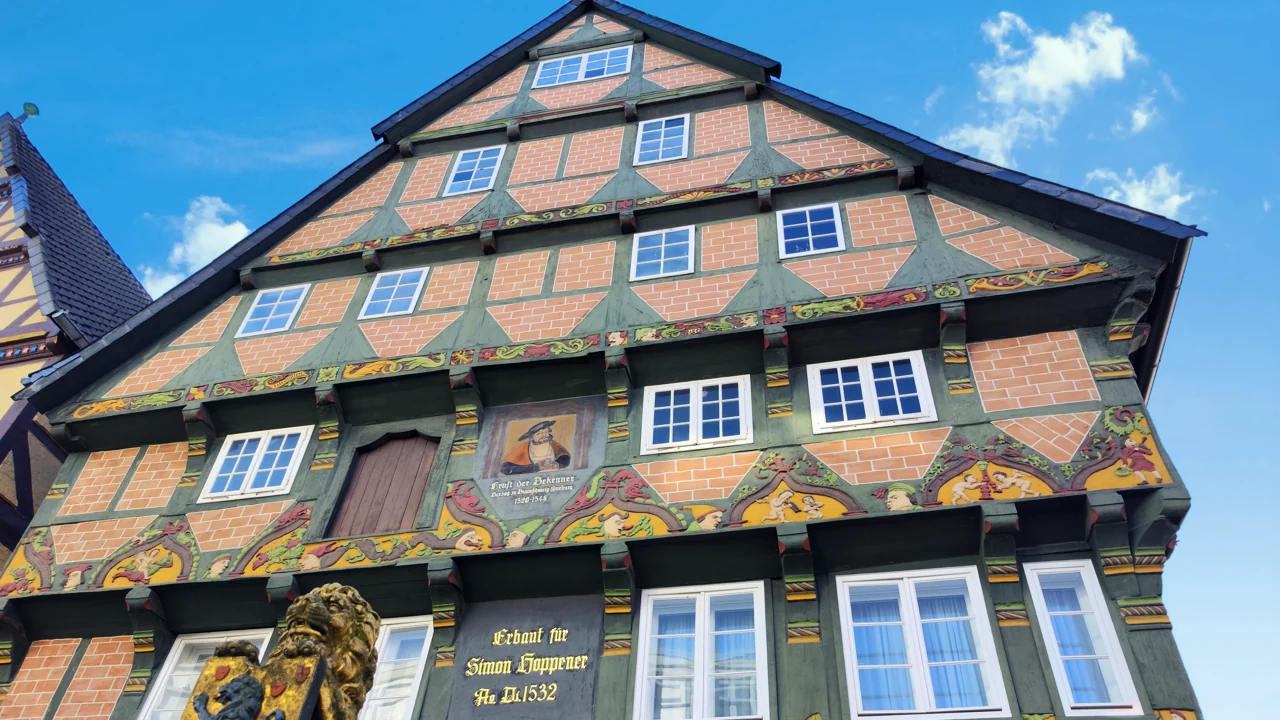
After finding an attractive façade in Celle, try following one detail instead of moving straight to the next building. The Tatil Merkezi Stork’s route begins with the scale of the palace, passes through the public space around Stechbahn and then turns towards figures on the Hoppener Haus and the narrower view in Kalandgasse. An overnight stay gives you a chance to compare a few fronts again in evening light. The aim is not to count every timber house, but to notice how street width and decoration create different impressions. Keep an interior palace visit and a substantial evening meal as distinct decisions.
At the palace bridge, choose the direction of the day
The official palace listing follows changes after the building’s first recorded mention in 1318. Gothic, Renaissance and Baroque elements provide a reason to compare different faces rather than seek a single historical label for everything. Begin by looking at the connection between palace and town. Then decide whether you want a museum or guided interior visit. Seeing the exterior is not the same activity as gaining entry to every room. If the interior matters to you, check its opening day and final admission arrangements for your date.
If you enjoy walking with a guide, the city’s public tours page explains the options. The classic walk meets at the bridge in front of the palace. Booking and participation conditions are not identical for every special experience; the organisation identifies some tours that require advance registration. On an independent outing, the bridge can simply be your starting point. Choose an activity you actually want before arranging the rest of the day around its time. If you decide on a longer interior visit, remove a street section rather than accelerating the entire programme.
At Stechbahn, look in four directions
Pause before searching for another street at Stechbahn. The tourism organisation’s timber house route introduces this former tournament space alongside the Rathaus, Stadtkirche St. Marien, Bomann-Museum and a line of timber fronts. Start with one building and widen your attention to the surrounding faces. Instead of putting as many buildings as possible into one picture, choose two views from different directions. One can explain the width of the space, while the other records a lower part of a façade. The scale of the street and the scale of its decoration then become separate things to notice.
Business doors and people’s daily movements are part of that setting. Avoid occupying an entrance for a long photographic pause. If one companion wants a museum visit while another prefers the streets, establish a precise meeting point in the open area. Saying which façade you are facing is more helpful than simply announcing that you are in the square. A coffee break need not interrupt the purpose of the walk; looking does not require continuous movement. Before entering a narrower street, keep the impression of this broader space in mind so that you can compare the next section with it.
Separate the figures on the Hoppener Haus
The Hoppener Haus at Poststraße 8 is presented as a building dating from 1532. Rich figure decoration appears over the lower levels, with projecting storeys above. Rather than trying to decode the entire front immediately, choose one figure and look at its neighbours. Its face, movement and relation to the supporting timber may be easier to remember than a date alone. The official description also records that Ernst’s portrait was added after 1901. That detail gives you a reason not to assume every visible element belongs to the building’s first phase.
When turning into Kalandgasse and the area of the Alte Lateinschule, ask the same question in a narrower space. A large figure may have stopped you at the Hoppener Haus, while here the closeness of buildings and passage might draw your eye. A short connection on the map need not be consumed quickly. Give a window row, a doorway surround or the gap between buildings a few minutes. Stay with exterior architecture rather than making private lives behind the windows the object of inspection. If returning in the evening, note one corner to revisit so that the second walk does not have to repeat the entire first route.
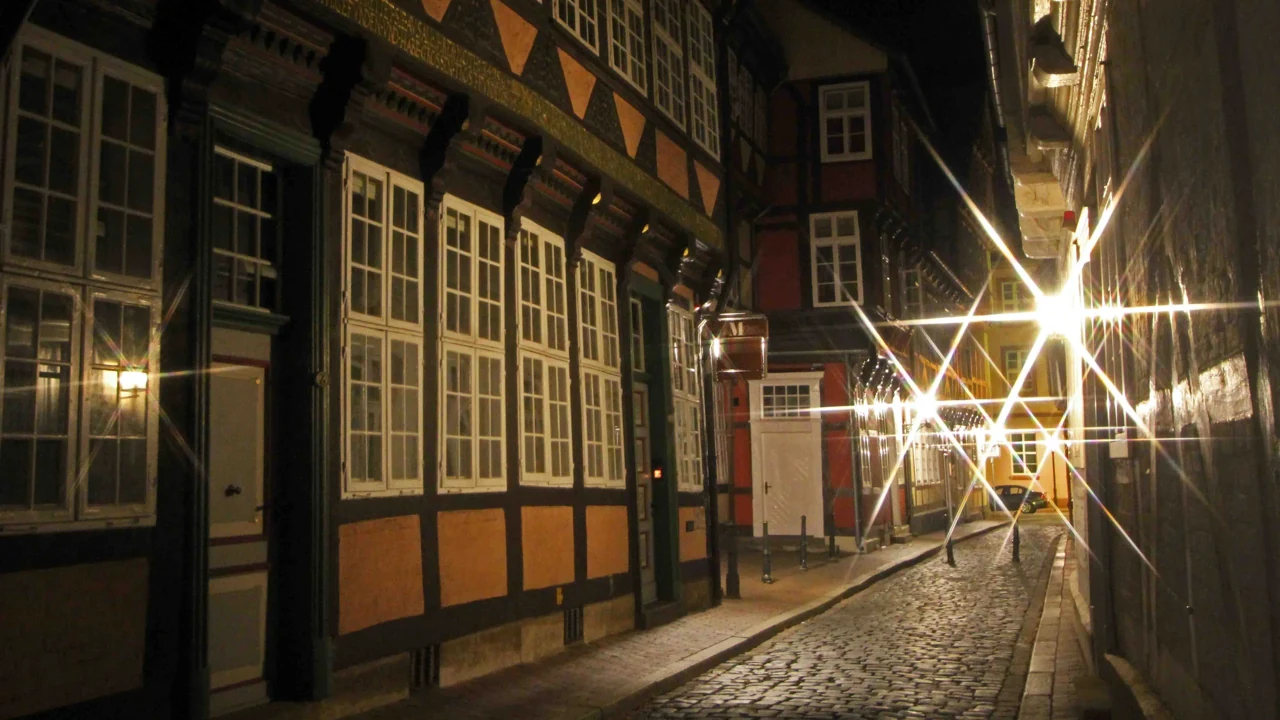
Compare the function of a façade at three short stops
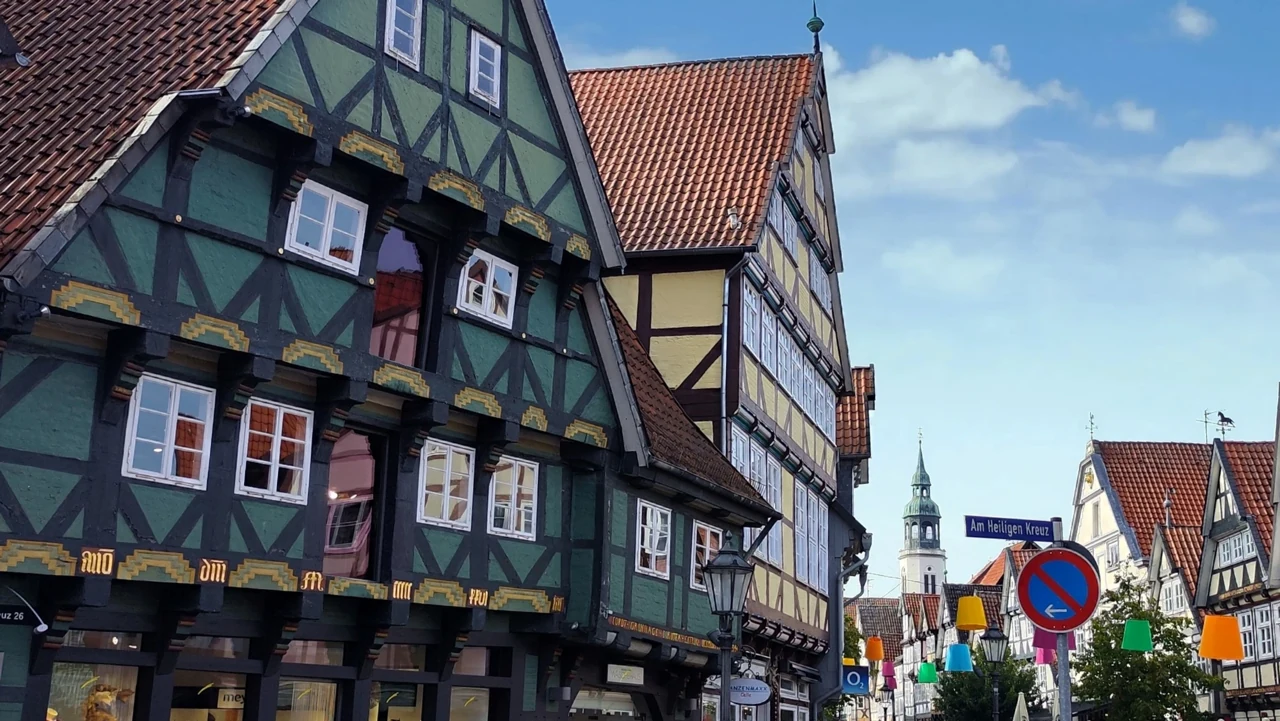
If time remains, turn towards Am Heiligen Kreuz 26 and look at the old house in relation to its neighbours.
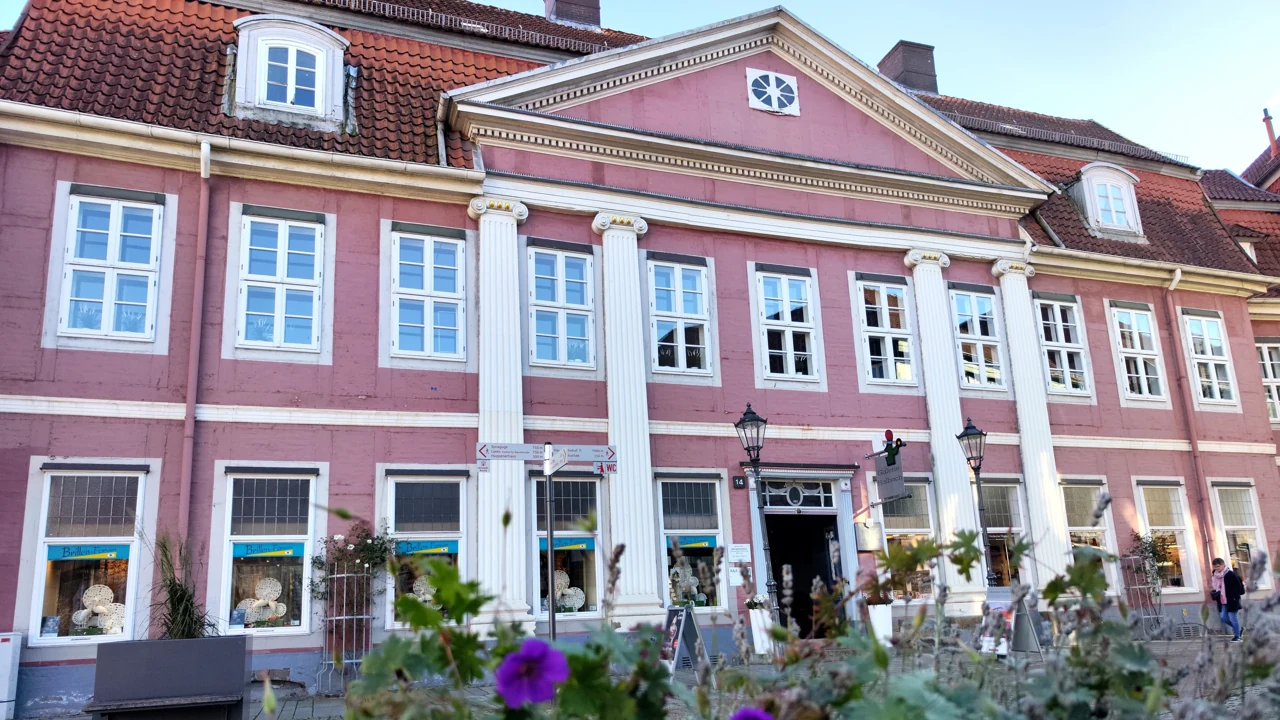
The Stechinellihaus on Großer Plan then offers a different comparison through the current building’s classical front, dating from 1795. Do not group it with the Hoppener Haus under a single decorative language; window rows and the organisation of the front call for another way of looking.
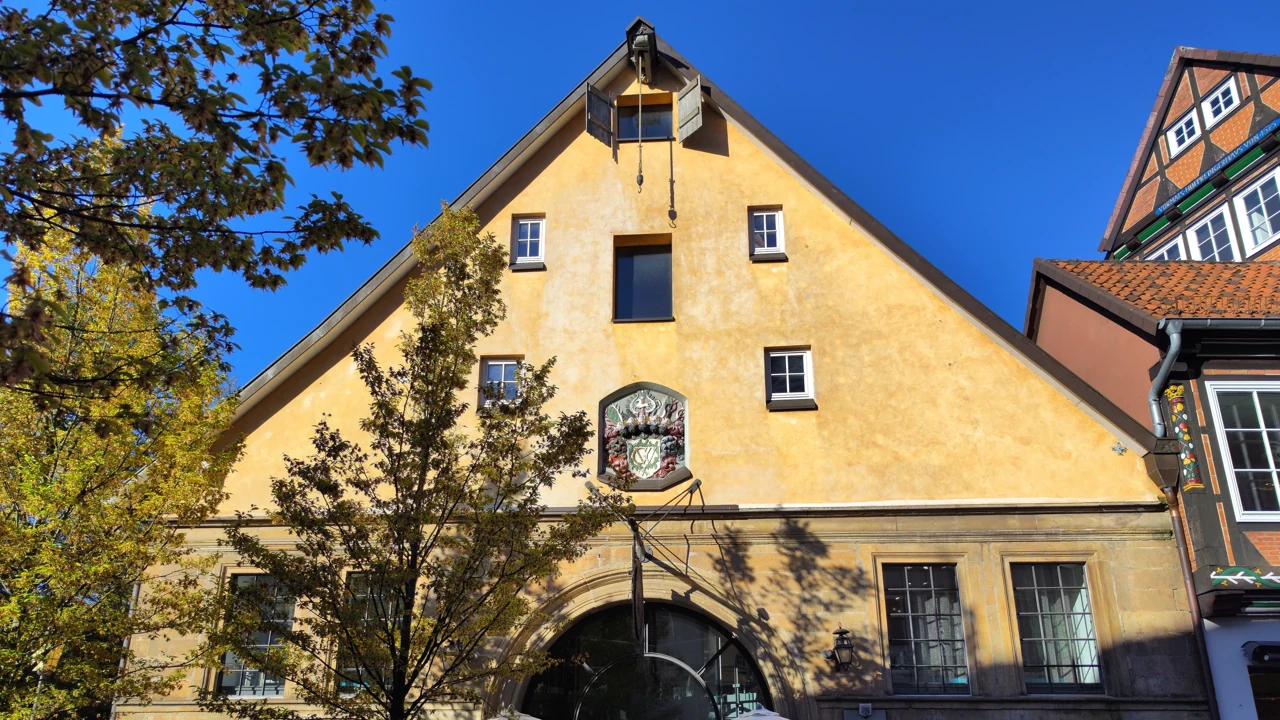
The Alter Marstall, at Westcellertorstraße and Schloßplatz, is a surviving stop from the palace’s former service and stable buildings. In the photograph, pick out the arched entrance and coat of arms on the yellow front. Adding these three exterior views does not mean gaining entry to the interiors. If your palace visit took longer than expected, choose the façade that interests you most and preserve time for dinner rather than racing to fit every stop into the afternoon.
Sit down for a main meal at Palio
Taverna & Trattoria Palio at Hannoversche Straße 55/56 is a meal candidate. The evening menu linked from the operator’s current page describes Ravioli alla Palio with veal filling, sage butter, spinach and Parmesan. Pasta choices distinguish starter and main portions. If you want a substantial meal, make that choice clear when ordering. Where meat, dairy or another ingredient is unsuitable, request the detailed allergen menu and discuss another option with staff rather than assuming a dish can be changed in every way.
This is a particular restaurant serving Italian food; the plate does not need to be described as a traditional Celle speciality. You can choose the town walk for its local architecture and the dinner for a meal that appeals to you. Check that evening service fits your date and establish table arrangements. Instead of finishing the walk with a rush to reach a booking time, leave a shorter street circuit until after dinner. Budget for the main dish, drinks and any additional choices together. A single menu price is not the full cost of the evening, and a recommendation is not a reservation already made for you.
Assess accommodation access and the station connection together
Althoff Hotel Fürstenhof Celle at the same address is one accommodation option to consider for an overnight visit. The operator explicitly says it is neither suitable nor certified for guests with reduced mobility. Do not dismiss that statement merely because the location is central; another property may fit your needs better. Assess room type, arrival arrangements, luggage storage and cancellation conditions against the actual booking. Having restaurant and hotel at one address does not mean every traveller needs to stay there.
For rail travel, use the Celle Pbf listing; the station address is Bahnhofsplatz 6. Check actual services, possible replacement transport and platform access. If you need mobility assistance, establish the advance booking arrangements. For a bus connection instead of walking to accommodation, examine the CeBus timetables to which the hotel points visitors. An older suggested bus line is not a guarantee of a service on your date. A shorter return to selected façades on the next morning, followed by collecting bags, may give the trip a calmer finish than adding one more interior visit before departure.