
Burhanpur: an overnight route around palace, mosque and Tapti
Plan a night in Burhanpur to read the palace district alongside ordinary city streets. The Tatilmerkezi Stork suggests concentrating on Shahi Qila and Jama Masjid on the first day, then giving the Tapti riverside and, if separately arranged, Ahukhana their own session on the second. This is a compact city route rather than a programme attempting to cover every layer of Madhya Pradesh history. District information places the palace beside the Tapti and the mosque in the city centre. Two apparently nearby map markers do not impose one walking duration on every visitor. On reaching your accommodation, establish the actual addresses and your return point before setting out.
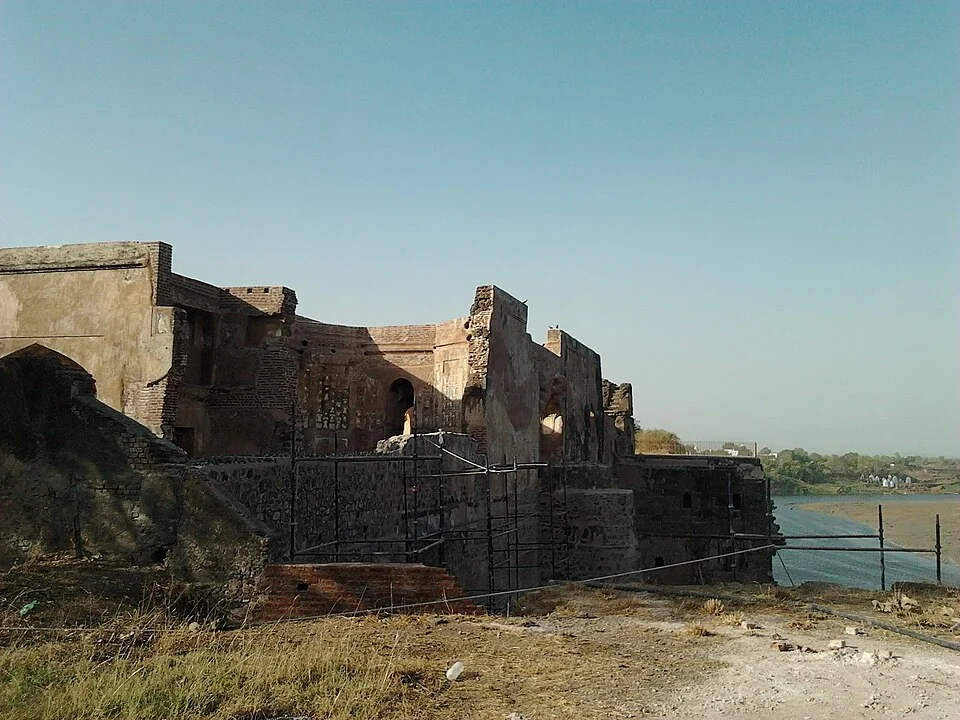
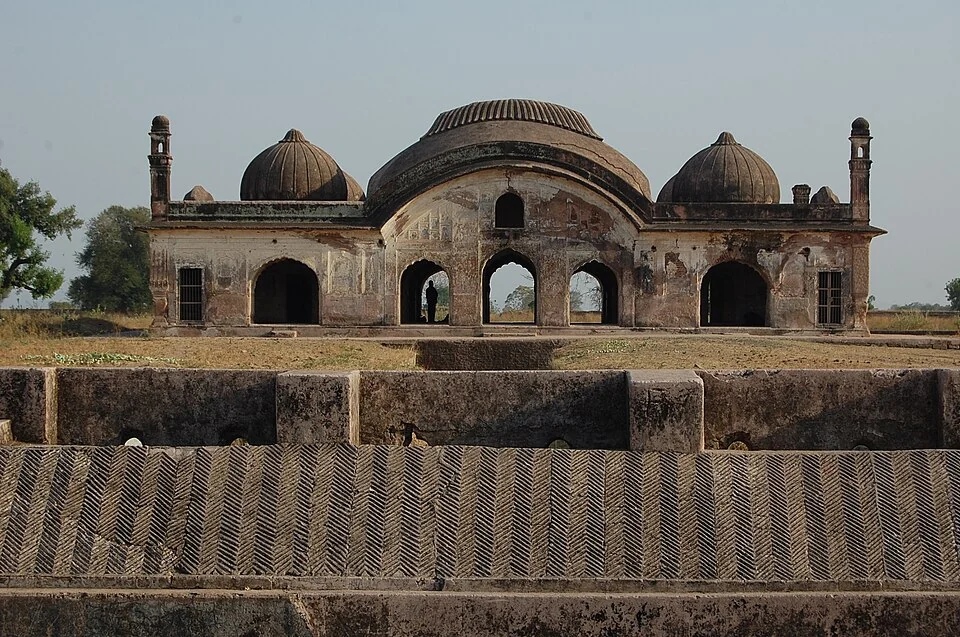
The cover photograph shows weathered walls, arched openings at Shahi Qila and the river connection to the right. It is not a picture of a painted hammam ceiling or a palace room that has been visited. Its source gives only March 12 as a capture date, without a dependable complete year, so the caption does not invent one. Nor does the historical image establish current visiting arrangements. Make the palace exterior the initial objective and ask locally which sections and interiors may be accessed. Keeping a return point in mind leaves options if luggage, weather or fatigue make a smaller circuit more appropriate.
Jama Masjid: compare courtyard and arches
The Jama Masjid image contains a minaret, an open courtyard, a long row of arches and people walking across the space. Taken in September 2024, it establishes a broad architectural setting rather than replacing the mosque with a tiny decorative detail. It does not, however, provide today's visiting hours. Ask about visitor permission and worship arrangements before entering. Check requirements concerning shoes, clothing and photography at the entrance, and keep passageways clear. The guide describes neither climbing the minaret nor taking part in worship or completing a tour of every interior room. Those experiences cannot be inferred from a courtyard photograph.
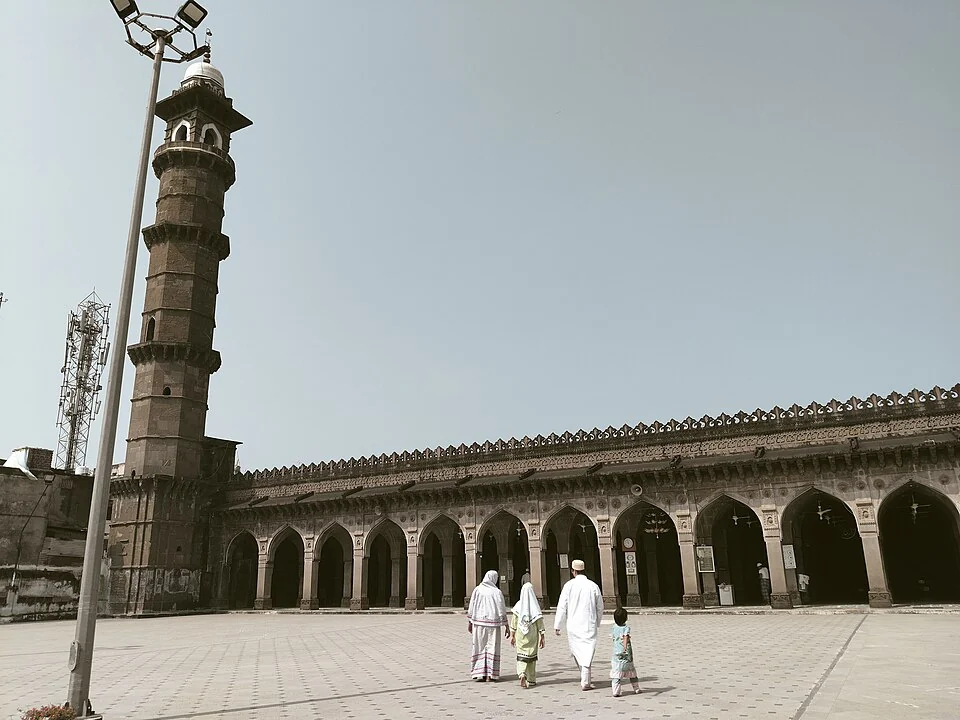

Choosing a single arch and comparing it with its neighbours is a manageable starting exercise. Look at repeated openings, column spacing and the boundary between open space and the covered section. District information places the building within the city's Farooqi heritage; that historical account is a different kind of evidence from a current opening schedule. Keep other mosques distinct rather than treating their names as interchangeable, and check your destination against local signs. For children, finding one vertical feature and one horizontal sequence may be easier than following a long historical account. If crowds or worship require waiting, move to another exterior portion of the itinerary instead of making entry essential to the visit.
Town streets: notice the scale between monuments
The street photograph shows a cyclist, shopfronts, several vehicles and buildings along both sides of the road. Recorded in 2009, it cannot establish current traffic direction or prove that an individual business still operates. Look first at the space used for movement, then at windows and balconies above the shopfronts. Comparing these smaller commercial surfaces with the palace walls gives the route a purpose beyond simply moving between monuments. No imaginary food order, current price or personal shopping memory is attached to a stall in the picture. The photograph provides urban context, not evidence of a transaction.
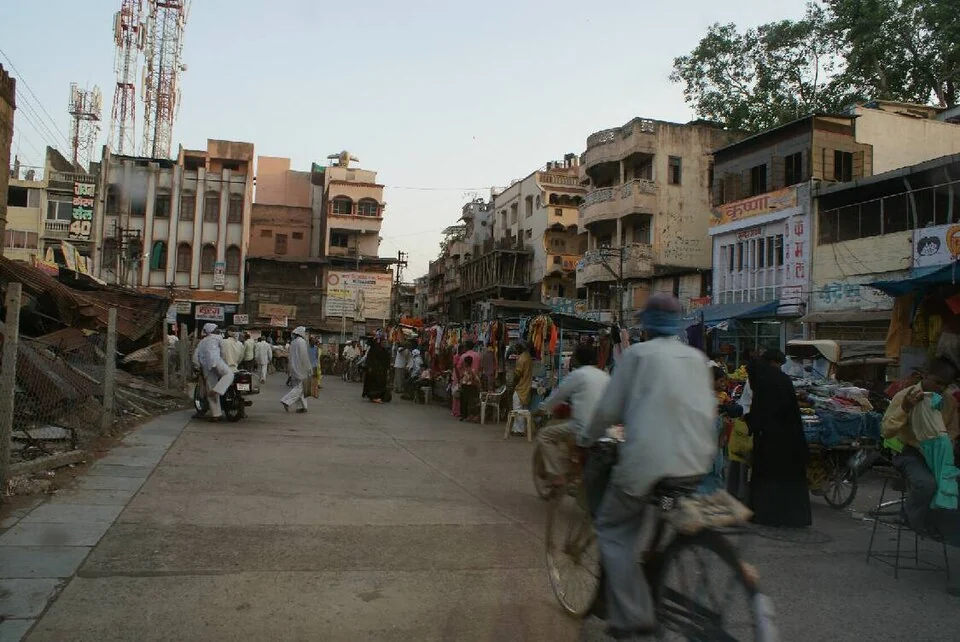

Adapt the central circuit to the group. After the mosque exterior, choose an appropriate street section while preserving the return to your accommodation. Rather than adding a distant fort to the same afternoon, leave time to observe these two central focuses. Select a resting place only when it is actually open and suitable; a historical image promises no vacant table. Consider water and breaks according to the day's conditions. Where pedestrians and vehicles share the street environment, compare your direction with the map, but do not use the old photograph to identify the exact location of a present safe crossing.
Ahukhana and the Tapti: arrange a separate connection
Domes, arched openings, low walls and open ground distinguish the Ahukhana photograph from the palace scene. Official tourism information locates Ahukhana across the Tapti from Burhanpur. It therefore should not be described as the next room reached through the same palace entrance or an automatic continuation of the compact central walk. Arrange an outward journey, suitable visiting conditions and a return separately for the second day. The image dates from 2011 and proves neither the current crossing arrangement nor interior access. If that additional connection cannot be arranged appropriately, retaining the centre and riverside produces a more workable short stay.
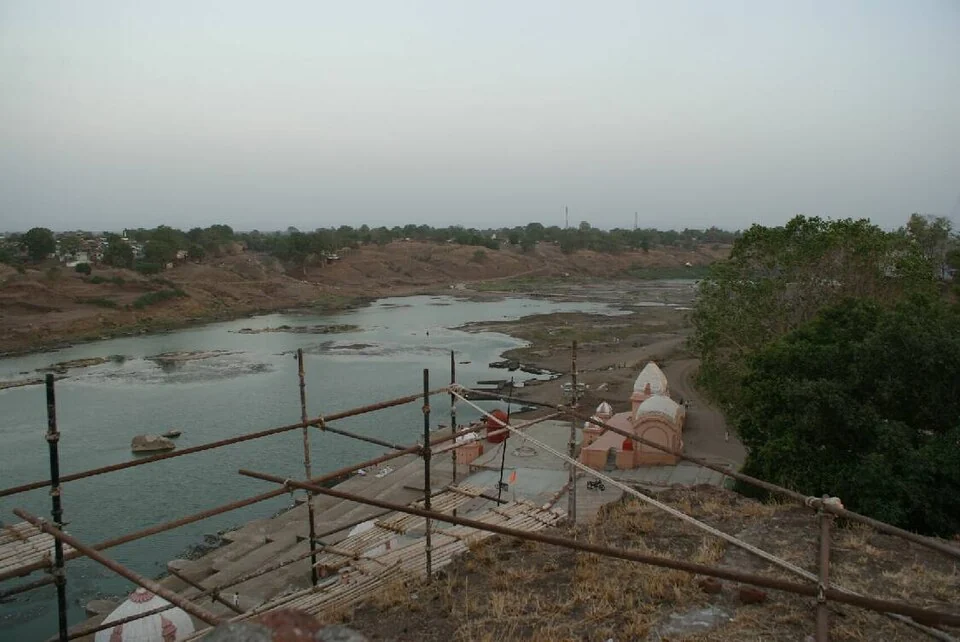


The riverside photograph contains a riverbed, water, vegetation, a small temple and railings in the foreground. The water level recorded in 2009 is not today's level. Do not infer a boat trip, swimming opportunity, permission to descend to the water or a river crossing from it. Observe from the pedestrian section that is permitted and usable on the day, then plan the return around the actual daylight conditions. This exercise considers how palace and city relate to the same watercourse rather than converting a view into an activity claimed to have taken place. The photograph's source does not establish a specific temple name, so a different named sacred building is not substituted in the caption.
A defined main meal, arrival and accommodation
For a meal, investigate Burhanpuri dal chawal, explicitly described as a main course by the district administration. Its account identifies arhar lentils prepared with yellow chilli, ginger, garlic and spices, alongside rice cooked with coconut milk, cardamom and cloves. That is a concrete meal choice rather than presenting Daraba dessert as a complete lunch. The administration associates the dish particularly with weddings and major celebrations; it does not establish daily availability in every restaurant. Ask in advance whether it can be served and which ingredients are used. No unverified restaurant menu, future price or invented tasting memory is attached to this recommendation.
District information describes Burhanpur's railway connections and arrival by road from Indore airport. Select your actual train using a current ticket: a list of connected cities does not establish a direct service or guaranteed journey time on your date. Treat the airport transfer as a separate part of the trip rather than a short movement within the city. For accommodation, the district's entry for MPT Tapti Retreat on Icchapur Road provides a concrete address example. It guarantees neither a room beside the mosque entrance nor availability for your stay. Ask the property about luggage, entrance steps, room arrangements and the return connection. Sources were checked on 6 October 2026; individual photograph dates and the incomplete palace capture year remain explicit.