
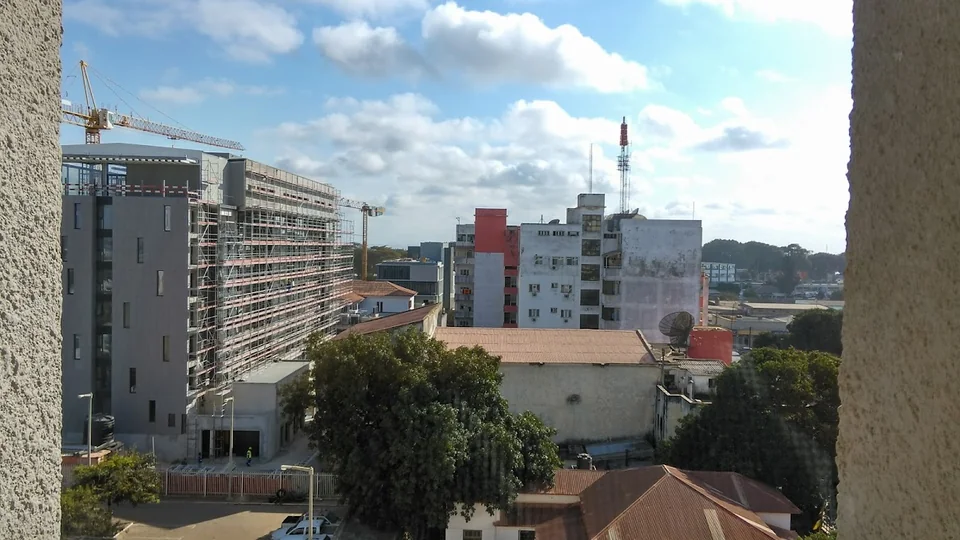
Understand Nampula at the scale of the city
Start a short visit by separating Nampula city from the much wider region carrying the same name. This guide concentrates on the ethnographic museum, the Catholic cathedral and a cultural day organised around your accommodation. An attraction appearing on a provincial tourism page is not automatically a city stop. Adding a separate destination such as Ilha de Moçambique to the same day would change the nature of this itinerary. Leylek’s suggestion is to give Nampula a day of its own while making separate arrangements for whatever journey follows.
Think of the visit in three parts: arriving and settling in, a museum session, and a flexible period around the cathedral. Allow time between the two stops for the journey and a break. Establish the visiting arrangements first and change the order accordingly. If a venue is closed, bring your meal or rest forward instead of spending the day waiting at its door.
Let the museum visit begin with the objects
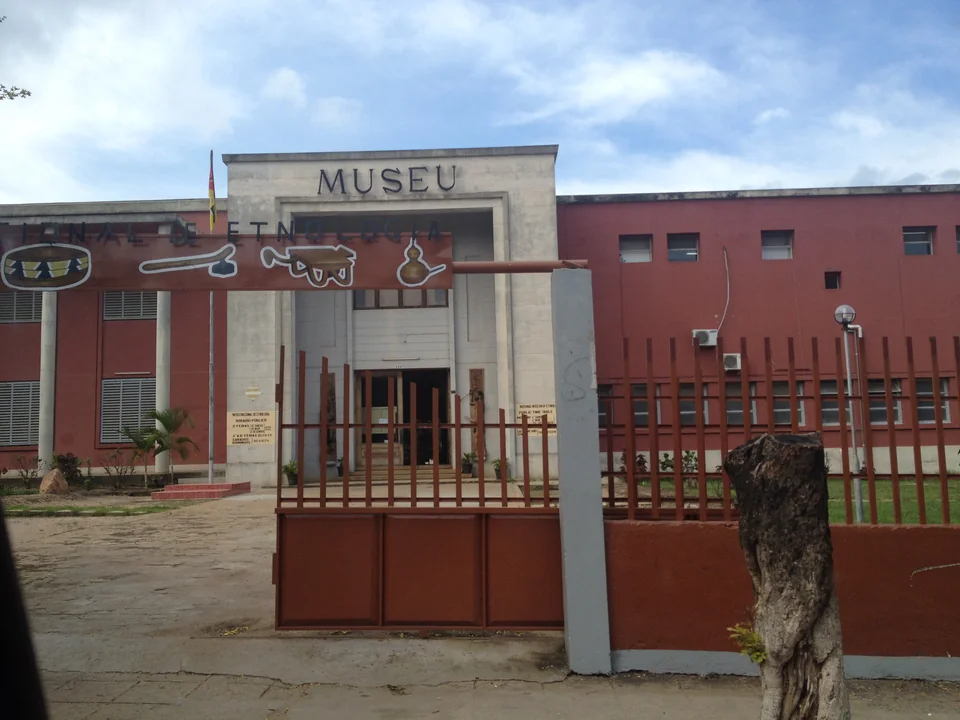

The official provincial tourism record describes Museu Nacional de Etnologia as holding a collection with national representation. Approach it expecting a scope wider than Nampula alone. Read where an object originated, what it was used for and what date is attached to it, rather than treating material from different communities as interchangeable. If guided interpretation is offered, ask about its language, scope and charge before agreeing to it.
Before entering, establish which galleries are accessible, the last admission time and the photography rules. The institutional description does not verify opening hours for your travel date. Do not handle objects, ask before photographing them, and avoid assigning meanings that their labels do not explain. With children, choosing a few objects and discussing their uses may be more rewarding than trying to rush through every display. Let the labels and the available galleries shape the visit rather than trying to follow a fixed list of exhibits.
Read the museum photographs with their dates in mind

.jpg)
.jpg)
.jpg)
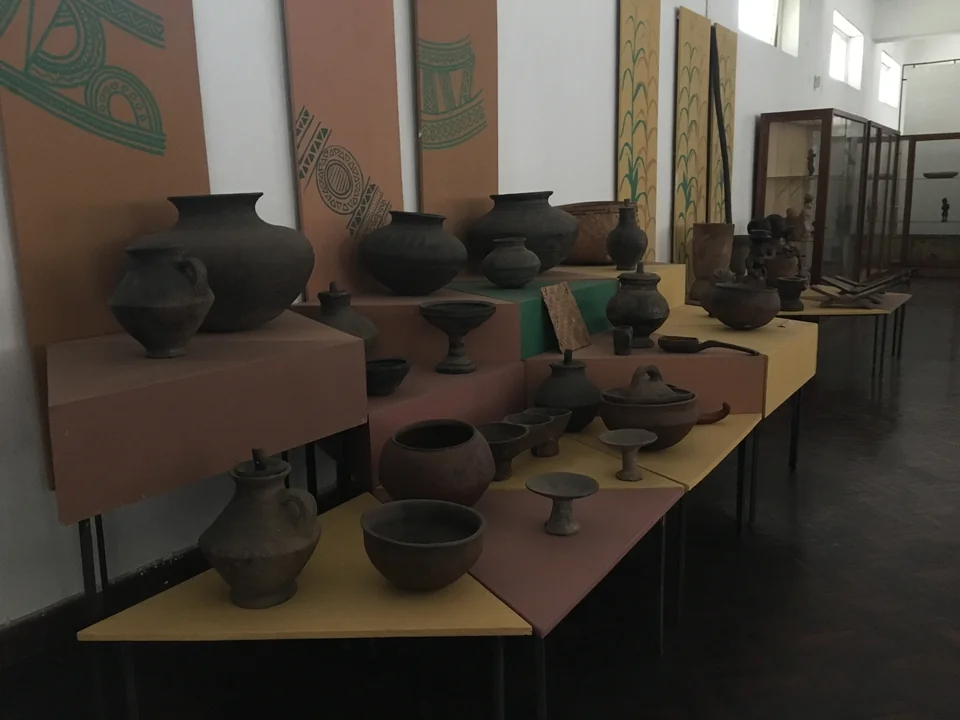
When preparing for the route, compare the museum images as records made at different times. Joseolgon’s photograph dated 20 February 2014 shows the red facade and entrance marked MUSEU. Denilsson Antonio’s gallery photograph from 5 January 2021 shows pottery vessels of different shapes arranged on stepped supports. Another image taken that day includes wooden and painted vehicle models. Together these details offer a way to think about the museum through everyday objects as well as its exterior.
The appearance of a vessel alone does not establish which community made it, and a model’s shape does not tell you its age. Look for those details on the exhibit label or ask a member of staff during your visit. The dates of the photographs do not prove that these objects remain in the same displays in 2026. In your own notes, distinguish what you actually encounter from what you saw in an older photograph. That keeps your visit from becoming a retelling of somebody else’s historical image.
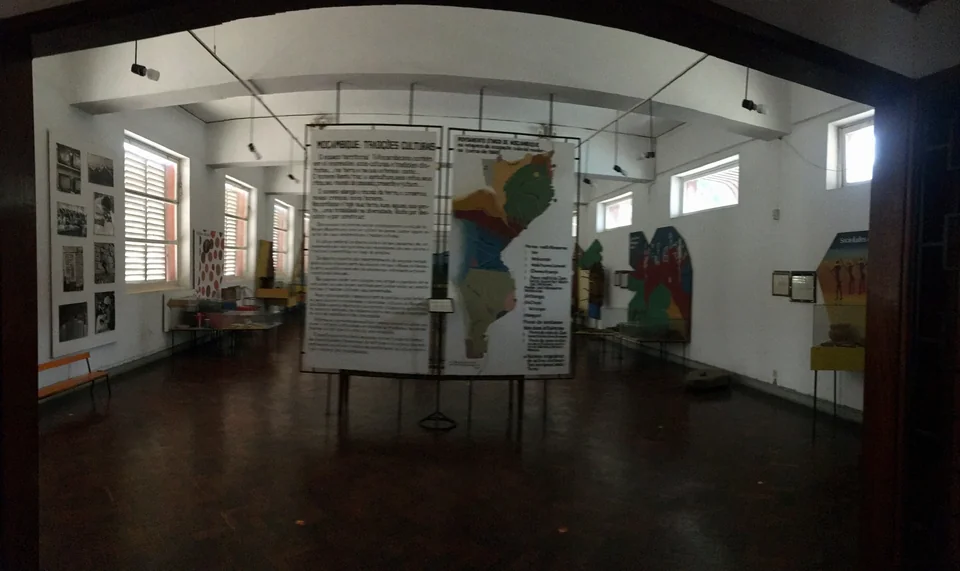
Denilsson Antonio’s gallery image dated 2 October 2021 shows a freestanding panel with a map and text, wall displays and windows. It is a reminder to give the interpretation around the objects some attention too. The panel’s complete text cannot be read from this photograph; read the accessible explanations during your own visit. The exterior, pottery, vehicle models and this gallery are different views of the same institution, rather than four separate sightseeing stops.
Pause respectfully around the cathedral
The municipality’s tourism page includes the Catholic cathedral alongside the ethnographic museum in the city’s heritage. Remember that it is a place of worship. An open door does not establish permission for a tourist visit or for photography inside. If entry is possible, follow the attendant’s guidance, keep quiet during worship and wait for an appropriate time to move around. If entry is unavailable, restrict your architectural pause to viewing the exterior from public space.
Allow time for food and the return to your accommodation when combining these two stops. Show their names to the accommodation staff and discuss the transport you will use that day; a connection that looks short on a map is not automatically a comfortable walk. Shorten a walking plan if conditions require it. Avoid blocking people for a photograph and ask before taking somebody’s portrait. This cultural day is intended to help you understand your surroundings without treating everyday city life as a performance arranged for visitors.
For an overnight stay, you can keep the arrival evening for settling into your accommodation and dinner, then leave the cultural stops until the following day. Once you have confirmed a day when a museum visit is possible, let that be the fixed part of the programme and give the cathedral surroundings a more flexible place. If a service is taking place, do not force an interior visit into the schedule. Arrange the transfer between the museum and your accommodation from their actual addresses rather than assuming one continuous walk. This separates an arrival delay from the next day’s cultural plans. Once you know the visiting hours, place the museum session accordingly and leave room for a break between the two stops.
Give your arrival day some breathing room
Leylek’s suggestion for Nampula is to leave the first day flexible. If you intend to arrive by air, begin with a date-specific search on LAM’s own booking page. The presence of a flight search form does not establish that a seat or a direct service is available on your chosen day. Before committing, read the connection conditions, baggage allowance and change rules attached to the itinerary you actually select.
Treat reaching your accommodation and exploring the city as separate decisions. Send your flight details to the property and ask whether an arrival transfer can be arranged. Request written confirmation of the vehicle, meeting point and charge, and ask whether that charge is included in the room offer. Leave room for a delay by keeping your first evening for settling in and eating, rather than attaching a timed museum appointment to the flight. For departure, check the room checkout time separately from the flight time and ask where luggage can be kept between them. Keeping those arrangements together makes it easier to leave time for the cultural stops after arrival.
A named place to stay and discuss dinner
New Hotel identifies its Nampula address as Avenida Eduardo Mondlane 1001/1003 on its own website. Its standard room description mentions air conditioning and a private bathroom. Confirm these in the offer for your dates: a general room description does not prove that a particular room is available when you arrive. Ask for the room category, breakfast arrangement, cancellation terms and total charge together so that you can compare like with like.
For a concrete first-evening meal, ask the same property's restaurant about picanha grelhada, grilled picanha beef. New Hotel names this preparation and charcoal-grilled prawns in its own post dated 6 July 2025. Use that dated post as a dinner idea and contact the restaurant before travelling to confirm whether the same picanha is being served, its portion, your preferred cooking level, the accompaniment and total price. The source does not name a side dish, so do not assume rice, chips or salad come with it. If you have an allergy or dietary requirement, request a specific answer from the kitchen about ingredients and preparation. Leylek's suggestion is to decide on an arrival meal alongside the accommodation address, then begin the museum day rested. Plan your next meal separately around the visiting arrangements for the cultural stops.