
Ecuador can suggest several different journeys within one country: Quito's neighbourhoods, Imbabura's lakes, high Andean landscapes and the southern surroundings of Cuenca. Tatilmerkezi's Stork does not turn that variety into a list to complete in one week. This country guide helps a first-time reader choose a workable regional programme rather than repeating a city guide street by street. Its main example is eight days around Quito and the northern Andes. Cajas in the south, Quilotoa and mountain summits are alternatives requiring their own time and access decisions.
Choose the region first: coastal warnings change the route
FCDO regional advice checked on 4 October 2026 advises against all but essential travel to Esmeraldas, Manabí, Santa Elena, El Oro, Los Ríos and Santo Domingo de los Tsáchilas. Guayas is also covered, with an exception for airside transit at Guayaquil airport. For a Galápagos connection, verify with the airline that you will remain airside rather than assuming a transfer permits a city outing. The same advisory applies within twenty kilometres of the Colombian border, apart from specified Carchi exceptions. This guide therefore proposes neither a coastal holiday circuit nor a northern border crossing. A Quito-centred example does not imply that the rest of the country is risk-free.
Eight days: Quito and one northern base
Keep day one for arrival, a prearranged transfer and a meal close to your accommodation. Day two can introduce the historic centre in daylight; day three can concentrate on a chosen neighbourhood, market and local lunch. On day four, travel in daylight to one accommodation base around Otavalo or Cotacachi. Give day five to the area's settlements and meals, and day six to a Cuicocha visit selected using authoritative local information if conditions permit. Return to Quito on day seven for a buffer night. Day eight is departure day.
This distribution does not also fit Cuenca, Cotopaxi, Quilotoa and an Amazon tour into the same week. Two bases can be easier to understand than unpacking in a different hotel every evening. If the northern connection or visitor conditions do not work, extend the Quito stay; do not automatically convert an unused day into a high-altitude hike. The sample is an editorial planning option, not a guaranteed tour, reservation or safety clearance.
Transport and accommodation: connect the address to the return
For the first Quito night, arrange airport transport in advance to reduce unplanned movement after a late arrival. Building meals and evening returns around La Floresta or another chosen neighbourhood can help reserve the historic centre for daylight. A neighbourhood name is not a safety certificate. FCDO guidance highlights robbery risks in urban centres and transport hubs, avoiding road travel after dark and protecting belongings carefully. Use official ECU 911 information when assessing road conditions; do not attempt to pass through a protest or road closure.
When choosing the northern base, put the terminal connection, daylight arrival and evening meal ahead of a room's distance from a lake. A private transfer and an intercity bus involve different luggage and cost decisions; no fixed fare or invented journey duration is supplied here. For a highland outing, the return vehicle, poor-weather alternative and guide's competence belong in the written plan. A beautiful accommodation photograph does not establish heating, accessibility or reliable transport.
Cuicocha: viewing the lake and walking around it are different choices
The 2014 photograph depicts Cuicocha's caldera. Day six of the main country example can be allocated to a lake-area visit, depending on current conditions. The picture does not establish that boats are operating or the entire circuit is accessible. Consider a viewpoint and shorter visit before treating a complete perimeter walk as the default goal. High altitude and changing weather distinguish this outing from ordinary city walking. Authoritative local information and an experienced guide help separate the landscape's appeal from the decision about a particular route.


Keep time for lunch and the connection back to your base. A day selected for the lake should not end with an improvised journey in the dark. Readers interested in a long walking programme need a different level of planning from those wanting a short landscape visit, and the country overview deliberately leaves those options distinct.
Quilotoa: a focus for a different Andean week
The 2007 crater image is not an extra stop squeezed into the northern programme. A reader prioritising Quilotoa should design a different Andean route after Quito instead of also heading north. Looking from the crater edge and descending to the water before climbing back involve different effort; this guide gives neither a descent time nor a promise that the path suits everyone. Arranging transport and accommodation with current operators can give the area actual nights rather than a rushed detour. A historical image is not current information about terrain or weather.


Choosing one Andean focus also makes meal planning less uncertain. Allow an arrival block, an outing block and an onward travel block rather than making each day a race between landscapes. If a route is unavailable, the flexible part of the plan is the itinerary, not a willingness to ignore a closure.
Cajas: the southern alternative paired with Cuenca
The Cajas lake photograph dates from July 2000, and its specific CC BY-SA 2.0 France licence is retained. It represents a different landscape for a journey based around Cuenca in southern Ecuador. It is not connected to the Quito-and-north example by an imaginary same-day transfer. If the south is your choice, remove the northern nights and allocate separate time for reaching the region. Confirm current visitor arrangements, route access and any guiding requirement through the relevant authority before setting off on a long park walk.
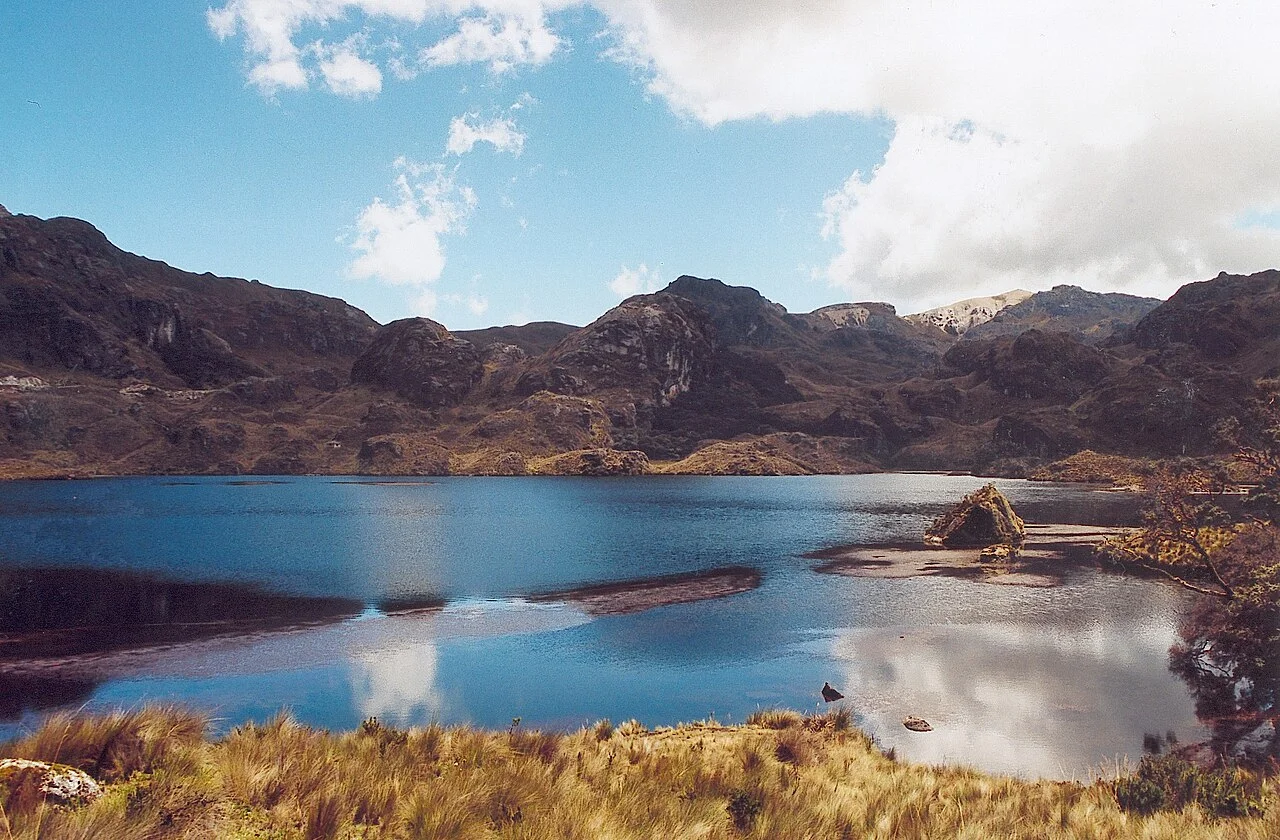

An old lake view does not certify an open trail. Treat the picture as an introduction to the region, then choose accommodation around the transport and meals that your actual programme needs. The country is more understandable when its southern landscapes receive a coherent visit instead of becoming another mark on a completion checklist.
Cotopaxi and Chimborazo: a summit image is not an outing promise
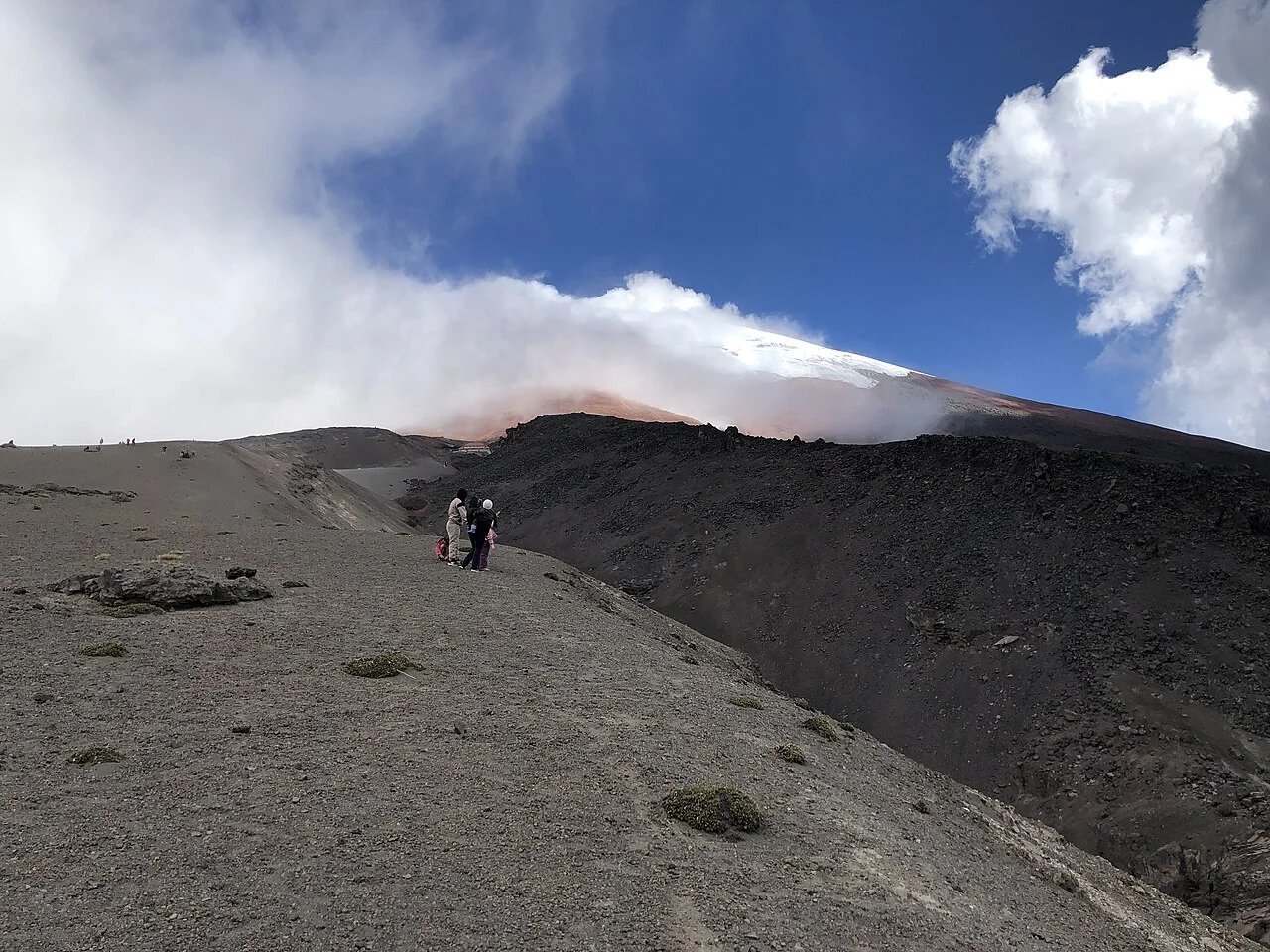
The cover shows Cotopaxi páramo terrain with distant walkers. The Chimborazo image looks east from the summit; its source description gives a 1997 date while metadata indicates 1996, so no exact capture day is asserted. These photographs do not make a summit climb compulsory on a first country visit. FCDO guidance discusses high altitude, unpredictable weather and competent guides for mountain activities. High mountaineering on a glaciated mountain requires an official accredited guide. This article supplies no medication, treatment or guaranteed number of days for altitude adjustment.
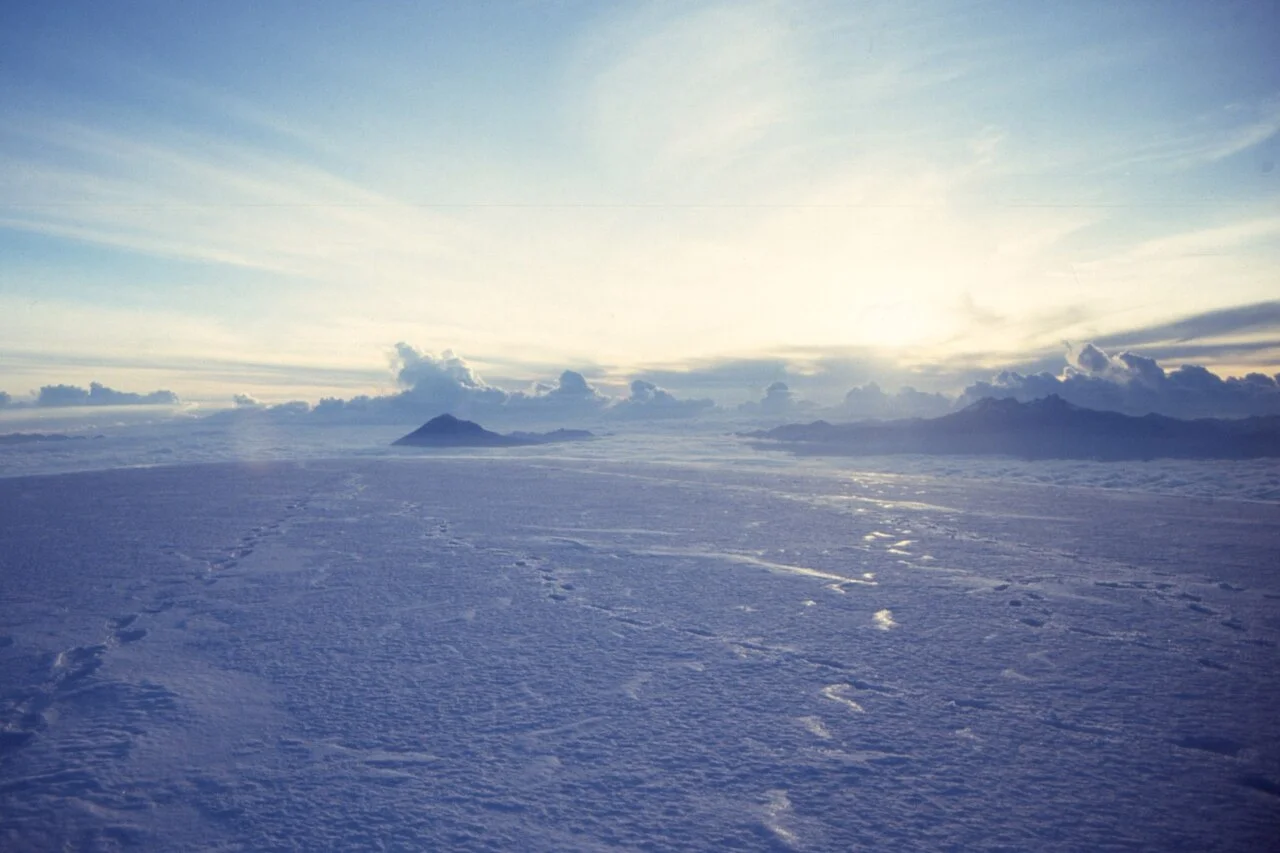

A traveller can appreciate Ecuador's mountain geography without undertaking a technical ascent. Choosing a lower-intensity day, cancelling in poor conditions or keeping mountain activities for a specialist trip are legitimate itinerary decisions. The photographs show real places, not a certification of present access.
Meals: one soup, one market and a sweet pause
Quito's official tourism organisation lists specific dishes including locro de papa, mote con chicharrón, empanadas de morocho, hornado and fritada. You might give day two's lunch to locro de papa and use day three's market break for a small empanada de morocho. Choosing hornado or fritada on a different evening reduces the pressure to order every named dish at once. A reader seeking a meat-free plate should examine the actual menu; a dish name alone is not a suitability guarantee.
At the northern base, match lunch to the lake visit's return rather than relying on a restaurant you merely hope will still be serving. In Quito, a small helado de paila or dulce de higos pause adds another concrete local detail. The accompanying photographs depict landscapes, not dishes or restaurants; these are separately sourced meal suggestions. There are no fixed prices, guaranteed open businesses or claims of universal recipes. Sources were checked on 4 October 2026. The Stork's suggestion is to begin Ecuador's variety with one well-chosen region, leaving the next journey room to be different.