

Amravati: choose the Maharashtra city on the right map
Amravati in this guide is the regional city in Maharashtra, not Amaravati in Andhra Pradesh. The Tatilmerkezi Stork selects two nights so that an old urban gate and institutional surroundings do not become a rushed transit checklist. Reach the room on the first evening, visit Jawahar Gate and the Ambadevi setting on the main day, then return to the genuine ticketed connection after breakfast on the final morning. Two nights mean three calendar days and one full urban day. An interest in the Shri Shivaji Science College entrance or a separate mosque exterior can be considered within the remaining time through actual city connections. Melghat, Chikhaldara and dams are not appended to the same city walk merely because they appear under the district name. Looking at education and religious settings together permits varied urban attention without obliging entry through every institutional door. Spelling differences in source filenames do not resolve geography by themselves. Check the Maharashtra location on both transport booking and accommodation address.
Resolve Amravati and Badnera through the accommodation address
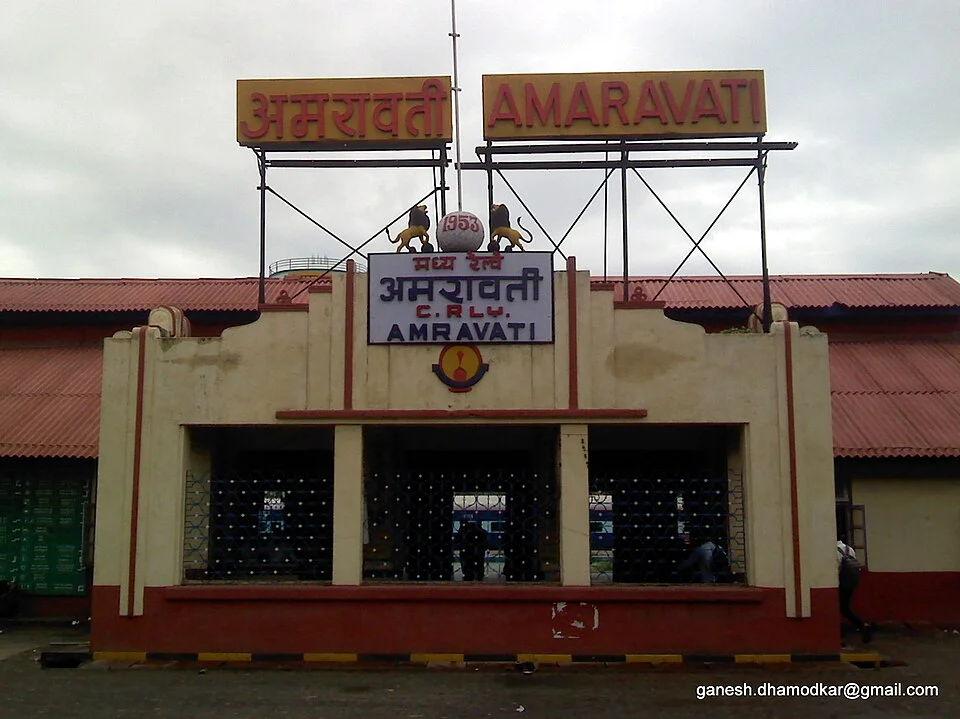
The Amravati sign in the railway photograph identifies a genuine station exterior. This older image supplies neither a current train time nor the station where a traveller on another connection will arrive. If the ticket says Badnera or Amravati, match that actual arrival point to the room rather than treating the two names as the same entrance. Discuss the final vehicle connection and reception time beforehand so the first evening does not disappear into an avoidable address problem. State promotion describes access options without proving daily direct trains from every city or an unchanging airport transfer. If considering a flight, check the airport on a currently bookable flight and the remaining ground journey to Amravati together. A station-area room may simplify arrival but does not guarantee the same walking distance to Jawahar Gate or other institutions. A central address can instead be assessed for resting after the visiting sessions. Allow separate time on departure morning for baggage, check-out and reaching the right railway station. Historic signage cannot replace a current transport plan.

Jawahar Gate: walls, an arch and a clock-topped structure
The Jawahar Gate photograph brings substantial stone walls, the principal passage and an upper clock arrangement into one view. It offers a useful urban threshold scale before approaching an individual institution. Its documented location is Amravati in Maharashtra and is not confused with a similar name in another state. A construction date and the length of surviving old walls are not calculated from the picture. Make a short exterior architecture pause from a public side, keep the arch clear for passing people and assess the traffic locally. A clock-topped structure does not establish that its upper level admits visitors. Observing the relationship between arch and wall from an appropriate edge is enough without holding a lengthy photography session in front of a narrow passage. Choose the actual pedestrian connection and road crossings before moving towards Ambadevi. One photograph cannot prove that the whole connecting route is unobstructed or free of works on the travel date. The first session is intended to understand the wall scale and proceed without haste.
Ambadevi: a named entrance setting rather than an invented interior
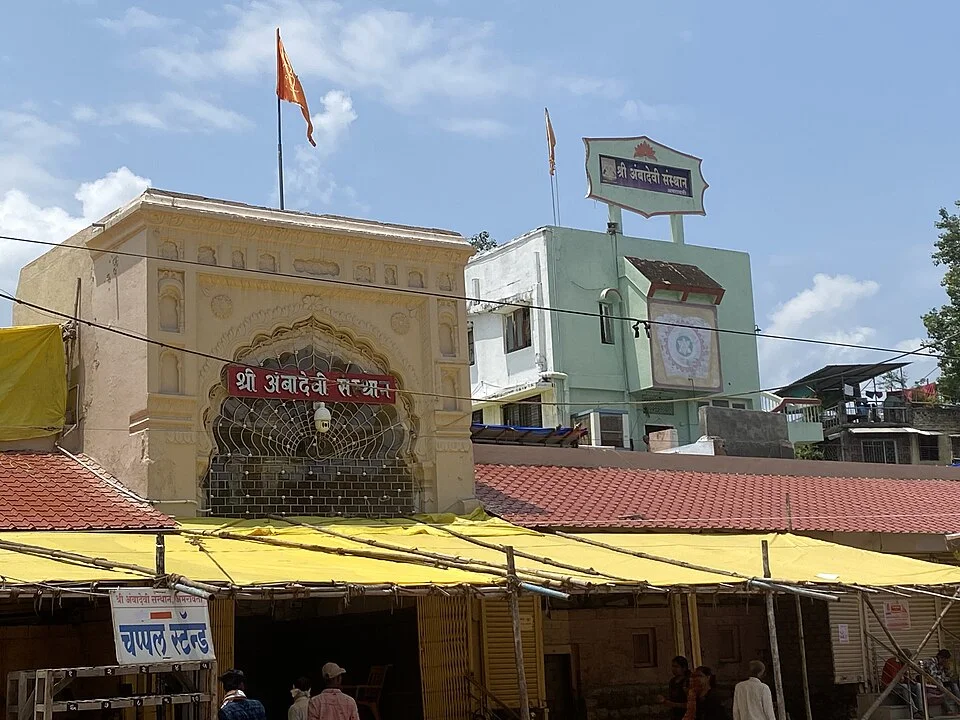
The current district Ambadevi record identifies the temple in Amravati. The selected image shows its entrance facade and surrounding buildings, not an inner sacred chamber or the full temple plan. General historical and architectural language on the state page is not used to describe a tall tower that the photograph does not show. Following the working routine of a place of worship begins with accepting the limits of the image. Ask staff about footwear, admission and photography, and keep the flow around the entrance open. If a ceremony or crowds affect the day, the exterior pause can be shortened. Choosing not to enter does not make the urban session unsuccessful: understanding the entrance and street relationship is part of the plan. Visitors are not all presumed to join the same religious practices. Ekvira appears nearby in official accounts, but this Ambadevi photograph has not been relabelled as that institution. Give the named entrance enough time without turning different sacred destinations into a race for the largest same-day total.

A mosque exterior: the visible dome and minaret
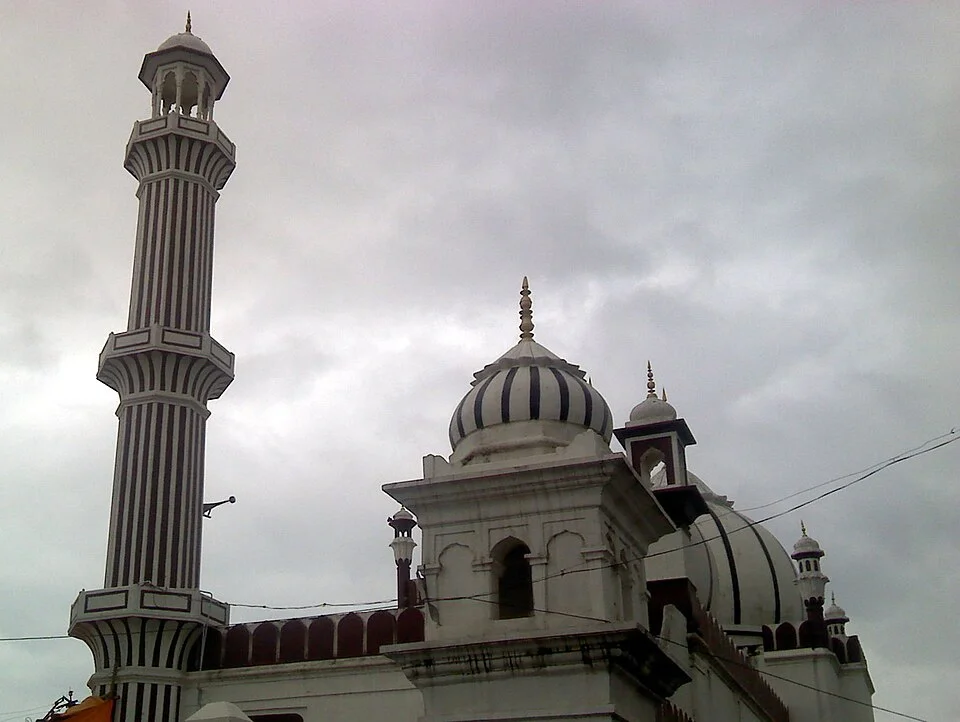
A separate photograph captured in 2012 shows a mosque facade, dome and tall minaret in Amravati. Since the source does not supply its specific name, no institution name, founder or denominational identity has been invented here. The picture is a concrete scene of another architectural language within the city, not evidence for tourist interior admission or a precisely established route stop. A traveller who wants to explore this exterior architecture should first identify the current location and an admitted public viewing position. Interior visiting requires the institution’s guidance; an old facade photograph does not grant access independent of worship arrangements. Consequently the mosque is not counted as a compulsory third religious stop to finish. It remains a small choice based on architectural interest and time after the Jawahar and Ambadevi sessions. The cloudy sky and facade condition are not presented as identical today. Urban variety is read through actual external forms without treating different institutions as interchangeable versions of one religious experience.

Morshi Road and the science college entrance
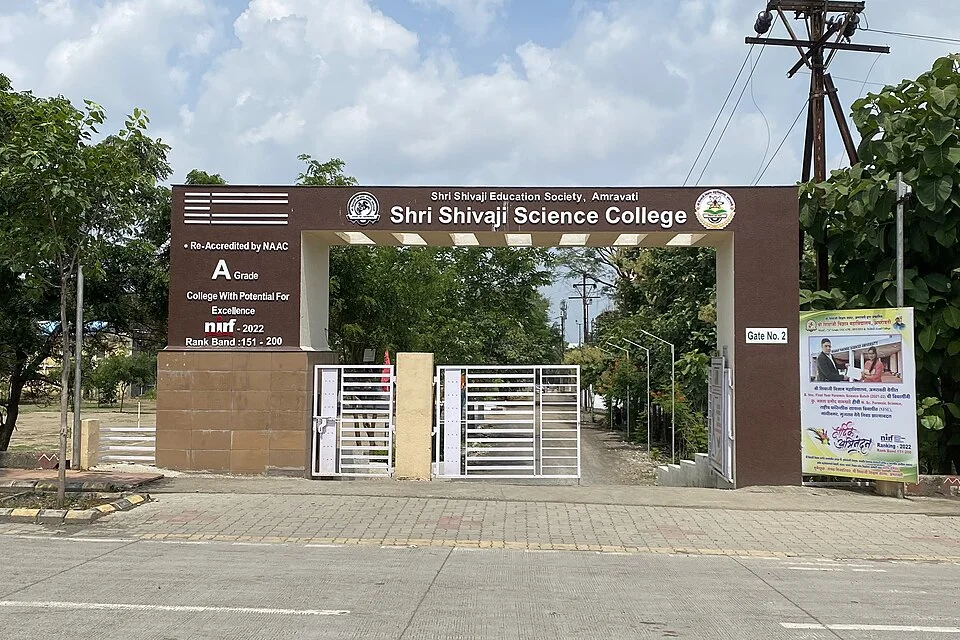
The current district public-utility record gives Shri Shivaji Science College an address on Morshi Road in Gadge Nagar, Amravati. The photograph shows the named entrance, a tree-lined inner approach and the external pavement. It documents an educational setting in the city rather than proving tourist access to classrooms, laboratories or the whole campus. If education is a particular interest, organise the connection through the real address and ask the institution about any required admission. Going to a closed gate merely to enlarge a sightseeing checklist is unnecessary. Observing an appropriate public exterior can be enough without converting current academic activity into a visitor performance. The college name is not substituted for a Siddaganga institution or an engineering campus elsewhere: the image and government record refer to the same Amravati institution. When the main day is short, this choice can be dropped in favour of more time at the room and for a meal. A nature or wider district outing represents another duration decision. The college surroundings are not described as a park that replaces those journeys.

Poha breakfast and the end of the city day
Maharashtra’s official cuisine booklet describes poha as a breakfast preparation made with flattened rice and mentions ingredients such as onions, spices and peanuts in some versions. When an actual Amravati establishment serves it, it supplies a concrete regional meal for the last morning. It is not claimed as an invention exclusive to this city or a plate arriving with identical contents everywhere. Ask about peanuts, heat and other ingredients when ordering; a personal dietary requirement is not resolved by a general dish description. Leaving time for a seated breakfast gives the programme a more coherent ending than adding a distant district excursion to departure morning. Poha is placed within a real meal slot instead of being included only as a name in a list. No price or invented restaurant tasting memory is provided. Anyone interested in the Wadali or Chatri waterside setting should check current access and its ground connection separately; none of the selected photographs depicts those lakes. Melghat and Chikhaldara need additional days. Sources were checked on 5 October 2026 and older photographs retain their 2012 and 2022 capture dates. Room departure and the actual onward transport point remain the final morning’s main priorities.