
Arras: distinguish the square from the underground narrative
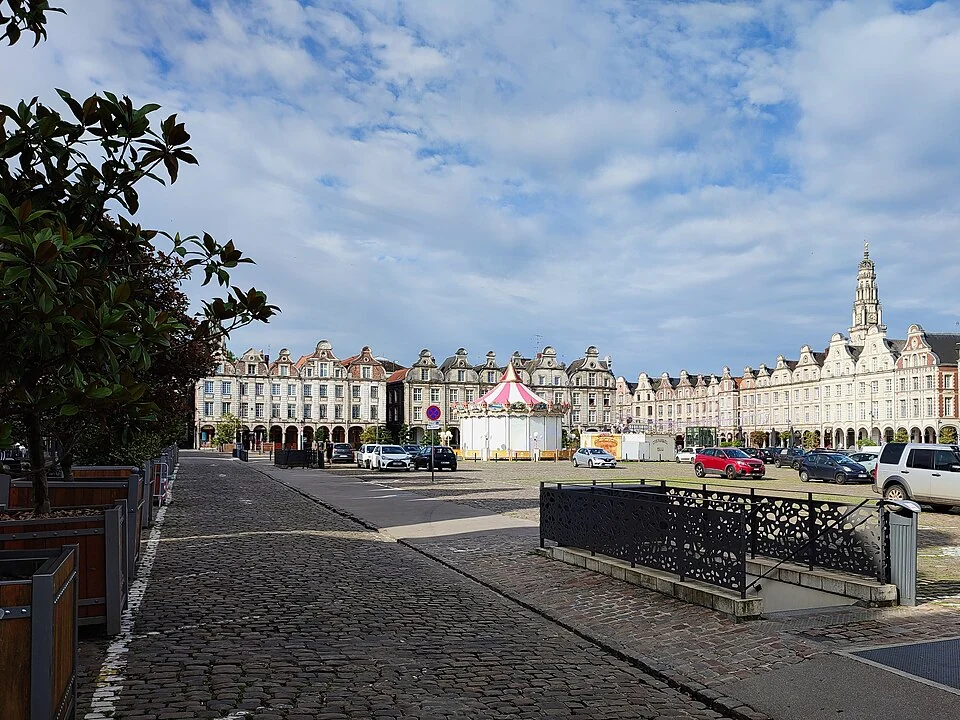
One night in Arras can support two distinct city experiences: the open fronts around Grand’Place and Place des Héros, followed by a guided underground visit at Carrière Wellington. If the return train permits, consider the Citadelle exterior as a separate short walk the following morning. This keeps daily use of a square distinct from the narrative of wartime preparation. Tatilmerkezi Stork suggests examining why one frontage resembles another in the square, then how passage is constrained underground. The cover is JackyM59's Grand Place photograph from 8 July 2024, showing broad space, a row of fronts, vehicles and temporary arrangements. It establishes neither today's parking layout nor the same event in October; the future visit needs its own conditions.
For the train arrival, check SNCF's Arras station at Place du Maréchal Foch. Search the TGV or TER connection for your actual date rather than treating an older journey estimate from another city as a definite return calculation. Choose accommodation around both reaching the squares and getting back to the station. Reception hours, luggage storage and room stairs need answers from the real property. Find an actual time to leave a bag instead of carrying it around the square on arrival. Select the underground tour's afternoon start beforehand and fit a proper meal around it. A delayed train may justify shortening the initial square observation so that you can reach the guided visit on time. No ticket or usable connection is assumed already obtained.
Place des Héros and a specific andouillette main meal
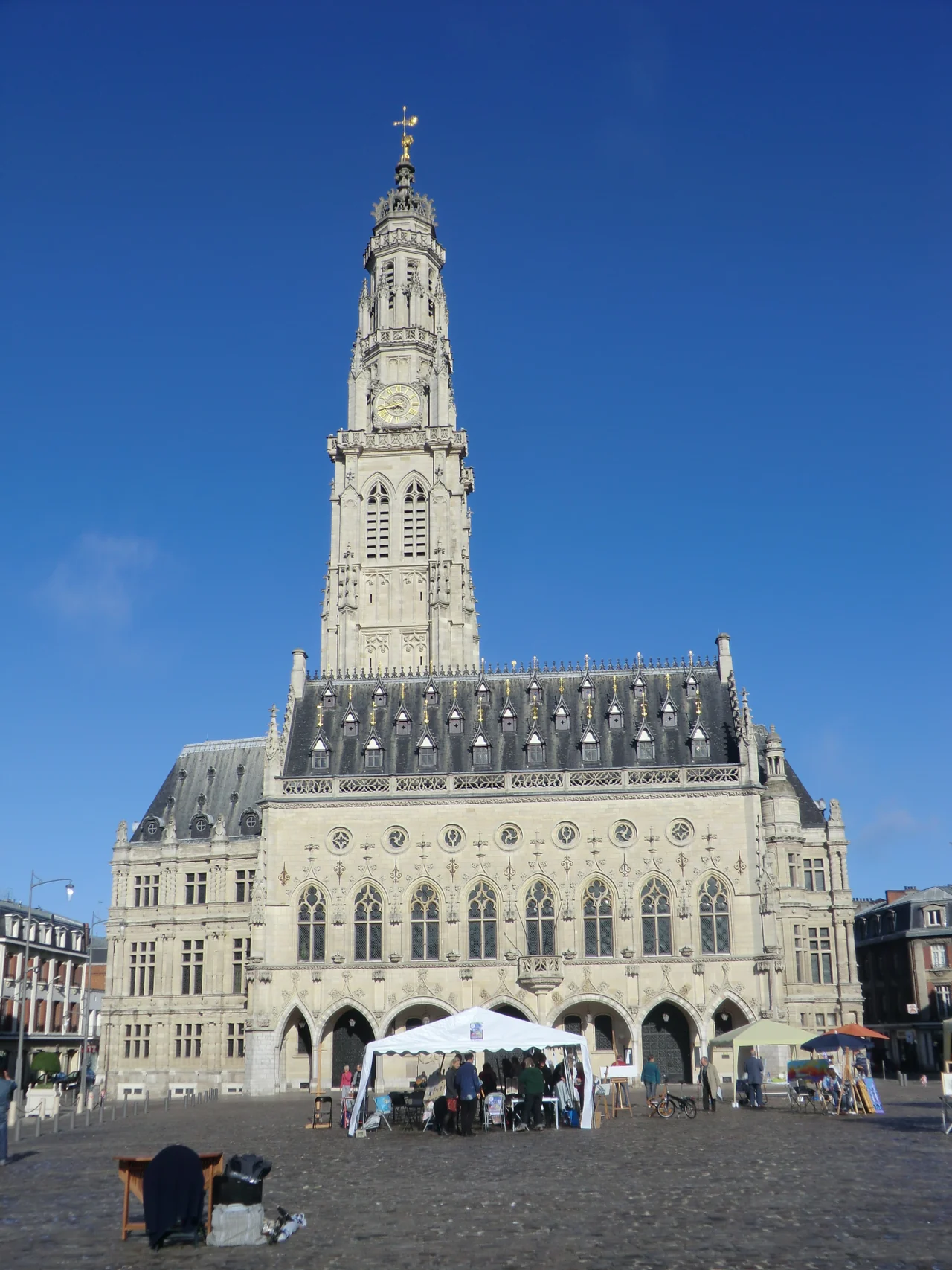
The second image depicts the belfry and town hall from Place des Héros, photographed by Mélanie Huguet on 18 September 2011. Unlike the repeated fronts of Grand’Place, the eye is directed towards a tall tower and broad public building. Look from the square to compare the nearby entrance with the tower's height. Open space in an older photograph does not establish the same present arrangement throughout. If ascending the tower matters, ask the tourism office about the actual ticket, final admission and movement conditions on your date. This guide does not transfer office opening hours automatically into tower-visit hours. A level square walk and a high ascent present different access questions for someone needing a lift or avoiding stairs. A short exterior observation may be sufficient.

For a real main meal, L’Entre Nous's operator menu lists andouillette d’Arras under mains, at 43 Grand Place. Accompaniment choices include chips, salad, vegetables, risotto, potatoes or gratin dauphinois; ask about pairing the andouillette with the gratin, for example. The tatin d’andouillette listed among starters is a different item. Published service is Tuesday–Saturday, noon–2pm and 7pm–10pm, with Monday and Sunday closed. Do not insert this restaurant as an open meal stop for a Monday arrival. Confirm ingredients, your chosen accompaniment and availability when booking rather than inventing the provenance of every component or producer from a menu name. The tower photograph depicts no food, so a supposed tasting or service encounter is not narrated.
Saint-Vaast: an old view establishes no open collection
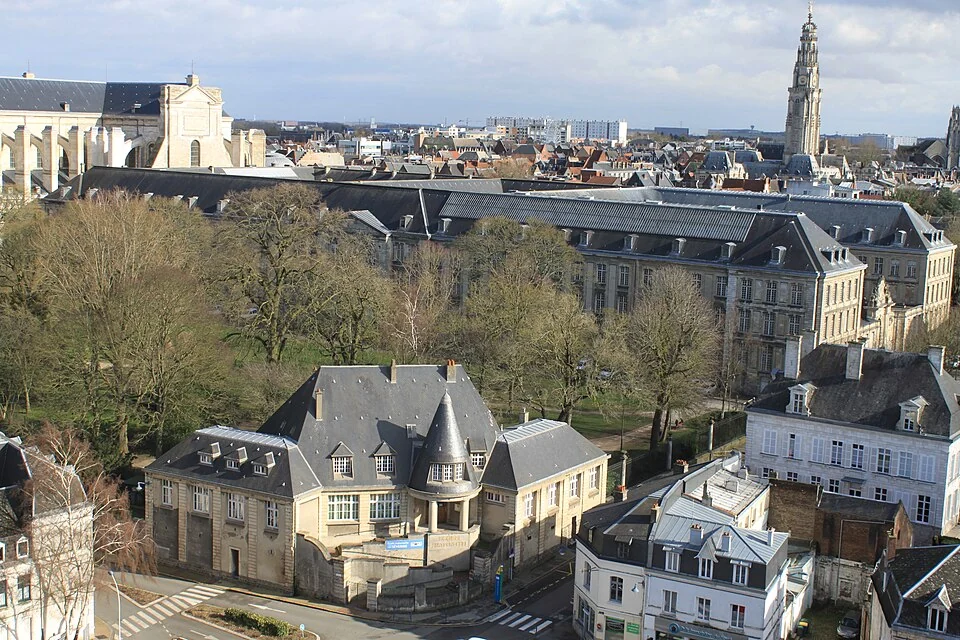
The third photograph shows the Saint-Vaast complex from above with surrounding roofs and trees, captured by Misimosni.Arras on 20 February 2020. It proves neither that a street-level walker can obtain the same elevated viewpoint nor that a roof is open for access. The source identifies abbey courtyards and the neighbouring cathedral; the guide uses the visible broad city context. For an outdoor observation, choose an open, safe city route and respect construction boundaries. Because the image predates current arrangements, do not disregard a closed path or scaffolding on the actual date. Moving from commercial squares towards a large abbey complex offers a short, concrete comparison between different scales within the city.

The Saint-Vaast collections are not included here as a normally open museum stop. The tourism office's autumn/winter 2024/2025 magazine published that museum rooms and collections would be inaccessible until 2030; this is not a new guaranteed reopening commitment. Municipal 2026 programming also places some museum activities outside the building. Do not turn older museum hours into an entry plan despite this situation. Find the real address and date separately for an off-site activity, without assuming a July park programme repeats in October. Completion of structural works and readmission to all collections may represent different project stages. The historic exterior observation proposed here makes no claim to have personally witnessed either milestone.
The Porte Royale approach at the Citadelle
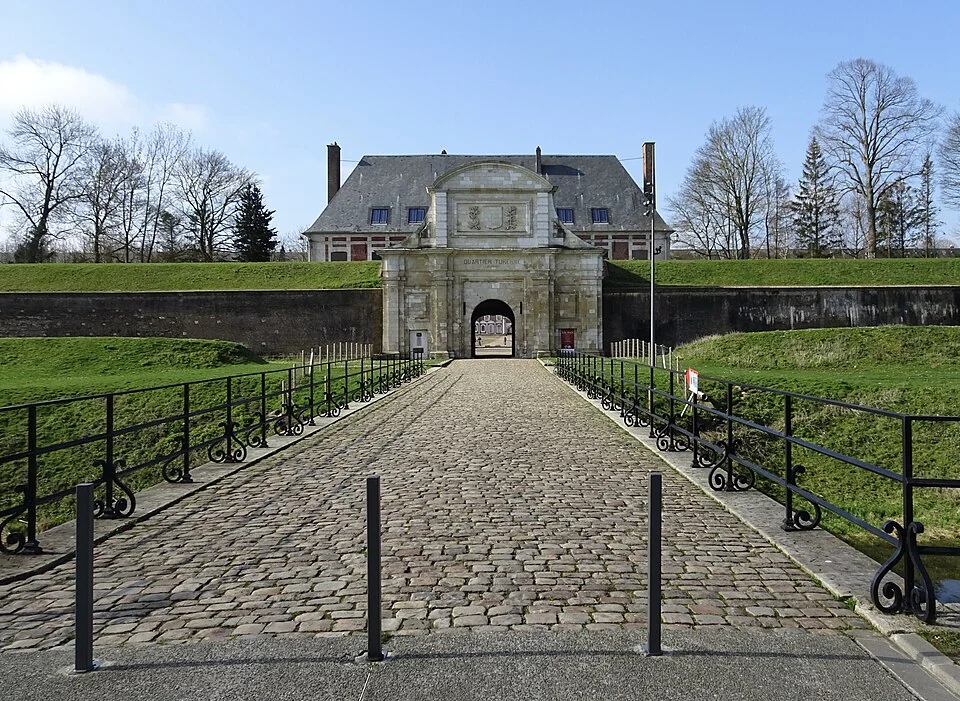
The fourth photograph depicts the paved approach, grassy defensive bank and Porte Royale entrance at the Citadelle, captured by Pierre André Leclercq on 21 March 2019. A broad square's scattered viewpoints give way to a single controlled opening. If choosing the Citadelle for the second morning, consider both returning through the city and the time available before the train. The tourism office's current practical information gives open access via Boulevard du Général de Gaulle and the principal Porte Royale passage. The complex now contains workspaces, homes and other uses, so open outdoor space does not mean every doorway admits visitors. Stay within public passage rather than entering a private office or home to reproduce a photograph's angle.

The current tourism page gives open admission from 9am to 7pm for the history exhibition and relief map in the Salle des Familles; still check any special arrangement for the actual day. This guide reproduces neither a close-up of the modern model nor a digital display, using only the historic gateway exterior. A short stay need not include the full circuit of the defences. Compare gate and grassy bank before returning as a smaller morning option. The Mur des Fusillés remembrance site has its own admission information; keep another history stop's calendar distinct from the underground museum. Hosting a past summer festival does not establish an October concert or food stall. Remove this additional walk if the need for rest increases.
Carrière Wellington: a real guided visit and the return
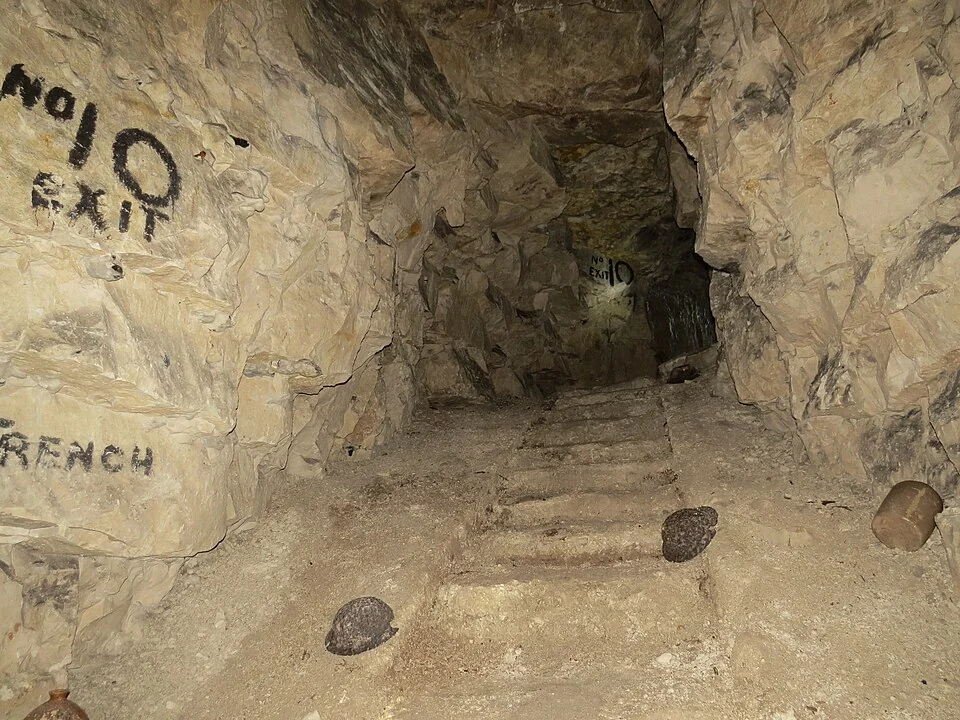
The fifth image shows stone steps, chalk walls and writing traces at Exit No. 10 in Carrière Wellington, with the source giving 20 November 2014 and Ei Shany / אלי שני attribution. It is not an image of the differently located Arras Tunnel in New Zealand. This older exit scene establishes neither the present visitor entrance nor a route everyone takes over those steps. The actual institutional address is Rue Arthur-Delétoille, Arras. Its 2026 brochure explains that New Zealand tunnellers linked former chalk quarries for preparations preceding the 9 April 1917 attack, and identifies today's guided underground narrative. No supposedly remembered soldier's account or personally heard sound is invented. Examine the passage and historical context with the institution's guide.

The same 2026 brochure gives daily year-round opening from 9:45am to 12:30pm and 1:30pm to 6pm, with closures on New Year's Day, Christmas Day and three weeks after the Christmas holidays. These ranges do not establish the final tour's starting time; check the booked departure and available places separately. The institution describes descending by lift, but that does not guarantee identical movement conditions throughout the route for every visitor. Consider children's needs and any difficulty with dark or underground surroundings beforehand. Allow real time for collecting bags and returning to the station afterwards. The announced 110th-anniversary event on 9 April 2027 is still future. A selected square walk, specific meal, guided remembrance visit and suitable morning exterior route can fit your dates without claiming to complete the whole Artois region.