
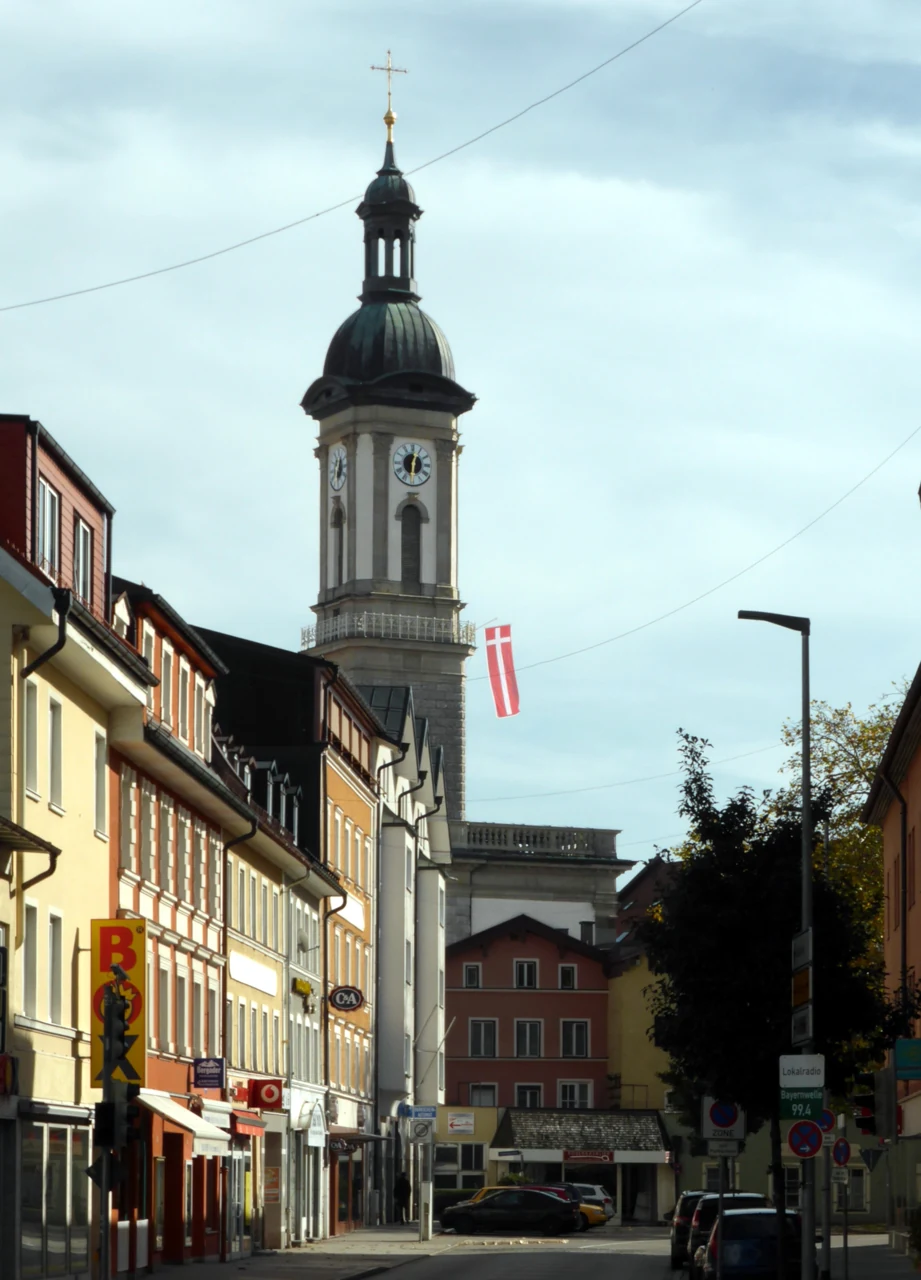
Build a first visit to Traunstein from the upper old town down towards the Au district and its salt-production heritage. The streets around Stadtplatz initially offer a familiar Bavarian townscape, while the lower area helps explain the industry behind that appearance. A museum, a walking route and a substantial meal can fit into one day. Staying overnight is optional, but removes the pressure to shape every stop around a return departure. Check current transport from Munich, Salzburg or the wider Chiemgau region. When booking, use the town name together with the actual property's address so that similarly named places do not lead you to the wrong destination.
Find your bearings at Stadtplatz
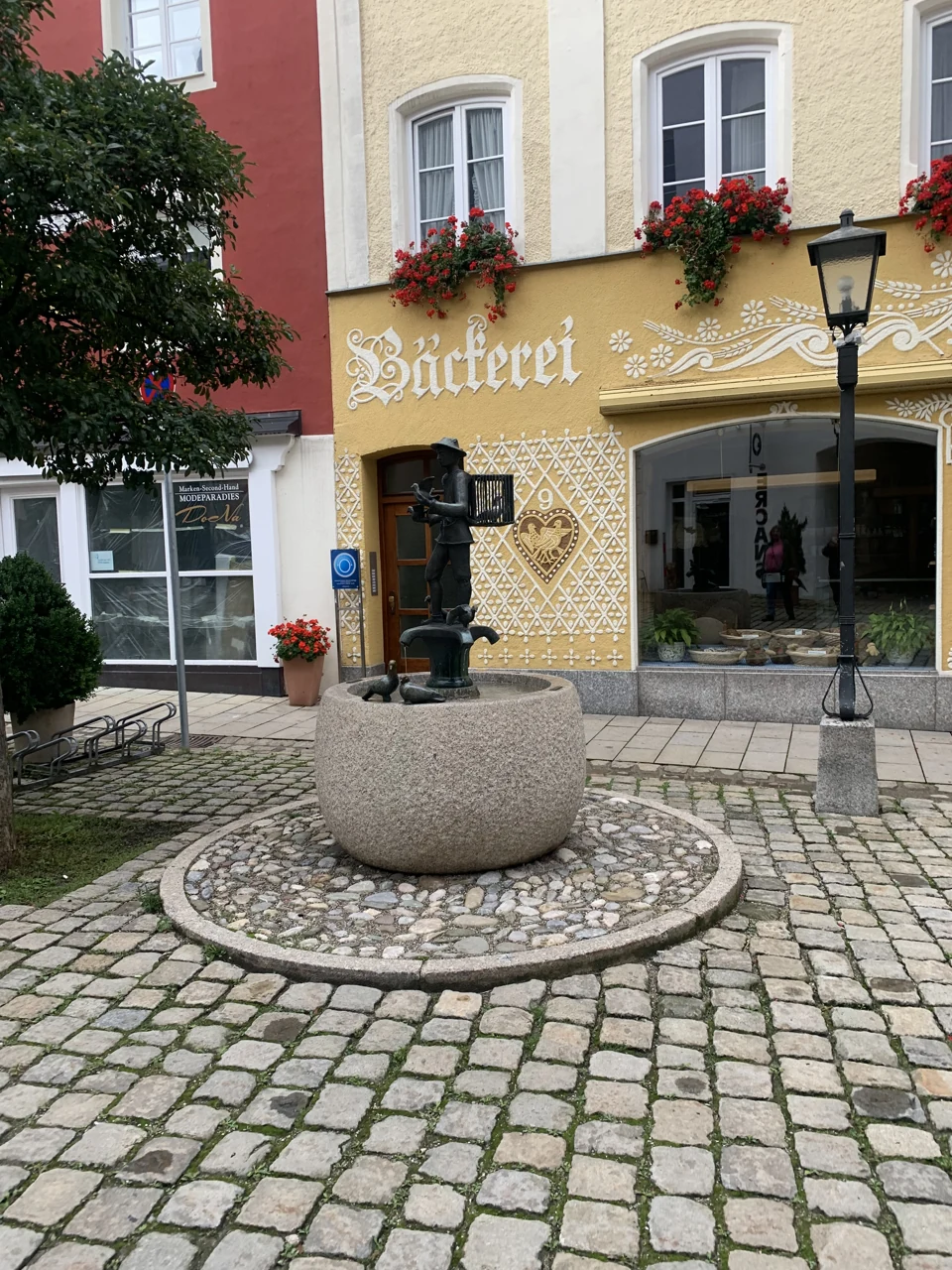
Start at Stadtplatz and use St. Oswald, Lindlbrunnen and Jacklturm as three distinct reference points: church, fountain and tower. First understand their positions, then move closer to the surrounding facades. That simple overview helps you avoid walking the same stretch repeatedly while looking for photographs. Entering the church depends on worship and local visiting arrangements; an exterior stop does not establish access to its interior. Keep the route around the fountain clear when pausing. Sitting down briefly to check museum and meal times can be more useful than immediately rushing into a side street. It gives the rest of the visit a practical shape.

Adapt the official walk to your pace
The municipality's town walk links the square with Kulturforum Klosterkirche, Stadtpark and the salt-related stops in the Au. Use that sequence as a framework rather than a timed challenge. Leave room to examine a doorway, look down a short side street or rest. If you want to attend an event inside Kulturforum, consult its dated programme separately: inclusion on a walking route does not mean unrestricted entry on your particular day. Save the route to your phone, but also notice how the streets connect. Comfortable shoes are especially useful for the descending section later in the walk.
Use Heimathaus to add context
The 2026 Heimathaus season announcement gives free admission and hours of Tuesday–Saturday 11am–4pm and Sunday 11am–5pm. Do not plan an ordinary Monday museum visit, and check fresh notices for winter or special dates. The town model, salt-industry material and religious art connect well with the streets outside. Choose one theme instead of trying to absorb every display. You might follow changes to the square, the effect of production on the town, or everyday belief. Record one building name and look for it again afterwards. The introduction of some English panels does not imply that the entire exhibition is in English.
Descend towards Salinenpark
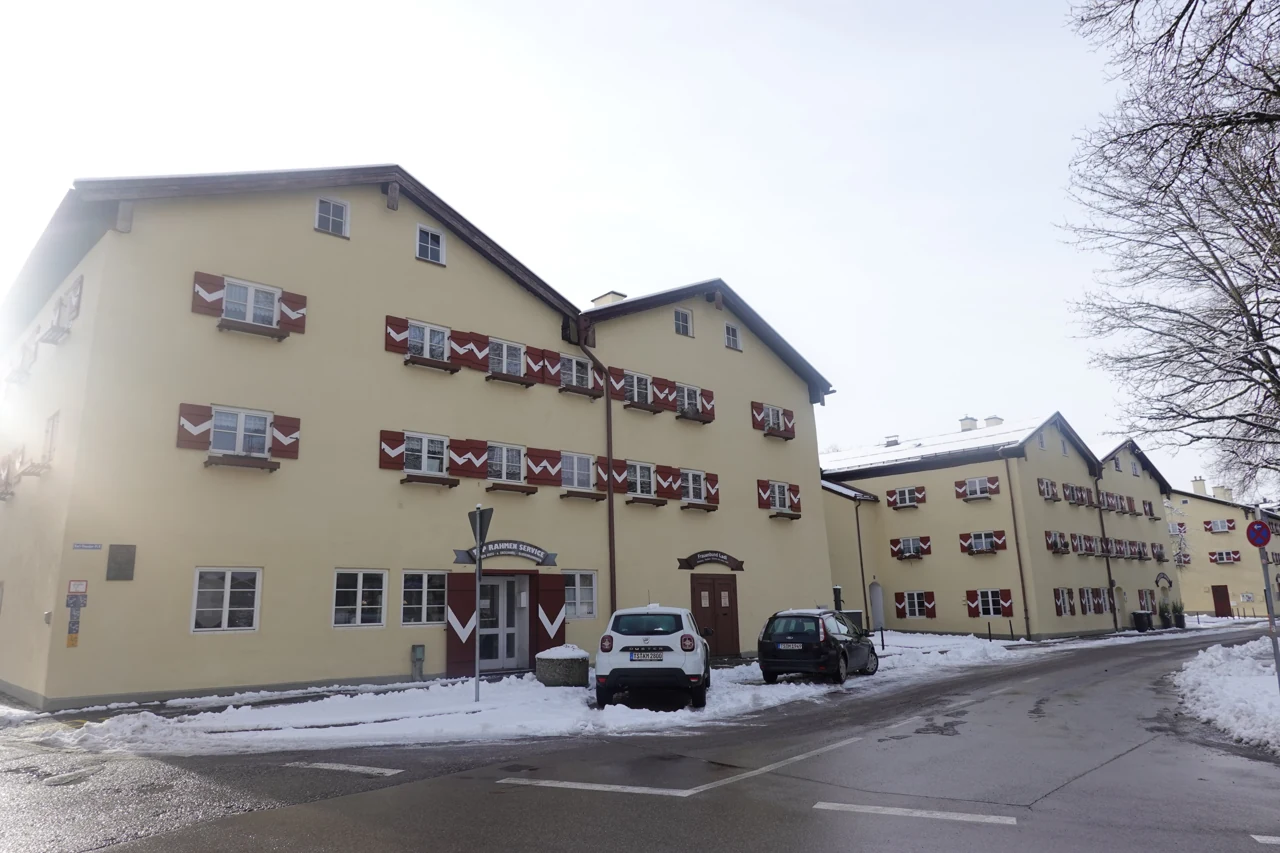
Treat the Au as a separate chapter of the day. Around Salinenkapelle, the former production buildings and Salinenpark, compare working spaces with the more formal facades you saw above. Two different functions of the same town become easier to read. The municipality's Salinenpark information provides a starting point for the area's background. A pause here allows museum information to settle into its physical setting. Shorten the outdoor part in persistent rain, or give it more attention in dry conditions. Walking through public outdoor space and entering a building have different access requirements; follow the information and open entrances actually available on site.
A proper meal at Sailer Keller
The July 2026 menu linked from Sailer Keller's dining page includes oven-roasted pork with bread dumpling, dark-beer sauce and bacon cabbage salad. Alternatives include cheese spätzle and a vegetable curry available in a vegan version. These offer a substantial meal between sightseeing sections, rather than relying on drinks and dessert for the whole day. Ask about current dishes and ingredients before ordering, since menus change. The business lists restaurant opening Tuesday–Sunday 10am–midnight; that does not guarantee every kitchen dish throughout the entire period. Confirm a table and hot-food service directly before fitting dinner into your walk.
Consider the hotel at the same property
Sailer Keller also operates genuine hotel accommodation. It is an option to investigate if combining a meal and an overnight stay at one property appeals to you, rather than a promise of availability or a fixed price. Ask about arrival, breakfast, cancellation terms and parking if relevant. Do not confuse the restaurant's Monday arrangements with the hotel's room service arrangements. Staying gives you the option of returning to the square in different morning light. Families and travellers with mobility needs should ask about stairs, room floors and access. General property photographs do not establish which specific room a booking will receive.
Choose between a short visit and a full day
With only a few hours, keep the scope to Stadtplatz and Heimathaus. A full day allows a wider sequence of square, cultural walk, museum, Au and meal. Sunday's later museum closing is useful flexibility, but should not become a reason to crowd every stop into the afternoon. Adjust outdoor time to the weather. In changeable conditions, switching an indoor and outdoor section is often more practical than cancelling everything. Leave a margin to reach the station before departure. A trip to Chiemsee or another regional destination needs its own travel allowance; it should not be treated as a free extension of a town-centre afternoon.

Return for a final look at the square
A brief return to Stadtplatz before leaving connects the upper and lower parts of Traunstein. A facade you noticed in the morning may look different after learning about trade and production. Watch the square's everyday use as well as its prominent structures: seating, pedestrian movements and street connections belong to the experience. Photograph the setting without intruding on people's private moments. If you have a second day, use it for a cultural programme you left open or a quieter walk instead of simply repeating every first-day stop. A coherent visit does not require a long checklist. A few well-connected places give you space to notice how this town works.