
Choosing two nights in Georgetown is different from adding a few photographs to the beginning of an interior Guyana journey. Tatilmerkezi's Stork looks at the capital's own day: the history of a municipal building, everyday trade around a market, the greenery of the botanical gardens and local meals eaten at a table. This programme contains two days and two nights, with the third morning reserved for departure. Kaieteur, Iwokrama, Rupununi and river lodges are not part of it. A brief stop while waiting for an interior flight serves a different need from a city stay in its own right. Here, one accommodation base and a limited number of connections make the capital the subject rather than merely the gateway.
Visit conditions before choosing stops
UK official travel advice checked on 4 October 2026 reports attacks and robberies occurring in daylight as well as at night. It specifically names Stabroek Market, Tiger Bay and Albouystown among Georgetown locations. This guide does not recommend an independent or night-time market walk. Current local conditions and suitable transport come before a visit decision. Discuss the market stop with a local guide or established provider; omit it and eat elsewhere if conditions are unsuitable. An old photograph cannot establish safe access. The value of the programme does not depend on completing every stop. Removing one location need not cancel the rest of the two days.
Use the full first-day plan when you actually have a city day. With an afternoon flight arrival, leave the bags at your accommodation, choose a meal and resolve the next day's connection instead of racing to fit in the same scope. The tourism authority identifies Cheddi Jagan and Eugene F. Correia as separate airports. A transfer booking that says only Georgetown is incomplete. Match the airport on your ticket with the accommodation address. Collection, communication after a delay and the return connection form the backbone of a short stay. You can make those three decisions without inventing a fixed travel duration, current price or service available at every hour.
Day one: City Hall and the city's timber heritage
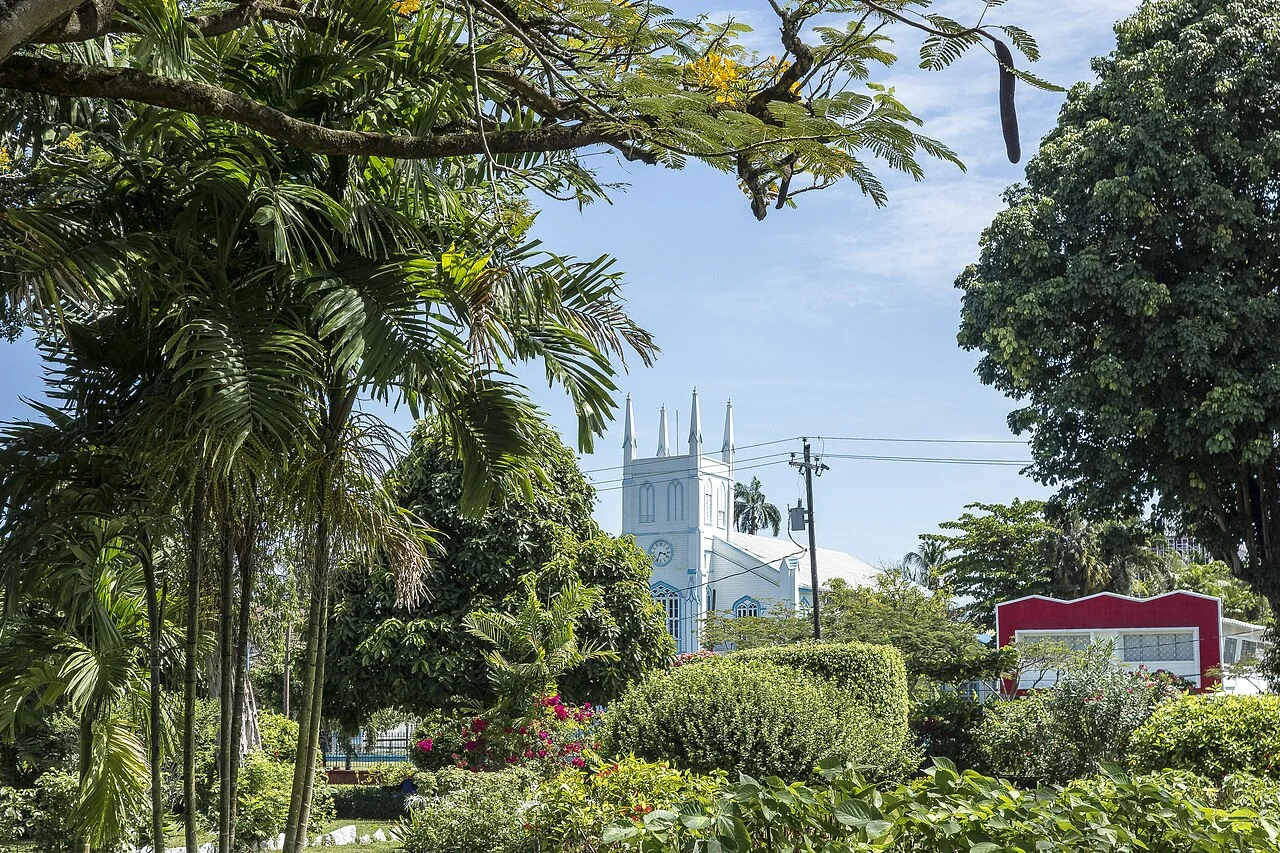
Treat Georgetown City Hall as a daytime heritage stop. The National Trust documents the building within the city's historic fabric. The photograph in this package records its 2014 appearance before later restoration; it does not promise that you will see an identical façade or be able to enter. A Guyana government statement from December 2025 refers to the rehabilitated City Hall. Comparing an older view with present work can therefore be meaningful without assuming opening hours or visitor operations. Notice the timber detail, the tower's scale and the building's position within the city, then continue to the chosen meal point. Completing the whole municipal area on foot is not the objective.


Read timber heritage as more than a postcard. The tourism authority discusses churches, Demerara windows and canal and sluice engineering together. Shade, rain and ventilation offer useful questions behind the façade details you see. A few minutes of observation can be enough; it need not involve unauthorised entry or occupying a private doorway. If your photography becomes commercial filming, consider the site manager's rules separately. This guide concerns a personal visit, rather than asserting unrestricted filming or publication rights across all properties. The rights attached to the licensed package photographs are independent records, not permissions automatically transferred to a traveller's own production.
Stabroek: see the trade and plan the meal separately
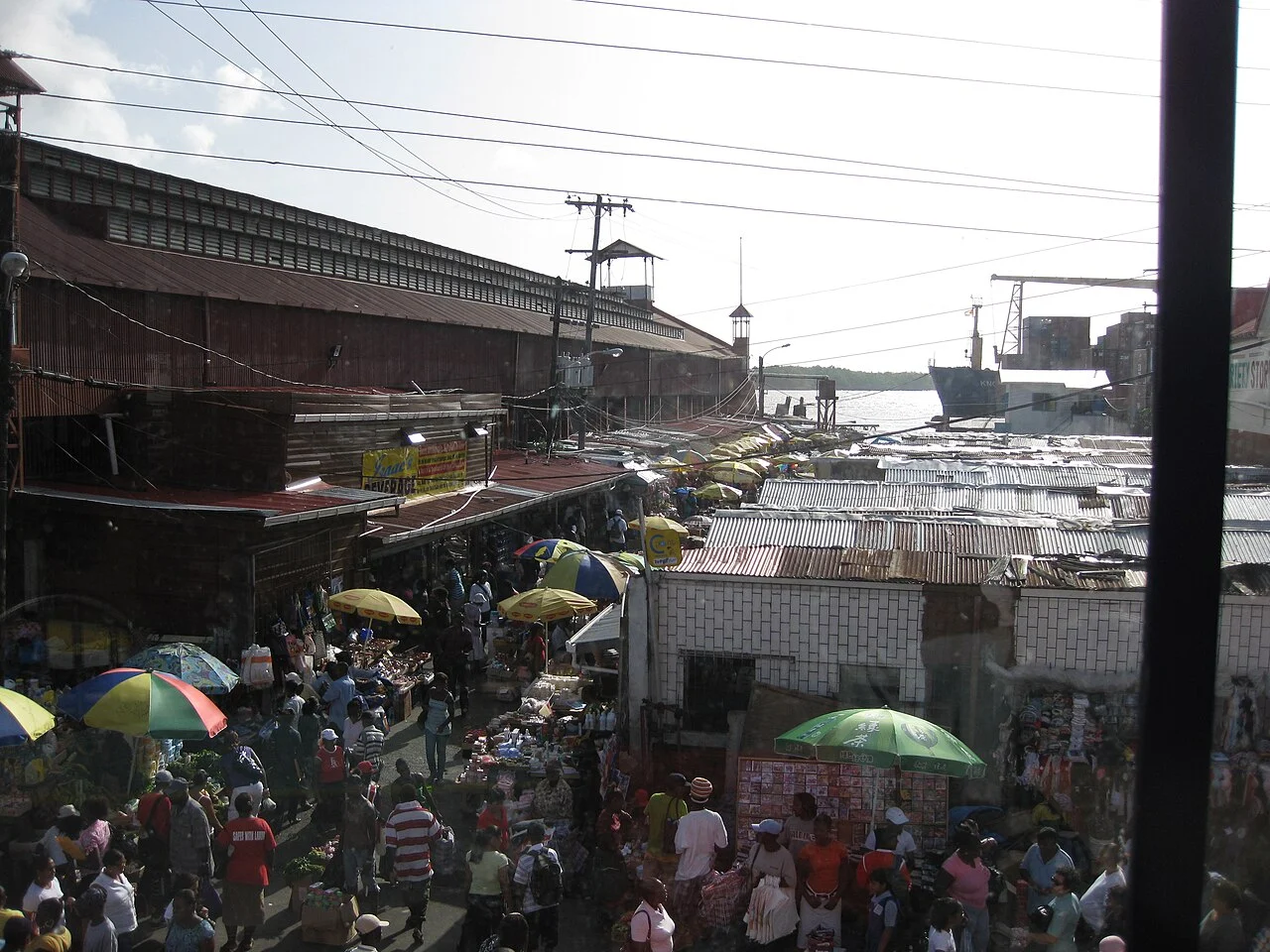
Stabroek Market is prominent in the tourism authority's account of Georgetown markets. The historic iron-framed building represents a meeting of trade and urban movement. If current conditions support a visit, consider a short, defined stop with local guidance instead of treating every surrounding street as part of a compulsory loop. The 2009 photograph depicts the older market setting. A December 2025 government statement discusses square improvements and a roof-repair contract, so the image cannot establish today's stall arrangement or roof condition. Placing the day's main meal afterwards, at a separately selected place with seating and a workable connection, may give the day a clearer structure.

For lunch, choose cook-up rice or curry and roti as a starting point when present on the actual menu. Official Guyanese food material documents cook-up rice, pepperpot, chicken curry and roti within the national table; the older festival report is not today's restaurant inventory. Two travellers might choose one rice-centred and one curry-centred dish to share different textures. Someone wanting more food or a lighter meal can choose an accompaniment separately. Keeping a fruit or drink break distinct from the main meal can reduce the pressure to complete a long food checklist in the heat. The city meal rhythm here is an experience in itself, rather than provisions for an expedition elsewhere.
Day two: a short botanical garden focus
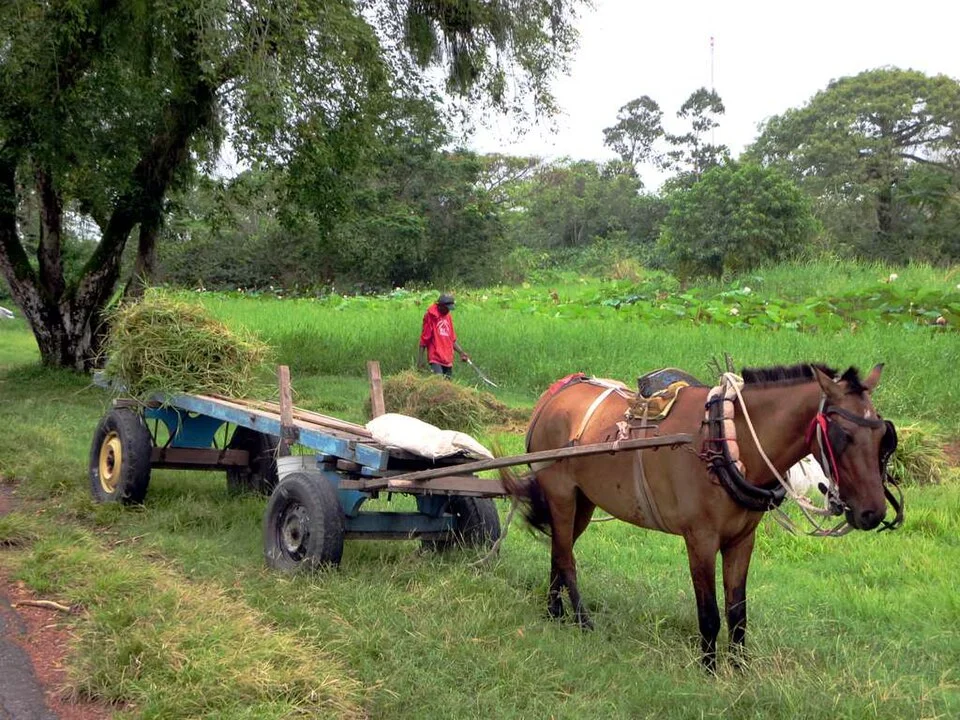
Georgetown Botanical Gardens supplies day two's green focus. Guyana Tourism Authority's birding information identifies the gardens as an urban area of interest. That does not promise a particular species or establish that a pictured path remains unchanged. Allow a short period of observation in an open, permitted visitor area according to current local conditions. This package contains two different real scenes: vegetation photographed in 2015 and a grass-collecting daily-life scene from 2014. They are not crops of the same image. Animals, people and plants are not presented as guaranteed features of today's visit; the dated views record different past uses and appearances of the grounds.

Choose the next main meal along the same transport backbone. A seven curry experience, when available with an appropriate booking, could make the second day a more leisurely seated meal. The tourism authority's introduction describes this Indo-Guyanese tradition through different curried elements including pumpkin, aubergine, potatoes and chickpeas. That is context for a concrete food decision, not a count of the pots cooking in a particular shop today. Having chosen a rice-heavy lunch on day one, another traveller might choose roti with a different dish on day two. Pepperpot, when on the menu, can be a separate main-meal choice. There is no need to collect every national dish at one sitting. Leave space for a smaller evening meal and rest.
Read the city scale without turning an aerial image into a walk
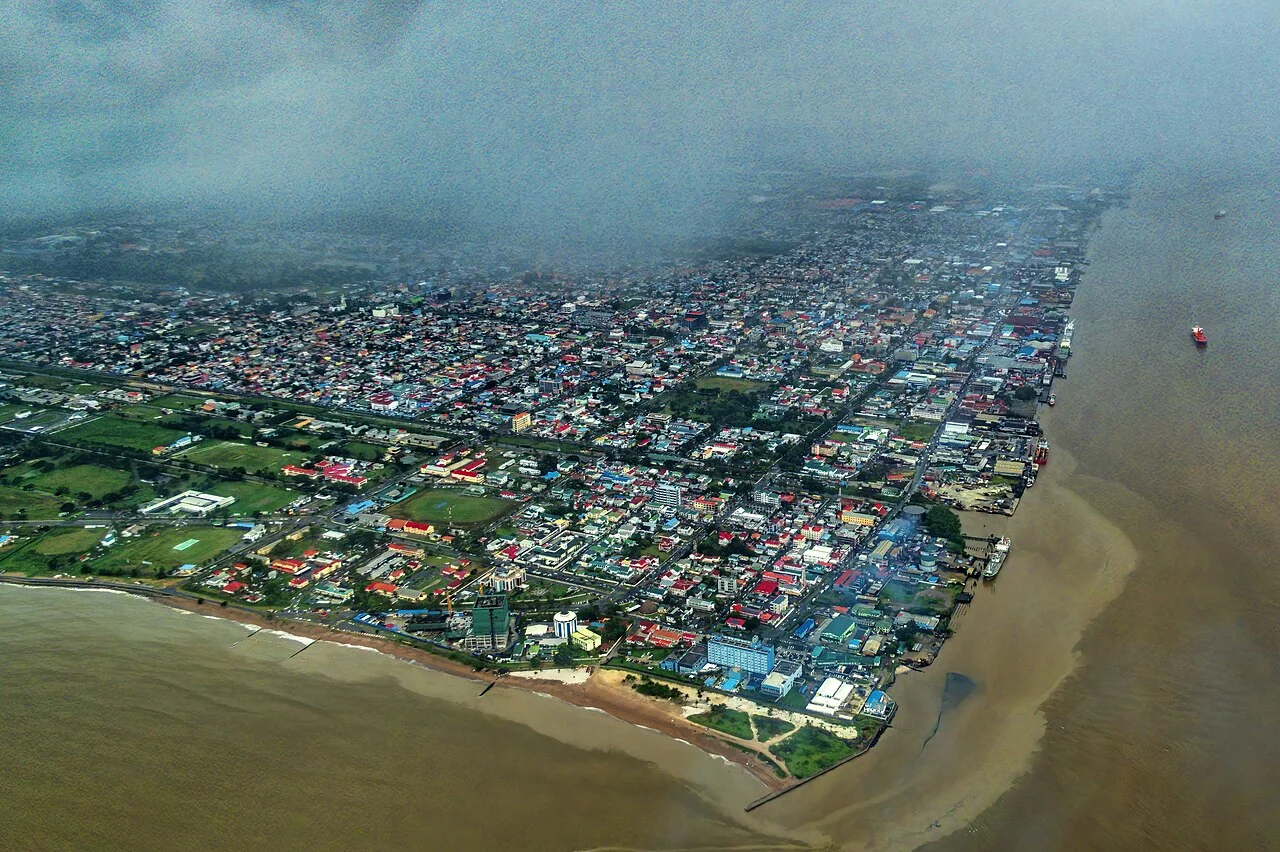
The 2019 aerial view illustrates Georgetown's scale at the mouth of the Demerara. This programme does not include walking to the camera position or descending to the river. Seeing a water line on a map does not establish access for a visitor. For the two-night accommodation decision, compare connections to the selected stops, collection at the entrance, bag storage and room conditions. An address described as central or near the gardens cannot give every property identical access and security characteristics. One city base supporting a guided day may make a more orderly short stay than changing accommodation every night. The practical question is how the actual room and connections serve these two days.

The third morning belongs to breakfast and departure; there is no last-minute natural attraction outside the city. An eventual interior Guyana trip requires its own transport and lodge decisions in another guide. These two Georgetown days are not the arrival and departure days of that national itinerary renamed as a city article. The Stork leaves room for a smaller capital experience alongside the larger geography: noticing timber heritage, making connections appropriate to the conditions and sharing a local meal without rushing. Changing visit and transport decisions require current official information. Sources were checked on 4 October 2026; the older photographs keep their dates explicitly in their captions.