
Reims: give the coronation city two days
An overnight stay in Reims can connect two different parts of the city instead of ending with a single photograph in front of Notre-Dame. Spend the first afternoon around the cathedral, Place Royale and the exterior of the town hall, then reserve a separate morning or afternoon for Saint-Remi and the museum in the former abbey. The Tatilmerkezi Stork suggests looking for changes of scale between a monumental church and an ordinary urban frontage. UNESCO relates the cathedral, former Saint-Remi abbey and Palace of Tau to the history of the French monarchy. That shared history does not establish identical opening arrangements today. The suggested stay combines an exterior city circuit with a separately planned Saint-Remi museum visit.
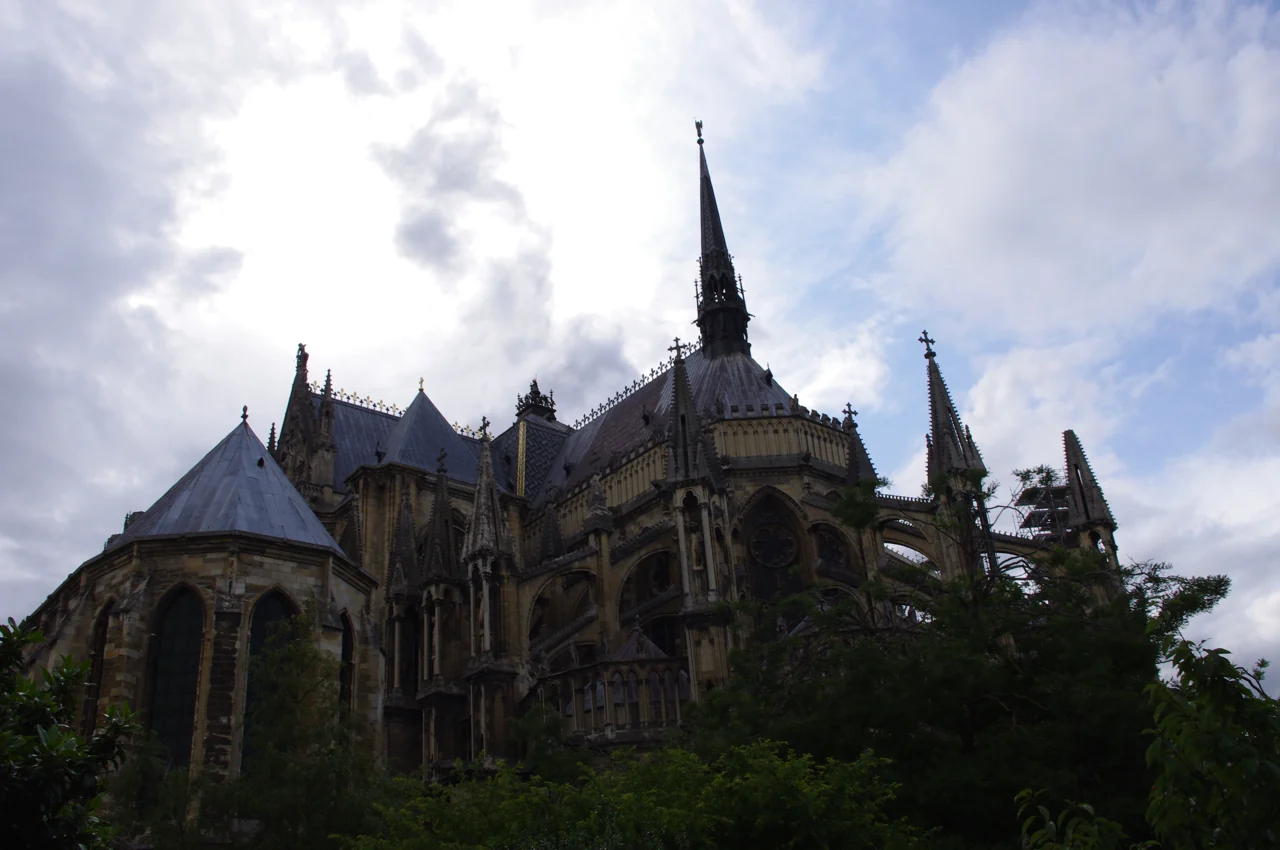
Our cathedral photograph shows the rear and apse area, rather than the celebrated western entrance. Read the trees, stone surfaces and rising building as an invitation to look around the monument, not as evidence that a portal tour was undertaken. When you reach the main front, choose one sequence of openings or one piece of stonework to examine instead of trying to identify every sculpture immediately. Worship, general interior access and a tower visit may have different conditions. Exterior observation does not imply any of those activities has been completed. With children, comparing a high window with a low doorway can make an approachable game. If rain reduces the comfort of walking, shorten the circuit and arrange the museum on a day when it operates.
Saint-Remi: a basilica portal and an abbey museum
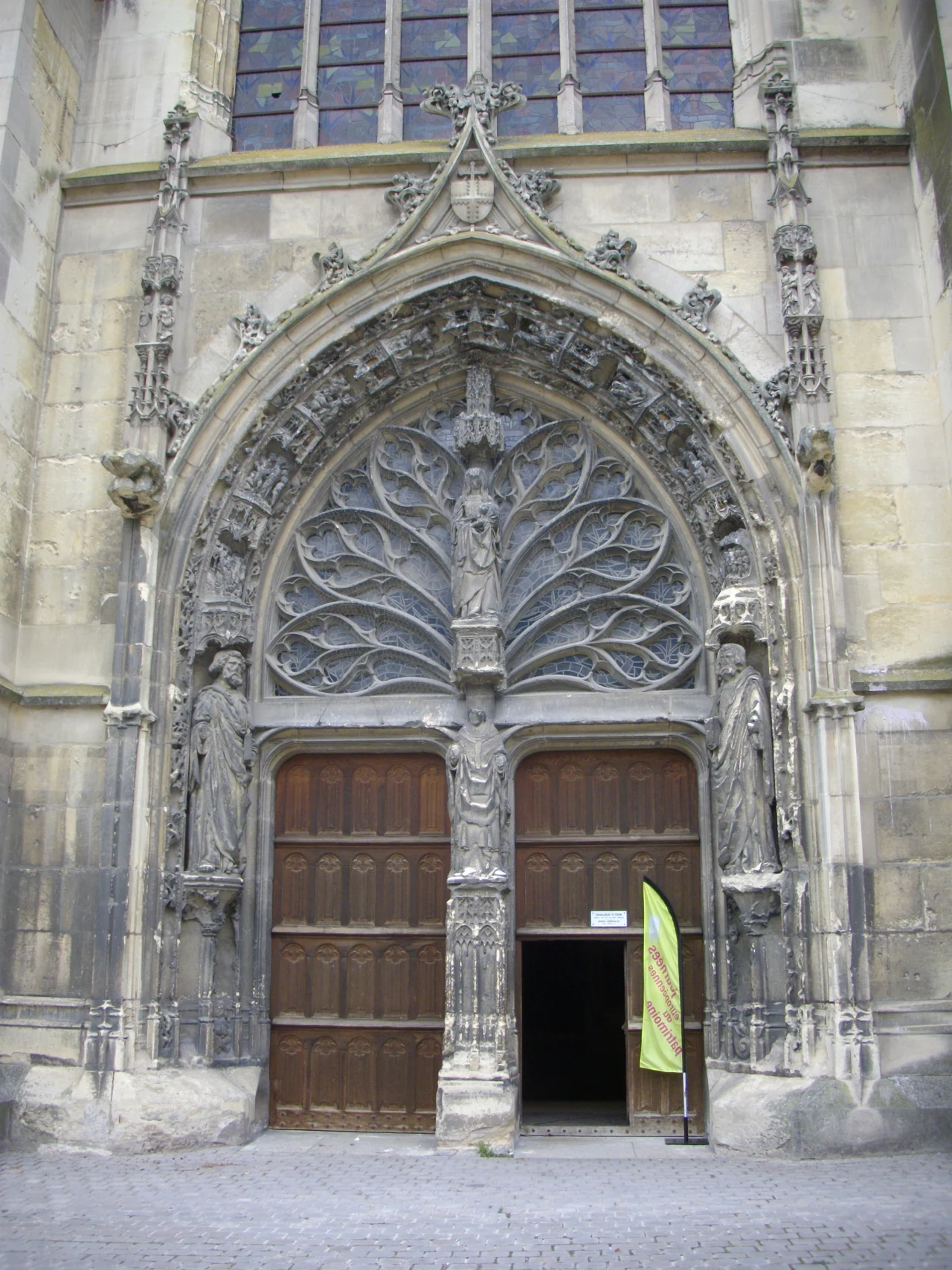
Give the Saint-Remi district its own session rather than walking from the central cathedral simply to turn around. The basilica is a place of worship; Musée Saint-Remi occupies the former abbey beside it. Our photograph depicts the basilica's southern transept portal, including its double wooden doors and circular window. It does not show the museum entrance or a gallery that has been visited. Compare the doorway's arrangement with the stone openings seen around Notre-Dame, then ask about that day's arrangements if you intend to enter. Use the museum's separate address, 53 rue Simon. Two neighbouring institutions sharing a name should not become one assumed entrance, particularly when travelling with luggage or limited mobility.

The museum's official introduction connects the former abbey's architecture with the history of Reims. Select a few sections that help reconsider the city outside, rather than setting yourself the task of completing every historical period. A question noted beside one object can return with you to the next street walk. The practical information gives Tuesday to Sunday opening from 10:00 to 18:00, Monday closure and closures on 1 January, 1 May, 1 November and 25 December. It also posts an exceptional closure of the cloister garden because of basilica works. Do not build a guaranteed garden picnic into the itinerary. Allow separate time for the museum and for looking at the portal; an exterior photograph is not evidence of an interior collection visit.
Porte de Mars: see the three arches together
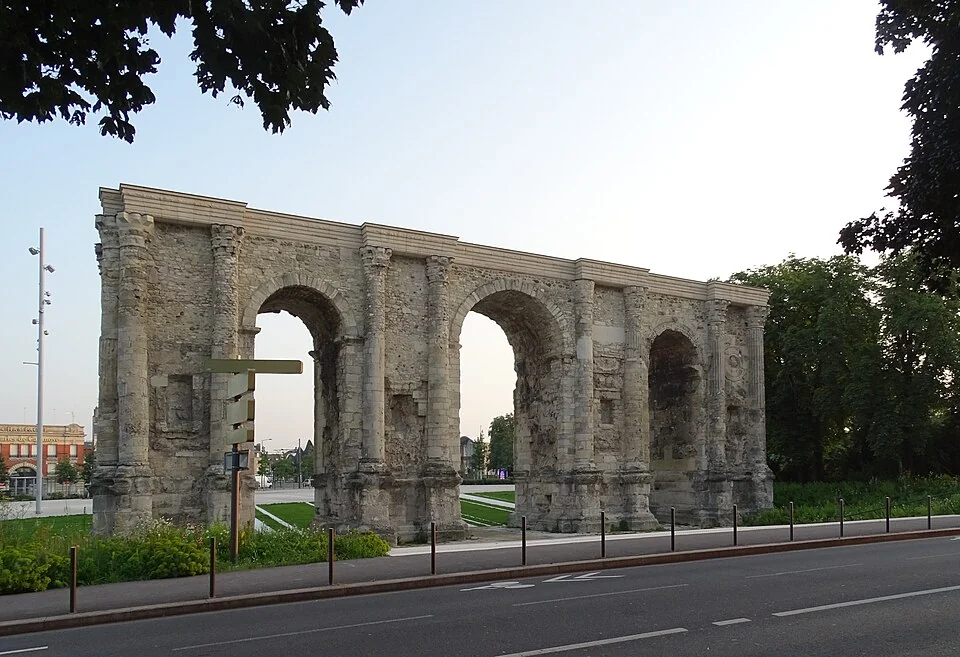
Porte de Mars introduces a different layer of Reims from the coronation story. The city's official heritage route places this Roman monumental arch around the transition between the second and third centuries. The useful exercise here is to see the three openings as a whole, rather than claiming to decipher every relief from a distant position. The licensed 2021 photograph includes the complete arch and the fence in front of it. It is not a small restoration detail substituted for the monument. Current landscaping and access can differ from the photograph, so neither the fence nor the vegetation supplies today's walking instructions. Follow the open pedestrian route and observe the arrangement from both a broader position and a closer permissible one.

Place this stop within the first day's central circuit: start at the cathedral, pass through Place Royale and the town hall district, continue towards Porte de Mars and then return to your accommodation. Adjust the turning point to your group's energy instead of requiring every possible photograph. Comparing the Roman arch's horizontal arrangement with the cathedral's vertical effect makes a difference of period and scale tangible. Take a short rest if a suitable place is available, without assuming a vacant seat is promised. Keeping the central walk manageable leaves time for Saint-Remi the following day. A vineyard excursion or cellar tour needs its own transport and reservation plan; the geographical association with Champagne does not automatically add those outings to this city itinerary.
Place Royale and the town hall: read the façades
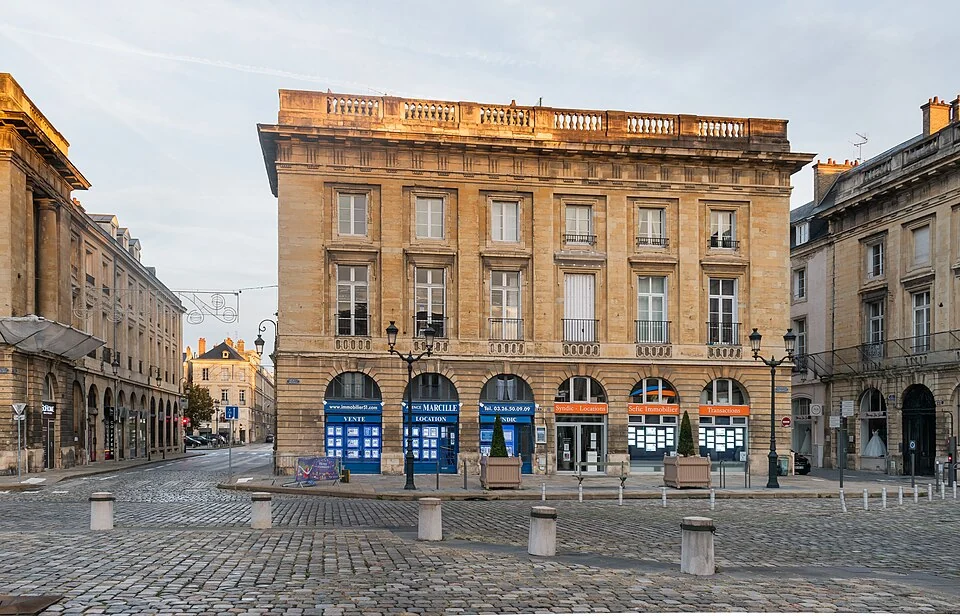
At Place Royale, move your attention from the square's name to the rhythm of its buildings. The photograph of numbers 9–11 clearly shows blue shutters, rows of windows and lower entrances. Follow one row to discover where the repetition changes. This small exercise brings the monumental scale of the cathedral down to the scale of an urban frontage. Doors seen from outside may belong to private or working premises, and the existence of a photograph does not make them visitor entrances. On leaving the square, compare the map with present street signs. Add your own stopping and photography time rather than turning a short connection into a fixed walking duration for everyone. A smaller circuit may be more comfortable when stone surfaces are wet.
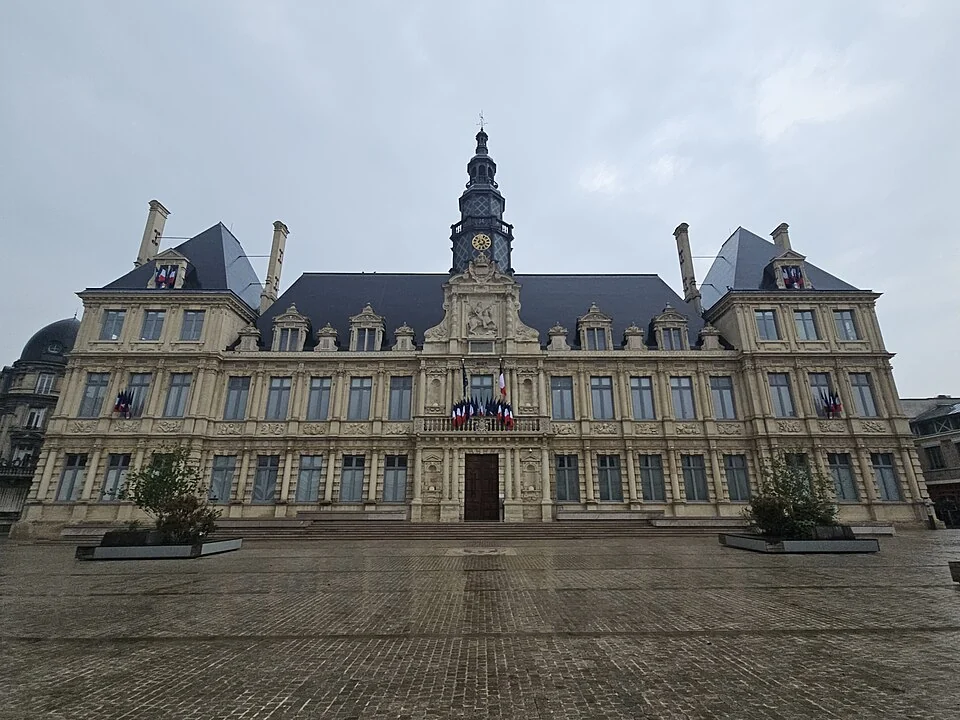


The town hall photograph shows the wide front, a clock-bearing feature above the roof, flags and steps. It is architectural context, not a claim to have toured the interior. Comparing repeated windows at the square with the civic building's central emphasis can help explain how different frontages organise your view. Connect dinner and the return to your room with this central loop. Accommodation near the station may suit an early train; a room around the cathedral and squares can support the walking circuit. Ask separately about the actual entrance, luggage storage, steps and overnight noise. A central address guarantees neither a quiet room nor parking at the door. If staying near Saint-Remi, consider the return from the centre using that day's actual transport arrangements.
A defined meal, two stations and the 6 October transport notice
Atrium's own menu identifies a concrete main-course option: coquillotto with Reims ham, or with the mushrooms of the moment, and a runny egg. Its address is 12 rue du Commerce. This is a meal described by the operator, rather than a dessert or drink presented as an entire lunch. Ask which version is currently served and whether the ingredients suit you; the listed egg, milk and gluten matter, and a mushroom option does not automatically satisfy every dietary requirement. Confirm service and any reservation directly. The menu's midday formula window of 12:00–14:00 does not establish the conditions of every evening meal. We do not fix a future price or invent a tasting memory. The architectural images are not described as pictures of the dish.
Read the station printed on your ticket carefully. Reims station in the centre and Champagne-Ardenne TGV in Bezannes are separate stops. Normal network information shows tram connections towards Opéra-Cathédrale, including T2 from the TGV station. For 6 October 2026, however, the operator announced that trams were not running, substitute buses were being used and city buses were operating at approximately half their usual frequency. Its notice also warned against relying on real-time timings and mentioned possible diversions in the centre and around Gare Centre. This dated disruption must not be presented as normal service. Recheck the operator's current notice for your journey and leave a larger return margin. The museum's normal U5/U6 Saint-Remi and U1/U2 Saint-Timothée access information likewise needs checking against diversions. Sources were checked on 6 October 2026; individual photograph dates remain visible in their captions.