
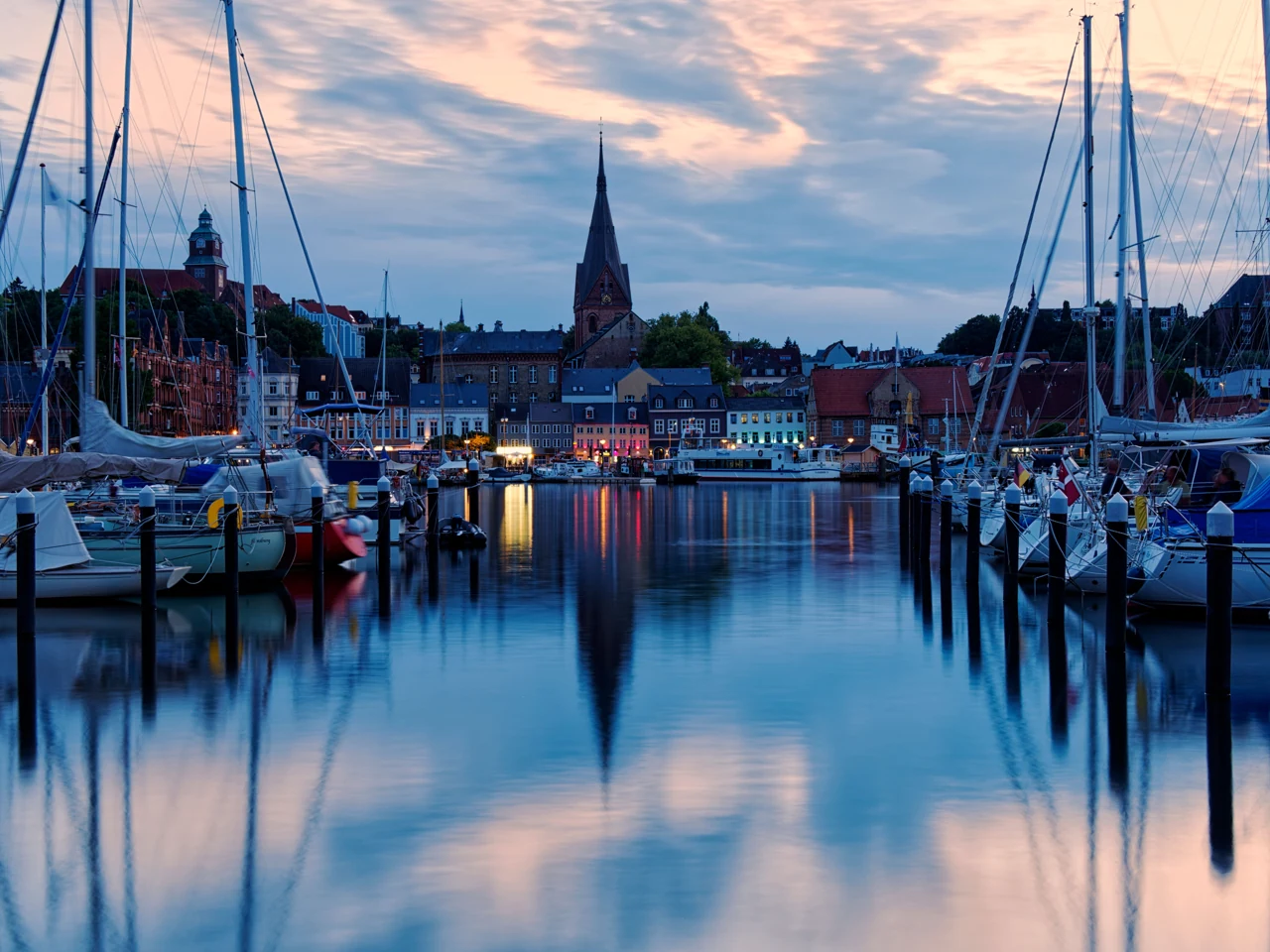
For a first visit to Flensburg, avoid treating the entire fjord coast as one short walk. The old-town shopping streets, the historic harbour on the western bank and the hillier neighbourhoods on the eastern side form different sections. This guide suits travellers arriving by train who want to explore the centre on foot, understand its maritime past through a real museum and allow time for a substantial fish meal. Start in the south at Rote Straße and Südermarkt, walk north and return beside the water. Families preferring Phänomenta can substitute it for the shipping museum. Two substantial indoor visits, a shipyard workshop and distant beaches should not all become obligations in a short day.
From Flensburg station to the southern old town
The official DB station page confirms the rail arrival point at Am Bundesbahnhof 5. It is not directly beside the historic harbour, so make the transfer into the centre part of the day's journey. With a large suitcase, ask your hotel about leaving luggage before taking on paved streets and smaller passages. Allowing an initial period for transport and orientation is more useful than beginning with a race to museum admission. If using a bus, consult actual services for your travel day rather than assuming one walking time suits everybody.
Starting at Rote Straße gives the old town a clear direction. Before reaching Südermarkt, look at the smaller facades and any genuinely accessible courtyards. A shop entrance and a courtyard gateway may have different access arrangements, so read signs. If a café or shop appeals, stop during this first section rather than relying on finding it again while hurrying back. Staying away from the waterfront initially also helps you notice the side streets that connect the commercial spine with the water. The return beside the harbour will then show the centre from another direction.

Follow Rote Straße, Holm and Große Straße
The official tourism account describes the central route from Rote Straße through Südermarkt to Holm and Große Straße. Restored former merchant and craft courtyards contain present-day shops and places to eat. Walk it as an urban sequence rather than rushing through a shopping checklist. Looking behind the main facades can reveal the smaller scale of the centre. A closed passage need not disrupt the programme; another accessible courtyard may explain the setting just as well.
Going north along Holm, compare the wider square, narrower streets and connections towards the harbour. The Marienkirche surroundings mark the next transition towards Norderstraße. Viewing a church outside and entering it for worship or a visit are separate choices; check access locally. Leave shop doors and moving pedestrian space clear when stopping for photographs. In rain, a few selected courtyards and a warm drink may suit the day better than a continuous fast march. Decide on the main indoor visit before proceeding farther north, so that the day's most important interior does not become a last-minute addition.
Norderstraße, Nordertor and the Phänomenta option
Do not assume the entire Norderstraße is a traffic-free pedestrian precinct; the tourism service distinguishes it from the shopping streets farther south. Observe its smaller businesses and street details, including the suspended-shoe decoration, while watching traffic and bicycles. Continuing north adds a meaningful walking section rather than just another quick square photograph. Check the time remaining if your return train is early. Around Nordertor, the historic gateway and the adjacent science centre offer different kinds of experience.
The official Phänomenta site confirms the hands-on science centre at Norderstraße 157–163. Its interactive stations deserve time for trying things, not merely walking past exhibits. With children, it may work best as the principal indoor visit instead of a small extra competing with the shipping museum. The operator's admission arrangements allow day-ticket holders to leave and return during the same day; younger children require an accompanying adult. Check opening and special programmes separately before travelling. Interest and the family's pace should determine how much of the centre you attempt.
The historic harbour, Museumswerft and shipping museum
Turn from the northern streets towards the water and walk along the historic harbour. Masts, mooring ropes and waterfront buildings show the city's maritime setting, but the presence of a vessel does not establish that boarding is allowed. The Museumswerft description identifies an actual shipyard where boats are built using historic methods and participatory activities take place. A working yard differs from a conventional enclosed museum. Obtain the current programme if a workshop interests you; looking from the quay is not the same as participating in a scheduled activity.
The Flensburger Schifffahrtsmuseum visitor page identifies the separate museum at Schiffbrücke 39 and its current Tuesday-to-Sunday pattern. Give its maritime interpretation a proper indoor block if this is your choice. Read the locker rule for larger bags before admission. Visiting both this museum and Phänomenta is possible with enough time, but it reduces what remains for courtyards and the waterfront. Travellers interested in ships and urban trading history may favour the shipping museum; families seeking experiments may favour the science centre. Neither choice requires compressing the other into a superficial ten-minute visit.
A fish main at Das Kleine Restaurant
The actual Das Kleine Restaurant operator page provides a concrete main-meal option at Große Straße 67. Its current recommendations include Nordsee Fischteller: fried herring and pollock fillets with a prawn sauce, fried potatoes and a side salad. This is a seated main meal, distinct from a fish sandwich or a small soup. As it includes fish and shellfish, discuss composition before ordering if you have an allergy or a dietary restriction. Knowing the actual accompaniments makes the recommendation more useful than simply saying that fish is popular by the harbour.
The published arrangements currently show Sunday closure, so do not make this a guaranteed Sunday lunch stop. On other days, confirm kitchen service and table availability too. Recheck the menu rather than treating a listed price as a fixed cost for a future trip. Putting the meal after the northern indoor visit lets you sit down without competing with museum closing time. Afterwards, return towards the southern end of the harbour and complete the street walk from the waterside. A reserved meal can also provide a comfortable break between the longer northern section and any eastern-bank extension.
An eastern-bank extension and Hotel Flensburger Hof
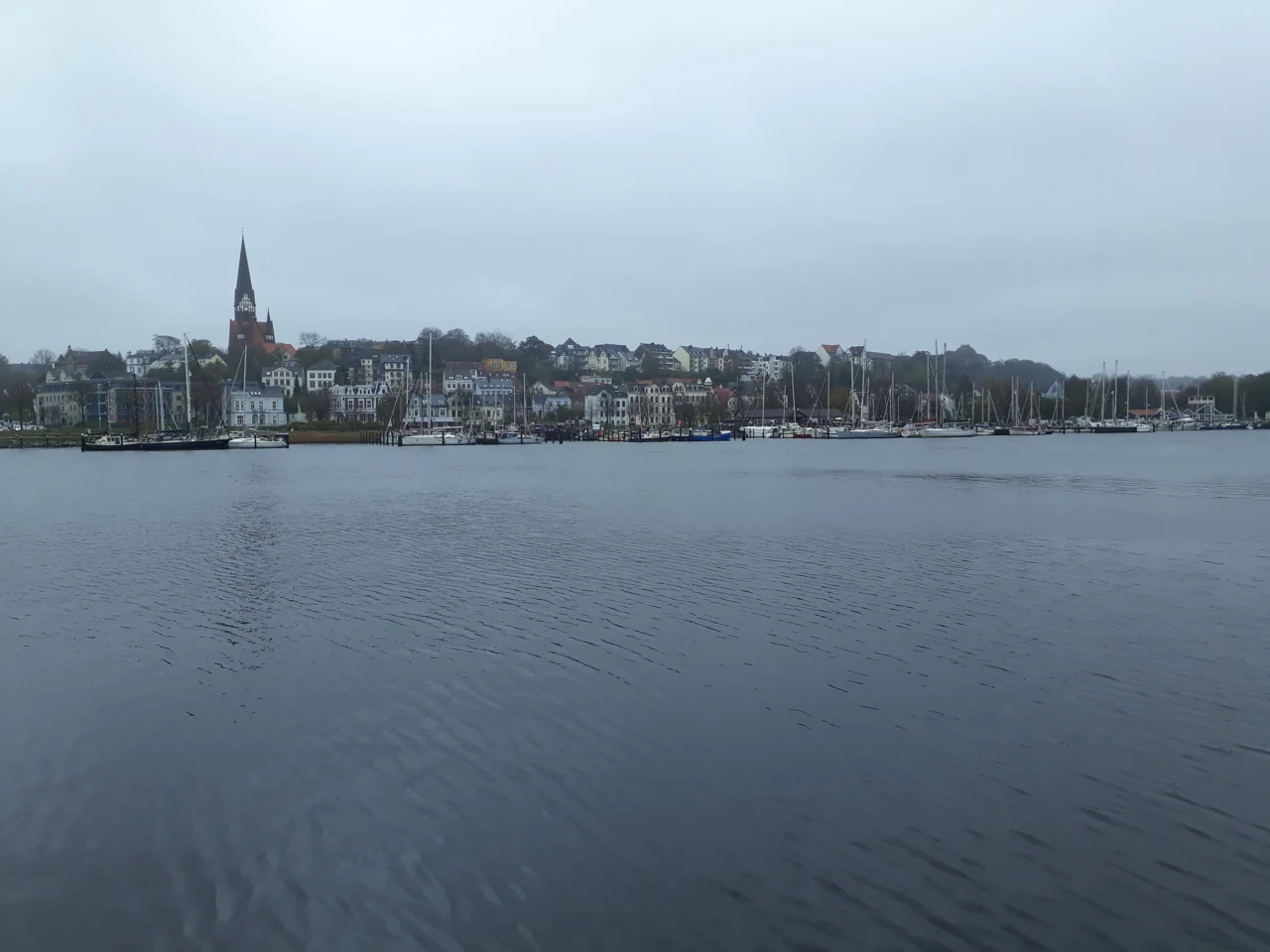
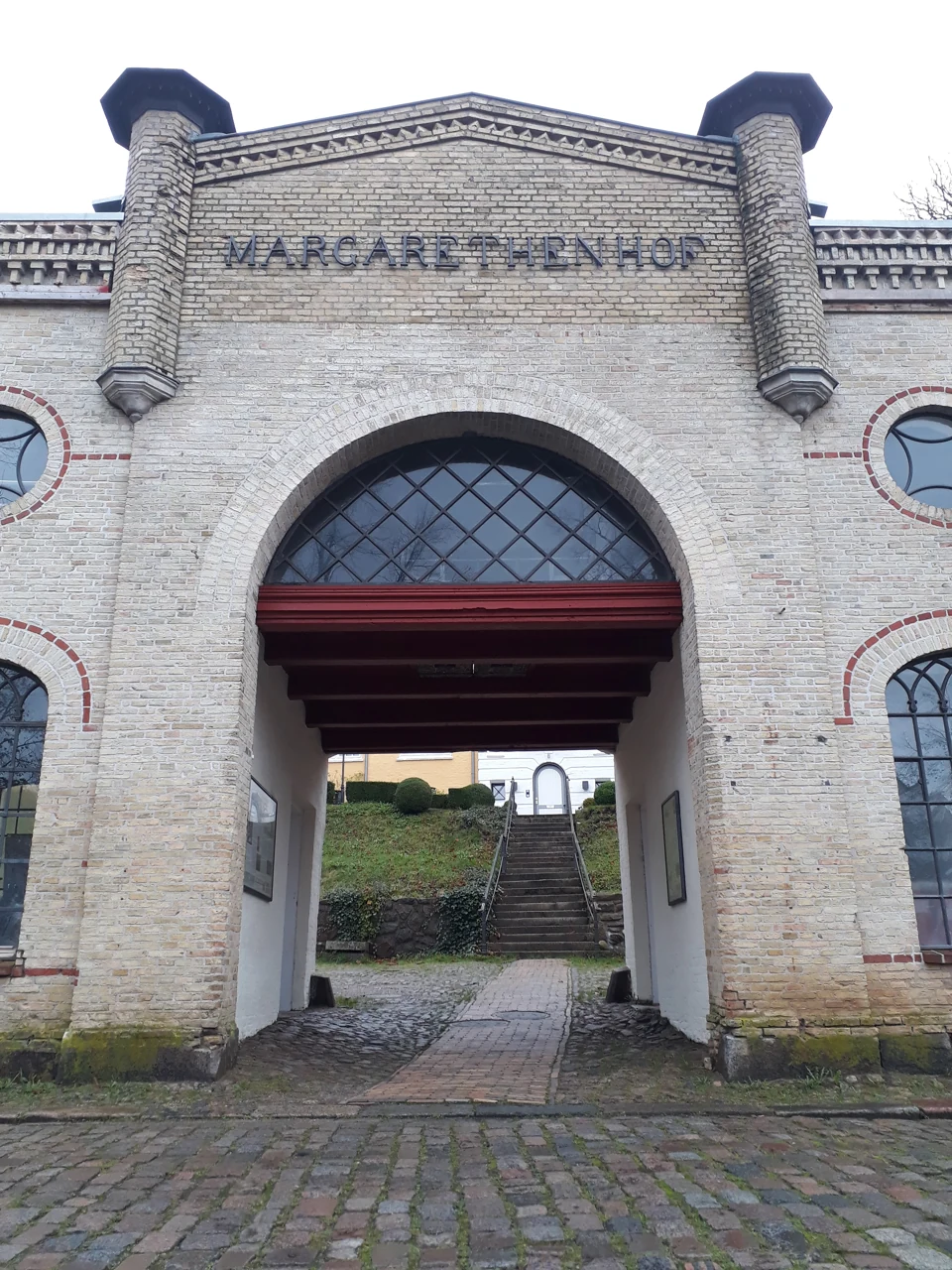
If time and energy remain, cross around the harbour head to see the Margarethenhof surroundings from public areas. The tourism service explains that the historic complex now contains homes; do not approach private interiors as a freely accessible museum. Continuing towards St Jürgen farther north adds gradients and distance. A short first day need not include both banks in full merely to complete a map. Glücksburg, distant beaches and outings towards Denmark require separate transport arrangements and should be treated as another programme. You can enjoy the harbour setting without turning the whole fjord into one afternoon's itinerary.
The official Hotel Flensburger Hof address information confirms the real city property at Süderhofenden 38. An overnight stay may allow an evening harbour walk and time for the museum you omitted the following morning. Ask the operator directly about room type, arrival and luggage arrangements. A central stay does not remove the transfer back to the rail station, which should be planned before the final photograph. The route works through its balance: a south-to-north old-town sequence, one selected interior, an actual fish main and a relaxed return along the water.