

Rodez: two days of carved stone and changing light
This Rodez itinerary begins with two different ways of looking rather than a list of buildings to collect. At Musée Fenaille, carved standing stones and the archaeology of Rouergue invite you to read human figures on a solid surface. Musée Soulages raises another set of questions about black, texture and reflected light. The Tatilmerkezi Stork keeps the trip within Rodez instead of squeezing every Aveyron village into the same weekend. Allow three nights and four calendar days: settle in on the first evening, use the next two full days for different cultural focuses, and leave on the final morning. With only one full day, choose Fenaille and the old town rather than reducing both museums to hurried glimpses.
Book the arrival journey and the accommodation together, considering the actual link between the station and your room. The historic centre stands above some transport and riverside points; a short line on the map does not remove the gradient. Before walking with heavy luggage, ask the accommodation about the slope and the appropriate local connection. Train and bus schedules can change, so consult the timetable for your travel date rather than treating a past connection as permanent. Use the first evening around the cathedral for orientation. Establish tomorrow's museum entrance, lunch area and any booking requirement before committing to several uphill and downhill crossings. That practical preparation preserves more energy for the collections themselves.
Fenaille: reading the carved human figure
Fenaille's current institutional website presents the archaeology, art and history of Rouergue through four broad periods. Its statue-menhirs provide a strong starting point: consider how a human presence is represented on a stone surface. Look for the features identified by the museum, including faces, arms, clothing or ornaments, without turning your own interpretation into an established meaning. Read the explanatory labels before deciding what a line represents. Standing quietly in front of one figure helps you understand scale and texture more effectively than moving through the whole display purely for photographs. The setting around Hôtel de Jouéry also offers a chance to consider how a historic building frames a collection. Our photographs show city context, not the present installation or individual collection objects.


For September to June, the museum's own information distinguishes weekday morning and afternoon opening periods from continuous daytime visiting at weekends. July, August and special dates have different arrangements. Check the current page before buying a ticket, and do not assume a weekday lunch break can be spent inside the building. Accessibility is not identical across the entire historic property: the institution states that 85 percent of its spaces are accessible, so enquire directly about the particular route your party requires. Visitors considering both museums can investigate the current joint-entry option without relying on fixed prices repeated from conflicting pages. At the end of the visit, note a few carefully observed stone figures; they will provide useful points of comparison for tomorrow's very different art encounter.
Soulages: time for looking, lunch planned separately
On the second cultural day, change the question from a carved line to the relationship between paint, paper, texture and light. Allow time to look at a surface from different positions. Instead of treating every black area as the same tone, notice reflectance and the way an individual work responds to your viewpoint. Follow the collection and exhibition information provided by the institution on the day. An announced temporary show is not necessarily already open: on the source-check date of 5 October 2026, a programme advertised to begin on 17 October could not be described as available that day. We have not assumed reproduction rights for contemporary works or the museum architecture, so the licensed photographs in this guide remain outdoor city scenes.

The museum's current practical page describes the weekday midday interruption in the September-to-June pattern and a different weekend arrangement. Large bags are subject to its visitor rules; check those before travelling with luggage. The critical meal-planning distinction concerns Café Bras, whose closure from 31 August 2026 is explicitly stated by the institution. Consequently, this itinerary does not promise a museum-café lunch or an operating restaurant there. Arrange a separate current option in the centre and ask the business itself about food allergies or access needs. Afterwards, returning to the public spaces around the cathedral can provide a pause between intensive looking sessions. Treat that outdoor setting as a place to orient yourself and rest rather than another compulsory paid attraction.
Bourg and Mazel: farçous and an old-town meal pause
Keeping a meal around place du Bourg connects the Fenaille day with a manageable walk through the older streets. The city tourism authority introduces farçous as an Aveyron speciality, small pan-cooked patties made with ingredients such as chard or other greens, onion and bread. Recipes may include meat, so they should not automatically be described as vegetarian. If they appear on the current menu, ask what that kitchen uses. The authority links Wednesday and Saturday markets with discovering these local flavours, but that is not a guarantee of a particular stall being open every day or a specific seller having the product. If your dates do not match the market pattern, choose an operating business for a regional meal and continue the architectural walk independently.


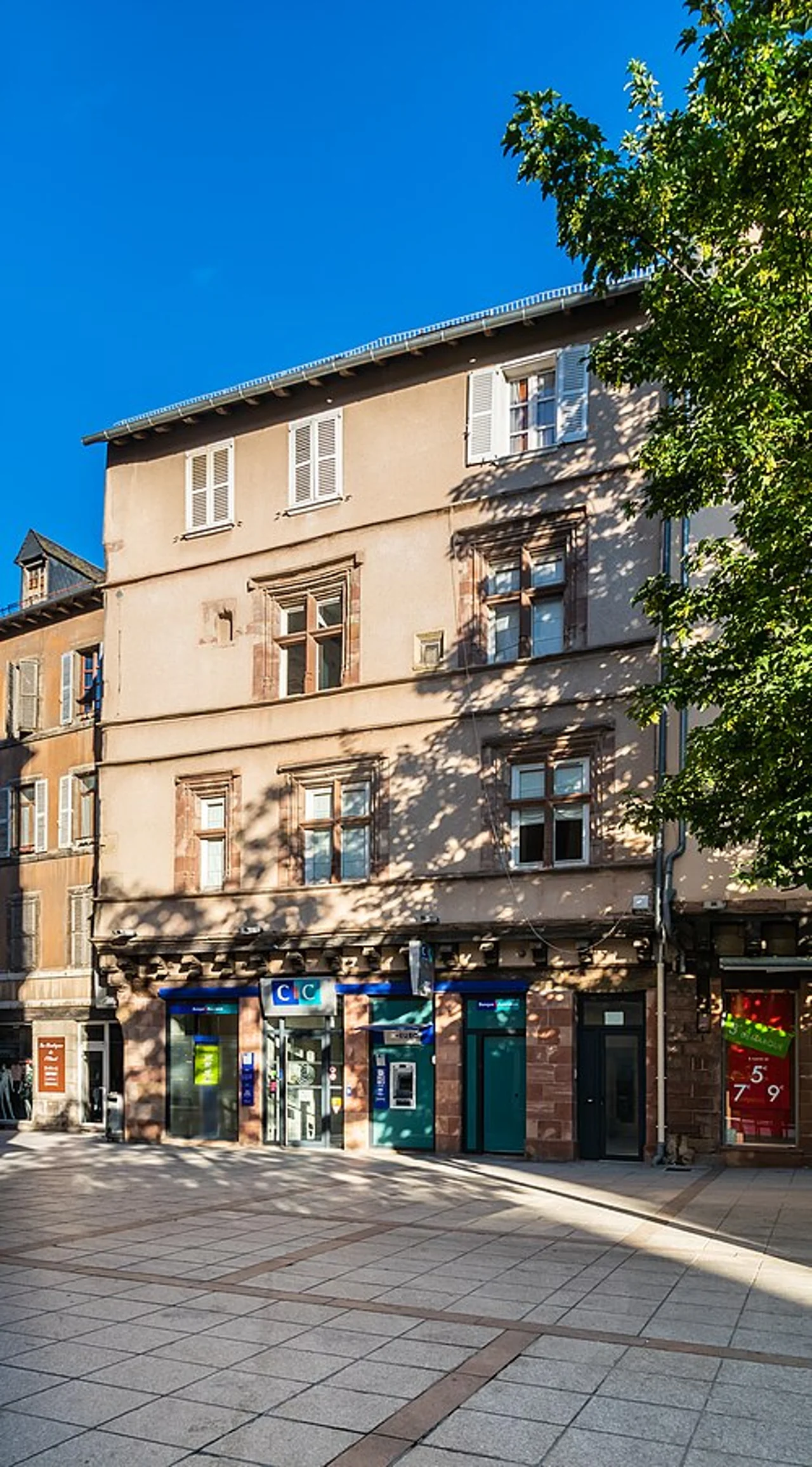
For something sweet, a menu offering gâteau à la broche provides a different cooking story. A mixture based on eggs, butter, flour and sugar builds in layers around a rotating spit, forming the distinctive spiked cone. Ask how it is sold rather than assuming a whole cake is an individual snack. Old summer tasting times published by tourism cannot simply be carried into an October itinerary; no current demonstration or complimentary sample is promised here. A short walk around Passage du Mazel can then focus on the scale of façades, doors and passages. The meal and the streets give context to one another without requiring staged food photographs. A business sign visible in an older square photograph is not evidence that the same establishment operates today.
Layoule: level riverside, uphill return
If you want open air after the museums, consider Layoule as a separate short nature section. The official tourism route describes a roughly 5.5-kilometre level riverside circuit. That level section should not be confused with the descent from the upper town or the climb back. Returning on foot to central Rodez adds effort; travellers seeking only the flat portion should check the current local transport or suitable vehicle access beforehand. Rain, path works and individual walking pace make an exact completion promise unhelpful. Do not attach the walk to the last few minutes before a departure train. The relationship between the bridge, the river and the higher town is itself a useful way of understanding the city's setting from a different perspective.


The tourism authority describes this area in the context of an LPO nature refuge, not a commercial outdoor amusement venue. Follow marked paths, avoid disturbing birds and take food waste away. If planning a picnic, buy the necessities in the centre rather than assuming a shop or refreshment stand at every point along the bank. A mixed-ability group need not all complete the full circuit: a shorter agreed walk with a clear return plan can protect energy for the next cultural day. The historic bridge photograph supplies landscape context but does not establish today's water level or path safety. Read current local notices and the weather forecast close to departure, and adjust the riverside section if conditions make it unsuitable.
Choosing a base and joining the days together
For this cultural programme, a central room selected with the real gradients between the cathedral, Bourg and the museums in mind can be practical. Accommodation near the station may help an early departure, but proximity to the station should not be presented as level access to the old town. Ask about the actual entrance, stairs, late luggage arrival and any parking conditions rather than relying only on the city name in a listing. A family wanting less museum time can replace one full cultural day with old-town exploration and a shortened Layoule section. If adding a separate rural Aveyron outing, remove something from the city schedule instead of claiming that both programmes fit effortlessly into the same time.
The sources were checked on 5 October 2026. A closed café, changing school-holiday arrangements and an exhibition not yet opened have not been converted into present-day service promises. Photograph dates are recorded separately in the captions: the snow-covered place d'Armes image documents an exceptional event in 2006 rather than predicting weather for your coming trip. Revisit institutional hours, ticket conditions and transport connections nearer the travel date. The Stork's final suggestion is to spend the first full day reading human marks in stone and the second observing a painting surface changed by light. Let the regional meal and the outdoor walk create breathing space between those two kinds of attention.