
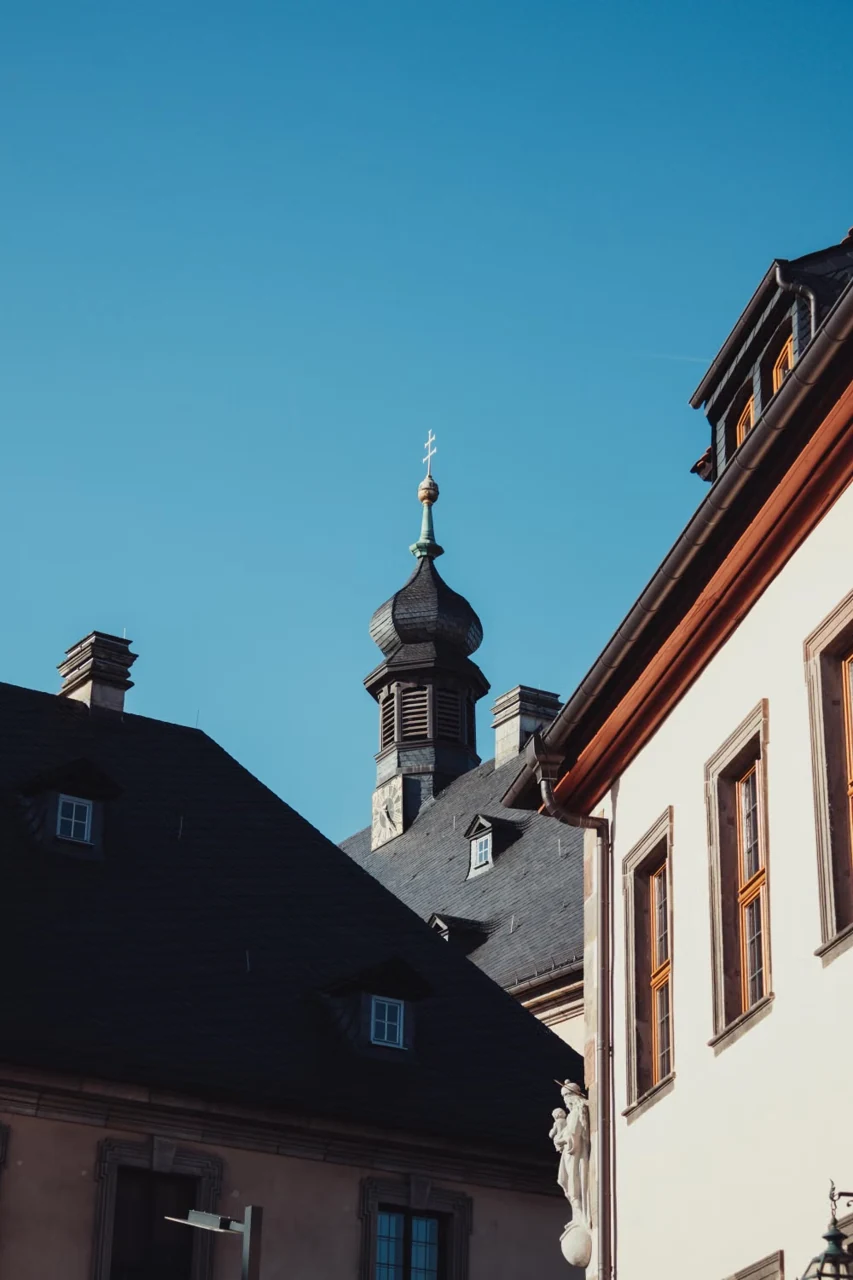
A rewarding first day in Fulda compares the monumental baroque quarter with the smaller scale of the old town. The Dom, Stadtschloss and Schlossgarten complement one another geographically, but they are not a single visitor complex with one opening schedule. Give the palace rooms and cathedral their own time, use the garden as a pause between interiors, and finish around the old-town streets and a proper meal. Schloss Fasanerie outside the centre and an excursion into the Rhön work better as a separate half day or second day than as hurried additions.
Arrival: distinguish the two bus areas
Fulda station is at Am Bahnhof 3. Before starting the centre walk, decide what to do with luggage and whether your hotel check-in fits the arrival time. The tourism office's official city map distinguishes the regional bus area beside the railway station from the urban bus station around Stadtschloss. This becomes particularly useful for a second-day excursion. The word Fulda on an itinerary is not enough to identify the correct boarding point.
On a day trip, consult the station's current locker information rather than carrying a suitcase across every historic street. Availability and a suitable empty locker cannot be assumed. The centre suits a compact walking visit, but stone surfaces and long periods standing inside museums accumulate. When planning two substantial interiors after a train journey, choose where your rest break will happen. At the end of the day, allow time to reach the actual platform, not merely the station entrance. A modest departure margin leaves the final part of the walk much more enjoyable.
Stadtschloss and the garden: two different ways of looking
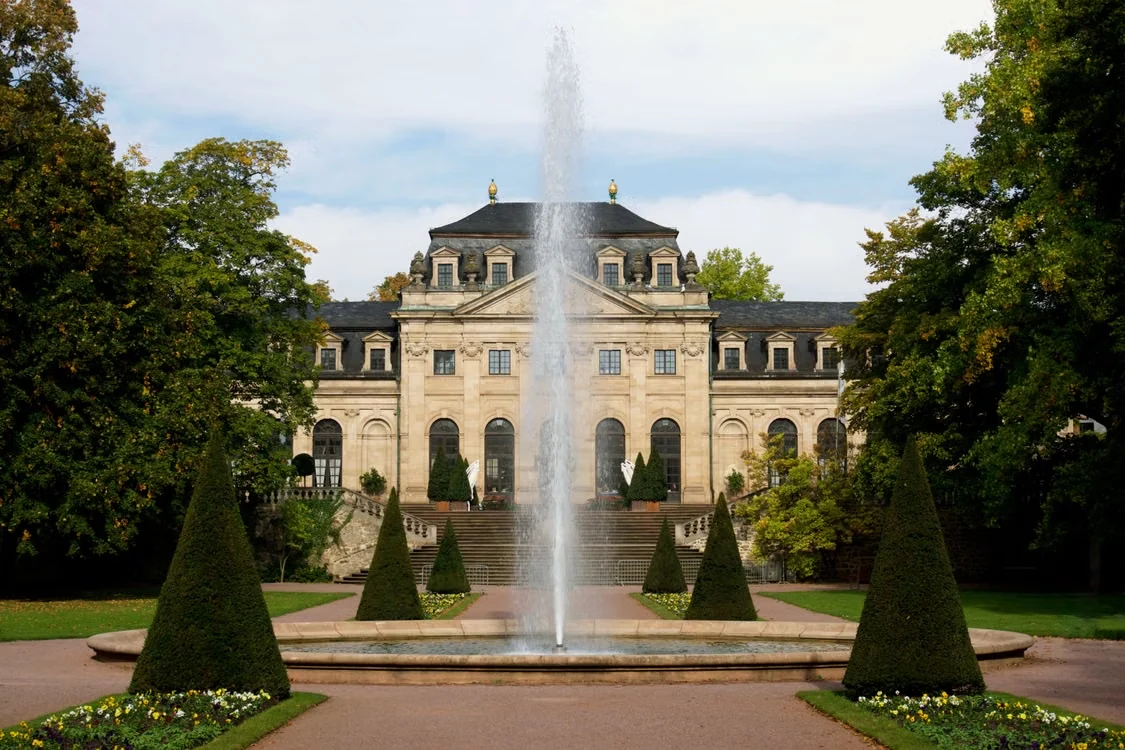
The official baroque-quarter overview describes Stadtschloss as the residence of Fulda's prince-abbots and prince-bishops. Check the current visitor hours for the historical rooms before treating them as the first fixed appointment of the day. Looking at a palace façade outside and entering its furnished spaces require different amounts of time. If you choose the rooms, leave enough attention for ceilings, wall treatments and displays rather than marching straight through to the exit.
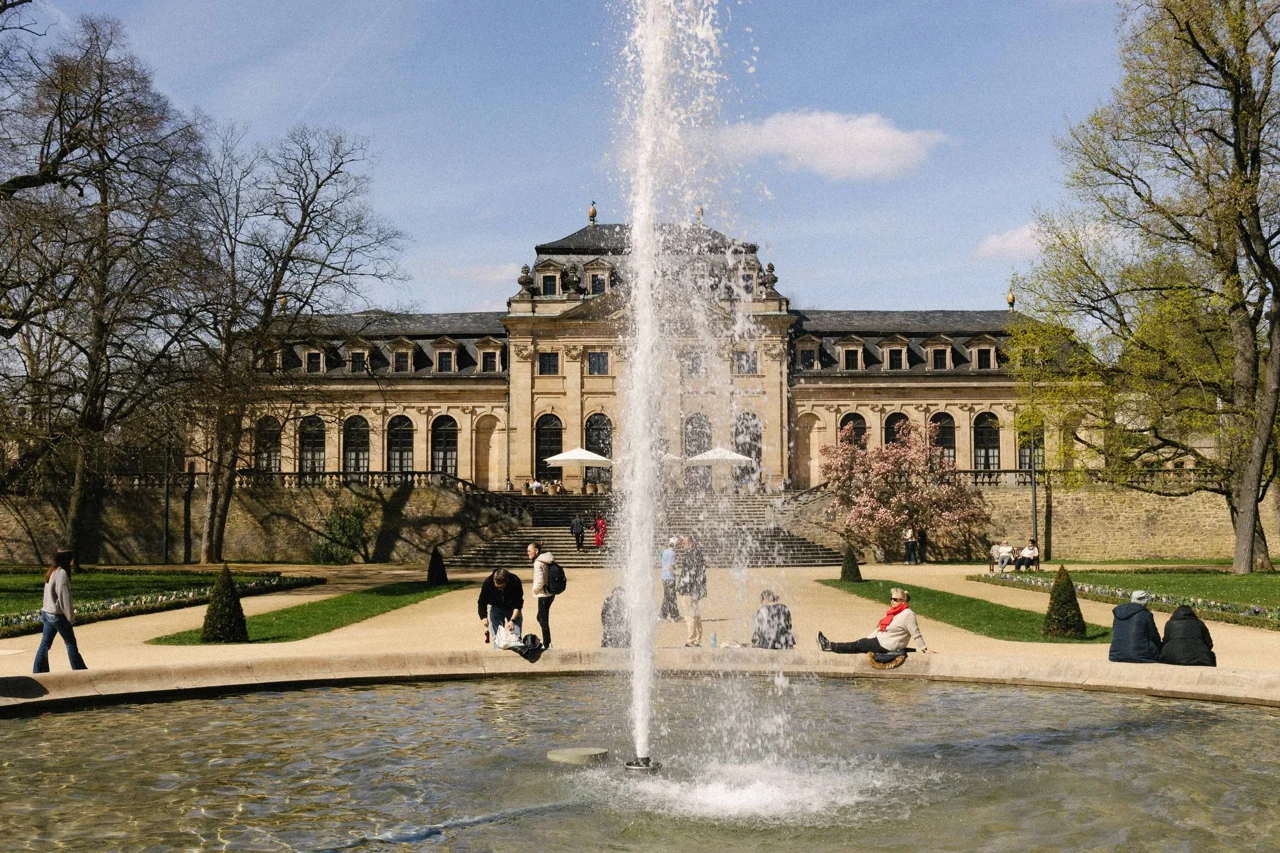
Continue through the Schlossgarten towards the Orangerie. The open garden lets you view the architecture from a broader perspective. Follow its main axis first, then use the side paths for a seat or another photographic angle. The Floravase and stairway by the Orangerie offer another way to see how the baroque ensemble connects buildings with outdoor space. Seeing the exterior does not establish public access to every event room inside. If a particular section is unavailable, the open garden can still carry the middle of the visit.
The cathedral and St Michael's: make the comparison deliberate
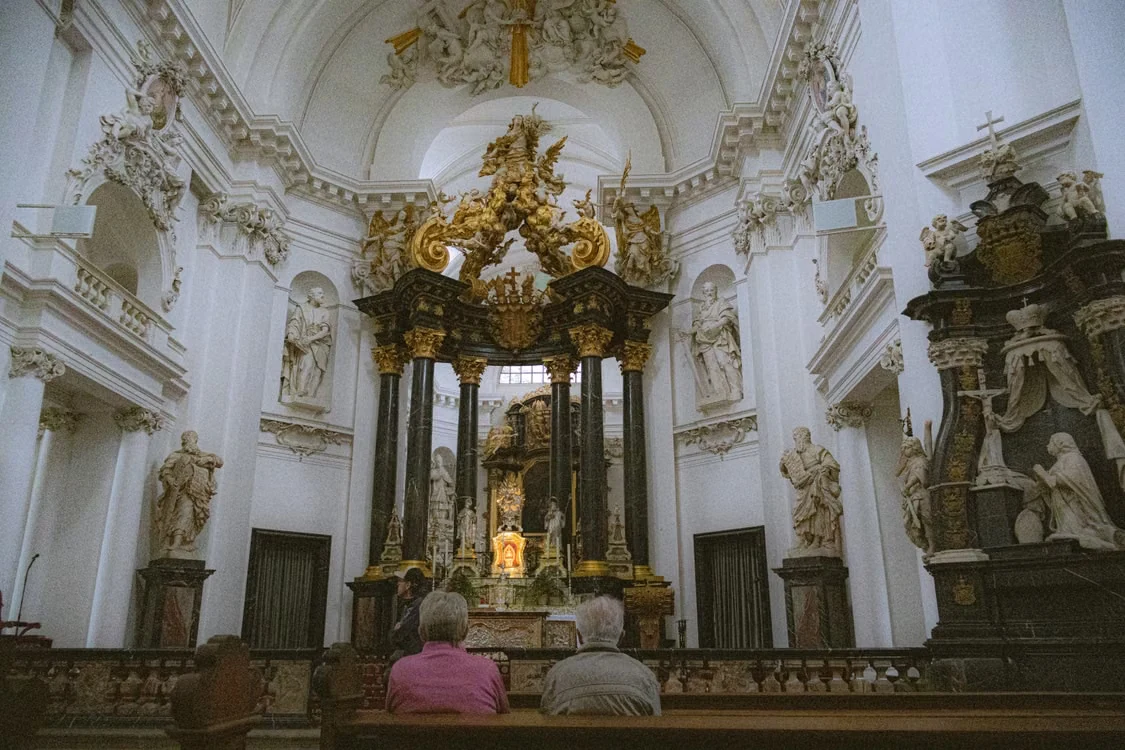
At Domplatz, pause before entering so that your impression of the cathedral is not limited to its doorway. Fulda's official churches overview identifies the Dom and Michaelskirche as separate places. After the large baroque cathedral, St Michael's offers an older and different architectural experience. Check worship times and access on your actual date. During a service, a quiet observer and a photographer have different responsibilities: avoid interrupting worship or blocking people for a preferred camera position.
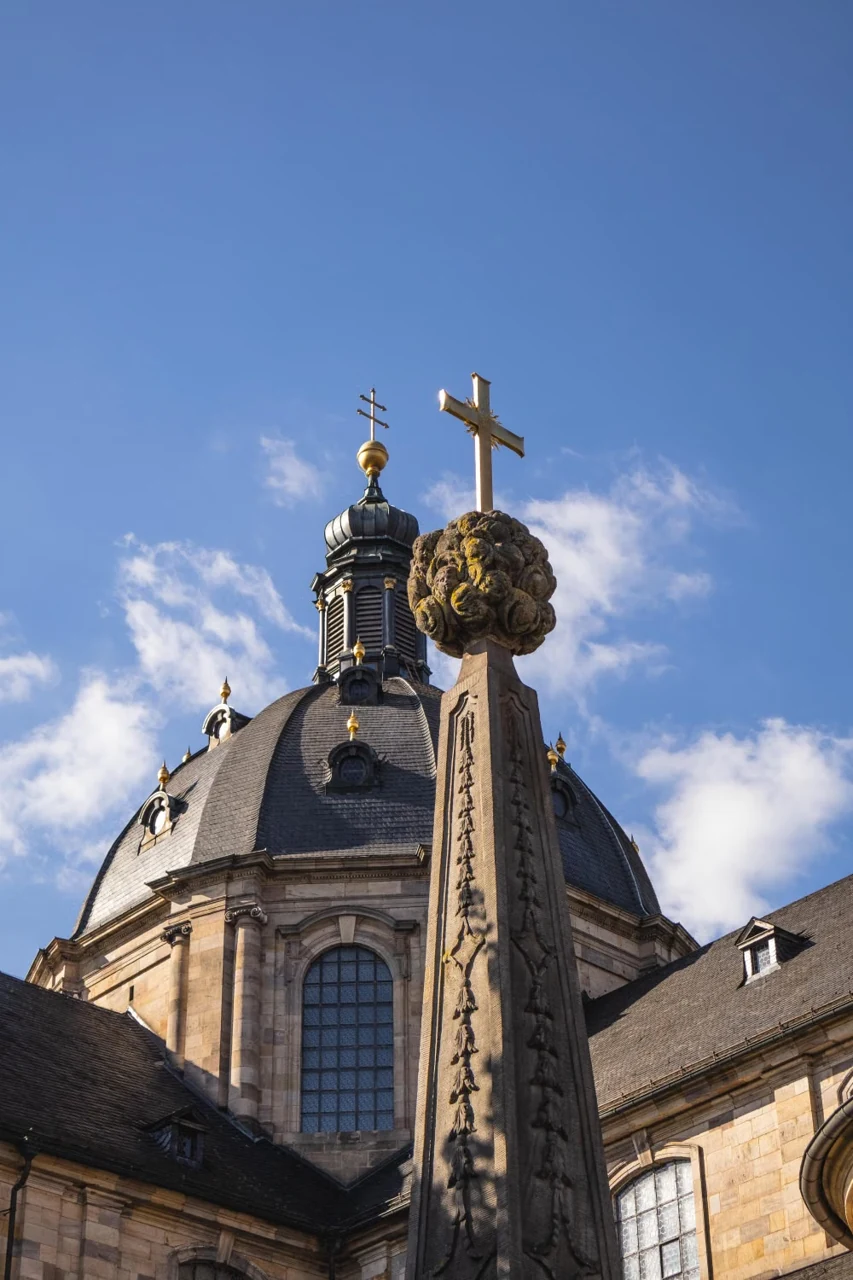
Do not automatically add the cathedral museum simply because you are already nearby. The museum overview presents it as a separate introduction to Fulda's monastic and diocesan history. It deserves its own time when that subject interests you. A visitor with a short day may find the palace rooms and cathedral provide enough indoor substance. Someone more interested in museum collections can deliberately reduce the loose old-town stroll instead. Making this choice before arriving is more effective than squeezing another ticketed visit into the final hour.
The old town and a main course at Wiesenmühle
From the baroque quarter, turn towards Unterm Heilig Kreuz and the old-town streets. Moving from monumental façades to smaller houses and shops is the point of this part of the route. Follow a main street, explore a short side lane and return, rather than constantly adding distant sights. For a meal, Wiesenmühle at Wiesenmühlenstraße 13 offers a specific destination towards the river. It makes a useful change after palace and church interiors. Outdoor seating depends on weather and season, so a garden photograph is not a promise of a comfortable outdoor table on your date.
The operator's 2026 menu includes Fuldaer Rucksack: breaded pork schnitzel filled with cooked ham, sheep's cheese and garlic, served with pepper cream sauce, chips and salad. It is a concrete full-meal suggestion. It contains pork and dairy, which matters more than presenting it simply as a regional speciality. Check the menu for alternatives and ask the kitchen about specific dietary needs. The brauhaus, restaurant and outdoor areas should not be assumed to share exactly the same service arrangements; identify the section you want when reserving.
A central overnight stay and an honest second day
Hotel Platzhirsch is a real accommodation option at Unterm Heilig Kreuz 3–5. Its old-town position is relevant to this route, which returns from the baroque area towards the centre. The current contact page states that bookings are available through its contact form, email and telephone. If an online booking process is unavailable, do not immediately interpret that as a sold-out hotel. Confirm the room category, parking, check-in procedure and access requirements directly. The address is a starting point for a decision, not a claim that every room suits every traveller.
For a second day, choose between another city museum and an excursion such as Schloss Fasanerie or the Rhön. A nature outing has weather, footwear and transport requirements that differ from the central walk. A palace excursion also needs its own opening and arrival plan. Let the first day have a complete shape: palace rooms, the open garden, the cathedral and perhaps St Michael's, followed by old-town streets and a relaxed meal. Fulda then becomes a place experienced on its own terms rather than a collection of photographs taken between train connections.